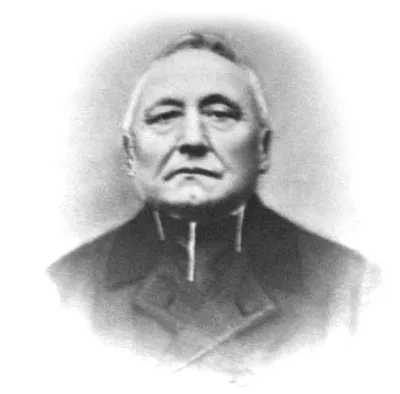
Jean-Baptiste Senderens
Human Design Chart
Biography
Senderens died on 27 September 1937 in his native village of Barbachen, Haute-Pyrénées.
Jean-Baptiste Senderens — Generator with Profile 5/1
Generator 5/1 — Design at a Glance
Jean-Baptiste Senderens revealed himself as someone who did not unfold his power through independent initiative but rather through quick responses to external impulses. As a Generator, he possessed considerable sacral energy, making him enduring and resilient – comparable to a strong workhorse that only runs effectively when used for the right task. His design suggested that he best utilized his energy by reacting to signals from his environment rather than initiating independently. The motto 'react, do not initiate' was central to his well-being.
When he responded to impulses from his gut, when his inner self clearly signaled a 'yes', he could be rewarded with deep satisfaction and a sense of fulfillment. Conversely, ignoring this inner resonance or forcing things that did not find inner approval led to frustration and energy loss. Two specific stumbling blocks shaped his potential: on the one hand, the risk of investing energy in unwanted tasks, leading to exhaustion, and on the other hand, holding back from his heart project despite still being full of power. His success thus depended on learning to wait for life and then powerfully respond to it, rather than fighting against the current of his own nature.
Emotional Authority
Jean-Baptiste Senderens revealed himself as someone who did not make decisions on impulse but consciously let them mature. His design featured Emotional Authority, meaning his defined Emotional Center served as the inner control center. This configuration was subject to a natural wave motion of feelings, showing up in constant ups and downs. The world appeared to him always colored by his current mood; what was exciting in one moment could appear negative in the next.
This mechanism posed a central challenge: the immediate feeling was only a snapshot, not a reliable truth value. Spontaneous decisions made directly from an emotional peak often proved detrimental, as they ignored the fleeting nature of the mood. The strategy of his design lay in patience. Jean-Baptiste Senderens needed time for a decision to mature. Revisiting important questions multiple times was not a sign of weakness but a necessary process.
Over time, intense feelings subsided, and an emotional distance set in. Only then, when the wave had subsided, did clarity and calmness emerge. This journey through the emotional process was essential for long-term decisions that significantly influenced his life course. By waiting, he gained the necessary perspective to not be guided by the transient intensity of emotions but to act from a deeper, more comprehensive understanding.
The 5/1 Profile — Heretic / Investigator
Jean-Baptiste Senderens revealed himself as someone who possessed deep, specialized knowledge that magnetically attracted others to seek solutions for their problems. His design as a 5/1 profile – the Hero and Researcher – set a tendency to embody his expert role while researching in the background. Others actively sought him out, driven by the projection his fifth line triggered. This often led to being inundated with inquiries, similar to a master exhausted after long conferences.
The mechanics of his design clarified this: Line 1 promoted the need for private research and depth, while Line 5 carried the responsibility to provide this knowledge for problem-solving for others. Without clear boundaries, exhaustion threatened from the constant expectation of the environment. Additionally, themes like empowerment and projection played a role, where limitations were often felt as frustration. To secure harmony and economic success, his design required clear agreements and hierarchies. The ability to say no was crucial to maintain the balance between personal research drive and external expectations. Thus, he could optimally utilize his gifts without being overwhelmed by the burden of constant availability.
Split Definition — Defined & Open Centers
Jean-Baptiste Senderens was someone who possessed immense inner strength, filtered through a profound emotional processing. His defined Heart Center endowed him with a natural willpower and the need to determine his life and resources for himself. He knew his own worth and kept promises he made, which gave him a strong self-confidence. This energy was fueled by his defined Sacral Center, a constant engine full of vitality. For him, it was crucial to respond to questions with a clear yes or no to avoid overextending his energy. Only through this affirmative response could he unleash his enduring strength and find satisfaction in his work.
At the same time, his defined Solar Plexus Center served as his inner authority. He was not inclined to make decisions in the moment but had to wait for the emotional wave to gain clarity. This patience allowed him to recognize deeper truths that went beyond the obvious. His defined Spleen Center complemented this with a sharp instinct for the
Channels for nurturing sustenance and emotional community.
, protecting him from danger and giving him a sense of well-being and health.
In contrast, his open Head Center revealed a vulnerability to mental pressure and confusion. He tended to engage with questions that were not his own and sometimes desperately sought inspiration or answers to relieve this pressure. His open Ajna Center made his mind flexible but also prone to interpreting foreign opinions as his own truth or feigning uncertainty. The open Throat Center led him to feel the pressure to attract attention rather than speaking spontaneously and authentically. His open G Center meant that he did not have a fixed identity or direction but adopted these through the environment and relationships, making him vulnerable to false places or partners. Finally, his open Root Center absorbed external stress, which could lead him to overburden himself to escape this pressure.
Tribal Circuitry — Circuit Signature
Jean-Baptiste Senderens was someone deeply rooted in the responsibility for the well-being of his community, paired with a strong need for emotional connection and fair agreements. His design tended to not only provide care but also secure the structural foundations of this care through clear, mutual agreements.
This attitude was shaped by the Channel of Preservation 27-50. It connected the selfless care of Gate 27 with the traditional values and laws of Gate 50. This created a mechanism of preservation: Jean-Baptiste Senderens used his energy to protect and nourish the clan and creative enterprises. He intuitively understood that true care begins with correctly caring for oneself – a kind of
Left Angle Cross of the Alpha 2
Jean-Baptiste Senderens revealed himself as someone who reached enlightenment through his own, often painful journey. His design was marked by the "left cross of Alpha 2". This configuration points to a life task that did not rely on pre-made solutions or external teachings. Instead, he had to work out the truth himself, often through personal experiences and mistakes. It was a process of learning through doing and experiencing, not just by listening or reading.
This pattern described an inner necessity to understand things through his own strength. Jean-Baptiste Senderens could not simply rely on the wisdom of others; he had to validate it himself. His path was often lonelier and more intense, as he felt the consequences of his decisions directly. This experience served as a foundation for a deep, authentic insight. He learned to accept his own mistakes as teachers, rather than denying them. Through this hard but effective method, he developed a robust inner stance. His insights were therefore particularly lasting, as they stemmed from living practice. Jean-Baptiste Senderens used this dynamic to develop a clear, experience-based perspective that he could later impart to others. His design challenged him to master the lesson of Alpha 2: that true knowledge can only be gained through personal experience.
Saturn Return · Uranus Opposition · Chiron Return · 2nd Saturn Return — Life Cycles
Jean-Baptiste Senderens’ Design showed a tendency towards cyclical structuring and the anchoring of responsibility. His life followed a pattern where inner steps of maturation were anchored to concrete career milestones.
This was clearly evident at his first Saturn return. In 1883, at the age of 27, he concluded his academic career with a professorship at the Institut Catholique. This marked the transition from education to established authority, a process encoded in his chart as a phase of consolidation and the first serious engagement. The appointment to the professorship was not merely coincidental but the material manifestation of this first major life phase, where identity and social role condensed.
Again, this structuring energy was evident at his second Saturn return. In 1914, at the age of 58, he moved into industry in Vitry-sur-Seine. This step signalled a further deepening of the practical application of his knowledge. While the first return laid the theoretical foundation, the second return anchored his expertise in industrial practice. Both events underscore how his design aimed at the step-by-step establishment of competence and influence, with each Saturn cycle demanding and enabling a new level of responsibility and structuring.
Generator · Emotional Authority — Synthesis
Jean-Baptiste Senderens lived as a Generator with emotional authority and the Profile of the Hero/Researcher, leading a life marked by a deep thirst for knowledge and a desire to make this knowledge accessible to others. The defined willpower and the Channel of Conservation (27/50) indicated a strong ability to preserve resources and provide for the tribe, with a focus on maintaining values and traditions. This was evident in his readiness to take responsibility and keep promises, which in turn built trust. The sacral energy typical of Generators was channeled through a combination of care and values, suggesting a sustainable and nurturing approach to work.
However, Senderens’ design contained a central paradox: the combination of emotional authority and the Profile of the Hero/Researcher. On one hand, the emotional wave required time for decision-making and a deep engagement with feelings to gain clarity. On the other hand, Line 5 of the Profile urged him to share knowledge and offer solutions, implying a need for quick reactions and interaction with others. This tension between inner maturity and external pressure led to a constant struggle with his own pace and the expectations of his environment.
2 Defined Channels
Incarnation Cross - Left Angle Cross of the Alpha 2
Solar Return
The Solar Return shows the moment when the sun returns to its exact birth position - your personal solar year.
Life Cycles
Discover the life cycles with a detailed triple view (birth chart, cycle chart, composite).
Human Design Profile
- Type
- Generator
- Strategy
- To respond - wait for something to respond to
- Authority
- Emotional Authority
- Profile
- 5/1 - Heretic / Investigator
- Definition
- Split Definition
- Incarnation Cross
- Left Angle Cross of the Alpha 2
- Date of Birth
- 27.01.1856 06:00
- Place of Birth
- Barbachen, France
Frequently Asked Questions
What was Jean-Baptiste Senderens' Human Design type?
What profile did Jean-Baptiste Senderens have?
What authority did Jean-Baptiste Senderens have?
What incarnation cross did Jean-Baptiste Senderens have?
When was Jean-Baptiste Senderens born?
Discover your own Human Design
Are you also a Generator? Find out in a personal reading how to use your sacral energy correctly and discover deep satisfaction.
More Personalities
Back to overviewAaliyah

Alexia

Angèle

Anne-Marie

Arcángel

Arno