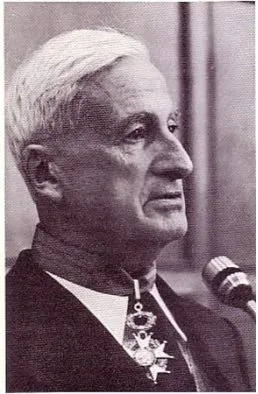
Jean Capelle
Human Design Chart
Biography
The Human Design of Jean Capelle: Manifestor 1/3
Manifestor 1/3 — Design at a Glance
Jean Capelle revealed himself as someone who did not just observe the world but actively steered it in a new direction. His design as a Manifestor pointed towards a tendency towards a pioneering role and visionary thinking. He acted similarly to an emperor in ancient Rome, who had a great vision but did not lead the necessary wars and battles himself but entrusted others with them. This configuration led to him often being misunderstood because he thought further ahead than others. His big dreams polarized: Some people loved him and followed him, while others disliked or even hated him because of these visions. To find the right followers, it was crucial for him to inform others about his plans in a timely and precise manner. This strategy of informing was the key to his inner peace. If he followed this strategy, his design rewarded him with a feeling of inner peace. If he lived against his design, he felt a persistent, deep anger within. Jean Capelle, therefore, relied on clearly communicating his intentions to minimize resistance and successfully implement his visions. His ability to inspire and lead others was closely tied to his willingness to be transparent. Without this transparency, he risked getting into conflicts and wasting his own energy. His path was marked by the necessity to assert himself, but also by the art of bringing others along.
Emotional Authority
Jean Capelle lived with an inner authority that did not manifest in immediate clarity but in wave-like emotional movements. His defined Emotional Center carried this authority, meaning that his perception of the world was always colored by the current mood. What appeared as exciting in one moment could be felt as negative in the next. These fluctuations were not a lack of reliability but a mechanical process: The feeling in the moment was merely a snapshot, not yet the final truth.
Quick, spontaneous decisions based on this emotional heat would often have had negative consequences for Jean Capelle. Instead, his design required patience. He had to take time to let decisions mature, often by sleeping on them multiple times. Only when the intense feelings subsided and emotional distance was gained, true clarity and calmness set in. This process was essential for long-term course corrections that shaped his life path. Jean Capelle thus showed himself as someone who reached deep, comprehensive understanding by enduring the emotional wave, rather than being led by first impressions.
The 1/3 Profile — Investigator / Martyr
Jean Capelle revealed himself as someone who combined theoretical knowledge and practical experience inseparably. His design, the Profile 1/3, marked him as both a researcher and an experimenter. He did not only seek information but tested it through his own actions. This urge to test things thoroughly was central to his way of understanding the world.
The Line 1 in his profile emphasized the necessity of careful preparation. It required weighing opportunities and risks as well as detailed planning before taking a step. Intuition played a crucial role in assessing risks. Without this thoroughness, his plans would often have remained in the air.
At the same time, Line 3 drove him to learn through trial and error. This was about implementation, about the experience that only arises through action. This line taught him to grow from mistakes and develop discernment. The quality of his decisions and the people he followed or who followed him was more important to him than mere quantity.
Jean Capelle united these two aspects: He planned thoroughly to then boldly try things out. His judgment was trustworthy because he had worked it out both theoretically and practically. He lived the principle that true knowledge arises when preparation meets practical experience.
Split Definition — Defined & Open Centers
Jean Capelle revealed himself through a design that relied on inner stability and emotional depth. His defined G Center gave him a reliable self-identity and a clear sense of direction; he knew who he was and could radiate this inner security without being dependent on others. This firm identity worked together with his defined Solar Plexus Center, which formed his inner authority. Here, there was a need to allow time for the emotional wave before making decisions. Jean Capelle tended to move through the highs and lows of his emotions to ultimately gain emotional clarity, rather than reacting impulsively.
His communication, guided by the defined Throat Center, was a direct expression of these inner processes. What he spoke came from his emotional truth and identity, not just from mere intellect. This ability to express was supported by the defined Spleen Center, which gave him a spontaneous, intuitive perception of the „now“. He could instinctively recognize what was healthy and correct and act based on this momentary intuition, protected by a strong survival consciousness. The defined Root Pressure also provided the constant energy to move forward in the world and transform stress into constructive movement.
At the same time, Jean Capelle was receptive to external influences through several open centers. His open Head Center made him vulnerable to mental confusion and the pressure to find answers to questions that were not his. He tended to identify with others' doubts rather than relying on his inner authority. The open Ajna Center reinforced this by causing him to adopt concepts and opinions from the environment that he could not consider his own truth. Particularly challenging was the open Heart Center, which could draw him into a cycle of promises and the need to prove his worth. Without a consistent willpower, he risked exhausting himself when trying to meet expectations that did not align with his strategy. His open Sacral Center also reflected the energy of the environment, which made him pay attention to his own exhaustion and not be overwhelmed by the generative power of others.
Channels for leadership, meaning-making and emotional change.
Jean Capelle showed himself as someone who sought leadership not through coercion, but through logical classification and shared responsibility. His design carried the Alpha Animal Channel 7-31, connecting the G Center with the Throat Center. This gave him the ability to recognize collective patterns and speak with a voice that inspired trust. He was inclined to lead only when invited by the community, as his authority was based on the principle of majority and an understanding of existing trends.
At the same time, he possessed the inner drive of the Life Struggle Channel 38-28, connecting the Root Center with the Spleen. This channel propelled him to fight for his individual integrity and find deeper meaning in conflicts. He instinctively knew which battles were worth fighting and stubbornly resisted external forces that would distract him from his true self. This energy required regular movement to channel the inner pressure and maintain clarity.
His emotional landscape was shaped by the Transience Channel 35-36, connecting the Solar Plexus Center with the Throat Center. Here, he sought new experiences to gain emotional depth and wisdom. He learned that emotions are transient and used this insight to inspire others to make the most of the moment. His personality complemented this dynamic through Gates like 27 (Care) and 41 (Evolutionary Change), helping him share experiences with warmth and an eye on further development. Gates like 18 (Correction) and 53 (Freedom) also supported him in questioning old patterns and pioneering new paths, always in service of a larger collective process.
Collective Circuitry — Circuit Signature
Jean Capelle's design tended to separate, parallel operating energetic fields. Through the „Split Definition“, two independent groups of forces existed that did not flow directly into each other. This shaped an experience world in which different aspects of his nature existed side by side without merging into a single, continuous stream.
One part of this design connected the Spleen with the Root Center through the Life Struggle Channel (28-38) in the Knowledge Circuit. This connection generated a pulsating, acoustic energy based on intuition and immediate reaction. It supported the ability to follow one's own path and transform new insights through inner security.
A second, separate area included the Throat, Identity, and Solar Plexus Centers. Here, two circuits worked in parallel. The Understanding Circuit connected through the Alpha Animal Channel (31-7) the Throat with the Identity Center. This allowed the sharing of logical, rational insights, free from emotions, focusing on future structures. Simultaneously, the Meaning Circuit connected through the Transience Channel (35-36) the Throat with the Solar Plexus Center. This channel channeled cyclical emotional waves from the past to express felt experiences and meaning behind events. Both forms of expression – cool ratio and emotional reflection – used the same starting point in the Throat Center but remained energetically separate due to the different sources (Identity versus Solar Plexus). Jean Capelle thus showed himself as someone who possessed both strategic clarity and deep emotional processing, yet as two distinct, non-fusing forces.
Right Angle Cross of the Unexpected 3
Jean Capelles design indicated a tendency towards unpredictable turning points that created clear directions from seemingly chaotic situations. This configuration, known as the Unexpected Right Cross 3, described a life dynamic where external circumstances often intervened unexpectedly to accelerate or change internal processes. Instead of linear planning, his path was characterized by spontaneous insights that emerged in critical moments, opening up action options that were previously unseen.
This mechanism fostered an attitude of openness towards the unknown. Jean Capelle was someone who did not fight against resistance but waited for the situation to clarify itself. The energy of this cross supported the emergence of new perspectives from unexpected events, which would otherwise have remained hidden. It was not a matter of chance but a structural property of his design that enabled him to find intuitive solutions in moments of uncertainty. Through this ability, he could adapt flexibly to changing circumstances without losing his inner alignment. The effect of this configuration was that it helped him to understand the unexpected not as a disturbance but as a necessary impulse for further development.
Saturn Return · Uranus Opposition · Chiron Return · 2nd Saturn Return — Life Cycles
Jean Capelle was someone whose life rhythm was marked by clear cycles of maturation and confirmation. His design indicated a tendency to experience important life stations in conjunction with planetary return phases that required structure and responsibility. The first Saturn return, typically occurring around the age of 28, marks the transition from youth to full adult responsibility in Human Design mechanics. During this phase, years of groundwork often condense into a solid result that strengthens one's identity in a public or professional context.
For Jean Capelle, this process was already effective earlier: in 1938, at the age of 25, he participated in the FIFA World Cup. This event served as a concrete proof of the mechanics of Saturn's influence, which here did not manifest as a later burden but as an early confirmation of his role and competence. Participation in such a global event underscored the stability and recognized position that his design required in this life phase. It was a moment when his individual strategy unfolded in a publicly visible form, based on prior development and now demanding a new level of responsibility and visibility.
Manifestor · Emotional Authority — Synthesis
Jean Capelle was a Manifestor whose life was marked by a strong drive for innovation and the desire to chart new paths. His design showed a natural authority rooted in the emotional center, giving him the ability to make decisions from a deep, though time-bound, inner wisdom. The connection of the Research Profile and the defined throat suggests that he was a man of action and communication, always seeking new insights and sharing them with others – always based on his own thorough examination (Channel 31/7). This combination allowed him to take logical leadership and influence societal patterns.
A central paradox in his design lay in the tension between the trailblazing need of the Manifestor and the emotional wave that shaped his decision-making. While he was destined to take initiatives and lead the world in a new direction, his emotional authority required time and space for feelings to mature before he could gain clarity. This may have led to internal conflicts, as the desire for immediate action clashed with the necessity of emotional clarification. The Unexpected Right Cross amplified this dynamic by repeatedly presenting him with unforeseen challenges that tested his adaptability and innovation potential.
3 Defined Channels
Incarnation Cross - Right Angle Cross of the Unexpected 3
Solar Return
The Solar Return shows the moment when the sun returns to its exact birth position - your personal solar year.
Life Cycles
Discover the life cycles with a detailed triple view (birth chart, cycle chart, composite).
Human Design Profile
- Type
- Manifestor
- Strategy
- To inform others before acting
- Authority
- Emotional Authority
- Profile
- 1/3 - Investigator / Martyr
- Definition
- Split Definition
- Incarnation Cross
- Right Angle Cross of the Unexpected 3
- Date of Birth
- 26.10.1913 01:00
- Place of Birth
- Liège, Belgium
Frequently Asked Questions
What was Jean Capelle's Human Design type?
What Profile did Jean Capelle have in Human Design?
What Authority guided Jean Capelle's decisions?
What incarnation cross did Jean Capelle have?
When was Jean Capelle born?
Discover your own Human Design
Are you also a Manifestor? Find out in a personal reading how to use your initiation power peacefully and dissolve resistance.
More Personalities
Back to overviewAldair

Cafu

Christian-Jaque
Joelinton

Kaká

Kesha