
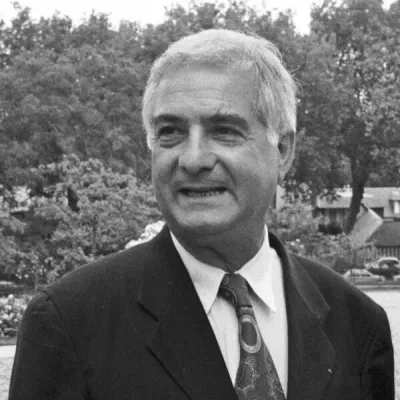
Jean-Claude Brialy
Human Design Chart
Biography
Brialy moved to mainland France with his family in 1942, moved to Paris in 1954, and appeared in his first film in 1955.
He became a star in the late 1950s when he was one of the most prolific actors of the French "nouvelle vague". He made films with such important nouvelle vague filmmakers as Claude Chabrol, Éric Rohmer, Jean-Luc Godard, Louis Malle, François Truffaut, Agnès Varda, and Jacques Rozier; and with other filmmakers such as Roger Vadim, Claude Lelouch and Luis Buñuel.
He was also, himself, a director of a number of films, including Églantine (1971). In his autobiographies, Le Ruisseau des singes (River of Monkeys) (2000) and J'ai oublié de vous dire... (I Forgot to Tell You ...) (2004) he revealed that he was bisexual.
He died 30 May 2007.
What does Generator 6/2 mean for Jean-Claude Brialy?
Generator 6/2 — Design at a Glance
Jean-Claude Brialy revealed himself as someone with remarkable inner endurance and strength. His design as a Generator laid a tendency towards great vitality, comparable to a workhorse that generates energy if fueled for the task. This energy was not released through self-initiative but reacted to signals from the environment. The motto was: Do not start, but respond. When his Sacral Center – the motor of his motivation – signaled a clear "Yes," he could act with full power and materialize projects. If he lived by this pattern, he was rewarded with deep satisfaction.
However, danger threatened him at two points. First, when he did things that he actually had no desire to do. Then he wasted his valuable energy and tended towards exhaustion. Second, if he was prevented from pursuing his heart's project while still full of drive. Such interruptions blocked his natural flow. He was only successful when he responded to impulses and acted from the gut. If he constantly initiated himself without waiting for this inner confirmation, sooner or later he encountered persistent frustration and a lack of energy. His path to fulfillment therefore did not lie in constant pushing forward but in patiently waiting for the right signal before then responding with strength.
Emotional Authority
Jean-Claude Brialy moved through an emotional wave that colored his perception of the world through the filter of his current mood. His design showed a defined Solar Plexus Center functioning as inner authority—a mechanism that applies to every type except Reflectors once this center is active. This emotional authority was subject to constant ups and downs: What seemed inspiring in one moment could appear negative in the next. His feeling was always just a snapshot, not a final judgment. Quick, spontaneous decisions based on immediate emotion therefore carried the risk of later proving false, as the first impression did not necessarily reflect his truth.
The strategy of his design lay in waiting and letting things mature. The more time Jean-Claude Brialy gave to a decision, the deeper and more comprehensive he could understand the situation. This required patience and consciously sleeping on important matters. By hesitating and asking multiple times, he gained emotional distance from initially intense feelings. Over time, these subsided, clarity and calmness set in. Only then was the decision-making process complete. This mechanism was primarily relevant for long-term decisions that could have a significant impact on his life course, as only through this temporal distance did the true depth of the situation become accessible.
The 6/2 Profile — Role Model / Hermit
Jean-Claude Brialy revealed himself through his Profile 6/2 as someone whose life was marked by a clear developmental trajectory. In his youth, he appeared to be an experimenter who learned through trial and error; mistakes here did not serve as final destinations but rather as necessary steps towards reflection. This phase of active experimentation laid the groundwork for his later approach.
After turning thirty, this dynamic fundamentally shifted. The sixth line became active and called for a period of distancing. Jean-Claude Brialy metaphorically withdrew into a "cave" to reflect on the accumulated experiences with great clarity. This withdrawal was not an isolation out of fear but rather a process of healing and deep self-knowledge. Only when this inner order was found did he re-emerge – now as a wise person, whose introspection attracted others.
This wisdom contrasted with the impulsive energies of Gate 38 (Line 2), which described an intuitive, foam-dampened combativeness. This energy served for self-defense and was characterized by discretion; it acted resistively but did not violate norms. Simultaneously, the sixth line in Gate 17 carried aspects of a Bodhisattva: a perfected succession where leadership did not come through dominance but rather through the example of a transformed personality. Jean-Claude Brialy thus embodied the transition from reckless experimentation to calm, collectively effective wisdom.
Split Definition — Defined & Open Centers
Jean-Claude Brialy revealed himself as someone who often struggled under a constant mental pressure to question and understand connections. His defined Head and Ajna centers created a continuous stream of inspiration that, however, could not be directly translated into action due to the lack of an associated energy source. This frequently led to inner worry or frustration when he tried to immediately act on these thoughts instead of waiting for the right moment to share them.
At the same time, Brialy possessed a firm identity and willpower. His defined G Center gave him clarity about his direction and self-love, while his defined Heart Center provided the energy to keep promises and actively shape his life. He tended to guide others with his inner security, which could lead to conflicts if he did not wait for their invitation.
His communication was characterized by a defined Throat Center serving as an anchor point to bring mental concepts and emotional waves into the world. Since his Solar Plexus Center was also defined, he had to learn to wait until his emotional waves subsided before speaking or acting. This emotional authority required patience; impulsive actions at the peaks or troughs of the wave often led to regret and chaos in his environment later on.
In contrast, Brialy revealed himself through undefined centers as susceptible to external influences. His open Spleen Center made him vulnerable to fears about survival and well-being. He tended to cling to people with defined Spleens for a false sense of security, which often led to unhealthy dependencies. Spontaneous decisions were risky for him since they did not rely on his own intuition. Furthermore, his open Root Center absorbed stress from the environment. He was exposed to others' pressure and tended to interpret this adrenalized pressure as his own, leading to hyperactivity or exhaustion if he failed to distinguish between his own and external stress.
Channels for intimacy, acceptance, pioneering spirit, community and abstraction.
Jean-Claude Brialy revealed himself as someone whose inner dynamics were strongly influenced by the tension between a desire for merging and the necessity of logical order. His design inclined towards intense intimacy filtered through a mind constantly reorganizing details.
This conflict manifested in Channel of Union 59-6, connecting sacral sexuality with emotional waves, making relationships profound and potentially fruitful. Brialy had the ability to quickly establish trust but needed to wait for his emotional clarity to avoid misunderstandings about his intentions. The intensity of this channel could be perceived by others as flirting, even if no romantic intent existed.
Simultaneously, Channel of Acceptance 17-62 influenced him. He visualized patterns and translated them into precise language. His mind was constantly engaged in logically organizing information to integrate it into his worldview. What he could not mentally categorize remained incomprehensible. This created an internal pressure to detail his opinions as soon as invited to speak.
Channel of Initiation 51-25 added competitive energy. Brialy sought the shock of individuation and encouraged others to transcend their limits. He understood initiation as a mystical process he could not control but had to surrender himself to.
Channel of Community 37-40 emphasized fair agreements' importance. He sought his place in groups through direct, personal contacts and waited for invitations to become part of an organization. This promoted loyalty based on mutual benefit rather than hierarchy.
Channel of Abstraction 64-47 drove him to filter every experience through mental images to find a story. His active mind searched for meaning in the past and present, leading occasionally to confusion until a clear picture emerged.
Collective Circuitry — Circuit Signature
Jean-Claude Brialy revealed himself as someone with a firm sense of self-worth and strong individual beliefs. His Centering Circuit directly linked Identity and Heart Centers; this promoted inner strength but lacked connection to the Throat Center, making these firm stances often hard to verbalize. Parallel to this was a separate stream: The Understanding Circuit connected Ajna with the Throat Center. Here the focus lay on logical strategy and sharing rational insights for the future, free from emotional influence. Another independent circuit was the Meaning-Finding Circuit linking Head and Ajna Centers. This turned towards the past to decipher meaning through emotional waves and reflection of old experiences. In the Social realm, the Ego Circuit spanned Heart and Solar Plexus Centers. It emphasized cooperation and balance in giving and taking for mutual resource creation but required necessary pauses without direct sacral energy. Finally, the Archer Circuit linked Sacral with Solar Plexus Center, endowing him with primal energies to protect his genetics focused on pairing and preserving family. Through shared definition, these forces existed as two parallel systems: an inner framework of Identity, Heart, Sacral, and Solar Plexus energy alongside a separate system of Head, Ajna, and Throat. Brialy navigated between these distinct energetic blocks without them directly overlapping.
Left Angle Cross of Upheaval 1
Jean-Claude Brialy lived under the influence of the left cross of transformation, a configuration that created a profound inner tension between the desire for absolute freedom and the constraints of societal or personal commitments. This design marked him as someone who often found himself in a state of transition – neither fully here nor there, but always flowing between two worlds. The mechanics of this cross describe a life task: questioning old structures and forging new paths, even if this process was accompanied by internal conflict. For Jean-Claude Brialy, this meant that he likely frequently grappled with the question of how to remain authentic without completely ignoring or radically rejecting others' expectations. His energy focused on finding this balance – not through traditional compromises but through a constant redefinition of his own boundaries and possibilities. It was a path of transformation that led him to constantly seek new perspectives, even if it brought uncertainties.
Saturn Return · Uranus Opposition · Chiron Return · 2nd Saturn Return — Life Cycles
Jean-Claude Brialy lived through rhythmic phases of structuring and change, shaped by the cyclical influences of his astrological transits. The first Saturn return marked a time of consolidation, where early impulses were condensed into sustainable life structures. This process laid the foundation for further development.
Later came the Uranus opposition, a transit that often explores internal tensions between habit and the desire for freedom. For Jean-Claude Brialy, this was a phase of reorientation, in which old patterns were questioned and new paths explored. This period of change prepared the ground for the subsequent bloom phase.
The Chiron return, a fulfillment cycle in middle age, brought about the unfolding of his incarnation purpose. If he had followed his strategy, his sense became tangible and his inner destiny became clearer. It was not healing in a medical sense but rather the blossoming of his own potential.
The second Saturn return rounded off this life arc. In this phase, it was about integrating accumulated experiences and establishing a mature, stable attitude towards life. Jean-Claude Brialy showed himself to be someone who processed his past and found a clear perspective for further existence. These cycles shaped his path from early formation through change to late maturity and finding meaning.
Generator · Emotional Authority — Synthesis
Jean-Claude Brialy lived a life marked by profound inner dynamics. As a Generator with emotional authority (and the defined Head Center), he possessed immense work capacity and endurance, which were always tied to his emotional reaction. The ability to generate energy required waiting and maturation processes in decision-making – an internal wave that brought him clarity before he could commit to a task. This combination of sacral energy and emotional center created a person deeply rooted in their own truth and who carried this out through inspiring questions.
A central paradox in Brialys design lay between the drive for experience and the need for reflection. The profile as role model/natural talent points to an intense phase of experimentation followed by withdrawal into wisdom and self-knowledge. This shift between active testing and passive reflecting formed an internal conflict: the energy of the Generator demanded action, while the emotional center and line 6 in the profile required time for deep insights. This tension shaped his life as a constant swing between the world and his own inner self.
5 Defined Channels
Incarnation Cross - Left Angle Cross of Upheaval 1
Solar Return
The Solar Return shows the moment when the sun returns to its exact birth position - your personal solar year.
Life Cycles
Discover the life cycles with a detailed triple view (birth chart, cycle chart, composite).
Human Design Profile
- Type
- Generator
- Strategy
- To respond - wait for something to respond to
- Authority
- Emotional Authority
- Profile
- 6/2 - Role Model / Hermit
- Definition
- Split Definition
- Incarnation Cross
- Left Angle Cross of Upheaval 1
- Date of Birth
- 30.03.1933 08:00
- Place of Birth
- Sour el Ghozlane, Algeria
Frequently Asked Questions
What was Jean-Claude Brialy's Human Design type?
What profile did Jean-Claude Brialy have?
What was Jean-Claude Brialy's Authority?
What incarnation cross did Jean-Claude Brialy have?
When was Jean-Claude Brialy born?
Discover your own Human Design
Are you also a Generator? Find out in a personal reading how to use your sacral energy correctly and discover deep satisfaction.
More Personalities
Back to overviewAaliyah

Alexia

Angèle

Anne-Marie

Arcángel

Arno
