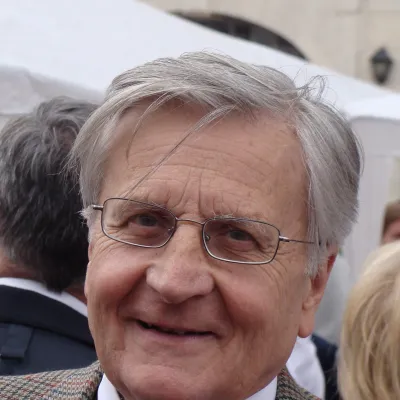
Jean-Claude Trichet
Human Design Chart
Biography
Jean-Claude Trichet — Manifesting Generator with Profile 1/3
Manifesting Generator 1/3 — Design at a Glance
Jean-Claude Trichet was someone who demonstrated quick action capabilities and could manage multiple projects simultaneously. His design as an expressing generator combined the constant energy of the sacral center with the ability to skip steps. This allowed him to quickly bring things into his life, but it also carried the risk of missing important stages or becoming frustrated through multitasking – his non-self theme.
The strategy was not to initiate himself but to react to impulses. Only when the sacral center responded with a clear “yes” and inner authority agreed, was he free for quick action. By correctly applying this resonance check, he gained deep satisfaction from his work. The pressure to focus on one thing until completion contradicted his nature; instead, variety and playful engagement promoted his creative power. As long as he reacted to the inner confirmation before acting, his speed remained helpful rather than hindering.
Emotional Authority
Jean-Claude Trichet showed a decision-making structure that did not rely on spontaneous impulses but on overcoming emotional waves. His inner authority lay in the defined solar plexus center – a configuration that always takes precedence over all other defined centers. This meant that his perception was marked by constant fluctuations: A topic could appear highly relevant at one moment and trivial the next. However, this emotional coloring was only a temporary reaction, not an ultimate truth.
Quick decisions would therefore have been risky as they were based on passing moods. Instead, his design required patience and time. By “sleeping” on questions, initial emotional storms could subside. Only when these waves subsided and emotional distance had been gained did clarity emerge. This process of maturation was crucial for long-term orientation. Jean-Claude Trichet thus had to consciously resist the urge for immediate responses to reach his deeper, stable truth of authority. The strategy involved delaying decisions until calmness took over from initial enthusiasm or rejection.
The 1/3 Profile — Investigator / Martyr
Jean-Claude Trichet's design inclined towards sustained research and practical verification. As a 1/3 profile, he was naturally an investigator who gained insights through learning (line 1) and experimenting (line 3). His life revolved around the process of trial and error: Self-earned and verified facts formed the basis of his judgment. When he deemed something good, it had been thoroughly tested both theoretically and practically; this judgment could be trusted absolutely.
Line 1 brought humility and adaptability. It was important to accept one's place in a hierarchy. Attempts from outside to change this behavior led him to over-sensitive reactions. At the same time, the energy of line 3 through gate 46 acted: It threw him off balance and required adaptation through experiential challenges. This force projected possible futures as present, which could result in unwarranted egoism or loss of momentum if not clearly distinguished whether one sees the future today or postpones it to tomorrow. The core process involved learning from mistakes and making decisions based on verified reality rather than mere projection.
Split Definition — Defined & Open Centers
Jean-Claude Trichet's Human Design profile pointed towards a tendency for reliable expression and a deep sense of personal identity. His defined Throat Center acted as a steady anchor, translating inner messages into clear communication. This aligned with his defined G Center, which provided a firm self-love and a clear compass for personal direction. He possessed an inner security that allowed him to lead others without needing their approval.
His energy source originated from the defined Sacral Center, a motor of constant vitality. This power was activated through reactions to life: Only when he waited and listened for his internal yes or no response did full strength become available to master tasks with persistence. Impulsive initiation would have interrupted this connection and led to frustration.
At the same time, his defined Solar Plexus shaped an emotional authority. For him, truth revealed itself not in the moment but after experiencing the emotional wave. Patience was essential here to distinguish clarity from fleeting moods and make decisions that wouldn't be regretted later. His defined Spleen Center provided spontaneous, intuitive signals for well-being in the present, while his defined Root Center supplied a constant pressure towards material stability and survival.
In contrast, his vulnerability showed in the open centers. The open Head and Ajna Centers meant he lacked consistent mental inspiration; he tended to pick up foreign questions or doubts that weren't his own business. Here lay the risk of sinking into mental confusion rather than trusting inner authority. Similarly, his Heart Center was open: He didn't have constant willpower in terms of competition and promise. Attempting to prove his worth through performance or control would plunge him into a cycle of self-doubt and exhaustion as this energy wasn't mechanically anchored within him.
Channels for self-acceptance, spontaneous power, intuition and emotional clarity.
Jean-Claude Trichet's Human Design profile pointed towards self-directed leadership driven by inner conviction and trust in personal instincts. This stance came from the Channel of Exploration 34-10, linking sacral energy for self-love with behavior in the G Center. It wasn't about conforming to external norms but staying true and living one's own principles, appearing as a clear, inspiring presence to others.
This foundation was reinforced by the Channel of Awakening 10-20, connecting the G Center with the Throat Center. This enabled turning personal knowledge into immediate action – an expression of 'I am here and now'. As a result, Jean-Claude Trichet often appeared as someone who, through mere presence and clarity, helped others find themselves without actively instructing them.
Simultaneously, he possessed a powerful ability to express himself through the Channel of Charisma 34-20. This channel directly linked the generative power of the Sacral Center with expression in the Throat Center. It was an energy that could act quickly and charismatically but only effectively if based on genuine reactions rather than being steered by intellect.
In the background, the Channel of Judgment 18-58 worked to question and correct logical patterns. This gave him the ability to recognize inconsistencies and strive for perfection as long as he was asked or invited to do so.
Additionally, Gates like Gate 15 (collective behavior) and Gate 30 (recognizing feelings) sharpened his sense of societal rhythms and emotional dynamics. Jean-Claude Trichet thus emerged as a figure who acted through authentic existence and reaction-based power, always seeking what was harmonious in the moment.
Individual Circuitry — Circuit Signature
Jean-Claude Trichet's Human Design profile pointed towards a tendency for firm individual conviction. The Centering Circuit connected his Identity with the Sacral Center (Channel 10-34), strengthening individuality and self-worth but lacking direct expression through the Throat Center. Parallel to this, two separate segments of the Meaning-Finding Circuit worked: The Throat-Solar Plexus connection (Channels 35-36, 46-29) processed past emotional waves while the Identity-Sacral connection integrated these experiences into his own existence. These groups were not directly connected.
Another characteristic was the focused logic of the Understanding Circuit. Here, Channel 18-58 linked Spleen and Root Centers, promoting strategic judgment for improving future structures – free from emotional influence.
Integration worked as another power line: Channels 20-10 and 20-34 connected Throat, Sacral, and Identity Centers into a single, continuous flow. This allowed expressing intuitive power (Gate 57 is inactive here but energy flows through the connection) and life reactions in the present moment to secure his survival. Through this divided definition, these energetic systems existed side by side: on one hand, emotional reflection of the past (Throat/Solar Plexus), on the other, strategic future vision (Spleen/Root) as well as centered expressive identity (Integration/Centering). Jean-Claude Trichet thus showed someone who combined inner strength with logical analysis, where different aspects of his design worked parallel but not always directly interwoven.
Right Angle Cross of the Vessel of Love 4
Jean-Claude Trichet's Human Design configuration points to a tendency towards deep emotional connection and a strong sense of justice. This setup, known as the right vessel of love cross 4, describes someone whose actions are guided by an internal compass system based on ethical principles and interpersonal integrity. It is not about superficial sympathy but rather the ability to experience relationships at a level supported by mutual respect and a clear value foundation.
This mechanical expression means that Jean-Claude Trichet often showed a calm yet determined presence in his way of interacting, aiming to build trust and resolve misunderstandings through clear, values-based communication. The 'Vessel of Love' symbolizes the space where these values are lived – a space that offers both protection and openness. The number 4 indicates a process that develops and stabilizes over time; it is not a spontaneous reaction but an adult, thoughtful approach towards others.
In his life journey, this was reflected in consistency in relationships and projects where he did not just pursue personal interests but always kept the welfare of the whole in mind. His decision-making style was marked by questioning whether they aligned with his deepest convictions. This gave him a certain authority that rested less on power than on the recognition of his integrity by those around him.
Saturn Return · Uranus Opposition · Chiron Return · 2nd Saturn Return — Life Cycles
Jean-Claude Trichet's Human Design points to a tendency towards structured, institutional anchoring. In 1971, at age 29, he joined the auditing department of France’s Ministry of Economy and Finance – a classic moment for the first Saturn return cycle. This cycle often marks the transition from an experimental phase to binding responsibility. Energy condenses here; years of groundwork find expression in concrete, durable structures. For Trichet, this meant entering a high-ranking administrative body where precision and rules are paramount. The Saturn return acts like a foundation pour: it stabilizes life direction and demands discipline as well as long-term planning security. At this age, the design often shows willingness to submit to an established system to influence within its boundaries. It is not about spontaneous impulses but integration into existing power and knowledge structures. This phase shaped his further career through focus on control, analysis, and preservation of institutional integrity. The choice of the Finance Ministry reflects how the design seeks security through clear hierarchies and professional excellence. Entering this department was no coincidence but a logical consequence of an inner development towards binding authority and systematic order.
Manifesting Generator · Emotional Authority — Synthesis
A central red thread runs through the design: a dynamic tension between internal preservation and external expression. The defined sacral energy (centers) provides constant life force, yet it is not immediately expressed by emotional authority (authority). Instead, time is required to let feelings mature and make decisions from deep inner clarity – a process that is further strengthened by the profile as researcher/experimenter (profile role), since thorough examination and experience are essential. The awakening channel (channels/gates) emphasizes the need to be present in the current moment and implement principles into action, while the defined throat center (centers) communicates this transformed energy outward.
The central paradox lies in the combination of manifesting generator energy (design view) and emotional authority. The ability to quickly initiate and realize things stands in contrast to the necessity of letting decisions mature over a longer period. This tension creates a pattern of quick action followed by returning to fundamental checks, which shapes the search for authentic insights and deep understanding of one's actions – a dynamic that was evident in his professional journey (cycles).
6 Defined Channels
Incarnation Cross - Right Angle Cross of the Vessel of Love 4
Solar Return
The Solar Return shows the moment when the sun returns to its exact birth position - your personal solar year.
Life Cycles
Discover the life cycles with a detailed triple view (birth chart, cycle chart, composite).
Human Design Profile
- Strategy
- To respond - wait for something to respond to
- Authority
- Emotional Authority
- Profile
- 1/3 - Investigator / Martyr
- Definition
- Split Definition
- Incarnation Cross
- Right Angle Cross of the Vessel of Love 4
- Date of Birth
- 20.12.1942 23:00
- Place of Birth
- Lyon, France
Frequently Asked Questions
What is Jean-Claude Trichet's Human Design type?
What Profile does Jean-Claude Trichet have in Human Design?
What Authority does Jean-Claude Trichet have?
What incarnation cross does Jean-Claude Trichet have?
When was Jean-Claude Trichet born?
Discover your own Human Design
Are you also a Manifesting Generator? Find out in a personal reading how to unfold your multi-talents and direct your energy wisely.
More Personalities
Back to overviewAldair

Alizée

Angeli

Arletty

Artus

Balthus