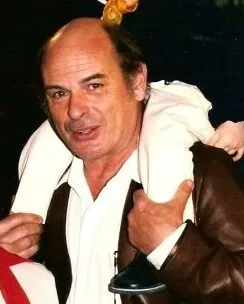
Jean-François Stévenin
Human Design Chart
Biography
Jean-François Stévenin — Projector with Profile 2/4
Projector 2/4 — Design at a Glance
Jean-François Stévenin appeared as someone who, with a dense, focused aura, directed his attention like a bright flashlight to weaknesses in his surroundings. His design saw him as someone who immediately recognized where systems or relationships were 'in the dark' or not functioning properly. This ability to identify flaws in the system was effective only when he used it gently. Direct confrontation with these insights often provoked resistance in others, as if he were shining a light directly into their faces. Instead, he was most effective by setting an example of inner harmony. Through this inner radiance, he attracted others who would then seek his advice on their own. His strategy was to wait for an honest, respectful invitation before taking on a leadership role. As a Projector, he did not have a defined Sacral Center, meaning he did not have a constant, intrinsic energy source. Instead, he experienced phases of high activity followed by necessary rest periods to avoid burnout. The conformist work model that demands constant performance did not fit this rhythm. When he followed the path of invitation and respect for his energy balance, he was rewarded with success. Deviations from this path tended to lead to bitterness, his specific non-self theme. His life task, therefore, did not lie in constant action but in precise, invited leadership.
Splenic Authority
Jean-François Stévenin made decisions not through prolonged deliberation but through an immediate, physical impulse. His design inclined him towards spontaneous orientation, where the first thought or feeling served as the decisive compass. This stance originated from his inner authority in the Spleen.
The Spleen Authority functions as a fine alarm system for health and survival. It does not provide rational arguments but an intuitive signal about whether a situation or environment is harmful or beneficial. For Jean-François Stévenin, this impulse was only valid in the moment; it had to be recognized and followed immediately before being drowned out by other influences. This required him to maintain a high level of alertness and often a brief retreat to hear the silence in which the answer lay.
Since the knowledge of the right course of action was only available in the moment of occurrence, planning fixed, long-term paths proved difficult and often counterproductive. His design favored flexibility and freedom. Instead of setting himself, he reacted to changing circumstances. This mechanism allowed him to rigorously distance himself from harmful influences and protect his well-being by trusting his spontaneous intuition, which told him when to leave or stay.
The 2/4 Profile — Hermit / Opportunist
Jean-François Stévenin moved in a constant interplay between a deep need for withdrawal and the urge for social connection. His design as a 2/4 Profile shaped this dynamic: Line 2, the Hermit, called for phases of isolation to gain inner clarity and cultivate self-sufficiency. At the same time, Line 4, the Community Person, drew him into exchange with a carefully chosen circle.
This configuration created a specific challenge. Line 2 often projected a strong, caring aura outward, although Jean-François Stévenin himself did not always fully recognize the extent of this effect. This could lead to misunderstandings, as others projected his strength while he actually needed space for himself. During his withdrawal phases, he processed the impressions of the outside world, delved into internal processes, and created the necessary distance.
Once this inner order was restored, he actively sought contact. Line 4 required social exchange to make experiences truly valuable. For him, friendships were not just pleasant but crucial for his personal success and development. He externalized his thoughts through sharing with others, thereby translating individual fantasies into collective reality.
The key to his well-being lay in clearly communicating this rhythm. He had to learn to signal clearly when he sought company and when he needed to be left alone. Only then could he use the power of his network without being drained by the expectations of others or his own dependencies. His life was marked by the necessity of setting these boundaries and reflecting the knowledge from his environment in solitude to develop new perspectives.
Split Definition — Defined & Open Centers
Jean-François Stévenin revealed himself through a constant, trustworthy mental function and a firm self-identity. His defined Ajna Center ensured that he established concepts in a specific, recurring way and was difficult to influence mentally by others. This inner clarity flowed into his defined G Center, which gave him a secure sense of his own direction and amiability; he could show others new paths without being dependent on them. His communication, guided by the defined Throat Center, was reliable and expressed what his mind conceptualized or his G Center felt as identity.
At the same time, he possessed a defined Spleen Center, which gave him a spontaneous, intuitive intelligence in the present moment. He could make trustworthy, non-rational judgments and was dependent on his physical well-being and immune system. His defined Root Center provided the constant pressure to move forward in the world and determined his way of dealing with stress and survival issues.
These fixed structures contrasted with his open centers. His open Head Center made him vulnerable to mental pressure and the risk of getting entangled in questions that were not his; he tended to seek inspiration to resolve confusion rather than accept it. The open Heart Center led him to often long for willpower and the need to prove his worth, even though he was not designed to keep promises or compete. His open Sacral Center allowed him to absorb and amplify the energy of others, which could lead to exhaustion if he did not listen to his inner authority to set boundaries. Finally, his open Solar Plexus absorbed the emotions of the environment, making him vulnerable to emotional conditioning and the fear of confrontation, as he easily personalized foreign feelings as his own.
Channels for leadership, curiosity, reflection and life purpose.
Jean-François Stévenin revealed himself as someone who combined logical structures with a deep, narrative curiosity. His design indicated a tendency towards collective leadership based not on authority, but on trust and an understanding of existing patterns. This was expressed through Channel 7-31: Gate 7 provided the logical role of the Administrator, while Gate 31 represented the voice of the collective leader. He sought his own sphere of influence, his "pack," from which to guide without taking responsibility for others away.
Parallel to this, Channel of Curiosity 11-56 was at work. Here, he linked abstract ideas (Gate 11) with the fascination for new stimuli (Gate 56). He functioned as a storyteller, passing on information not as dry facts but as inspiring parables to stimulate the imagination of his listeners. This ability to transform the seen into narrative form complemented his leadership role by making complex connections understandable and emotionally engaging.
Another defining aspect was Channel of the Lost Son 13-33. Through Gate 13, he listened and collected memories, while Gate 33 urged him to withdraw and reflect. He waited patiently until the deeper truth of an experience revealed itself before sharing it. This process of maturation and listening gave his contributions a weighty, timeless quality.
On a physical level, Channel of the Life Struggle 38-28 propelled him. Gate 38 generated the pressure to maintain individual integrity, while Gate 28 enabled the intuitive recognition of what a struggle was worth. He actively sought out struggles that gave him meaning and found in this stubborn determination to walk his own path his life energy.
Additionally, Gates like 27 (Care), 41 (evolutionary development), and 4 (formulation) supported his ability to care, to process crises, and to develop logical formulas for future security. His personality was shaped by Gates like 60 (acceptance of limitations) and 2 (openness to new directions), making him open to mutations and profound changes.
Collective Circuitry — Circuit Signature
Jean-François Stévenins design revealed itself as a split structure, in which two independent energetic blocks existed in parallel without directly flowing into each other. This created an internal tension between different life areas, which did not act as a continuous stream but as separate energy fields.
One block connected the Spleen Center with the Root Center through Channel 28-38 (Life Struggle). This shaped an instinctive, pulsating energy, oriented towards the unique path and the mastery of life struggle. The other block included Head, Ajna, and Throat Centers as well as the Identity Center. Here, three circuits were active. The Understanding Circuit (Channel 31-7, The Alpha Animal) connected Throat and Identity Centers, enabling a focused, rational expression for future-oriented strategies. The Meaning Circuit utilized Channels 11-56 (Curiosity) and 33-13 (The Lost Son) to connect Ajna, Throat, and Identity. This promoted a cyclical, emotional reflection of the past to gain insights and share them. Together, these centers formed a complex expression channel linking logical future visions with emotional past analysis, separate from the instinctive survival energy in the other block.
Right Angle Cross of the Unexpected 1
Jean-François Stévenin's Human Design profile established a foundational disposition characterized by a profound connection to the unexpected and the unpredictable. He was someone who did not view life as a linear, controllable process but rather as a series of moments where the unknown took the lead. This configuration, known as the Right Cross of the Unexpected, shaped his existence through a constant openness to what could not be planned.
In Human Design, this cross describes a specific energetic alignment where the person is called to integrate life's lessons through direct encounters with chance and the surprising. It was not about controlling events but learning to navigate the unpredictability of the world without falling into resistance or fear. Jean-François Stévenin lived this mechanism by adapting to the currents of fate rather than fighting against them. His experience was marked by the insight that true understanding often emerges only when preconceived expectations shatter. This fostered an inner attitude of humility and learning, deepened by every unexpected turn. He used these moments to expand his perspective and focus on the essence behind the external circumstances.
Saturn Return · Uranus Opposition · Chiron Return · 2nd Saturn Return — Life Cycles
Jean-François Stévenin's Human Design profile was marked by phases of external recognition that confirmed his inner structure. In 1983, at the age of 39, he was nominated for the César Award for Best Supporting Actor for “A Room in the City.” This moment coincided with the Uranus Opposition, a cycle often bringing sudden changes or public visibility when internal tensions seek resolution. The nomination was not a coincidence but an expression of this dynamic energy, bringing Stévenin into focus.
Later, in 2002 at the age of 58, he received the Prix France Culture Cinéma for his lifetime achievement. This marked his second Saturn Return, a phase of maturation and confirmation of long-term work. While the first Return often coincides with the establishment of structures, the second solidifies identity and reputation. The award showed that Stévenin had consistently lived his strategy and authority over decades. The Saturn Return acts like a test, leading to deeper anchoring upon successful navigation. Stévenin's life illustrated how these cyclical mechanisms – the disruptive force of Uranus and the structuring power of Saturn – shaped his artistic career and secured his place in the film world.
Projector · Splenic Authority — Synthesis
Jean-François Stévenin was a Projector, distinguished by a pronounced ability to recognize patterns and expose weaknesses (Gate 7/31). This talent, combined with a defined mental center, allowed him to form concepts and influence others through his thoughts. Simultaneously, his life was marked by an inner rhythm – a balance between the need for withdrawal and the longing for community (Profile 2/4). His Spleen Authority pointed to a pronounced instinctiveness and a fine sense of his own health and well-being, enabling him to effectively shield himself from harmful influences.
A central paradox in his design lay in the tension between his Projector nature, which allowed him to identify and correct flaws in the system, and his need for recognition and invitation to share these insights effectively. He possessed the ability to exercise logical leadership (Channel 7/31), yet the successful exercise of this leadership depended on the right environment and the right moment – underscored by the cycles of Uranus Oppositions and Saturn Returns, marking moments of success and transformation.
4 Defined Channels
Incarnation Cross - Right Angle Cross of the Unexpected 1
Solar Return
The Solar Return shows the moment when the sun returns to its exact birth position - your personal solar year.
Life Cycles
Discover the life cycles with a detailed triple view (birth chart, cycle chart, composite).
Human Design Profile
- Type
- Projector
- Strategy
- Wait for the respectful invitation
- Authority
- Splenic Authority
- Profile
- 2/4 - Hermit / Opportunist
- Definition
- Split Definition
- Incarnation Cross
- Right Angle Cross of the Unexpected 1
- Date of Birth
- 23.04.1944 17:45
- Place of Birth
- Lons le Saunier, France
Frequently Asked Questions
What was Jean-François Stévenin's Human Design type?
What Profile did Jean-François Stévenin have?
What Authority did Jean-François Stévenin have?
When was Jean-François Stévenin born?
Discover your own Human Design
Are you also a Projector? Find out in a personal reading how to unfold your leadership qualities and recognize the right invitations.
More Personalities
Back to overviewSissy Spacek
Alain-Fournier

Anémone

Ann-Margret

Arletty

Arno