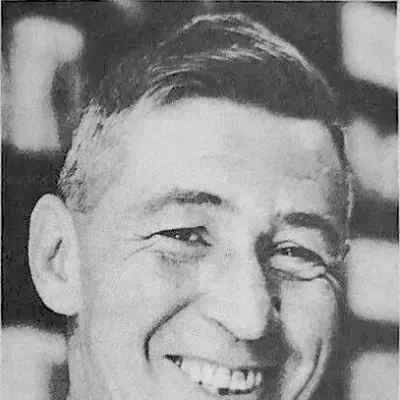
Jean-Louis Borloo
Human Design Chart
Biography
Jean-Louis Borloo — Projector with Profile 2/5
Projector 2/5 — Design at a Glance
Jean-Louis Borloo was characterized by a dense, focusing aura that acted like a flashlight, revealing system errors and 'dark spots' in others immediately. As a projector, he didn't have a constant internal energy source but moved through rhythmic phases: periods of high activity alternated with necessary rest phases to prevent burnout.
His strategy did not involve directly addressing faults – which would trigger resistance – but rather attracting others by being a harmonious example himself. By shining brightly as an exemplar, he invited others to seek his insights. The central imperative for him was waiting for an honest, appreciative invitation. Only then could his energy be effective without feeling overbearing.
If Jean-Louis Borloo lived in alignment with this orientation, he was rewarded with success. However, if he ignored the need for invitations and rhythmic recovery, bitterness would arise. His design thus marked him as someone who practiced leadership through targeted illumination and patient waiting rather than constant, unbridled action. This dynamic significantly shaped his interactions: Success followed respect for his specific energy economy and a wait-and-see approach towards external initiatives.
Splenic Authority
Jean-Louis Borloo's design inclined toward the highest spontaneity, with the first impulse serving as the sole guiding principle for health and well-being. This inner authority resided in the defined Spleen Center, a system that functions as highly sensitive survival intelligence in Human Design. For this authority to be effective, both the Emotional and Sacral Centers were open, typical of projectors or manifestors. The Spleen Center acted not as a planning mind but as an immediate alarm system: Its intuition signaled instantly whether a situation or environment was beneficial or harmful.
This mechanism required rigorous boundary setting against negative influences and made decisions exclusively in the moment. Given that the spleen impulse is extremely fine and occurs only once, high vigilance was necessary to not override it with deliberation. Long-term planning stood opposed to this nature; needs changed with each moment, complicating rigid commitments. Instead, flexibility and freedom shaped his actions. A retreat for decision-making could be helpful, but knowledge of the right course always emerged in the present. Thus, Jean-Louis Borloo was shown as someone who cared through spontaneous reactions and set boundaries against anything threatening his physical or energetic integrity.
The 2/5 Profile — Hermit / Heretic
Jean-Louis Borloo's design inclined toward strategic restraint driven by Profile 2/5. This configuration generates a fundamental tension: Line 2 demands isolated regeneration and withdrawal to maintain ego strength, while Line 5 awakens external expectations as an immediate problem solver or hero.
For Jean-Louis Borloo, strict boundary setting was not an option but a necessity. Withdrawal served not for isolation at any cost but clear selection: Only after intense inner assessment could it be decided who would receive help and when. Without this filtering, exhaustion threatened from constant others' demands. With this discipline, however, authentic generosity emerged – a state where support can be given without negative consequences.
The mechanics show: Line 2 radiates willpower if respected; it rejects false calls. Only after initiation through withdrawal does the quality of Line 5 become effective – practical solutions in crisis times, carried by generosity and awareness of timing. Jean-Louis Borloo thus had to learn to use his 'alone time' to discover what he wanted to commit to. Only then could he answer the call for help without forgetting himself and receive recognition for work done rather than succumbing to chaos of expectations.
Single Definition — Defined & Open Centers
Jean-Louis Borloos Human-Design offers a tendency towards constant inner direction and intuitive perception, paired with high sensitivity to external pressure forms. His defined G Center grants him a reliable self-identity and a clear sense of his own life mission. This allows him to feel secure in his self-love and show others new perspectives without being dependent on their approval. The challenge lies in not trying to direct others or fulfill their expectations, which could lead to a deep loss of his own path.
At the same time, his defined Spleen Center offers spontaneous intuition and strong body awareness for health and well-being in the here and now. However, it requires strict trust in these immediate impulses without wanting to rationalize them to remain protected and vital.
In contrast, Head, Ajna, and Throat Centers are open. This makes him vulnerable to absorbing mental pressure, doubts, and seeking inspiration from his environment. He tends to engage with others' questions or feel the pressure to provide answers even though these are not his own mental processes. The Heart Center is also open, putting him at risk of wanting to prove his worth through promises or competition rather than trusting his inner authority.
The open Sacral, Solar Plexus, and Root Centers complete this picture of situational absorption. He can take in the vital energy of others and overextend himself because he lacks a constant generative force within. Emotional waves from the environment often amplify without him recognizing them as his own, leading to inner unrest. Similarly, he absorbs external stress and adrenaline, which could drive him into cycles of hyperactivity to escape this pressure rather than finding calm. The mechanics require a strict separation between his stable core of G and Spleen Centers and the fleeting signals from open centers.
Channels for intuitive elegance and self-assured behavior.
Jean-Louis Borloo demonstrates an intuitive, spontaneous adaptability in the here and now. His design suggests that he acts unburdened by future anxieties, driven by a deep inner truth rather than intellectual reflection or emotional wave movement.
This stance is rooted in the activation of Channel Perfect Form 57-10. This channel connects the Spleen Center with the G Center and projects a quality of behavior based on intuitive awareness. Through Gate 57, Jean-Louis Borloo has acute sensitivity to the quality of tones in his environment; he reacts more to tonal inflections than words themselves. This links him to an innate, spontaneous wisdom beyond thoughts.
The energy flows further to Gate 10, the Gate of Self Behavior. This combination allows him to move existentially through the world and secure his survival perfectly in the now. His creativity does not arise from self-reflection but by authentically living his uniqueness. Thus, he leaves his environment healthier and more beautiful subconsciously without seeking recognition. It is a process of self-perfection where his unique behavior acts as an example to others on how to live fully in the moment.
Additionally, Gates like 51 (Willpower, Adaptability), 54 (Ambition, Spirituality) and 7 (Leadership, Hierarchy) contribute to his personality while Gates like 13 (Continuity, Memory) and 46 (Devotion, Presence) complement his design. However, the Channel Perfect Form 57-10 significantly shapes his ability to generate a healthy aura through intuitive action based on self-appreciation and love.
Individual Circuitry — Circuit Signature
Jean-Louis Borloos Human-Design is characterized by a precise connection between inner identity and intuitive perception. This configuration allows him to directly link his self-understanding with the knowledge of what is truly right or useful in any given moment. A closed loop forms between who he is and his natural intuition for the essential.
This mechanism is realized through the Channel Perfect Form (Gates 10 and 57). Gate 10 in the Identity Center stands for correct behavior and the ability to remain true to oneself. Gate 57 in the Spleen represents intuitive knowledge of time and space as well as perception of what survives. For Jean-Louis Borloo, these two centers are directly connected, making his intuition not just a fleeting thought but firmly anchored in his identity. He acts from a synthesis of personal style and intuitive security.
Although the larger integration circuit also encompasses survival (Gate 34) and being present (Gate 20), these aspects are not directly linked to his identity or Spleen in Jean-Louis Borloo's case. His focus is specifically on perfecting his form through the connection of character and intuition, fostering high individuality as he learns to align his actions with an inner compass that integrates both logical correctness and intuitive truth. The energy flows clearly between Identity and Spleen without being disturbed by other unconnected centers.
Right Angle Cross of Penetration 1
Jean-Louis Borloo's Human Design shows a tendency towards direct and penetrating presence. His energetic quality was designed to break through barriers and enter situations with clear, often unshakable force. This corresponds to the mechanics of the right penetration cross 1, which does not aim for gentle adaptation or long preparation but rather for the ability to immediately penetrate into the heart of an event.
This configuration describes a kind of influence that works through its directness and sharpness. It's about the energy of penetrating – entering complex or resistant environments to create clarity or set a decisive impulse. For Jean-Louis Borloo, this meant his impact often lay in changing existing structures or discussions with focused, penetrating attention.
The archetypal mechanics of this cross emphasize not lingering on the surface. Instead, it demands a deep, almost physical penetration into topics or relationships. Jean-Louis Borloo was someone whose design predisposed him to act with a certain immediacy and urgency. This energy does not allow for superficial observation; it forces confrontation with the essential. In his actions, this quality is reflected: a strong focus on hitting the core of an issue without unnecessary detours. The penetration here is not a destructive act but a means to make truth or reality visible by actively appropriating it.
Saturn Return · Uranus Opposition · Chiron Return · 2nd Saturn Return — Life Cycles
Jean-Louis Borloo's Human Design shows a clear tendency towards structural confirmation through concrete proof of performance. The first Saturn Return cycle, which occurs around the 29th year of life, marks in Human Design mechanics the establishment of professional identity and social status. This was evident for Jean-Louis Borloo in 1980: At this age, he was counted by Fortune among the five highest-earning lawyers in the world. This success condensed years of groundwork into a tangible material proof of his competence.
The second Saturn Return cycle, which began at the age of 56 here, further consolidated this position. Mechanically, this phase is about elevating established structures to higher responsibility or institutional power. Jean-Louis Borloo entered this stage in 2007 when he became Minister for Economy, Finance and Employment in Fillon's first cabinet. This career step underscores the typical function of the second cycle: The earlier professional identity is not only confirmed but translated into a position of broader societal relevance and authority. Both events illustrate the process of maturation where inner qualifications become visible through external, recognized structures.
Projector · Splenic Authority — Synthesis
Jean-Louis Borloo’s chart reveals a thread of intuitive adaptation and self-determined action. The combination of defined Spleen Center and the Channel of Perfect Form (Gate 57/10) indicates a strong ability to grasp one's environment and respond with authentic behavior – a process deeply rooted in maintaining personal well-being. This intuitive intelligence, paired with the penetration cross 1, amplifies the tendency to recognize solutions and implement them in a way that is both effective and self-determined. The repeated successes (1980, 2007) seem to result from this ability to instinctively act correctly in the present moment and adapt to changing circumstances.
A central paradox lies in the tension between the need for withdrawal and the projection quality of his design. Borloo is destined to recognize others' mistakes (Projector), yet his defined Spleen and open Heart as well as Root Centers require simultaneous periods of rest and separation from external influences. This field of tension between the desire to help others and the necessity to protect oneself shapes his character and challenges him to always find a balance between engagement and self-care.
1 Defined Channel
Incarnation Cross - Right Angle Cross of Penetration 1
Solar Return
The Solar Return shows the moment when the sun returns to its exact birth position - your personal solar year.
Life Cycles
Discover the life cycles with a detailed triple view (birth chart, cycle chart, composite).
Human Design Profile
- Type
- Projector
- Strategy
- Wait for the respectful invitation
- Authority
- Splenic Authority
- Profile
- 2/5 - Hermit / Heretic
- Definition
- Single Definition
- Incarnation Cross
- Right Angle Cross of Penetration 1
- Date of Birth
- 07.04.1951 15:15
- Place of Birth
- Paris Arrondissement 15, France
Frequently Asked Questions
What is Jean-Louis Borloo's Human Design type?
What profile does Jean-Louis Borloo have?
What authority does Jean-Louis Borloo have?
What incarnation cross is Jean-Louis Borloo associated with?
When was Jean-Louis Borloo born?
Discover your own Human Design
Are you also a Projector? Find out in a personal reading how to unfold your leadership qualities and recognize the right invitations.
More Personalities
Back to overviewSissy Spacek

Alain-Fournier

Anémone

Ann-Margret

Bourvil
Hergé