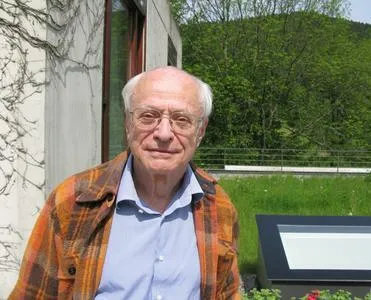
Jean-Pierre Serre
Human Design Chart
Biography
Human Design Analysis: Jean-Pierre Serre as Manifestor 5/1
Manifestor 5/1 — Design at a Glance
Jean-Pierre Serre's Human Design shows a tendency to act as a pioneer and visionary, capable of leading the world into a new future. His nature resembled an emperor in ancient Rome: He had the vision of a great empire but did not personally lead the necessary wars and battles. Instead, he sent his soldiers out to conquer foreign lands for him.
This configuration brought with it a specific pain point: The feeling of being misunderstood. Since he often thought ahead of others, he polarized people. Some loved him for his big dreams and followed him, while others disliked him precisely because of his vast visions, perhaps even hated him.
For the right followers to find him, it was important that he informed others about his visions in a timely and precise manner. This was his ideal strategy. By informing and adhering to his authority, he was rewarded with a sense of inner peace. If he lived against his design, he likely felt a persistent, deep anger within. This dynamic shaped his interaction with the environment and determined whether he lived in harmony or conflict with his own nature.
Emotional Authority
Jean-Pierre Serre showed a tendency to not make decisions immediately but to leave them to a necessary maturation period. His Human Design suggests that he let himself be guided by the current emotional wave without immediately accepting it as the final truth.
This attitude stems from his emotional authority, carried by the defined Solar Plexus Center. A central mechanism here is the absolute priority of this authority: Whenever the Solar Plexus Center is activated, it takes precedence over all other defined centers, regardless of what else is defined in the chart. This means that Jean-Pierre Serre was subject to constant emotional fluctuations. The world appeared to him colored by his current mood – sometimes inspired, sometimes negatively assessed.
Since these feelings were only snapshots and first impressions, he risked negative consequences with spontaneous, emotionally driven decisions. His path to clarity required patience and conscious waiting. By taking time to let decisions mature over time, he could even out the intense feelings. Only with this emotional distance did calmness and deep insight set in. This process was essential for long-term life decisions, as only then did the true, stable truth become visible beneath the surface of transient emotions.
The 5/1 Profile — Heretic / Investigator
Jean-Pierre Serre showed a fundamental attitude that combined deep, isolated research with the need to offer this knowledge to others for problem-solving. His design as a 5/1 profile suggests a tendency to initially retreat to deepen insights before sharing them as practical solutions. This dynamic reflects Line 1, which requires a monastic retreat to prepare for inner clarity and mutation, away from constant external stimuli.
At the same time, Line 5, with its almost magnetic pull, made others seek answers from him. In times of crisis, he could rely on his own experiences to offer meaningful, practical solutions without being personally influenced by others' problems. This ability to recognize sanctity and meaning in experiences helped him maintain a harmonious relationship with oppressors or difficult circumstances even under pressure.
The challenge, however, lay in the balance: Constantly answering others' questions could quickly lead to exhaustion if clear boundaries were not set. By learning to say no sometimes, he could preserve the beneficial tension between the necessary retreat for his own research and the task of optimally using his gifts for the community. Thus, the potential overload from others' interest turned into a structured, sustainable knowledge transfer.
Single Definition — Defined & Open Centers
Jean-Pierre Serres Human Design profile indicated a tendency towards emotional depth and reliable expression strength. His defined Solar Plexus Center acted as an inner authority, making decisions not on impulse but by waiting for the emotional wave to pass. This mechanism fostered a stance that combined patience with oneself and others to gain clarity before taking action. Simultaneously, he had a defined Throat Center, serving as a pivot for communication. It allowed a consistent, though limited, way to express himself by translating information from other centers into clear speech or action.
These stable inner resources contrasted with his open centers, making him susceptible to specific conditioning. His open Head Center tended to absorb mental pressure from the environment, leading to doubts or engagement with foreign questions if he did not trust his emotional authority. Similarly, his open Ajna Center was flexible in handling concepts but could lead to getting lost in theoretical labyrinths or interpreting answers as personal truth. The open G Center meant that his identity and direction were not set but crystallized through interaction with the environment and the right context. He tended to question whether he was in the right place to find his true alignment.
Further open centers like the Heart, Spleen, Sacral, and Root Centers made him sensitive to external energies. He could take on the will pressure of others, get stuck in unhealthy dependencies, or feel overwhelmed by foreign stress. The wisdom of his design lay in not seeing these open areas as deficits but as mirrors that helped him distinguish the energies and intentions of his environment while relying on his defined emotional clarity and voice.
Channels for emotional openness and creative passion.
Jean-Pierre Serre showed himself to be someone whose social impact and communicative clarity strongly depended on the inner emotional wave. His design set a tendency towards rhythmic openness that was not constant but wave-like. This is explained by the Openness Channel 22-12, which connects the Solar Plexus Center with the Throat Center. Here, the caution of Gate 12 regulates the emotional radiance of Gate 22. Serre had the ability to unfold a transformative effect on his environment through the quality of his voice and articulation, but only when his inner mood inclined towards it. Coercion or impulsivity would have disturbed this connection; instead, waiting for the right emotional phase allowed him to break down barriers and move others through his words.
Alongside this social dynamic, other mechanisms influenced the understanding of meaning and experience. Gate 47 in the Collective Cross brought the challenge of recognizing clarity and meaning from past, often confusing, image sequences. This was a process of understanding that could succeed not in isolation but through exchange with others. Additionally, Gate 11 helped to examine ideas through visual memory and harmonious assessment of the situation before acting. This analytical stance contrasted with the deeper, emotional streams of Gate 36, which understood crises as cyclical movement and necessary decline to enable new experiences. Finally, Gate 30 carried the theme of longing and recognizing feelings, where the illusion of absolute freedom was replaced by the acceptance of limitation and fate. Together, these elements formed a profile that oscillated between emotional depth, analytical distance, and the search for collective meaning.
Individual Circuitry — Circuit Signature
Jean-Pierre Serres design indicated a tendency towards emotionally driven expression that came directly from the inner self. In simpler terms, there exists only one cohesive energetic system while other areas remain open. Here, the Knowledge Circuit connected the Throat Center with the Solar Plexus. This channel, known as Openness, allowed for emotional waves and inner impulses to be immediately translated into words or actions. The energy flowed pulsing and acoustically, driven by the immediate emotional reaction of the Solar Plexus. It was not about abstract planning but the authentic expression of one's individuality in the present moment. The connection created a direct line between what Jean-Pierre Serre felt and what he carried outward. This shaped a communication style that was carried by genuine conviction and emotional depth, without long delay. The open nature of the remaining centers meant that this specific power of emotional articulation was in the foreground, while other areas responded flexibly to external influences. The focus was clearly on transforming inner experiences into outer expression, thereby initiating change through personal authenticity.
Left Angle Cross of Informing 2
Jean-Pierre Serre's Human Design suggests a tendency towards a deep, often unconscious connection to collective communication streams. This configuration, the left cross of communication, describes not a conscious choice but an energetic anchoring in the way information circulates and is processed in society. It is a structure that focuses on the quality and flow of exchange rather than the individual content.
The mechanics of this cross work subtly in the background. They shape an attitude aimed at creating clarity in transmission or reflecting existing communication patterns. Jean-Pierre Serre, influenced by these factors, was someone whose thinking and actions were marked by the necessity to structure complex connections in a way that makes them accessible to others. This is not about loud proclamation but about the precise, often silent, transmission of insights that expand collective understanding. This energetic alignment fostered a lifestyle where the exchange itself – the way knowledge is shared – was at the center, independent of the specific topic. The connection to collective intelligence through communication was a constant, driving factor.
Saturn Return · Uranus Opposition · Chiron Return · 2nd Saturn Return — Life Cycles
Jean-Pierre Serre's Human Design points towards structural condensation, showing in clear, durable results. This attitude was reinforced by recurring Saturn Returns, cycles in which years of groundwork condensed into stable foundations. In 1951, at the age of 25, he earned his doctorate at the Sorbonne under Henri Cartan – a typical moment of the first Saturn Return, when early efforts matured into a concrete academic achievement.
Later, during the Chiron Return between the ages of 47 and 49, a phase of fulfillment began, in which his life's work increasingly unfolded. In 1973, he published “Corners and arithmetic groups” with Armand Borel. This marked not a healing but a bloom: the meaningful expansion of his intellectual reach, when strategy and authority were lived out.
The second Saturn Return around the age of 55 further deepened this stability. In 1981, “Quelques applications du théorème de densité de Chebotarev” was published. Here, the design rewarded long-term consistency: earlier insights were not discarded but integrated into new, dense structures. Jean-Pierre Serre thus moved not through random events but through a rhythmic condensation of his thinking, which in each of these cycles led to measurable, career-defining publications.
Manifestor · Emotional Authority — Synthesis
A central thread runs through the design: the dynamic connection between inner authenticity and outer expression. Emotional authority demands a maturing wave, while the defined communication and manifestation centers emphasize the urge to express these inner processes. The profile as Hero/Researcher strengthens this cycle of deep understanding and the transmission of insights, with the channel of openness enabling the emotional coloring of this communication. Repeated documented events in the career area show that this process does not only occur internally but manifests in concrete, creative achievements.
A central paradox lies in the tension between the Manifestor type and emotional authority. The Manifestor is destined to act and initiate, while the emotional wave requires a time of waiting and inner clarification. This discrepancy leads to an internal dynamic where the impulse to act collides with the necessity of emotional maturity, resulting in a unique form of creative transformation, which arises through the connection of knowledge and expression.
1 Defined Channel
Incarnation Cross - Left Angle Cross of Informing 2
Solar Return
The Solar Return shows the moment when the sun returns to its exact birth position - your personal solar year.
Life Cycles
Discover the life cycles with a detailed triple view (birth chart, cycle chart, composite).
Human Design Profile
- Type
- Manifestor
- Strategy
- To inform others before acting
- Authority
- Emotional Authority
- Profile
- 5/1 - Heretic / Investigator
- Definition
- Single Definition
- Incarnation Cross
- Left Angle Cross of Informing 2
- Date of Birth
- 15.09.1926 00:15
- Place of Birth
- Bages, France
Frequently Asked Questions
What is Jean-Pierre Serre's Human Design type?
What Profiles does Jean-Pierre Serre have?
What Authority does Jean-Pierre Serre have?
What incarnation cross does Jean-Pierre Serre have?
When was Jean-Pierre Serre born?
Discover your own Human Design
Are you also a Manifestor? Find out in a personal reading how to use your initiation power peacefully and dissolve resistance.
More Personalities
Back to overviewChristian-Jaque

Kesha

Lucebert
Masaccio

Nadar
Papus