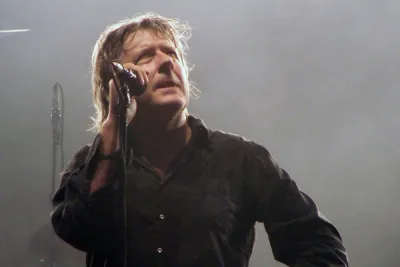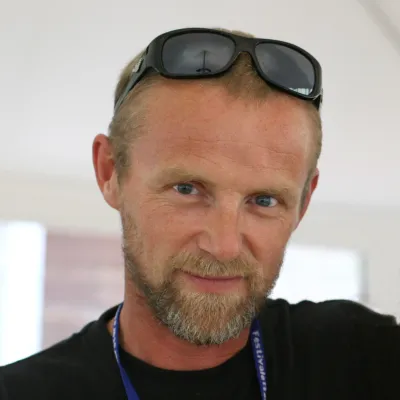
Jo Nesbø
Human Design Chart
Biography
Nesbø played top-flight football (soccer) for Molde FK until he tore the cruciate ligaments in his knee, and had to concentrate on other aspects of his life. Nesbø is a dedicated rock climber and has climbed sport routes up to French grade 7c.
In addition to his career as an author, Nesbø was also the main vocalist and songwriter for the Norwegian rock band Di Derre. He lives close to his former wife and their daughter in Oslo.
The Human Design of Jo Nesbø: Generator 6/2
Generator 6/2 — Design at a Glance
Jo Nesbø revealed himself as someone who unfolds his power not through self-driven initiative, but through quick reactions to external impulses. As a Generator, he had an enormous, sacral energy base - comparable to a durable workhorse that only brings its full performance when it knows for what it is working. This energy, however, is not released through initiatives but exclusively through reacting to signals from the environment. His strategy was to wait for an impulse and then respond from the gut when the internal signal said 'yes'.
This design contained two specific stumbling blocks. First, the risk of investing energy in tasks that did not find an inner resonance, leading to long-term exhaustion. Second, the risk of being held back from his heart project, even though the inner driving force was still fully present. Living in harmony with this mechanism - that is, reacting rather than initiating - he was impetuous and effective. The reward for this was a deep sense of fulfillment. If he missed this path and tried to start things independently without a prior impulse, it often led to ongoing frustration and a noticeable lack of energy. His success therefore did not depend on constant activity, but on the quality of his reactions to the life that came to him.
Emotional Authority
Jo Nesbø's design showed a tendency towards emotional volatility that significantly shaped his decision-making. His system was configured such that the Solar Plexus Center served as the inner authority. In Human Design mechanics, if the Solar Plexus Center is defined, it always takes on the role of the inner authority, regardless of other defined centers in the chart.
This configuration generates a permanent emotional wave. Jo Nesbø exhibited a constant up and down of emotions, where the perception of the world was always colored by the current mood. What appeared inspiring in one moment could be seen as negative in the next. This immediate emotional reaction only provided a snapshot, not necessarily the deeper truth. Quick, spontaneous decisions made in this emotional heat carried the risk of negative repercussions.
Therefore, his authority mechanism required strategic delay. The more time Jo Nesbø took to let decisions mature, the clearer the inner truth became. The process demanded patience and the conscious reflection of important questions. Through waiting, the intense feelings subsided, emotional distance gained strength, and calmness set in. Only when this process was complete did clarity emerge. This strategy was particularly crucial for long-term, life-changing decisions, as it ensured the quality and sustainability of the decision made.
The 6/2 Profile — Role Model / Hermit
Jo Nesbø revealed himself as someone who structured his life experience into two clearly distinct phases: an early period of intense experimentation and a later epoch of detached reflection. In his younger years, before the return point of Saturn, his 6/2 line functioned like a 3-line. This meant that his path was marked by trial and error; he gathered numerous personal experiences, withdrew after mistakes, and learned through direct confrontation with reality.
Around the age of 30, the sixth line was activated. Jo Nesbø metaphorically retreated into a 'cave' to look back at his past experiments with great distance. This phase served for intense introspection, healing, and deep self-awareness. From this isolation, he emerged later as a wise person, ready to share his life wisdom. Others sought him out to learn from his ability for deep self-reflection.
This development is underpinned by the specific energies of his lines. The sixth line in Gate 17 represents completed succession and leadership, similar to a Bodhisattva who only expresses an opinion when asked. It marks the end of a learning process without a cycle. Simultaneously, the second line in Gate 38 is active, showing resistance without violating behavioral norms. This energy is discreet, intuitive, and serves for self-defense. It overcomes the fear of death and allows a clear, if reserved, position to be taken even in difficult collective processes.
Triple Split Definition — Defined & Open Centers
Jo Nesbø's design is characterized by a blend of mental intensity and physical vitality. His defined Head and Ajna Centers created a constant internal pressure to question and understand connections. This state was not a choice but a mechanical given: his mind was always active, conceiving theories and seeking answers. Simultaneously, he had a defined Heart Center, which endowed him with a clear willpower and a need to control his resources. He enjoyed working independently to express his ego and keep promises, which gave him self-esteem.
This mental and willful structure contrasted with his open centers. His open G Center meant he did not have a fixed, unchanging identity but rather formed through interaction with his environment and the right places. He tended to reflect in relationships or environments that did not fit him, causing confusion until he waited for initiation by others. His open Throat Center showed a vulnerability to the pressure to gain attention. Instead of speaking spontaneously, he might try to be noticed through targeted actions or words, often leading to frustration when the words did not come from his own truth. Additionally, his open Root Center absorbed external stress from the environment. This foreign pressure could be experienced as inner restlessness or haste, a feeling that he constantly had to do or achieve something to escape the pressure, even though it did not originate from him. The challenge lay in accepting the mental pressure without turning it into hasty actions and recognizing external stress without being driven by it.
Channels for logic, intimacy and devoted strength.
Jo Nesbø's design is characterized by a blend of logical rigor with instinctive business acumen and emotional intensity. His mind was not a passive observer but an active filter constantly searching for patterns. The Logic Channel 63-4 connected the Head Center with the Ajna Center, ensuring that doubt served as an essential part of knowledge. Here, skepticism was not seen as paralysis but as a tool to eliminate unfounded beliefs and accept only what proved consistent and verifiable. This mechanism drove him to question and formulate answers until they were logically sound – a process that often fostered collective benefit by creating clarity in future prediction.
Parallel to this, the Devotion Channel 26-44, connecting the Spleen Center with the Heart Center, endowed him with entrepreneurial intelligence: the ability to instinctively recognize what the market or collective needed before it was consciously realized. This was about a form of 'selling' where willpower and an instinct for how to address egos combined to present improvements or products convincingly. Jo Nesbø could thus use his gifts to generate resources, waiting for confirmation from the tribe to use his platform.
The emotional depth and potential for intense relationships were determined by the Partnership Channel 59-6. This channel connected the Sacral Center with the Solar Plexus Center and rooted itself in the power of intimacy. Sexuality and the emotional wave of pleasure and pain created a basis for relationships that were personal and penetrating. The challenge lay in waiting for the emotional wave to gain clarity rather than causing confusion through spontaneous reactions. This combination of logical doubt, instinctive marketing, and emotional intensity formed a complex but coherent energy aimed at penetrating patterns, fulfilling needs, and forming deep connections.
Tribal Circuitry — Circuit Signature
Jo Nesbø's design inclined towards structured, logical analysis, manifesting in three separate, parallel operating energy fields. First, the Understanding Circuit connected the Head with the Ajna Center. This created a direct flow for rational insights and strategic thinking, free from emotional coloring, aimed at improving things or leading into the future.
Second, the Ego Circuit operated through the Heart and Spleen Centers. Here, it was not about individual ego but tribal dynamics: cooperation and the joint creation of resources. The energy of this connection fostered mutual support and material security, but required pauses, as there was no direct connection to the constant life force of the Sacral Center.
Third, the Warrior Circuit, connecting the Sacral with the Solar Plexus Center, brought in primal energies of survival and protection of one's genetics. It encompassed themes like pairing, care, and preservation of family, driven by instinctive impulses and strong, wave-like emotions.
These three groups – Logic/Strategy, Resources/Cooperation, and Protection/Instinct – were energetically isolated in Jo Nesbø. They formed no cohesive experience but existed as separate, parallel potentials, each setting its own focus in his life.
Left Angle Cross of Upheaval 1
Jo Nesbø's design points towards a tendency for profound, often abrupt transformation processes. This configuration, known as the left cross of the 1st Reformation, does not describe a linear development but rather cyclical phases in which old structures irreversibly break down to make way for something new. It is an energy that does not tolerate stagnation but instead advances through radical change.
For Jo Nesbø, this means that his path was not marked by gradual adaptation but by moments when the entire orientation of his life or work shifted. The left cross of the 1st Reformation acts like an inner compass pointing towards transformation once the old has lost its function. This is not about arbitrary chaos but a necessary dissolution, often felt as a crisis, but ultimately serving renewal.
This mechanism is evident in Jo Nesbø's ability to not cling to outdated patterns during phases of reform but to use the power to reshape himself. The energy of this cross demands courage to let go of the familiar, even if the future seems unclear. It is a process of dying and being reborn, deeply rooted in his design, enabling him to move repeatedly in new directions without losing his own identity.
Saturn Return · Uranus Opposition · Chiron Return · 2nd Saturn Return — Life Cycles
Jo Nesbø showed a development line where inner structure and external recognition increasingly converged. His design suggested that personal stances should be confirmed through concrete results in the public sphere. In 2000, at the age of 40, he received the Norwegian Book Trade Prize. This period coincided with the Uranus opposition, a phase where long-held ambitions often materialize through unexpected opportunities or sudden life changes. The success here was less a matter of chance than the logical consequence of being open to new structures.
Ten years later, in 2010 at the age of 50, the Chiron return followed with the Palle Rosenkrantz Prize for “Panserhjerte”. This cycle marks not a healing but a bloom: what Jo Nesbø understood as his core purpose now came into full clarity. His work was not only seen but recognized as an expression of his true life mission. The success confirmed that he had consistently followed his path.
In 2017, at the age of 57, he experienced the premiere of the film adaptation of “Snowman”. This occurred during the second Saturn return, a phase of maturation and conclusion. Here, it was no longer about the first breakthrough but about confirming his own position. The film adaptation symbolized how his private creations were translated into the public sphere and left lasting impressions. His design shows a person who, through constancy and adaptability, anchored his impact over time.
Generator · Emotional Authority — Synthesis
A central red thread in this design is the deep connection between energy and inner truth-seeking. The sacral energy of the Generator (Design View) is channeled through emotional authority (Authority), leading to a process that requires time and the endurance of emotional waves. This process is not linear but marked by experimentation and the subsequent withdrawal for reflection (Profile Role), to gain wisdom that can then be shared. The defined Head and Ajna (Centers) reinforce this inner drive to question patterns and draw logical conclusions (Channels/Gates), emphasizing the ability for deep analysis and understanding of complex connections.
The central paradox lies in the tension between the need for profound emotional maturation and the drive to find logical clarity. The emotional wave (Authority) creates an inner dynamic that makes quick decision-making difficult, while the channel of logic (Channels/Gates) constantly seeks consistency and proof. This apparent discrepancy is further emphasized by the cycles (Cycles), which show both successes and periods of inner transformation, pointing to a lifestyle marked by inner work and the sharing of insights.
3 Defined Channels
Incarnation Cross - Left Angle Cross of Upheaval 1
Solar Return
The Solar Return shows the moment when the sun returns to its exact birth position - your personal solar year.
Life Cycles
Discover the life cycles with a detailed triple view (birth chart, cycle chart, composite).
Human Design Profile
- Type
- Generator
- Strategy
- To respond - wait for something to respond to
- Authority
- Emotional Authority
- Profile
- 6/2 - Role Model / Hermit
- Definition
- Triple Split
- Incarnation Cross
- Left Angle Cross of Upheaval 1
- Date of Birth
- 29.03.1960 12:50
- Place of Birth
- Oslo, NOR
Frequently Asked Questions
What is Jo Nesbø's Human Design type?
What Profile does Jo Nesbø have in Human Design?
What Authority guides Jo Nesbø's decisions?
Which incarnation cross is active for Jo Nesbø?
When was Jo Nesbø born?
Discover your own Human Design
Are you also a Generator? Find out in a personal reading how to use your sacral energy correctly and discover deep satisfaction.
More Personalities
Back to overviewAaliyah

Alexia

Angèle

Anne-Marie

Arcángel

Arno