
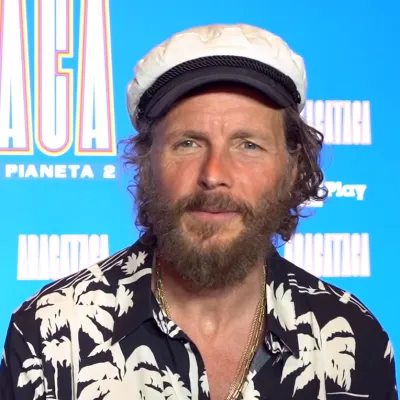
Jovanotti
Human Design Chart
Biography
Jovanotti gradually departed from his early mix of hip hop, rap and disco, taking in funk, world music and even classical arrangements and ska influences. As his musical influences changed, so too did his lyrics, which over time began to increasingly address philosophical, religious and political issues, which are more typical of the Italian cantautore tradition. His social and political commitment increased as well. Some of his earlier work is also closer to keyboard-heavy 1980s pop.
Most of his songs are sung in Italian; he also released a Spanish-language greatest hits album. His live album includes a short version of the Sugarhill Gang's "Rapper's Delight." Jovanotti appears on several international compilations, most notably Red Hot + Rhapsody, a 1998 tribute to George Gershwin, on which he performed "I Got Rhythm". Jovanotti appeared in one of Luciano Pavarotti's charity concerts in 1996.
The Human Design of Jovanotti: Manifesting Generator 6/2
Manifesting Generator 6/2 — Design at a Glance
Jovanotti was revealed as someone who possessed a constant energy source that allowed him to attract things quickly and skip steps. This design is a hybrid of Manifestor speed and Generator energy: With the defined Sacral Center, he had the power typically associated with Generators, but additionally, his active connection between Motor Centers and Throat Center enabled direct action.
However, this configuration brought specific challenges. The speed led to important steps being skipped at times, which inevitably required catching up and caused frustration – the classic non-self theme of this type. Furthermore, Jovanotti tended to pursue multiple projects simultaneously as he reacted to various impulses. Without applying the correct strategy of 'reacting rather than initiating', his creative drive quickly turned into overload.
The key was to start only when the Sacral Center gave a clear 'yes' and inner authority agreed. When these conditions were met, Jovanotti found deep satisfaction in his work. In this state, it wasn't an issue for him to work on different tasks simultaneously; rather, switching between projects promoted his necessary 'play mode', keeping his energy flowing instead of stifling it through monotonous focus.
Sacral Authority
Jovanottis decision-making was primarily oriented towards physical resonance within the body, not intellectual deliberation. His design saw the defined Sacral Center as central authority and thus took precedence over all other defined centers. This meant: Waiting for external stimuli and reading the 'gut feeling'.
The mechanics of sacral authority, unique to the Generator type, greatly simplify this process. It manifests through physical signals like a grunt, an 'mm-hm', or a noticeable surge of power as a direct response to a question or situation. Positive resonance generated vital energy and enthusiasm, allowing tasks to be carried out with joy and without rigid purposefulness.
Supporting this was the active Spleen Center, likely connected to the Sacral Center, functioning as an additional instance for quick, instinctive reactions. This gave Jovanotti immediate access to his physical well-being. He could reliably orient himself towards this instinctual perception, enabling spontaneous decisions. The authenticity of his actions thus always lay in the physical confirmation – vitality versus emptiness – in response to external impulses, independent of mental considerations.
The 6/2 Profile — Role Model / Hermit
Jovanottis development proceeded through two clearly distinguishable phases, driven by the dynamics of his 6/2 Profile. In youth, a process of experimental 'trial and error' dominated. Here, the sixth line temporarily acted like a third: Jovanotti sought answers through direct action and gathered diverse life experiences to learn from them. Mistakes were not only allowed but necessary for gaining insight.
This pattern fundamentally changed with Saturn's return, typically occurring before the 30th birthday. From this point on, the actual energy of line 6 (Gate 46) was activated. Jovanotti showed a tendency to withdraw – metaphorically into a 'cave' – to look back at his earlier experiments from a distance. This phase was characterized by intense reflection, healing, and deep self-awareness. Line 2 (Gate 52) brought themes of consideration, concentration, and occasional egoistic pauses as protective mechanisms.
From this period of introspection emerged an attitude of wisdom and integrity. Jovanotti developed into a figure distinguished by insight and the ability for deep self-reflection. Others could recognize this clarity; it became a role model that worked not through instruction but through lived experience and understanding others' essence. The path led from impetuous experimentation over painful withdrawal to the role of wise teacher, helping others find their own way.
Split Definition — Defined & Open Centers
Jovanotti revealed himself as someone whose inner architecture was marked by constant, mechanically reliable inspiration. His design indicated a tendency towards persistent mental pressure to ask questions and form concepts – a process that ran continuously through his defined Head and Ajna Centers. However, these thoughts never occurred in a vacuum; they were translated into clear communication via his defined Throat Center. Jovanotti possessed the ability to express directly what he had understood, with his voice serving as a pivot point for mental content to become effective in the world.
This expressive capacity rested on a stable identity and available vital energy. His defined G Center provided him with a firm sense of self-understanding and clear direction, while the defined Sacral Center acted as a motor. It generated a reliable daily amount of energy that was released only through correct reactions to external requests rather than initiatives. This was complemented by his defined Spleen Center, which gave him spontaneous intuitive body awareness and a sense of well-being in the moment.
In contrast to this inner stability stood the openness of his emotional, willpower-related, and stress-related centers. His open Heart Center meant that he wasn't designed to prove his willpower or keep promises to validate his worth; instead, he tended to get caught up in spirals of self-doubt when trying to be competitive. The open Solar Plexus Center made him receptive to the emotions of his environment. He absorbed these and amplified them without identifying them as his own – a mechanism that could lead him to personalize emotional waves from others or avoid confrontations out of fear of rejection. Similarly, his open Root Center absorbed stress and adrenal impressions from the environment. Jovanotti was geared towards taking on this external pressure, making him vulnerable to overload when he tried to follow this non-self-driven urging rather than recognizing that this stress did not originate with him.
Channels for inspiration, rhythm, intuition and abstraction.
Jovanotti exhibited a fundamental approach aimed at publicly being an example of his individual identity through authentic living. His impact arose less from explanatory words than from the exemplary demonstration of his uniqueness, which encouraged others to live out their own creativity.
This dynamic was significantly shaped by the Channel of Inspiration 1-8, connecting individual self-expression with contribution to community. Jovanotti was designed to gain attention by fully expressing his unique nature and thereby mutating the perspective of his environment. This required courage to stand apart from the masses and trust in an inner authority rather than social adaptation.
Additionally, the Channel of the Beat 14-2 linked material resources (Gate 14) with higher knowledge about direction (Gate 2). This endowed him with the ability to initiate innovative directions and support others in their creative development by simply trusting life and responding. The Channel of Brainwave 57-20 added intuitive insight (Gate 57), communicated clearly in the present moment (Gate 20). This allowed Jovanotti to spontaneously express penetrating self-awareness and encourage others to awaken their inner survival intelligence.
Mentally, the Channel of Abstraction 64-47 filtered experiences through a kaleidoscope of mental images (Gate 64) to understand patterns (Gate 47), driving him to find stories and reveal new perspectives, even if this initially caused confusion. This profile was complemented by Gate 46, promoting full commitment and presence in the here and now; Gate 52 required pausing concentration for pattern correction; Gate 58 brought pressure and humor into play; Gate 25 introduced mystical innocence; Gate 4 sought logical formulas for the future; Gate 28 evaluated risks in the present; Gate 45 expressed tribal energy; Gate 56 stimulated mental storytelling, and Gate 43 enabled breakthroughs of individual insights through spontaneous communication.
Individual Circuitry — Circuit Signature
Jovanotti revealed himself as someone whose creativity pulsed and was acoustically marked. His design connected identity with Throat, Spleen, and Sacral Centers in the Knowledge Circuit, generating an energy of 'now' that generated new insights through mutations and flashes of inspiration. The Channel 20-57 promoted innovative impulses while the Channel 8-1 provided inspiration. Together with the Beat Channel (2-14), this created a rhythmic expression emphasizing individual identity and initiating transformation. This connection allowed him to carry knowledge emotionally filtered through the Throat Center.
Parallel to this, there was a separate energetic group: Head and Ajna Centers were connected in the Meaning Circuit. Here it wasn't about the acoustically creative area but reflecting on the past. The Channel 64-47 enabled abstraction, translating past experiences into visual or emotional patterns. These two groups – the pulsing knowledge flow and cyclic meaning-making – existed side by side without direct energetic exchange. Jovanotti's expressive power thus stemmed from the interplay of inspired newness and reflected oldness, with each area following its own logic: one created through deviation, the other organized past experiences.
Left Angle Cross of Healing 2
Jovanotti revealed himself through a profound orientation towards inner work and the process of transformation. His design suggested that identity for him was not a static state but an ongoing act of healing and transformation. The central motivation lay in not ignoring pain or feelings of incompleteness, but actively penetrating them to gain new insights.
This trait stems from the influence of the 'Left Cross of Healing 2'. This configuration describes a life task aimed at understanding wounds and transforming them into wisdom. It is not about superficial repair but about fundamental change through awareness of one's vulnerabilities. Jovanotti was marked by seeing life as a path where inner work takes precedence. Through engaging with his own fractures, he could continue to develop and serve as a mirror for others. The energy of this cross supports an attitude of humility and learning from experience, where transformation arises through acceptance and deep reflection.
Saturn Return · Uranus Opposition · Chiron Return · 2nd Saturn Return — Life Cycles
Jovanotti's design showed a tendency towards consolidation when the experimental youth phase ended and a stable adult identity took hold. This was evident in 1997: At age 31, he released the World Music album *Lorenzo 1997 - L’Albero*. For his design, this marked a typical moment of the first Saturn Return cycle, signaling the transition into the phase of responsibility. Years of groundwork condensed into a solid result that not only had artistic merit but also shaped his identity. The cycle poses questions about lasting legacy and forces one to grapple with what truly endures. Jovanotti used this mechanism to strengthen his role and take a clear stance. The release was not an isolated event, but the expression of inner maturation supported structurally by Saturn's influence. It was about stepping out of uncertainty and creating something enduring. This phase leaves a lasting imprint on life as it lays the groundwork for future developments. Jovanotti showed himself to be someone who embraced this challenge and brought his creativity into a stable form. The Saturn Return cycle acts like a filter, separating what is essential from the rest. Thus emerged a work that resonated both personally and publicly. It marked the beginning of a new quality in creation based on security and clarity.
Manifesting Generator · Sacral Authority — Synthesis
Jovanotti's design reveals a central thread of dynamic adaptation and transformative expression. As an Manifesting Generator with Sacral Authority, he lives in a constant flow of reaction and initiation, where his connection to the Throat Center gives him an accelerated ability to set energy into motion. This is reinforced by the defined G-Center, which provides clear direction while open centers like Heart and Root make him receptive to external influences – a continuous intake and transformation of energies. The prominent channels of the Knowledge Circuit (Lightning Strike, Inspiration, The Beat) underscore his ability to generate new perspectives and express them authentically through the Throat Channel, especially when he is in 'play mode'.
A central paradox lies in the tension between his fast, initiating energy as a Manifesting Generator and the need to respond to life as demanded by his Sacral Authority. This dynamic is further intensified by the openness of the Root Center, making him vulnerable to external pressure while simultaneously destined to transform this into creative energy. He navigates thus between the urge for rapid implementation and the necessity to wait for the right timing – a dance between action and reaction that defines his life force.
4 Defined Channels
Incarnation Cross - Left Angle Cross of Healing 2
Solar Return
The Solar Return shows the moment when the sun returns to its exact birth position - your personal solar year.
Life Cycles
Discover the life cycles with a detailed triple view (birth chart, cycle chart, composite).
Human Design Profile
- Strategy
- To respond - wait for something to respond to
- Authority
- Sacral Authority
- Profile
- 6/2 - Role Model / Hermit
- Definition
- Split Definition
- Incarnation Cross
- Left Angle Cross of Healing 2
- Date of Birth
- 27.09.1966 06:50
- Place of Birth
- Rome, Italy
Frequently Asked Questions
What is Jovanotti's Human Design type?
What Profile does Jovanotti have in Human Design?
What authority does Jovanotti have?
What is Jovanotti's incarnation cross?
When was Jovanotti born?
Discover your own Human Design
Are you also a Manifesting Generator? Find out in a personal reading how to unfold your multi-talents and direct your energy wisely.
More Personalities
Back to overviewAaliyah

Aldair

Alexia

Alizée

Angèle

Angeli
