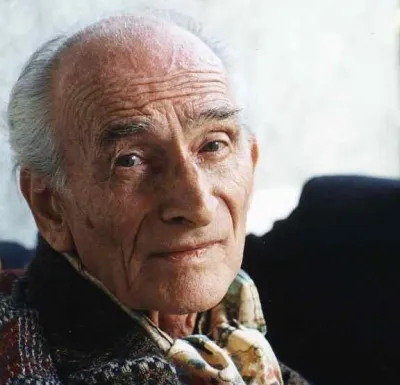
Konstantin von Neurath
Human Design Chart
Biography
At Nurnberg, Neurath was included among the major war criminals and given 15 years prison. Released in 1954 on health grounds, he died on 14 August 1956 in Enzweihingen, Germany.
Konstantin von Neurath as a Manifesting Generator 1/4 in Human Design
Manifesting Generator 1/4 — Design at a Glance
Konstantin von Neuraths Human Design fosters a tendency towards hybrid action capability. As an Manifesting Generator, he had constant sacral energy that enabled him to swiftly draw things into his life and skip steps in the process. This speed was, however, a double-edged sword: it allowed for efficient forward movement but also carried the risk of overlooking important stages, often leading him back later to catch up on missing foundations. Such feedback loops could cause frustration as they questioned his own efficiency.
Moreover, his system tended to pursue multiple impulses simultaneously and handle diverse projects in parallel. This worked smoothly only when he strictly responded to inner signals – that is, acted after the sacral center gave a clear “yes”. Without this reaction to life impulses, his creative drive quickly turned into overburdening. With correct application of this strategy, however, he found deep satisfaction. His design promoted a play mode where variety and parallel work served not as distractions but as sources of vital energy. The challenge always lay in respecting inner authority to use his unique speed constructively rather than sabotaging it through unchecked initiation or ignoring warning signals.
Sacral Authority
Konstantin von Neuraths decision-making was characterized by direct, physical resonance. As a Generator, he had sacral authority, meaning that his strategy and internal guidance were identical: he responded to external stimuli. This configuration simplified his process as he did not have to choose between different inner voices but listened to one source.
A prerequisite for this clarity was his open emotional center. His answers came from the gut – as a surge of power or an instinctive “yes” or “no”. When this reaction showed, he felt vital and energized; without it, enthusiasm was lacking. He lived to perform tasks with joy and without external compulsion.
Additionally, his activated spleen center acted as a supportive instance. Through the connection to the sacral center, he could react particularly quickly and spontaneously to situations. This direct access to his instinctive perception allowed him to make rapid decisions and reliably orient himself by physical well-being. His actions did not arise from prolonged thinking but from a quick, intuitive bodily response to the respective life environment.
The 1/4 Profile — Investigator / Opportunist
Konstantin von Neuraths design fosters a tendency towards deep research that always carries the desire for a familiar community. As a 1/4 profile, he sought not only isolated knowledge but longed to share insights with a closely connected group. This configuration created a tension: the urge for thorough analysis conflicted with the fear of being exposed as unknowledgeable before his loved ones and thus suffering heartache. A loving environment with deep trust was therefore essential for him so that his abilities could come into their own.
This mechanism was reinforced by specific energies. The line 1 at Gate 13 promoted empathy and listening, but also allowed him to absorb secrets from various sources. This openness could be burdensome as it often linked the motivation of others with his own interests. At the same time, the line 4 at Gate 1 shaped his work through a need for solitude as a medium of creativity. Only in this isolation, far from external influences, could he develop innovative mutations and achieve transpersonal harmony. His path lay in connecting this creative loneliness with the ability to build authority in heart themes through deep knowledge – always dependent on whether the necessary trust of his reference persons was present.
Single Definition — Defined & Open Centers
Konstantin von Neuraths design points to a tendency towards clear communication stemming from his own identity. His defined G Center provided him with a firm sense of self and direction; he knew who he was and where he stood. This inner security flowed into his defined Throat Center, which served as the pivot point for carrying this identity outward through speech or action. Thus, his voice spoke not out of mere intellectual speculation but from a reliable core of self-love and orientation.
As a Generator with a defined Sacral Center, Neurath had an enormous source of generative energy. However, his drive did not come from initiatives he started himself, but rather through reactions to external impulses. The strategy was to wait until life asked or invited him, then hear the immediate sacral response – an inner yes or no. Only with a confirming reaction would full energy be available to fulfill tasks with endurance and satisfaction. Initiating actions without this confirmation quickly led to resistance and exhaustion.
At the same time, Neurath was vulnerable to conditioning through several open centers. His open Head Center could push him into mental confusion or pressure to find answers to questions that were not his own. While his open Ajna Center allowed flexible thinking, it also tended to adopt foreign concepts as personal truth. Most critically, his open Heart Center often drove him to prove his worth through promises and willpower despite lacking the consistent energy for this, leading into a cycle of overextension and self-doubt when failing to meet expectations. Additionally, his open Solar Plexus and open Spleen absorbed others' emotions and fears, making him prone to clinging to uncertain situations or making spontaneous decisions out of fear rather than trusting his inner authority.
Channels for logical leadership and powerful manifestation.
Konstantin von Neuraths design points towards collective, logical leadership paired with a strong, impulsive life force. This combination shaped him as someone who could exert influence but was dependent on the approval of his environment.
The Alpha Animal Channel 7-31 connects his G Center to his Throat Center, creating an ability for logical guidance based on tested patterns and trends. His voice carried weight, yet his leadership role – often described as a 'power behind the throne' – only worked when invited by the majority. He could show the way but had to wait until others were ready to follow; absolute authority was not available to him, rather an influence from an acknowledged position.
Simultaneously, the Charisma Channel 34-20 acted within him, connecting the raw physiological energy of his Sacral Center (Gate 34) with the expression center in the throat (Gate 20). This gave him a quick, manifesting power that often pushed him to act immediately. Without inner guidance, however, this energy could appear chaotic or obsessive. His success depended on directing his generative power towards things he truly said 'yes' to rather than being led by external expectations.
Additionally, Gates like 1 (Uniqueness), 2 (Receptivity), and 5 (Rhythm) contributed to him taking new perspectives and seeking his own life rhythm. Gate 13 promoted reflection on collective experiences while Gate 29 strengthened his Sacral Center through persistence and the right 'yes'. This structure showed someone navigating between the urge for immediate action and the need to be logically recognized, with energy that was impressive but required balancing impulsive manifestation with waiting for collective invitation.
Individual Circuitry — Circuit Signature
Konstantin von Neuraths design points towards strategic clarity and pragmatic expression. As a person with simple definition, he had a coherent energetic flow directly connecting his Throat Center to his Sacral Center, creating a stable basis for action-oriented communication.
The Understanding Circuit worked through the Alpha Animal Channel, linking his Throat and Identity Centers. This promoted the ability to articulate logical structures and strategic visions free of emotional coloring. He was someone who shared rational insights to spark societal or organizational improvements, focusing on visual perception and formulating future-oriented plans.
Parallelly, the Integration Circuit operated via the Charisma Channel connecting his Throat Center with his Sacral Center. This channel conveyed an acoustic presence based on intuitive knowledge and reaction to immediate life. Konstantin von Neurath could draw strength from interaction and make it effective in the present moment. The connection of both circuits through the Throat Center allowed him to combine strategic intelligence with robust, survival-ensuring activism. His energy flowed directly from rational planning into verbal and active implementation, resulting in high individual efficiency in dealing with daily life challenges.
Right Angle Cross of the Sphinx 1
Konstantin von Neuraths Human-Design profile is characterized by a specific static configuration: the right cross of the Sphinx. This structure does not imply dynamic action competence or strategic life tasks but rather defines a fixed internal state. It was not a tool for actively shaping the external world, but rather an indication of a certain quality of being that exists independently of external events.
In Human-Design terminology, such crosses do not describe patterns of action but deeper archetypal stances. The right cross of the Sphinx represents a kind of inner stability and endurance that is not forced by willpower but is present as a fundamental tone of character. It is an energy that was more observed and carried than actively steered or changed. Konstantin von Neurath lived with this constant internal imprinting, which gave him a certain constancy without his having to consciously apply it as a strategy. It simply was there – like a fixed point on the compass of his nature – influencing his reactions and existence in subtle but consistent ways. This configuration did not demand a specific life task in terms of 'achieving something,' but rather provided a framework for experiencing durability and inner peace amidst change.
Saturn Return · Uranus Opposition · Chiron Return · 2nd Saturn Return — Life Cycles
Konstantin von Neuraths Human-Design profile indicated a tendency towards long-term structuring and the acceptance of societal responsibility. This imprinting was evident in two key phases of his life, coinciding with Saturn Returns – cycles where internal maturity often manifests through external commitments.
In 1901, at age 28, Neurath married Marie Auguste Moser von Filseck. This step marked his first Saturn Return. During this phase, years of emotional and social groundwork often condensed into a stable, sustainable partnership. The marriage was not just an accident but an expression of the maturing ability to bind oneself durably to others and build shared structures.
Thirty years later in 1932 at age 59, he became Reichsminister for Foreign Affairs. This coincided with his second Saturn Return. This cycle represents a test of previously lived values leading often to consolidation of professional identity or a peak of public responsibility. Neuraths appointment to the highest diplomatic position demonstrated how his design integrated the burden of authority and the necessity of working within established systems. Both events underscored a life marked by phase-wise deepening of commitments and power structures, with each Saturn Return reinforcing a new level of responsibility.
Manifesting Generator · Sacral Authority — Synthesis
Konstantin von Neurath lived a life deeply influenced by the dynamics of a Manifesting Generator. His sacral energy (defined Sacral Center) provided constant driving force, but his connection to the Throat Center (communication and manifestation) inclined towards quick action. This pattern was evident in his ability to advance initiatives with a focus on logical leadership (Channel 'The Alpha Animal'). The Profile role of Researcher/Networker amplified this trait by creating a deep desire for knowledge and its dissemination to others – always with the wish to influence through understanding.
A central paradox in his design lay in the interplay between speed and thoroughness. While the manifesting component encouraged skipping steps, Line 1 of the Profile demanded intensive exploration and analysis. This may have led to internal tension between the urge to push things forward quickly and the necessity for well-founded decisions – a field of tension that manifested at key moments in his life (relationships, career).
2 Defined Channels
Incarnation Cross - Right Angle Cross of the Sphinx 1
Solar Return
The Solar Return shows the moment when the sun returns to its exact birth position - your personal solar year.
Life Cycles
Discover the life cycles with a detailed triple view (birth chart, cycle chart, composite).
Human Design Profile
- Strategy
- To respond - wait for something to respond to
- Authority
- Sacral Authority
- Profile
- 1/4 - Investigator / Opportunist
- Definition
- Single Definition
- Incarnation Cross
- Right Angle Cross of the Sphinx 1
- Date of Birth
- 02.02.1873 20:00
- Place of Birth
- Vaihingen an der Enz, GER
Frequently Asked Questions
What was Konstantin von Neurath's Human Design type?
What Profile did Konstantin von Neurath have in Human Design?
What Authority guided Konstantin von Neurath?
When was Konstantin von Neurath born?
Discover your own Human Design
Are you also a Manifesting Generator? Find out in a personal reading how to unfold your multi-talents and direct your energy wisely.
More Personalities
Back to overviewAldair

Alizée

Angeli
Arletty
Artus
Balthus