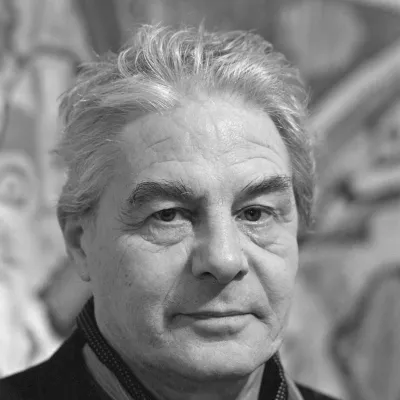
Leonard Cohen
Human Design Chart
Biography
Cohen pursued a career as a poet and novelist during the 1950s and early 1960s, and did not begin a music career until 1966. His first album, Songs of Leonard Cohen (1967), was followed by three more albums of folk music: Songs from a Room (1969), Songs of Love and Hate (1971) and New Skin for the Old Ceremony (1974). His 1977 record Death of a Ladies' Man, co-written and produced by Phil Spector, was a move away from Cohen's previous minimalist sound.
In 1979, Cohen returned with the more traditional Recent Songs, which blended his acoustic style with jazz, East Asian, and Mediterranean influences. Cohen's most famous song, "Hallelujah", was released on his seventh album, Various Positions (1984). I'm Your Man in 1988 marked Cohen's turn to synthesized productions.
Leonard Cohen — Manifestor with Profile 6/2
Manifestor 6/2 — Design at a Glance
Leonard Cohen's design established him as a pioneer and visionary whose core task was to lead the world into a new direction without direct execution. His character bore the traits of an emperor in ancient Rome: He had the vision of a great empire but did not fight the necessary battles himself; instead, he sent others to conquer foreign lands for him. This role brought with it a specific conflict. Since his thoughts often reached further than those around him, he was misunderstood and polarized. His visions were loved by some who followed him, while others hated or rejected them precisely because of their grandeur.
To navigate this dynamic, it was crucial for him to filter his followership through timely and accurate communication about his plans. This strategy served to bind the right people to him. Living according to this design and consistently informing led to a feeling of inner peace as a reward. Violating his design by failing to inform resulted in an ongoing, deep-seated anger within him. His path was thus marked by the tension between his leading vision, the inevitable misunderstanding by others, and the necessary communication for achieving emotional balance versus inner irritability.
Emotional Authority
Leonard Cohen exhibited a basic attitude where spontaneous reactions were seen as unreliable and decisions required conscious time. His design dictated that he did not act out of the moment but waited for an internal clarity only reachable through distance from current emotions. This resulted from his emotional authority: Since his Emotional Center was defined, he was subject to a permanent wave of ups and downs in feelings. The world appeared colored by his current mood – sometimes enthusiastic, sometimes negative. A quick decision based solely on this fleeting moment would not be grounded in his true truth. Quick reactions out of emotion often had negative consequences.
The mechanics of his authority required patience and the conscious “sleeping over” of decisions. The longer he waited, the deeper he could see. Intense feelings subsided with time, emotional distance grew, and calmness set in. Only then was the process complete and the decision clear. This priority rule applied regardless of other defined centers in his chart; the emotional wave determined the rhythm of his inner truth. Leonard Cohen therefore took his time properly, asked himself multiple times, and used it to transition from the emotional wave to lasting clarity. This shaped especially long-term life decisions where a comprehensive insight was needed beyond just momentary understanding.
The 6/2 Profile — Role Model / Hermit
Leonard Cohen's design established a clear evolutionary arc from experimental error to wise distance. In his younger years, before age 30, the energy of the third line dominated his profile “Role Model / Natural Talent”. This showed as intense experimentation and the principle of trial and error. Necessary retreats after failures were not signs of weakness but driving elements of his early development.
Around age 30, the sixth line was activated. Leonard Cohen likely withdrew deeply – a phase described as “Cave on the Mountain”. Here he looked back with great distance at his earlier experiments. This time served intense reflection, healing, and self-discovery. The sixth line represents the highest form of reason and life as sacred; it seeks to control emotionality and set conditions to establish peace and justice.
From this inner synthesis emerged an emergent wisdom. Leonard Cohen later emerged from this retreat. Other people recognized this wisdom and came to him to partake in his insights about life. They learned from his ability for deep introspection. The connection of the second line, marked by individuality and extreme rhythms, created a broad range of experiences that now culminated in modest, correct action. Leonard Cohen thus became a role model whose wisdom arose from processing his own errors.
Split Definition — Defined & Open Centers
Leonard Cohen's design inclined towards a reliable presence with emotional depth. His defined G Center gave him a firm identity and clear inner direction, while the also defined Throat Center translated this orientation into consistent communication. He spoke not from fleeting moods but from an authentic center. This stability was complemented by his defined Spleen Center, which granted him intuitive presence in the moment – spontaneous knowledge of what was healthy and right without needing to rationalize it. Additionally, the defined Root Center provided the necessary pressure to advance in the world and master existential challenges.
However, his defined Solar Plexus Center as an inner authority imposed a critical condition: truth revealed itself only with time. Leonard Cohen was designed to wait for emotional waves before acting or deciding. Impulsive action contradicted his mechanics; clarity emerged when the emotional charge subsided.
Simultaneously, his open centers marked areas of situational receptivity. The open Head and Ajna Centers freed him from the pressure to be constantly inspired or logically coherent. He tended to perceive mental confusion as a foreign phenomenon rather than solving it himself. Particularly influential were the open Heart and Sacral Centers. The lack of a constant will center relieved him of the need to prove himself continuously or make promises he couldn't keep. Instead, acknowledging his own worth without validating it through performance was key. The open Sacral Center also meant that generative energy wasn't constantly available. Leonard Cohen showed vulnerability to exhaustion when adhering to the conditioned expectation of continuous action. His mechanics required respect for energy limits through active pauses rather than the illusion of infinite availability.
Channel 10-57: Perfected Form — Channels & Gates
Leonard Cohen's design featured a rare combination of intuitive adaptability and an emotionally driven search for new experiences. His essence moved in a tension field between securing his own survival in the moment and defining or rejecting tribal bonds based on deep principles.
This dynamic was significantly shaped by Channel of Perfect Form 57-10. This channel connected the intuitive insight of the Spleen Center with self-behavior in the G Center. It endowed Leonard Cohen with acute sensitivity to the quality of his environment – less for words than for tones and moods. This enabled him to act spontaneously and appropriately to protect his physical well-being. His interaction with others was based on this inner, intuitive wisdom, beyond thoughts or emotions. He lived this ability to move existentially in the present as a process of self-love and acceptance that resolved unfounded future anxieties.
Simultaneously, Channel of Synthesis 19-49 strongly influenced his life. This channel connected the pressure of the Root Center with the emotional wave of the Solar Plexus. It drove Leonard Cohen to seek belonging while simultaneously rejecting everything incompatible with his highest ideals. Loyalty and defining 'tribe' were not logical decisions for him but guided by a deep emotional frequency. He sought connections based on mutual need and protection of shared resources, where the emotional wave decided acceptance or rejection.
The driving force behind these processes was Channel of Transience 36-35. As an emotional manifesting channel, it resisted restrictive patterns and urged change through new experiences. Leonard Cohen actively sought adventures as he perceived unfamiliarity as inadequacy. This restless desire to explore the depth of emotions often led to crises consciously or unconsciously created to set things in motion. His wisdom emerged not just from reflection but from fully living these experiences and accepting their transience.
Additionally, gates like Gate 6 (Friction and Further Development) and Gate 15 (Collective Behavior) worked in the background while gates like Gate 30 (Recognizing Feelings) and Gate 33 (Reflection) supported emotional depth and withdrawal. Leonard Cohen's design thus showed as a continuous process of adapting, binding, and experiencing, driven by intuitive clarity and emotional intensity that savored life in its entirety.
Individual Circuitry — Circuit Signature
Leonard Cohen exhibited a tendency to emotionally process past experiences and draw meaning from them. His design connected the Throat Center with the Solar Plexus through Channel of Transience. This connection within the Perceiving Circuit generated wave-like emotional cycles from the past, serving to share insights with the collective. Parallel to this, there was a separate energetic line between the Solar Plexus and the Root Center via Synthesis Channel. This part of the Ego Circuit emphasized mutual support in the tribe but without direct connection to the Sacral Center. This required necessary pauses for resource regeneration as no constant life force flowed. A third independent aspect connected Identity and Spleen Centers through Channel of Perfect Form. Here, it was about intuitive knowledge and correct behavior to secure survival in the present moment. Due to his split definition, these three areas existed as parallel, not directly linked forces. The right chart half dominated emotional reflection and tribal dynamics while integration fostered individual self-empowerment. Leonard Cohen lived in the tension between cyclic sharing of emotional past insights and discreet intuitive adaptation to current life, always interrupted by phases of recovery in social exchange.
Left Angle Cross of the Plane 2
Leonard Cohen's Human Design chart indicated a tendency towards a profound and often painful journey toward his own authenticity. His chart was marked by the left cross of Level 2, which described not a static trait but a dynamic search process for his true self. This was about seeking hidden truths and the necessity to share these insights with others.
For Leonard Cohen, this meant that identity and self-confidence were not given facts but had to be gained through personal, direct experience. The left cross of Level 2 shaped an attitude that turned away from superficial answers. Instead, there was a drive to question and re-establish the foundation of his own being. This process was often marked by uncertainty as it gave up the comfort of known roles.
The mechanics of this cross required a journey towards truth that could not be externally validated. Leonard Cohen had to walk through his own reality to understand it, creating an inner discipline that could also be isolating because the path was individual and indivisible. The emphasis was on authenticity, which only came when all external expectations were shed. This resulted in a character trait marked by a serious engagement with his essence. Self-confidence grew only parallel to the degree of personal experience and insight gained. It was not a quick process but a slow condensation of self-understanding through life itself.
Saturn Return · Uranus Opposition · Chiron Return · 2nd Saturn Return — Life Cycles
Leonard Cohen's life showed a clear structuring through astrological cycles that manifested in concrete career-relevant turning points. In 1974, at the age of forty, he released his studio album "New Skin for the Old Ceremony". This came after a period of financial worries and marked the time of Uranus opposition, a cycle often associated with sudden changes or liberating blows.
Ten years later, in 1984, Chiron returned at fifty when Nick Cave interpreted Leonard Cohen's song "Avalanche". This period is considered an achievement cycle where one's inner life task increasingly unfolds in the outer world and becomes meaningful if one consistently follows their path.
The second Saturn return followed in 1988. At fifty-four years old, Wolfgang Niedecken sang Leonard Cohen's song "First We Take Manhattan" in Kölsch. The Saturn return traditionally stands for maturity, structuring, and the consolidation of previously lived experience. These three events illustrate how different planetary influences – Uranus as an impulse giver, Chiron as a meaning creator, and Saturn as a stabilizer – were active in Cohen's career. Each cycle brought with it a specific kind of confirmation or change that further solidified his artistic position.
Manifestor · Emotional Authority — Synthesis
Leonard Cohen was a Manifestor whose life was marked by deep emotional waves. His authority lay in feeling, the ability to make decisions after thorough consideration – a process requiring time and experiencing various levels of emotion (Emotional Authority). This inner rhythm corresponded with the meaning-making circuitry that constantly drove him to learn from experiences and pass them on. The connection between Throat Center and Heart (Channel 57-10) points to a voice speaking from deep self-understanding, placing his own behavior in service of survival and evolutionary change.
A central paradox lay in the combination of his manifesting energy with the cyclical nature of his emotional center. Cohen was destined to act as a trailblazer (Manifestor), yet his decisions required a long emotional process, making him vulnerable to misunderstandings and creating polarity. The early years were marked by an experimental spirit (6/2 Profile), followed by a phase of intense reflection from which wisdom emerged – a wisdom that attracted others. Specific career events (1974, 1984, 1988) showed how he continually redefined himself and brought his inner truth into the world.
3 Defined Channels
Incarnation Cross - Left Angle Cross of the Plane 2
Solar Return
The Solar Return shows the moment when the sun returns to its exact birth position - your personal solar year.
Life Cycles
Discover the life cycles with a detailed triple view (birth chart, cycle chart, composite).
Human Design Profile
- Type
- Manifestor
- Strategy
- To inform others before acting
- Authority
- Emotional Authority
- Profile
- 6/2 - Role Model / Hermit
- Definition
- Split Definition
- Incarnation Cross
- Left Angle Cross of the Plane 2
- Date of Birth
- 21.09.1934 06:45
- Place of Birth
- Montreal, Québec, Canada
Frequently Asked Questions
What was Leonard Cohen's Human Design type?
What profile did Leonard Cohen have?
What authority did Leonard Cohen have?
What incarnation cross was assigned to Leonard Cohen?
When was Leonard Cohen born?
Discover your own Human Design
Are you also a Manifestor? Find out in a personal reading how to use your initiation power peacefully and dissolve resistance.
More Personalities
Back to overviewAlain-Fournier

Angeli

Christian-Jaque
Juninho

Kesha

Lucebert