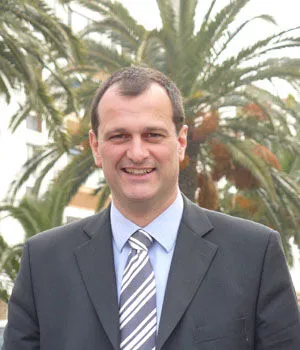
Louis Aliot
Human Design Chart
Biography
Louis Aliot as a Manifestor 1/3 in Human Design
Manifestor 1/3 — Design at a Glance
Louis Aliot's Human Design profile establishes a foundational stance as a pioneer and visionary. His nature is geared towards actively guiding the world into new directions, much like an emperor in ancient Rome: he possesses the grand vision of an empire but does not wage wars himself; instead, he delegates to others who conquer foreign lands on his behalf. This structure brings with it a central challenge: misunderstanding due to his superior perspectives. As Louis Aliot often thinks beyond his environment, he inevitably polarizes people. Some love his big dreams and follow him, while others hate him precisely because of these vast visions.
To resolve this tension and find the right following, it was crucial for his design that he informed others timely and accurately about his intentions. This formed the strategy of informing as the key to inner peace. When Louis Aliot followed this strategy and respected his authority, he was rewarded with a sense of inner peace. However, if he lived against his design, he instead felt a persistent, deep-seated anger within himself. His chart thus describes a clear contrast between the state of peace when adhering to his strategy and the intense frustration experienced when it is violated.
Emotional Authority
Louis Aliot's Human Design profile establishes a specific dynamic for decision-making: spontaneous impulses were misleading, true clarity emerged only after emotional waves subsided. This results from his Emotional Authority, carried by the defined Solar Plexus Center. In Human Design, this center always carries inner authority, independent of other defined centers in the chart.
Louis Aliot was subject to constant emotional waves, a perpetual up and down of feelings. The world appeared colored by his current mood: one moment could inspire excitement, the next make the same thing seem negative. His immediate feeling was merely a snapshot, a first impression, not necessarily the truth yet. Quick decisions based on this emotion could therefore have negative consequences.
The mechanics of his authority required time and distance. The longer Louis Aliot gave space to a decision, the deeper and more comprehensive he could see. This meant patience and repeatedly "sleeping on" decisions. He should take his time and ask multiple times. Over time, intense feelings subsided, emotional distance grew, and clarity and calmness set in. Only then had he gone through the process. This cycle was primarily relevant for long-term, life-defining decisions, as only this way could the deeper truth beneath the surface of the current mood become accessible.
The 1/3 Profile — Investigator / Martyr
Louis Aliots Design established a tendency towards a cyclical process of theoretical foundation building and practical validation. His Profile 1/3, the Researcher and Experimenter, defined this life path as an ongoing interaction between abstract knowledge and concrete action. Line 1 provided the mental framework, while Line 3 compelled confrontation with chaos and crises to learn from them.
This mechanism created an internal tension: The drive for perfect understanding before action conflicted with the biological necessity of "trial and error". Often, this led to fear of insufficient knowledge blocking implementation, even though the system relied on practical experience. Line 3 required other people as mirrors for these learning processes; this path could not be walked alone.
The result of this design was a specific kind of judgment capability. A judgment by Louis Aliots was only trustworthy if it had been tested both intellectually and through practical experience. Only then did confusion transform into clear insight. The duality of Scientist and Adventurer shaped his development: Without the foundation of Line 1, there was no direction; without the experimental Line 3, knowledge remained untested. His path involved integrating these two poles and advancing through active experiments.
Split Definition — Defined & Open Centers
Louis Aliot's Human Design profile established a tendency towards constant internal dynamics that transformed into clear external communication. His defined Head, Ajna, and Throat Centers created an ongoing mental process: inspiration was continuously translated into concepts and verbally manifested. This resulted in more than just ideas; it produced a reliable form of expression that made his thought world accessible to others. Supported by a defined G Center, he acted from a stable identity and clear sense of direction, lending authenticity to his voice. Simultaneously, his defined Solar Plexus endowed him with emotional depth; Louis Aliot tended not to make decisions in the moment but waited for an emotional wave to clarify before acting. This combination of mental sharpness and emotional patience formed the foundation of his inner architecture.
In contrast, he lacked personal sources of willpower, vital energy, or survival stress because his Heart, Sacral, Spleen, and Root Centers were open. This did not mean weakness but a specific sensitivity: Louis Aliot was prone to internalizing external pressure as his own. He often questioned whether he had to do enough to be valuable (open Heart) or constantly prove himself. The open Sacral Center made him receptive to the energy of others, leading to the risk of running on borrowed energy and overworking instead of respecting his natural rhythms. Similarly, the open Spleen Center could lead him to make spontaneous decisions to resolve uncertainties or cling to unhealthy situations for a sense of security. The open Root Center absorbed external stress, putting pressure on him to be hyperactive despite this frenzy not being part of his nature. The challenge was protecting his powerful inner world of thought and feeling from the overload of external energy demands without getting lost in proving himself or exhaustion.
Channels for emotional openness, reflection, change and abstraction.
Louis Aliot's design established a tendency towards hyperactive, experience-based mental processing. His mind filtered every life situation through a kaleidoscope of images and tirelessly sought connections to weave into a narrative story. This process was significantly shaped by the Abstraction Channel 64-47: Gate 64 (Confusion) in the Head Center generated constant pressure to intellectually understand life, while Gate 47 (Understanding) in the Ajna Center tried to form a perspective from chaotic impressions. This configuration meant that his mind could not be an internal authority for its own problems; clarity only emerged when patiently waiting for a coherent picture to emerge.
Alongside this primary mental dynamic, other channels also played roles. The Openness Channel 22-12 connected Solar Plexus and Throat: Gate 22 (Openness) brought emotional moodiness, which was regulated by Gate 12 (Caution). Social interaction only proved effective when it aligned with the emotional timing; otherwise, abruptness or misunderstandings were likely. The Lost Son Channel 13-33 promoted reflection: Gate 13 (Listener) gathered information and secrets while Gate 33 (Withdrawal) withdrew to process these experiences and recognize deeper truths. This created an attitude of patient observation before sharing insights.
The Transience Channel 35-36 drove the search for new experiences. Gate 36 (Crisis) in Solar Plexus felt a lack of experience as inadequacy and sought intensity, while Gate 35 (Change) in Throat articulated the urge to manifest new states. This led to restless longing to explore the depth of emotional experiences often by provoking crises to generate movement.
Individual Gates complemented this picture: Gate 63 (Doubt) pressed for security and resolving mental uncertainties, while Gate 5 emphasized the fundamental rhythm of life. Gate 24 stood for mental mutation and renewal in the pulse of knowledge. Gate 20 promoted integration here and now as well as awakening to uniqueness. Gate 46 represented dedication to the process and love for the body as a temple. Gate 6 provided the emotional engine for growth through friction. Together, these elements created a design that linked constant mental activity with the necessity of waiting for emotional clarity and experience-based wisdom.
Collective Circuitry — Circuit Signature
Louis Aliot's Human Design profile established a tendency towards cyclical visual reflection driven by the Sun in Gate 64. This position connected the Head Center to the Ajna Center via Channel 64-47 (Abstraction). It was about intuitively grasping meaning from past experiences and their mental structuring. As the Sun represents roughly seventy percent of energy, this ability for abstract sense-making was a constant, present feature.
In the Knowledge Circuit, Louis Aliot connected Throat with Solar Plexus via Channel 12-22 (Openness). This allowed the expression of personal identity through emotional waves and pulsing creativity. The energy here was acoustically grounded in the now but served as separate power for internal sense-making.
Both circuits existed separately alongside each other due to Shared Definition in Louis Aliot's profile. There was no direct energetic connection between the groups: one stream included Throat, Solar Plexus, and G Centers; the other Ajna and Head Centers. The inner work of sense-making from the past formed the foundation while Openness in the Knowledge Circuit carried the emotional expression of individual identity. These separate systems did not function as a continuous flow but as distinct parallel forces in his design.
Right Angle Cross of Consciousness 3
Louis Aliot's Human Design profile indicated a tendency towards strategic orientation, which was evident in the framework of the 'Right Cross of Consciousness'. This configuration influenced his actions with a focus on clarity and targeted direction within his life purpose. The Right Cross of Consciousness describes not just a passive trait but an active mechanism that structures consciousness. It supports an approach where decisions are less impulsive reactions and more conscious placements in larger contexts. For Louis Aliot, this meant that his strategic approach was channeled through this energetic structure. The implications of this cross promoted a deep understanding of how consciousness can be effective in concrete situations. It wasn't just theoretical but about the practical application of these insights in everyday life. Thus, Louis Aliot demonstrated himself as someone who aligned his actions with this internal logic. The mechanics of the Right Cross helped him filter distractions and focus on what was essential. This created a foundation for consistent action that resonated with his deepest nature. Without external validation, he could find his own direction. His design supported him in not just possessing consciousness but strategically using it to achieve his goals. This orientation was central to his entire experience and actions.
Saturn Return · Uranus Opposition · Chiron Return — Life Cycles
Louis Aliot's profile featured phases of structural reorganization followed by later goal-oriented development. This dynamic became visible in 2011 when he was appointed Vice President of the FN at age 42, coinciding with a Uranus opposition, an astrological cycle often initiating sudden changes or new responsibilities in professional structures. It was a moment of disruptive energy that broke existing frameworks and required a novel positioning.
Six years later, another quality emerged: In 2017, at the age of 48, Louis Aliot was elected as a member of the National Assembly. This occurred during the Chiron Return period (around ages 49-51). In Human Design mechanics, this cycle does not mark healing of old wounds but rather a phase of fulfillment and flourishing. If life has been lived according to individual strategy up until then, the Incarnation Cross increasingly unfolds in daily life. Purpose and meaning become tangible and concrete. His election into the National Assembly can be seen as an expression of this deepening: A transition from structural change towards anchoring one's purpose within a broader political framework. Both events illustrate how cyclical energies – first through disruptive Uranus influence, then through integrative Chiron Return power – shaped Louis Aliot’s life path and gradually defined his role in the public sphere.
Manifestor · Emotional Authority — Synthesis
The red thread running through the chart is a dynamic interplay between the need for inner clarity and the drive to express this creatively. Emotional authority (Solar Plexus) requires time for decision maturation, while defined centers in the Head-Ajna area generate constant mental pressure towards inspiration and understanding. This internal process is amplified by the Channel of Openness (Gate 22/12), emphasizing the ability to communicate feelings and insights – but only when emotional waves permit it. The profile as Researcher/Experimentor (Profile 1/3) underscores this search for experience and knowledge gained through trial and error, while the Channel of Abstraction (Gate 64/47) implies a continuous engagement with understanding the world.
A central paradox lies in the tension between the need for inner reflection and the ability to manifest externally. The defined G Center signals firm self-understanding and the ability to give direction, yet the open Sacral and Root Centers make this person receptive to others' energies and susceptible to conditioning. This leads to an internal conflict between personal impulse and adaptation to external expectations, reinforced by Tones in the Knowledge and Meaning Finding Circuit – a constant oscillation between the desire for authenticity and the need for connection.
4 Defined Channels
Incarnation Cross - Right Angle Cross of Consciousness 3
Solar Return
The Solar Return shows the moment when the sun returns to its exact birth position - your personal solar year.
Life Cycles
Discover the life cycles with a detailed triple view (birth chart, cycle chart, composite).
Human Design Profile
- Type
- Manifestor
- Strategy
- To inform others before acting
- Authority
- Emotional Authority
- Profile
- 1/3 - Investigator / Martyr
- Definition
- Split Definition
- Incarnation Cross
- Right Angle Cross of Consciousness 3
- Date of Birth
- 04.09.1969 18:15
- Place of Birth
- Toulouse, France
Frequently Asked Questions
What is Louis Aliot's Human Design type?
What profile does Louis Aliot have?
What is Louis Aliot's authority?
What incarnation cross is active for Louis Aliot?
When was Louis Aliot born?
Discover your own Human Design
Are you also a Manifestor? Find out in a personal reading how to use your initiation power peacefully and dissolve resistance.
More Personalities
Back to overviewChristian-Jaque
Kesha

Laurent-Eynac
Lucebert
Masaccio
Papus