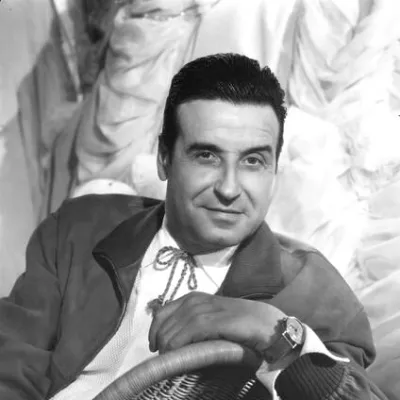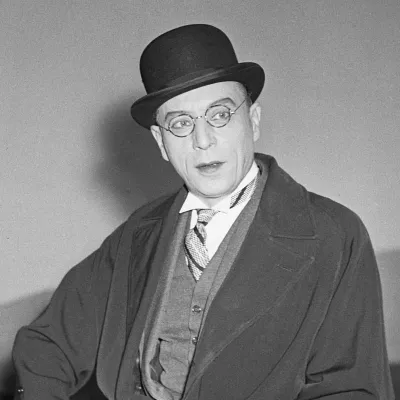
Louis Jouvet
Human Design Chart
Biography
Human Design Analysis: Louis Jouvet as Projector 5/1
Projector 5/1 — Design at a Glance
Louis Jouvet revealed himself as someone who focused his energy on the environment around him. As a Projector, he had a dense aura that acted like a bright flashlight, immediately revealing weaknesses in systems or others. However, this ability to identify flaws was only effective when not used directly and confrontationally. Directly addressing issues often provoked resistance from those around him, much like shining a bright light into someone's face. Instead, Louis Jouvet was most effective through harmonious self-expression; by living what worked himself, he attracted others who then sought his advice. His strategy involved waiting for honest invitations rather than intervening independently. Since Projectors lack a defined Sacral Center and thus do not have a constant source of life energy, Louis Jouvet experienced phases of high activity that needed to be followed by necessary rest periods to prevent burnout. Living according to this design rewarded him with success; ignoring these dynamics and fighting against others' resistance led to his non-self theme: bitterness. Therefore, his influence was less about constant action than the quality of his perception and the right timing through awaited invitations.
Splenic Authority
Louis Jouvet carried inner authority in his defined Spleen Center, which set a specific requirement for his decision-making process: The Emotional and Sacral Centers had to be open. This configuration endowed him with pronounced survival intelligence that manifested as spontaneous inner knowledge about whether a situation or environment was right for him. His instinct and physical well-being served as reliable indicators; the first immediate impulse always indicated the correct path to preserve his health. This allowed him to rigorously defend against harmful influences and take good care of himself.
However, this Spleen impulse was very subtle and only appeared once in the current moment, posing a risk that it could be overshadowed or ignored by other influences. Louis Jouvet needed high vigilance; temporarily withdrawing for decision-making could be helpful. Since knowledge about what is right was always available only at the moment, plans could change short-term, making long-term commitments difficult. His design therefore promoted much space and flexibility; he should commit as little as possible and act spontaneously to follow his inner guidance.
The 5/1 Profile — Heretic / Investigator
Louis Jouvet used deep, specialized knowledge to provide orientation for others in complex situations. His Human-Design Profile 5/1 combined the lines of the Researcher with that of the Hero: He first gathered insights in a protected space (Line 1) before offering these as solutions to collective problems (Line 5). This configuration gave him a magnetic presence; others actively sought his expertise, but this risked exhausting his energy through excessive requests.
His internal dynamics reflected the tension between tradition and necessary rebellion. The first line urged him to lay stable foundations and maintain conservative principles – he corrected existing structures step by step without destroying what was essential. Simultaneously, Line 5 carried the impulse of the 'heretic': In times of crisis, he questioned established norms not out of defiance but to secure survival and progress. He acted as a guardian who mutated outdated behaviors when they threatened collective harm.
The challenge lay in setting boundaries. Without clear demarcation, there was a risk that he would break under the flood of questions and expectations like an overburdened expert. However, if he managed to say 'no,' he could maintain balance: He remained true to his own research without uncontrolled distribution of his gifts. Thus, his specific design became a source of stability integrating both the depth of knowledge and the necessity for change.
Single Definition — Defined & Open Centers
Louis Jouvets design points to a tendency towards clear, reliable communication that stems from his deep inner identity and intuitive body awareness. His defined Throat Center serves as the focal point for this expressive ability; it transmutes information into words and actions with consistent honesty. This voice does not come from arbitrary thinking but is guided by his also defined G Center, which gives him a firm sense of direction and self-love. He spoke therefore out of a reliable 'I' that knew where it was going. Additionally, his defined Spleen Center provides spontaneous judgments in the present moment; he acts based on intuition and well-being without the need for rational justification.
At the same time, Louis Jouvet is exposed to several open centers making him susceptible to conditioning. His open Head Center allows him to take up mental pressure and questions from others, which can lead to confusion if he does not trust his inner authority. Similarly, his open Ajna Center reflects concepts of the environment without owning them as personal truth, putting him at risk of identifying with foreign opinions. His open Heart Center lacks consistent willpower; he tends to make promises or prove worthiness to find recognition – a pattern that can spiral into cycles of failure and self-doubt due to lacking the energy for sustained assertion.
His open Sacral Center absorbs the vital energy of others, leading to overloading and exhaustion if he does not pause. He is not a constant energy carrier but must learn to set boundaries. His open Solar Plexus amplifies emotional waves from the environment; he suffers under feeling foreign moods as his own, making him appear emotionally unstable although he merely reflects these feelings. Finally, his open Root Center takes up external stress and adrenaline. This pressure often drives him into hyperactivity to escape unrest rather than recognizing it as foreign energy and letting go.
Channels for intuitive leadership, presence and creative expression.
Louis Jouvet showed himself as someone who through his mere presence and authentic life encouraged others to express their unique individuality. This effect stems from the Channel of Inspiration 1-8, which connects the G Center with the Throat Center. Here, the individual, mutative perspective of Gate 1 becomes publicly visible through the contribution of Gate 8. Louis Jouvet lived this art of standing as an individual and gaining attention not by explaining words but by demonstrating his direction. His presence acted like a role model showing others that they can make their creative contributions.
Parallel to this, Louis Jouvet had the ability to clearly articulate intuitive truths in the immediate moment. The Channel of Brainwave 57-20 connects his deep acoustic sensitivity at Gate 57 in the Spleen directly with the expression in the present at Gate 20 on the Throat. This allowed him spontaneous, precise statements that hit the core of a situation and encouraged others to listen to their own survival intelligence. His words were not theoretical constructs but direct outflows of knowledge anchored here and now.
Furthermore, Louis Jouvet moved through the world with an elegance guided by inner intuition. The Channel of Perfect Form 57-10 integrates this intuitive insight at Gate 57 with self-referential behavior at Gate 10 in the G Center. This shaped a way to existentially and unburdenedly behave, perfecting his own survival. Through this spontaneous, self-referential action, he left his environment healthier and more beautiful without having to pursue it as a primary goal. His ability to be present and true to himself was key to his flourishing and the effect he had on his surroundings.
Individual Circuitry — Circuit Signature
Louis Jouvet revealed through his design as someone who intuitively grasps new insights and then clearly articulates them. His simple definition connects the Throat, Identity, and Spleen Centers into a single, cohesive energetic flow. This means that inspiration, flashes of insight, and logical structure do not work in isolation but directly feed into expression.
The Knowledge Circuit shaped him through the channels of Flash of Insight (20-57) and Inspiration (1-8). Here, the intuitive knowledge of the Spleen connects with unique identity and the Throat Center, allowing new ideas to be immediately formulated linguistically. Parallel to this, the Understanding Circuit works through the channel of Alpha Animal (31-7), bringing logical strategies directly into communication. Similarly, the Meaning Finding Circuit with the channel of Lost Son (33-13) flows into this unity by reflecting past experiences and sharing them emotionally grounded. Additionally, the Integration Circuit through the channels Awakening (20-10) and Perfect Form (10-57) integrates intuitive knowledge with correct behavior in the present moment. All these circuits used the same energetic path for Louis Jouvet: They connect Spleen, Identity, and Throat directly to each other so that intuition, logic, and emotion always come together as a coherent message.
Left Angle Cross of Prevention 2
Louis Jouvet revealed himself as someone whose life path was profoundly marked by a deep engagement with protection from dangers. His design pointed to the configuration of the 'Left Cross of Prevention', a structure that did not strive for fame or material accumulation but rather for security and stability for himself and others. This orientation meant that Louis Jouvet often immersed himself in identifying risks and preventing them before they could concretely manifest. It was an inner drive that propelled him to create or maintain structures that minimized vulnerability. Instead of acting impulsively, he sought ways to cushion uncertainties and ensure long-term stability. This attitude shaped his interactions with the world: He acted as a stabilizing force, ensuring from behind the scenes that the foundation remained intact. The energy of this cross prompted him to engage with themes of protection, precaution, and defense against potential threats. For Louis Jouvet, this was not a peripheral interest but a central expression of his way of being. He lived out this role of guardianship by ensuring that dangers were identified early and neutralized, thereby fostering an atmosphere of trust and security.
Saturn Return · Uranus Opposition · Chiron Return · 2nd Saturn Return — Life Cycles
Louis Jouvet moved through phases of structural consolidation. In 1913, at the age of 26, his first Saturn Return marked a turning point: being appointed to Jacques Copeau's Théâtre du Vieux-Colombier and his film appearance showed how years of groundwork condensed into a solid result. This cycle established his professional foundation.
Later, life demanded flexibility. In 1930, at the age of 43, the Uranus Opposition came into play. It often brought unexpected changes or breaks. That year, Jouvet became director of the Théâtre Pigalle – a step indicating new, unconventional paths and questioning established patterns.
The deepest unfolding of his purpose occurred during the Chiron Return. This cycle between the ages of 49 and 51 is not a healing process in the traditional sense but rather a blooming period when the incarnation cross unfolds, provided that strategy and authority are respected. In 1934, at age 47 – just before this peak – Jouvet took over as director of Théâtre de l’Athénée. This position reflected his growing experience of his life purpose: The inner structure was now outwardly effective and shaped his role as a shaping leader of an important institution.
Projector · Splenic Authority — Synthesis
Louis Jouvet was a projector whose life was marked by a deep ability to recognize the potential and flaws of others (Throat Center, Gate 1). This recognition always went hand in hand with the need to constructively apply this knowledge – a tendency reinforced by his profile as Hero/Researcher (5/1). He sought solutions and gladly shared his insights, but this required constant boundary setting to avoid being drained by other people's requests. His Spleen Center as an authority ensured that he instinctively knew when an environment or situation was beneficial for him and helped him distance himself from harmful influences.
A central paradox in his design lay in the combination of a need for recognition of his abilities (Channel 1-8) and the inherent challenge of the projector to correctly 'project' their energy. He could inspire and motivate others, but how he did this always had to be attuned to the well-being of his counterpart. The professional turning points (appointment at Jacques Copeau's Théâtre du Vieux-Colombier, director of Théâtre Pigalle, director of Théâtre de l’Athénée) showed that he was successful when he could bring his creativity and knowledge into environments that suited him well.
6 Defined Channels
Incarnation Cross - Left Angle Cross of Prevention 2
Solar Return
The Solar Return shows the moment when the sun returns to its exact birth position - your personal solar year.
Life Cycles
Discover the life cycles with a detailed triple view (birth chart, cycle chart, composite).
Human Design Profile
- Type
- Projector
- Strategy
- Wait for the respectful invitation
- Authority
- Splenic Authority
- Profile
- 5/1 - Heretic / Investigator
- Definition
- Single Definition
- Incarnation Cross
- Left Angle Cross of Prevention 2
- Date of Birth
- 24.12.1887 05:00
- Place of Birth
- Crozon, France
Frequently Asked Questions
What was Louis Jouvet's Human Design type?
Which profile did Louis Jouvet have?
What was Louis Jouvet's Authority?
What incarnation cross was Louis Jouvet assigned to?
When was Louis Jouvet born?
Discover your own Human Design
Are you also a Projector? Find out in a personal reading how to unfold your leadership qualities and recognize the right invitations.
More Personalities
Back to overviewSissy Spacek
Alain-Fournier

Anémone
Ann-Margret

Bourvil
Christian-Jaque