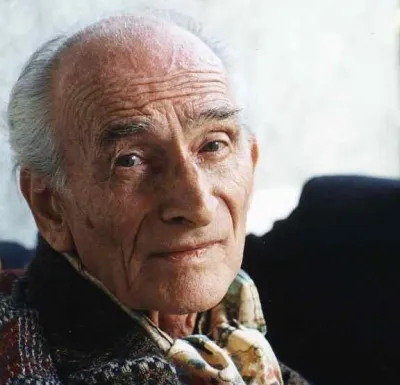
Luc Besson
Human Design Chart
Biography
In 2014, he directed "Lucy", viewed by 52 millions people in cinemas all over the world. He also produced "Taken 3" after "Taken 1" (2008) and "Taken 2" (2012).
After having lived with Anne Parillaud since 1986 (a daughter, Juliette), he married actress-director Maïwenn Le Besco in 1992.
In early 1999, his bride of 16-months, the exotic-looking actress Milla Jovovich announced their separation. Her residence in Los Angeles and his in France created more distance to their relationship than the couple could manage.
In 2004, he remarried French-Senegalese producer Karine Silla (3 children).
Luc Besson as a Manifesting Generator 5/1 in Human Design
Manifesting Generator 5/1 — Design at a Glance
Luc Besson revealed himself as someone who combined constant energy with an enhanced ability to accelerate processes. His Manifestor Generator design works like a hybrid: He had the continuous power of a generator, but also possessed the structure to skip steps and produce results quickly.
This constellation created a specific tension field. On one hand, he could pull things into his life rapidly; on the other hand, there was the risk of missing important stages or overextending himself by chasing multiple impulses simultaneously. Such hastiness often led him to catch up later, which caused frustration – the central non-self theme of this type.
The solution did not lie in slowing down itself but rather in precise timing. Luc Besson acted most effectively when he responded to external impulses and only started once his inner approval was clearly felt. It was also crucial to constantly check: Even during the creation process, the feeling of confirmation had to be maintained.
When this condition was met, a 'play mode' emerged. In this state, it wasn't an obstacle for him to handle multiple projects simultaneously; on the contrary, variety and fun were fuel for his deep satisfaction. The demand to focus on one thing would have rather slowed down than promoted his energy. His creative power flourished exactly where reaction, inner confirmation, and playful ease met.
Emotional Authority
Luc Besson showed a decision-making structure that did not rely on immediate impulsiveness but on the need for emotional distance. His design suggested that spontaneous reactions were risky; what appeared as deep conviction in the first moment was often just a passing mood state. This tendency towards delay served not to hesitate, but to precision: Only through waiting could he distinguish between fleeting enthusiasm or rejection and his actual inner truth.
This mechanism stems from his emotional authority. Since his Emotional Center is defined, his perception undergoes a natural wave of feelings. The world appears colored positively or negatively depending on the current wave. This emotional wave is not a snapshot of the truth but a process. Quick decisions in this phase were therefore prone to misjudgments as they rested on transient emotions rather than clarity.
The strategy of his design was to take time and let decisions 'sleep' multiple times over. Through this patience, intense feelings subsided, creating emotional distance. Only in this phase of calm did deeper clarity set in, necessary for long-term, life-defining steps. Luc Besson had to consciously resist the pressure for immediate action and instead trust his natural cycle of emotions to achieve results that aligned with his essence.
The 5/1 Profile — Heretic / Investigator
Luc Besson displayed a fundamental stance that oscillated between deep withdrawal into personal knowledge spaces and magnetic attraction towards others. His design suggested he could offer practical solutions under pressure, making him a natural reference person in crisis situations. This energy came from his Line 5 (Gate 36), which defines survival through experience and pragmatic action. Yet this strength brought an inner tension: While his external presence drew others to seek advice, his internal Line 1 (Gate 10) called for humility, adaptability, and the protection of personal space.
Without clear boundaries, there was a risk that he would exhaust himself by constantly offering solutions or develop nervous self-deception – convincing himself of things to meet expectations. The mechanics of his Profile 5/1 describe this conflict between the need to be available as a hero and the necessity to withdraw to accumulate knowledge. Luc Besson's challenge lay in balancing these two poles: Saying yes when he could truly help, and no when his own substance was at risk. Only so did he avoid exhaustion from others' problems and preserve his ability to remain authentic and resilient.
Split Definition — Defined & Open Centers
Luc Besson was characterized by a massive, constant presence driven by seven defined centers. His design signaled immense energy generation and a consistent way of being in the world. The defined Sacral Center provided the vital power source, a daily hum that required activity to find satisfaction. This energy was directed through the defined Heart Center, which supplied willpower and the desire for control over personal resources. Luc Besson tended to determine his life himself and keep promises, strengthening his self-esteem.
The direction of this force came from the defined G Center, which provided a reliable identity and a sense of love as well as personal mission. It allowed him to take others along on his journey without being dependent on them. However, this energy passed through the emotional wave of the defined Solar Plexus Center. Here, truth was revealed only over time. Luc Besson showed a mechanism that required waiting for feelings before making decisions to avoid impulsiveness and achieve emotional clarity.
Communication occurred via the defined Throat Center, which served as a pivot point to translate these inner processes – whether from Heart, G or Solar Plexus – into language and action. It offered a consistent yet limited way of expression. Additionally, the defined Spleen and Root Centers provided spontaneous intuition in the present moment as well as a constant pressure for forward movement and survival.
In contrast, Head and Ajna Centers remained open. This meant no constant internal mental burden but rather mental flexibility. Luc Besson was however prone to identifying with questions or concepts of others that were not his own. Instead of seeking endless answers in the mind, his potential lay in using these open centers as mirrors for inspiration and not succumbing to mental pressure but trusting his inner authority from defined centers.
Channels for ambitious intimacy with intuitive power.
Luc Besson exhibited a basic attitude that swung between an intense urge to merge and calm, logical structuring. His design suggested he sought intimacy not as superficial touch but as deep wave-based experience that needed patience and clear focus to stabilize.
The Channel of Union 59-6 connected his sacral life force with the emotional wave of Solar Plexus. This generated a strong impulse towards merging, yet required waiting for his own emotional cycle waves to gain clarity and find true connection rather than just short-term friction. Simultaneously, the Channel of Concentration 52-9 offered balance: By connecting root pressure and sacral logic, he could assess details precisely and perfect patterns by holding still and focusing on essentials. This calm attention helped channel the intensity of union.
Additionally, Channels of Exploration 34-10 and Perfect Form 57-10 fostered intuitive self-love. The former encouraged following his own convictions and acting independently while the latter enabled spontaneous, intuitive action in the here and now securing physical well-being. Channel of Power 34-57 emphasized this individual vitality through acute perception of dangers and opportunities allowing him to react quickly and appropriately to his environment.
This configuration described a process where the urge for intimacy was regulated by emotional patience while parallel energies provided logical precision and intuitive adaptability. Luc Besson could thus build a stable internal structure enabling both deep relationships and penetrating complex patterns with calm energy.
Individual Circuitry — Circuit Signature
Luc Besson appeared as a person of strong inner strength and bold individuality. His design linked the Identity Center to the Sacral Center (Channel 10-34) in the Focusing Circuit. This connection created firm convictions but lacked direct articulation through Throat Center. Parallel, he integrated intuition and reaction for self-reinforcement now via the Integration Circuit. Here Channels 10-57 and 34-57 connected Identity, Spleen and Sacral Centers into a coherent power reacting to immediate events.
Rational structure complemented this inner dynamics. The Understanding Circuit (Channel 9-52) linked Sacral with Root Center enabling emotionless logic and strategic focus for future improvements separate from emotional waves. Socially the Ego Circuit (Channel 45-21), connecting Throat to Heart Center, promoted cooperation and resource management within the clan based on material well-being and mutual support.
Instinctive protective energies also shaped his actions. The Shielding Circuit (Channel 6-59) linked Sacral with Solar Plexus Center establishing a primal connection of life force and emotion aimed at preserving and protecting family and genetics.
Luc Besson's design consisted of two separate groups: The first included Solar Plexus, Sacral, Root, Heart and Spleen Centers as interconnected unit. The second group formed isolated Throat and Heart Centers (in context of Ego Channel). This separation meant energy flows were not continuous but worked as parallel independent fields structuring specific aspects of his personality.
Left Angle Cross of the Plane 1
Luc Besson is characterized by a structure that aims for fundamental stability and clear definitions. His design features the "left cross of level 1," which describes an archetypal basic stance: the drive for a solid foundation before actions follow or visions arise. This is not about fleeting inspiration but rather establishing order principles that serve as a sturdy underpinning.
This configuration signals a tendency to reduce complexity and focus on what is essential. Luc Besson tended to act less through spontaneous impulses and more through a thoughtful, almost methodical approach to his projects or life areas. The first level represents the root, the origin; the "left cross" adds specific geometric clarity to this root. It is the search for the one right line, the one correct foundational point.
For Luc Besson, this often meant investing time to precisely define the parameters before entering into the actual events. This archetypal structure ensures that his expressions or decisions do not appear arbitrary but are based on deeply rooted logic. It is an energy of anchoring: first, the ground must be firm, then construction begins. This characterizes his entire work as someone who values stability and structural integrity rather than yielding to the currents of the moment.
Saturn Return · Uranus Opposition · Chiron Return · 2nd Saturn Return — Life Cycles
Luc Besson's design was characterized by a cyclical dynamics in which crises acted as catalysts for new creative phases. This structure illustrates how internal upheavals often drive external renewal.
In 1999, at the age of 40, he announced his separation from Milla Jovovich. This moment marked an Uranus opposition: a time when old bonds and structures often break to make way for individual freedom and new identities. The crisis here did not act as an end but rather as a necessary rupture that cleared the path for future developments.
This process culminated years later in a phase of affirmation and consolidation. In 2014, at age 55, he celebrated international success with the film "Lucy". This coincided with his second Saturn return: a cycle often rewarding long-term projects by solidifying personal achievements into sustainable form. The success affirmed the previously experienced changes as fruitful.
Thus, Luc Besson moved in a rhythm of dissolution and rebirth: first letting go of the familiar, then building on new foundations. This sequence underscores how his design did not view crises as obstacles but rather as driving forces for creative and personal evolution.
Manifesting Generator · Emotional Authority — Synthesis
Luc Besson seems to be marked by a deep inner tension between the need for quick action and the necessity of listening to his own inner authority. The combination of manifesting Generator energy with emotional authority suggests that while he possesses a strong impulse to initiate (Sacral Center), this must be channeled through an emotional wave to avoid ending up in frustration and aimless activity. This dynamic is reinforced by his defined Throat, which gives him clear expressive power once he connects with his inner guidance. The focus on the ‘Here and Now’ (Spleen Center) also seems to prompt quick reactions to stimuli, further emphasizing the need to create a filter through emotional clarity.
A central paradox in his design lies in the interplay of individuality and the urge to connect. A strong definition in the G Center points to pronounced self-awareness and clear personal direction, while channels to the Heart and Sacral Center simultaneously link him with the energy of the tribe – a force that can be both nurturing and demanding. This contradiction manifests in an ongoing dance between the desire for independence and the need for recognition and cooperation, shaped equally by crises (such as separation) and successes.
6 Defined Channels
Incarnation Cross - Left Angle Cross of the Plane 1
Solar Return
The Solar Return shows the moment when the sun returns to its exact birth position - your personal solar year.
Life Cycles
Discover the life cycles with a detailed triple view (birth chart, cycle chart, composite).
Human Design Profile
- Strategy
- To respond - wait for something to respond to
- Authority
- Emotional Authority
- Profile
- 5/1 - Heretic / Investigator
- Definition
- Split Definition
- Incarnation Cross
- Left Angle Cross of the Plane 1
- Date of Birth
- 18.03.1959 13:45
- Place of Birth
- Paris, France
Frequently Asked Questions
What is Luc Besson's Human Design type?
What Profile does Luc Besson have in Human Design?
Which Authority determines Luc Besson's decisions?
What is Luc Besson's incarnation cross?
When was Luc Besson born?
Discover your own Human Design
Are you also a Manifesting Generator? Find out in a personal reading how to unfold your multi-talents and direct your energy wisely.
More Personalities
Back to overviewAldair

Alizée

Angeli

Arletty
Artus

Balthus