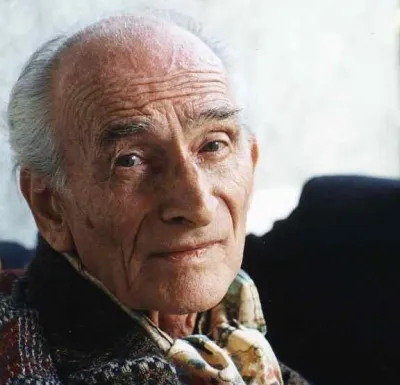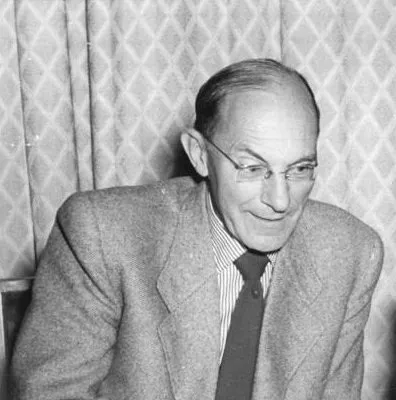
Ludwig Renn
Human Design Chart
Biography
From 1911 Renn served as an officer in a prestigious Saxon Guards Regiment, where he served under his friend Prince Friedrich August. Between 1914 and 1918 he fought in the First World War as a company commander, and a field battalion commander on the Western Front. His first book, Krieg (War), which appeared in 1928 brought him wide acclaim. After the war he was a captain in the Dresden security police, a paramilitary force set up during the Weimar Republic. In 1920 during the Kapp Putsch, Renn refused to open fire upon striking workers and left the police service shortly afterwards. This is recounted in the novel Nachkrieg (1930) but confirmed as a fact by some sources.
From 1920 to 1923 Renn studied law, economics, history of art and Russian philology in Göttingen and Munich. In 1923 he worked as an art dealer in Dresden during the time of hyperinflation.
During 1925 and 1926 Renn undertook a journey on foot through Europe and the Near East. In 1927 he undertook further studies in archaeology, art history and Chinese history in Vienna, returning to Germany in the same year to give lectures to workers on the history of China and Russia at the Volkshochschule Zwickau.
In 1928, the year in which he published Krieg, Renn became a member of the German Communist Party, a step which the novel Nachkrieg (1930) reflects. In the same year he joined the Roter Frontkämpferbund (Alliance of Red Front-Fighters) and from 1928 to 1932 was secretary of the Alliance of Proletarian-Revolutionary Writers in Berlin (BPRS).
Ludwig Renn as a Manifesting Generator 1/3 in Human Design
Manifesting Generator 1/3 — Design at a Glance
Ludwig Renn revealed himself as a person with a hybrid energy configuration: He possessed the constant power of a Generator, yet also had the ability to skip steps and quickly draw results into his life. This structure required him to approach his life task in a specific way. Instead of taking independent initiatives, it was crucial for him to react to external impulses. Only when his inner center – the Sacral Center – responded with a clear "Yes", could he efficiently utilize his energy.
His design carried the inclination to advance multiple projects simultaneously and quickly switch between different tasks. This speed was a strength but also harbored risks: Without constant verification by his internal authority, frustration threatened if he overlooked important intermediate steps or got entangled in too many directions at once. The strategy consisted of regularly pausing and checking whether the current activity still aligned with his inner approval.
When Ludwig Renn fulfilled this condition – reacting instead of initiating and consulting his authority –, he could draw deep satisfaction from his work. His design promoted a playful mode where variety and parallel working were not seen as distractions but as sources of his creative power. The challenge always lay in connecting this speed with the necessary endurance without losing touch with his inner compass.
Sacral Authority
Ludwig Renn's decision-making was characterized by Sacral Authority. As a Generator, he possessed an internal guidance that seamlessly merged with his strategy and thus simplified it. This authority did not manifest as abstract contemplation but rather as an immediate physical reaction to external stimuli. It appeared in the form of a "gut feeling" or perceptible surges of energy – often audible as grunts, hums, or affirming mhm.
A prerequisite for this clear guidance was his open Emotional Center. This meant that he was not swayed by fleeting mood swings but waited for the stable, physical response of his Sacral Center. When this inner motor engaged, Ludwig Renn felt vital and alive. He then possessed seemingly inexhaustible energy and tackled his tasks with great enthusiasm. His life was geared towards performing activities with joy and satisfaction, fully immersed in what drove him without needing a rigid goal-oriented purpose.
Furthermore, his activated Spleen Center supported this sacral guidance. Through the connection between spleen and Sacral Center, he could react particularly quickly and spontaneously. He had direct access to his instinctive perception and physical well-being. These instincts served as reliable compass needles guiding him in current decisions and enhancing his ability for rapid adaptation to changing circumstances.
The 1/3 Profile — Investigator / Martyr
Ludwig Renn's design inclined towards pragmatic experimentation supported by careful preparation. As a person with the Profile 1/3 – Researcher and Experimenter – he combined the necessity of a stable personal foundation with the urge to gain insights through direct engagement with reality. His Line 1 at Gate 27 emphasized the fundamental importance of self-sufficiency; he had to ensure that his own needs were met without harming others. This formed the basis upon which he acted. Simultaneously, the energy of Line 3 at Gate 41 drove him to learn efficiency through trial and error. Here it was not about abstract theory but efficient adaptation to material circumstances supported by discipline and a clear ambition. When Ludwig Renn made a decision or rendered judgment, this dual test formed its basis: theoretically grounded by Line 1 and practically tested by Line 3. His path was marked by learning from his own mistakes; only what he himself had tested counted as reliable for him. This configuration created a person who initially needed to secure their foundation but then grew with great reliability into the world, sharing their experiences.
Single Definition — Defined & Open Centers
Ludwig Renn's Human Design profile indicated a tendency towards clear, identity-based communication. His defined G Center provided him with a firm sense of self-identity and direction; he knew who he was and where he stood. This inner security flowed into his also defined Throat Center: His voice spoke not from impulsive urge or mere concept but from this reliable identity. He could express his truth with honesty, as the source of his words was stable.
This expressive ability was fueled by a massive energy source: his defined Sacral Center. As a Generator, he had constant vital energy available, yet it only activated through reaction. His life force did not serve mental initiatives but responded to life itself. When asked or invited, his Sacral could respond with a clear 'Yes' and put full power behind decisions. Ignoring this sacral response in favor of mental plans led to resistance and frustration. His defined Spleen Center supported this through spontaneous intuition; he perceived what was healthy and correct in the present moment and acted from this existential awareness. The pressure of his defined Root Center propelled him forward, driving him to survive materially and correct what was functioning incorrectly.
At the same time, his design revealed specific vulnerabilities. His open Head and Ajna Centers meant that he did not have a constant mind. He tended to get caught in mental monologues, take others' questions as his own or seek inspiration to balance uncertainties. His thoughts were not a reliable compass but rather a field of possibilities and doubts. Additionally, his Heart Center was open: He lacked consistent willpower in the sense of ego and promises. He tended to want to prove his worth through performance or make promises he could not keep, ending up in cycles of failure and self-doubt. His open Solar Plexus absorbed emotional moods from the environment; he mirrored foreign feelings rather than generating stable emotions himself, making him vulnerable to emotional conditioning.
Channels for change, meaning, leadership and intuitive clarity.
Ludwig Renn's basic disposition showed a search for evolutionary change within clear boundaries. The Channel of Mutation 60-3 connected his Root Center with the Sacral and generated a pulsating rhythm between chaos and order. This energy required patience: He had to accept that new ideas could not be forced but only became effective when he lived through the inner melancholy of waiting. His design drove him towards innovation, yet always in harmony with his sacral reaction to the moment.
At the same time, he possessed potential for logical, collective leadership. The Channel of Alpha 7-31 connected his G Center with the Throat and gave him the ability to recognize patterns and guide others through clear visions. This leadership role was not an autocratic one; it was based on trust and invitation from his environment. He could offer logical structures that provided security but had to wait for the community to acknowledge him as a representative.
His communication was marked by intuitive sharpness. The Channel of Flash of Insight 20-57 directed insights directly from his Spleen Center into his voice. This allowed him to speak in the present moment and express profound truths suddenly. His words carried the weight of immediate self-awareness, encouraging others to activate their own inner intelligence. This channel helped minimize misunderstandings as long as he relied on his spontaneous perception here and now.
Furthermore, he actively sought meaning through resistance. The Channel of Life Struggle 28-38 connected Root Center with Spleen and gave him the determination to fight for his individual integrity. He found significance in defending against distractions and taking on struggles that reflected his value system. This stubborn commitment to his own path not only served his development but also inspired others to dare their individuation process.
This profile was complemented by Gates of Care (27) and evolutionary crisis (41), deepening his empathy, as well as provocation (39) and receptivity (2), sharpening his sensitivity for new directions. His ability to recognize patterns (58, 62) and focus on continuity (32) ensured that his mutative impulses were translated into stable structures, while his contribution to the collective (8) always served the community.
Individual Circuitry — Circuit Signature
Ludwig Renn's design connected Throat Center with Spleen, Root, and Sacral in a continuous energetic flow. This connection marked him as someone who carried his unique impulses directly into the world. The Knowledge Circuit drove this dynamic: His channels for Flash of Insight (20-57) and Mutation (3-60) promoted innovative deviations from the known, while the Life Struggle channel (28-38) provided the will to implement them. This created a pulsating energy that allowed new knowledge to emerge and be expressed through emotional waves from the Solar Plexus. Parallel to this, another stream connected Throat Center with Identity Center via the Understanding Circuit. Here, the Alpha Channel (7-31) focused on sharing logical, rational insights – free of conditioning and emotional coloring. These two separate streams existed side by side: On one hand, creative, emotional transformation through the Knowledge Circuit; on the other, clear, strategic dissemination of knowledge through the Understanding Circuit. Both flowed into the throat, allowing Ludwig Renn to express both intuitive innovation and structured logic without these energies crossing over or mixing.
Right Angle Cross of the Unexpected 1
Ludwig Renn's design set a tendency towards unpredictable turning points, which can be described as the 'right cross of the unexpected.' This configuration did not manifest as a steady flow but rather as sudden, often surprising impulses that broke through the usual rhythm. For his system, this meant that decisive moments could rarely be planned linearly; instead, they appeared as spontaneous insights or unforeseen opportunities requiring immediate reaction.
The mechanics of this cross connect various energetic centers in such a way that routine is quickly questioned. Ludwig Renn was therefore often prepared to leave established paths when a new and unexpected impulse arose. It was not random chaos but rather a specific kind of adaptability: the ability to gain clarity at moments of surprise and act upon it. This characteristic shaped his life through constant openness to the new, even if initially confusing or disruptive. The focus was always on immediate reaction to the unexpected, which helped him remain flexible in dynamic situations instead of clinging to rigid plans.
Saturn Return · Uranus Opposition · Chiron Return · 2nd Saturn Return — Life Cycles
Ludwig Renn's design fostered an attitude that prioritized consistent inner integrity over external conformity pressure. This fundamental stance became visible in 1920 at age 31: He refused to open fire on striking workers and subsequently left the police service. For his system, this first Saturn Return marked a turning point where years of groundwork and internal value assessment condensed into a viable yet radical life decision. Refusing to act against his own convictions showed as necessary separation from a system no longer compatible with his inner truth.
Later in 1928 at age 39, he achieved broad public recognition with his first book 'War.' This event fell during the Uranus Opposition cycle, often marked by sudden upheavals and breaking through old structures. Renn's success was not mere luck but the result of long-term inner maturation now manifesting outwardly. The opposition to Saturn energy from his first return helped make his voice heard. His design thus promoted a developmental line: First clear separation from false paths, later powerful articulation of his truth finding resonance and making him famous.
Manifesting Generator · Sacral Authority — Synthesis
Ludwig Renn lived a life marked by a deep drive for independent insight and the implementation of this into the world. The connection between sacral authority and the Profile of the Researcher/Experimentator (1/3) led to an ongoing search for new experiences and their critical examination. This energy, fueled by a defined Sacral Center, showed in his willingness to take risks and question conventions – a pulsating drive amplified through the Channel of Mutation (3-60). He did not act out of mere initiative but reacted to external stimuli with vital force, constantly setting him in motion and enabling him to trigger apparent lightning-fast changes.
Simultaneously, a central paradox revealed itself: Renn's internal dynamics between the desire for thorough preparation (Line 1) and the necessity to experiment and learn from mistakes (Line 3). This tension culminated in moments where he overlooked important steps or made decisions requiring later corrections. A documented event showed when he stood against established norms and faced consequences (1920), while another success arose through publishing his own insights (1928). This interplay between cautious research and bold action shaped his path.
4 Defined Channels
Incarnation Cross - Right Angle Cross of the Unexpected 1
Solar Return
The Solar Return shows the moment when the sun returns to its exact birth position - your personal solar year.
Life Cycles
Discover the life cycles with a detailed triple view (birth chart, cycle chart, composite).
Human Design Profile
- Strategy
- To respond - wait for something to respond to
- Authority
- Sacral Authority
- Profile
- 1/3 - Investigator / Martyr
- Definition
- Single Definition
- Incarnation Cross
- Right Angle Cross of the Unexpected 1
- Date of Birth
- 22.04.1889 05:30
- Place of Birth
- Dresden, GER
Frequently Asked Questions
What was Ludwig Renn's Human Design type?
What Profile did Ludwig Renn have in Human Design?
What Authority guided Ludwig Renn?
What incarnation cross did Ludwig Renn have?
When was Ludwig Renn born?
Discover your own Human Design
Are you also a Manifesting Generator? Find out in a personal reading how to unfold your multi-talents and direct your energy wisely.
More Personalities
Back to overviewAldair

Alizée

Angeli

Arletty

Artus

Balthus