
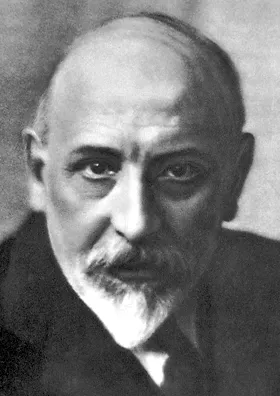
Luigi Pirandello
Human Design Chart
Biography
The son of a mine owner, he studied at universities in Rome and Bonn, where he obtained his doctorate in philology. He settled near Rome in 1893, writing verse, plays, short stories and two novels. He taught at the Normal College for Women in Rome 1897-1921.
Pirandello married Antonietta Portulano in 1894; she became insane but was not committed until just before her death in 1918. He served in the military in the war of 1915.
Pirandello was troubled with stomach problems, tuberculosis and in 1903 had an episode of suicidal depression. He died on 10 December 1936 at age 69 in Rome, Italy.
Luigi Pirandello — Manifesting Generator with Profile 3/5
Manifesting Generator 3/5 — Design at a Glance
Luigi Pirandello revealed himself as a hybrid of Manifestor quickness and Generator energy. His design featured a constant sacral source that required him to respond to impulses rather than initiate independently. This configuration gave him the ability to skip steps and draw things into his life at lightning speed. At the same time, he tended to handle multiple tasks in parallel.
The mechanics of this type carry specific risks: Misapplication often led to important stages being overlooked due to speed, forcing him to backtrack on steps and resulting in frustration – the non-self theme of the Manifesting Generator. Additionally, his energy dispersed easily when responding to too many impulses simultaneously without obtaining inner confirmation.
The correct strategy involved only proceeding once the sacral center had given a clear "okay" after testing. With this approach, the mechanics translated into an enriching play mode. Then it was not just possible but necessary for him to work on various projects in parallel to draw deep satisfaction from creation. Forcing linear processes would have hindered his nature; instead, responding to lively impulses enabled a productive dynamic where variety and fun shaped the process.
Emotional Authority
Luigi Pirandello exhibited an inner decision-making structure that did not rely on immediate clarity but rather on the penetration of emotional waves. His inner authority lay in his defined Solar Plexus Center. This configuration meant that his perception of the world was always colored by his current mood; at one moment he could feel totally excited, and in the next, see the same situation negatively. However, his immediate feeling was only a snapshot, not an ultimate truth. Spontaneous decisions made from this emotional heat often risked negative consequences because they were based on fleeting impulses.
The mechanics of his emotional authority required patience and time. To reach true clarity, Luigi Pirandello had to allow himself the process of "sleeping on it." By letting decisions rest, intense feelings gradually subsided. Only with this emotional distance did calmness set in and genuine insight become accessible. This cycle of ups and downs was not an obstacle but rather the necessary instrument of his inner guidance. The longer he waited, the deeper and more comprehensive could he perceive a situation. This was especially true for long-term decisions that significantly influenced the course of his life. His strength did not lie in the speed of judgment but in the ability to find stable truth through emotional fluctuation.
The 3/5 Profile — Martyr / Heretic
Luigi Pirandello showed himself to be someone who initially took nothing for granted. His design indicated a tendency to try everything out for himself before making judgments. This attitude stemmed from his Line 3 in Profile 3/5, which defined a learning process through trial and error. He learned from his own experiments and also from failures, with external pressures often forcing him into necessary concentration.
This private experimenting stood in dynamic tension with his public role. The Line 5 of his profile translated the acquired practical experiences into a function as helper or savior. Pirandello used his self-learned knowledge to solve other people's problems and thus contribute to societal order. Gate 17 emphasized the necessity of hierarchies and mutual dependence for stability.
This configuration made him attractive to others who wanted to learn from his rich life experiences. The role of the competent hero flattered him, but it carried a risk: if he failed in public experiments, this became a painful humiliation before society's eyes. His task was to find synthesis through personal experience and assign each individual their place within the whole, with the refusal to acknowledge this position causing disorder.
Split Definition — Defined & Open Centers
Luigi Pirandello revealed himself as a person with immense physical presence and reliable communication. His energy architecture was marked by five defined centers: Sacral, Throat, Solar Plexus, Spleen, and Root. The defined Sacral Center provided a constant vital base energy that was transmuted into the world through the equally defined Throat as reliable action. This physical power was colored by the emotional awareness of the defined Solar Plexus, which allowed decisions to mature over time, as well as by the intuitive moment-instinct of the defined Spleen. The Root Center ensured the necessary pressure for movement.
In contrast, Head, Ajna (Mind), G-Center (Identity), and Heart (Willpower) were open. This openness meant situational flexibility: Mental inspiration was not constant but rather taken from the environment. Identity reflected context instead of being predetermined. Pirandello tended to get entangled in thought patterns when trying to find answers for problems that weren't his own or seeking external inspiration to solve mental confusion. With an open G-Center, his direction and identity were shaped by the people and places around him; he adapted rather than having a fixed internal compass. Additionally, lacking constant energy for willpower in terms of keeping promises or competition, he did not need to prove his worth as the Heart Center was open.
The challenge lay in not blocking the consistent energy of the Sacral through mental initiatives (open Head/Ajna). Instead, it meant waiting and reacting to life. Emotional clarity had to be waited for before acting. The defined motors allowed a strong projection, but direction came from context. Pirandello lived this mechanism by directing his energy towards reactions rather than initiations and accepting his identity as a mirror of his environment instead of seeking a fixed essence.
Channel 59-6: Mating — Channels & Gates
Luigi Pirandello was characterized by an intense drive for merging and intimacy, accompanied by critical perfectionism and restless experience-seeking. This dynamic rooted in his specific configuration of three defined channels.
The Union Channel 59-6 connected the sacral sexuality of Gate 59 with the emotional wave of Gate 6 (Friction). This created a powerful aura that made relationships personal and profound. Pirandello needed patience, as his emotional wave determined the timing for intimacy; clarity about the depth of connection emerged only after waiting for this wave movement. Without this resonance, he risked misunderstandings or premature approaches.
Parallel to this, the Judgment Channel 58-18 linked the Root Center (Gate 58, Vitality) with the Spleen Center (Gate 18, Correction). This generated an insatiable logical impulse for pattern correction and perfection. Pirandello constantly assessed whether things were healthy or balanced. His drive was to find errors and offer solutions – but only when asked. Otherwise, this critical energy could be perceived as a constant search for faults, straining relationships.
The third pole formed by the Transience Channel 36-35 between Solar Plexus (Gate 36, Crisis) and Throat Center (Gate 35, Change). This channel propelled the quest for new experiences often through creating crises or dissatisfaction with the status quo. Pirandello learned from emotional depth and wisdom gained from lived situations. His restlessness constantly sought the new, aware that feelings are transient.
The synthesis of these mechanisms was evident in how the emotional wave both steered intimacy (Union) and crisis management (Transience), while judgment tried to bring order into these flowing experiences. Pirandello used his ability to correct patterns and enter deepest emotional connections simultaneously to gain wisdom and share it.
Collective Circuitry — Circuit Signature
Luigi Pirandellos design presented two separate, parallel functioning energetic poles. On one side, the Understanding Circuit connected Spleen and Root Center through the Judgment Channel. This created a capacity for cool, emotionless logic and strategic focus on the future, free from emotional conditioning. Parallel to this, the Meaning-Making Circuit worked through the Transience Channel between Throat and Solar Plexus Centers. Here he processed cyclical emotions and experiences from the past to reflect their meaning and share these insights with the collective. A third aspect was seen in the Protector Circuit: The Union Channel connected Sacral with Solar Plexus Center. This activated primal energies for protection, defense, and preservation of genetics as well as family.
The Split Definition clearly separated these systems from each other. Emotional life force (Solar Plexus/Sacral/Throat) did not directly exchange with instinctive strategies (Spleen/Root). Full activation often required external resonance or interaction with others since the internal circuits were not continuously connected. Thus, at Luigi Pirandello there existed on one hand rational future orientation and on the other emotional past processing as independent, parallel forces, complemented by an instinctual drive for genetic preservation.
Right Angle Cross of Service 2
Luigi Pirandellos Human-Design legged a fundamental orientation that was marked by the "Right Cross of Service." This configuration pointed to a deeper, often unconscious motivation: to realize oneself through service to others or to a higher idea. It was less about conscious choice and more about an archetypal drive behind his actions.
This cross describes a life task of service. The essence of this mechanism lies in the "Why" of action, not primarily in the "How." The inner impulse was to dissolve oneself into or use oneself within a larger context. For Luigi Pirandello, this meant that his existence was determined by the urge to serve others or something greater. It was an overarching theme that guided his actions and decisions from deep down.
The emphasis lay on this archetypal role. Service was not a secondary characteristic but the central axis of his existence. Through this configuration, he was led to see his life as a means to an end for others. It was about a dedication that went beyond the everyday and possessed almost spiritual dimensions. Luigi Pirandello lived in this tension between individual self and the need for service. His design dictated that fulfillment could only be found in giving and serving. This shaped his entire attitude towards the world and people around him.
Saturn Return · Uranus Opposition · Chiron Return · 2nd Saturn Return — Life Cycles
Luigi Pirandellos Human-Design indicated a tendency toward structural turning points marked by planetary cycles. His first Saturn Return in 1894, at age 27, was a moment of maturation and binding; he married Antonietta Portulano. This cycle condensed years of groundwork into a solid result in partnership.
The Uranus Opposition in 1904, at age 37, brought a breakthrough through established structures. The success with the serial novel *Mattia Pascal* showed itself as a moment when old patterns were overcome and new forms of expression became effective.
The Chiron Return in 1915, at age 48, was a fulfillment cycle. During this period of bloom, he served in the military during the war. This corresponded to the unfolding of his incarnation cross if he had lived according to his strategy; meaning and purpose were experienced not as healing from wounds but as the realization of life's task.
The second Saturn Return in 1924, at age 57, marked another phase of maturation. The telegram sent to Mussolini for admission into the Fascist Party was an expression of this structural binding and the urge for stability during a crisis-ridden time. These cycles shaped his life as a sequence of consolidation and breakthrough.
Manifesting Generator · Emotional Authority — Synthesis
He was a Manifesting Generator with emotional authority and the Profile of the Experimenter/Hero. This combination shaped a character that learned through constant experimentation and provided knowledge to others – a dynamic interaction between inner reaction and outer action. The defined sacral motor (Channel of Pairing) supplied energy for quick grasping of opportunities, while the emotional center required a maturation process to gain clarity. This led to a life in which he both took impulsive steps and needed time to emotionally process decisions and weigh consequences.
A central paradox lay in the tension between his ability to quickly initiate things (Throat Center connected with Sacral) and the necessity of calculating emotional waves (defined Solar Plexus). He experimented and experienced successes (documented event 1904), but also showed crisis tendencies (documented event 1924) when the speed of action did not align with inner emotional clarity. This tension between the urge to act and emotional maturation shaped his path, as he continually reoriented himself and shared his experiences.
3 Defined Channels
Incarnation Cross - Right Angle Cross of Service 2
Solar Return
The Solar Return shows the moment when the sun returns to its exact birth position - your personal solar year.
Life Cycles
Discover the life cycles with a detailed triple view (birth chart, cycle chart, composite).
Human Design Profile
- Strategy
- To respond - wait for something to respond to
- Authority
- Emotional Authority
- Profile
- 3/5 - Martyr / Heretic
- Definition
- Split Definition
- Incarnation Cross
- Right Angle Cross of Service 2
- Date of Birth
- 28.06.1867 03:15
- Place of Birth
- Agrigento, Italy
Frequently Asked Questions
What is Luigi Pirandello's Human Design type?
What Profile did Luigi Pirandello have in Human Design?
What Authority did Luigi Pirandello have?
What incarnation cross did Luigi Pirandello have?
When was Luigi Pirandello born?
Discover your own Human Design
Are you also a Manifesting Generator? Find out in a personal reading how to unfold your multi-talents and direct your energy wisely.
More Personalities
Back to overviewAlain-Fournier

Aldair

Alizée

Angeli

Arletty

Artus
