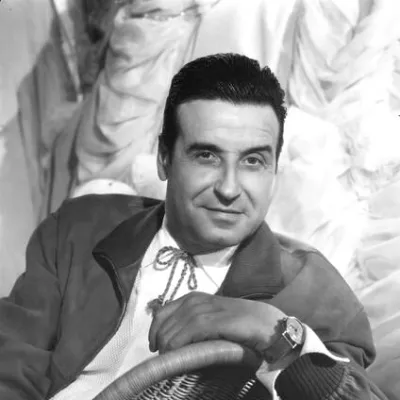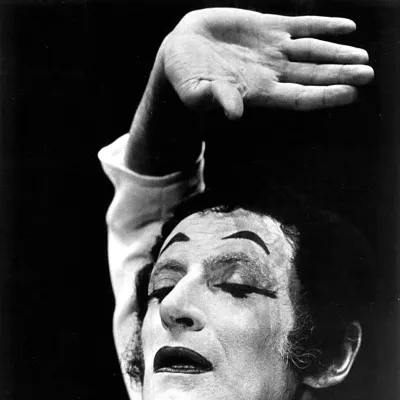
Marcel Marceau
Human Design Chart
Biography
One of the most recognized performers of the 20th century, Marceau, whose real name was Marcel Mangel, grew up in Lille. He was the second son of a butcher, Charles, and homemaker, Ann, who taught their sons to cherish the family's Jewish traditions along with their father's Socialist philosophy. From an early age, Marceau began to imitate everything around him. "When I was five years old my mother took me to see Charlie Chaplin's moving pictures... I sat entranced... It was then I decided to become a mime." As a member of a summer theater group, he longed to play the Tramp and spent long hours imitating Chaplin's walk. He soon began imitating birds, trees, plants, animals and eventually everyday people. Encouraged by his parents to pursue a career in theater, he enrolled in the Lycee Fustel de Coulanges in Alsace but was unable to complete his training due to the outbreak out of WW II. Seeking refuge in Limoges, he studied ceramics and at age 17 won the Masson prize for his work in enamel.
Tragedy struck when his father was seized by the Nazis and died in Auschwitz. Marceau, in his zeal to help his fellow Jews escape the horror of the Nazi regime, assisted his brother Alain, a leader in the Limoges underground, in falsifying identification documents so young men could avoid the German labor camps, citizens could get fake ration cards and Jewish children could be safely smuggled into Switzerland.
Marcel Marceau — Projector with Profile 3/5
Projector 3/5 — Design at a Glance
Marcel Marceau was someone who interacted with his environment through an intense and focused aura. His Human Design type was that of a Projector, meaning he did not have a constant internal energy source but rather drew his strength from interactions and recognition in his surroundings. This configuration gave him the ability to immediately identify weaknesses or errors in systems – much like a bright flashlight shining directly into darkness.
However, this sharp perception required tact. If Marcel Marceau expressed his observations directly and bluntly, he risked causing resistance or discomfort in others, as if shining light too aggressively in their faces. A more effective strategy for him was to attract through his own harmonious presence. By setting an example himself, he became interesting and attractive to others; people came to him of their own accord seeking advice or guidance.
Central to this was the waiting period: Marcel Marceau needed a sincere, appreciative invitation before investing his energy. Without this confirmation from his environment, his design tended towards feeling unseen, which in extreme cases could lead to bitterness. Since Projectors also do not have consistent life energy, phases of rest were essential to avoid burnout and sustainably exercise their specific leadership function. His success depended directly on whether he respected the dynamics of invitation and withdrawal.
Splenic Authority
Marcel Marceau demonstrated decision-making that did not rely on logical analysis or emotional weighing but rather on an immediate physical impulse. His inner authority lay in his defined Spleen Center – the center for health and survival intelligence. This configuration required open emotion and sacral centers, typical for Projectors or Manifestors.
His intuition acted as a fine alarm system: A spontaneous internal stream of instructions signaled immediately whether a situation, environment, or person was beneficial or harmful. This first impulse was the only reliable guide to his well-being and health. Since this signal flow was extremely subtle and present only momentarily in each moment, it required high alertness not to overlook it or have it drowned out by external influences.
Long-term planning often stood in contrast to his nature, as the right action revealed itself only in the present. Flexibility and freedom were therefore essential prerequisites for his functioning. Marcel Marceau had to be able to make short-term decisions to rigorously distance himself from harmful influences and effectively protect himself. A temporary withdrawal helped him clearly perceive this fine inner voice before acting. His strategy was not to commit but to trust in the spontaneous knowledge of his body, which always arrived in the now.
The 3/5 Profile — Martyr / Heretic
Marcel Marceau showed that he gained knowledge through personal experimentation rather than from books. His design as a 3/5 Profile – Explorer and Hero – meant that he had to test everything himself first before conveying it to others. This line of the Adventurer (3) indicated that he learned from mistakes and gathered practical experience. From this, his role developed as Rescuer or Role Model (5), addressing others with knowledge gained through these experiences.
His lifestyle was marked by a deep sensitivity rooted in the here and now. Success did not come to him through targeted planning but arose as a byproduct of authentic action. This often led to misunderstandings and shocks, as innocent actions did not guarantee victory. At the same time, his design functioned as a heretic questioning established norms. In times of crisis, this mutated behavior proved essential for progress. He protested against rigid traditions, not against people themselves, and regulated necessary changes. This combination of experimental learning and norm-breaking action created a strong attraction to his environment, which wanted to participate in his experiences.
Single Definition — Defined & Open Centers
Marcel Marceau had a fixed, reliable self-identity and a deep sense of his own direction. His defined G Center gave him the ability to feel secure in his love for himself and show others new paths without being dependent on them. This inner grounding allowed him to comfort people by helping them understand the nature of human evolution. At the same time, his defined Spleen Center served as a source of spontaneous intuition and well-being. He lived in the present moment, trusted his body instincts for health and safety, and radiated a vital calm based on an immediate, non-rationalized awareness.
In contrast, Marcel Marceau was marked by several open centers that made him vulnerable to external conditioning. His open Head Center led him to take mental inspirations and questions from the environment; if he tended to wonder whether he had to find answers, he could get caught in a whirlpool of confusion because he lacked a consistent way to generate this information himself. Similarly, his open Ajna Center meant that he took on concepts and theories from others but needed to learn not to interpret every idea as his own truth or pretend to have certainty about things he merely reflected.
His open Heart Center meant that he was not designed to consistently apply willpower or give and keep promises. Instead, he tended to want to prove his worth through performance, which could lead into a cycle of self-disapproval if he failed. The solution lay in not taking on commitments to gain recognition. Additionally, his open Solar Plexus absorbed the emotions from his environment; he had to learn not to personalize these feelings but rather observe and let go of them as temporary waves to remain emotionally stable. Finally, his open Root Center took on the adrenalized stress of others. Instead of reducing this pressure through overactivity, which would lead to burnout, it was crucial for him to recognize that some of this pressure did not belong to him and to withdraw purposefully or use the external adrenaline surge consciously and temporarily without being overwhelmed.
Channels for intuitive elegance and authentic behavior.
Marcel Marceau showed himself as someone whose essence was marked by a deep intuitive self-love. His design tended towards securing his survival through authentic behavior, not by adapting to external expectations. This was particularly evident through Channel 57-10 of the Perfect Form. This connection path linked the intuitive insight of the Spleen Center with the G Center and allowed him to show spontaneous, appropriate reactions to his environment. He listened less to words than to the quality of tones and moods around him, creating a rare clarity. Through this connection, he let go of unfounded future anxieties and moved through the world existentially unburdened. His creativity did not arise from intellectual reflection or emotional depth but from the pure practice of living life as himself. This uniqueness drew attention and influenced his environment because his example showed how valuable it is to be present in the here and now.
Additionally, Gate 25 carried a spiritual stance of innocence and individualization that led him through a mystical channel towards unconditional love. This supported his centering. In the background, other gates were at work: Gate 46 called for full dedication in the process and saw the physical body as a temple, while Gate 15 organized collective behavior through natural rhythms. Gate 13 collected experiences for collective memory, Gate 1 emphasized creative mutation without limitations, Gate 44 ensured awareness and transformation through interaction, and Gate 7 projected patterns into the future. Yet the core of his influence lay in his ability to love himself enough to remain true while intuitively acting. He created something healthy and beautiful through his life without needing recognition as motivation. His impact was subtle but effective: he left the world healthier and more beautiful than when he found it, simply by living himself.
Individual Circuitry — Circuit Signature
Marcel Marceau's design tended towards precise form-making rooted in the connection between identity and spleen. This configuration corresponded to Channel 'Perfect Form', which linked the Identity Center with the Spleen Center. While identity stood for the core of selfhood, the spleen provided intuitive knowledge about the essence of things and situations. Together they generated an energy aimed at grasping and representing things in their purest, most efficient structure. It was not mere aesthetics but a deeper perception of how something functions internally and what form it ideally should take to fulfill its purpose optimally.
This channel belonged to the Integration Circuit, which generally secures survival by gaining strength from reacting to life and guiding this energy through proper behavior as well as intuitive knowledge. However, in Marcel Marceau's case, only this specific section was active; other parts of this circuit, such as the connection to the Now Moment or acoustic perception, were not directly linked to these centers in his chart. Since he had a simple definition and his defined centers – here the G Center and Spleen – according to raw content stood together in a group, these areas formed a coherent energetic flow. The energy flowed unimpeded between the center of personality and that of intuition, allowing for a consistent radiance based on inner truth and structural clarity without being disturbed by conflicting, disconnected forces.
Right Angle Cross of the Vessel of Love 1
Marcel Marceau demonstrated a fundamental attitude characterized by deep devotion to feeling and emotional connection. His design bore the signature of the right cross of the Love Vessel, indicating an inner orientation centered around the heart. This configuration described more than just romance; it pointed to a fundamental willingness to open emotionally and touch others through this openness.
In Human Design, this cross means that the energy of the heart does not remain private but wants to act outwardly. It is a power that flows through empathy and compassion. Marcel Marceau lived with this inner logic: His strength lay in making feelings visible and thus building a bridge between people. He did not primarily seek intellectual analysis but rather the authentic expression of what moves one deeply.
This mechanism shaped his way of interacting. Instead of maintaining distance, he used the ability to empathize with others. The right cross of the Love Vessel demands a certain vulnerability as a source of strength. Marcel Marceau showed himself to be someone who acted through emotional engagement. His presence was marked by this gentle yet determined power aimed at reaching hearts and building connections that went beyond mere superficiality.
Saturn Return · Uranus Opposition · Chiron Return · 2nd Saturn Return — Life Cycles
Marcel Marceau demonstrated his inner energy being transformed into concrete results through structured perseverance. His design tended towards taking responsibility and carrying projects to completion, which became particularly evident during Saturn Returns. The first Saturn Return often marks the phase where years of groundwork forms a solid foundation. In 1951 at age 28, Marcel Marceau planned a four-day guest performance in Berlin but ended up staying for two months and was successful. This event illustrated the mechanism: Initial planning expanded through his perseverance into a sustainable success experience based on solid ground.
The second Saturn Return around the age of 59 (here at 55 years old) stands for consolidation and legacy. Marcel Marceau founded the International School of Mime in Paris, École Internationale de Mimodrame de Paris, in 1978 at age 55. This founding was not a spontaneous project but the logical consequence of a life phase focused on structuring knowledge to pass it on to the next generation. His design promoted this ability to pour experiences into institutional structures that would have an impact beyond his own lifetime. Through these two milestones, it became clear how his inner architecture was geared towards longevity and substantial anchoring.
Projector · Splenic Authority — Synthesis
As a Projector whose life was marked by a deep need to recognize and unfold the potential of others (G Center, defined direction), he possessed an extraordinary ability to identify flaws in systems (Projector Design). Yet, his intuitive insight (Gate 57) found expression in behavior aimed at securing and perfecting his own well-being (Channel Perfect Form). This led him to show others new paths always from the focus of his own survival.
A central paradox lay in that while his projection power served to bring light into darkness, it also required a boundary to protect his energy field (Spleen Authority). He experimented and tested ways (3/5 Profile) to learn himself and then pass this knowledge on – a cycle of self-discovery and sharing insights that showed itself in verifiable successes (Saturn Returns) and enabled him to found his own school.
1 Defined Channel
Incarnation Cross - Right Angle Cross of the Vessel of Love 1
Solar Return
The Solar Return shows the moment when the sun returns to its exact birth position - your personal solar year.
Life Cycles
Discover the life cycles with a detailed triple view (birth chart, cycle chart, composite).
Human Design Profile
- Type
- Projector
- Strategy
- Wait for the respectful invitation
- Authority
- Splenic Authority
- Profile
- 3/5 - Martyr / Heretic
- Definition
- Single Definition
- Incarnation Cross
- Right Angle Cross of the Vessel of Love 1
- Date of Birth
- 22.03.1923 08:00
- Place of Birth
- Strasbourg, France
Frequently Asked Questions
What was Marcel Marceau's Human Design type?
What Profile did Marcel Marceau have in Human Design?
What Authority did Marcel Marceau possess?
What incarnation cross did Marcel Marceau have?
When was Marcel Marceau born?
Discover your own Human Design
Are you also a Projector? Find out in a personal reading how to unfold your leadership qualities and recognize the right invitations.
More Personalities
Back to overviewSissy Spacek

Alain-Fournier

Anémone

Ann-Margret

Bourvil
Christian-Jaque