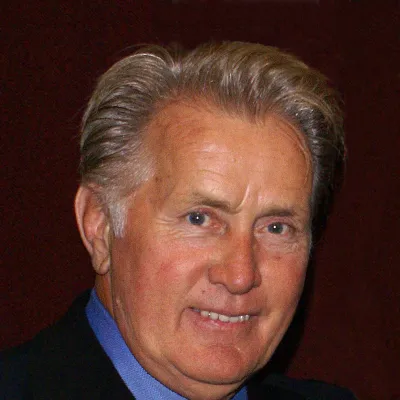
Martin Sheen
Human Design Chart
Biography
A devout Catholic, Sheen was one of nine boys with one sister. He grew up in poverty with a Spanish dad and Irish mom who died when he was 11. In December 1961 he made a long-term, stable marriage with four kids who have all gone into show biz, Ramon, Emilio, Carlos and Renee. A political and social activist, he takes a hands-on role in recognizing the plights of the homeless and hungry, as well as issues of peace and justice, gun control, better quality in Hollywood moral presentations, nuclear disarmament. He has been arrested 70 times for his involvement in protests for issues ranging from nuclear disarmaments to the disenfranchised. In 2000, he was working for Democratic candidates, in agreement with vice-presidential hopeful Joseph Lieberman that "half of Hollywood is in production of sleaze; gratuitous sex and unnecessary violence."
The role which shaped his career was in Apocalypse Now, released in 1979. It also came close to finishing his career: during 18 brutal months of filming in the jungles of the Philippines, he had a heart attack on 5 March 1977. Given the last rites, he pulled through and gave up booze, cigarettes and gambling, but not his drive to succeed. He has worked steadily since then. While shooting The American President in 1995, he met the creator and executive producer, Aaron Sorkin, who later cast him in the superlative hit TV series, West Wing.
With his own family, he backs up his beliefs in strong support and tough-love with action.
Martin Sheen — Manifestor with Profile 5/1
Manifestor 5/1 — Design at a Glance
Martin Sheen's Design shows a tendency towards proactive action, coupled with the ability to move others through his presence. As a Manifestor, he was destined to act as a pioneer and visionary, similar to a Kaiser who sets the direction without engaging in any battle himself. This configuration brings a strong inner energy with it, which, however, often met resistance because his perspectives reached further than those of his environment. This led to him being enthusiastically followed by some groups while being misunderstood or rejected by others. The central challenge in this design lies in minimizing this polarization by informing his environment about his intentions in a timely and clear manner. This strategy of informing is crucial to finding the right following and avoiding unnecessary friction. If he followed this strategy and listened to his inner authority, it rewarded him with a sense of inner peace. If, however, he lived against this design by fighting against resistance or not communicating, this resulted in persistent, deep anger. His design thus shows that his success and well-being directly depended on how well he announced his visions before setting them into the world.
Ego Authority
Martin Sheen's Design shows a tendency towards a clear, will-driven orientation, which, however, stands out through high susceptibility and potential distraction. This configuration of authority in the ego is rare and occurs only in Projectors or Manifestors whose Emotional, Sacral, and Spleen Centers are open, while the Ego Center is defined. His truth lay in the will, which was expressed in spoken words. It was important to listen to oneself while speaking to distinguish when the mind, which serves the open centers and foreign interests, was speaking and when the spontaneous, uncensored Ego Center articulated his own truth.
When Martin Sheen did something that was truly close to his heart, he had the willpower to achieve goals and keep promises. This consistent following of his own will could appear selfish to others but was essential to standing by himself. His drive included both the will for material success and the urge to be first, to cross boundaries, and to leave conventional paths, thereby leading others into new directions. A central mechanism was the need for a pause after goal achievement; continuous work without recovery did not lead to the desired results but to unhealthy exhaustion and illness.
The 5/1 Profile — Heretic / Investigator
Martin Sheen's Design shows a tendency towards a dual role: the reserved researcher who gathers knowledge, and the magnetic hero who offers solutions. As a 5/1 (Hero/Researcher), he showed himself as someone who initially works in depth through Line 1. This phase requires privacy, confidentiality, and reflection to avoid confusion and find the right moment for action. Only when this inner clarity is achieved, does Line 5 come into effect. It grants a nearly magnetic aura that attracts others to seek advice or problem-solving.
This configuration, however, brings a specific challenge with it: As other people reach out to the 5/1s to solve their own problems, there is a risk of overloading. Without clear boundaries, it can lead to the energy of the 5/1 being drained, similar to an expert who is exhausted after hours of consultation. The mechanics show that Martin Sheen had to learn to also say 'No' to maintain the balance between the necessary withdrawal phase of research and the public role of the helper. Only through this demarcation could he utilize the beneficial dynamics without exhausting himself.
Single Definition — Defined & Open Centers
Martin Sheen's Human Design profile indicates a tendency towards clear, conceptual communication, supported by a firm inner identity and available willpower. His defined Ajna Center ensures consistent, trustworthy thinking that is not easily influenced from the outside. This mental precision flows directly into his defined Throat Center, allowing him to reliably express what he thinks. His defined G Center conveys a clear sense of self-love and direction, while the defined Heart Center gives him the willpower to keep promises and determine his own resources.
At the same time, Martin Sheen is exposed to several open centers of the environment. His open Head Center makes him susceptible to mental pressure and the temptation to take on questions from others instead of waiting for inspiration. His open Sacral Center means an inconsistent energy flow; he tends to be energized by the generative energy of others, which can lead to overexertion as he cannot rely on his own sacral answers. Additionally, his open Solar Plexus absorbs the emotions of his environment, making him emotionally vulnerable and prone to personalizing foreign moods as his own. His open Spleen Center brings a fundamental fear of survival security, leading him to cling to things that are not good for him to simulate a sense of well-being. Finally, his open Root Center takes on external stress, leading to a cycle of adrenalized pressure and the need not to identify this as his own to avoid burnout.
Channels for logical leadership, inspiration, acceptance and will.
Martin Sheen's design is characterized by a complex tension between individual radiance and the need for collective recognition. Central is the Channel of Inspiration 1-8, which predestines him to inspire others through his mere existence and bold self-expression. This effect does not arise through words, but through the living example of his uniqueness, which draws public attention and awakens new perspectives in others.
At the same time, the Channel of Alpha 7-31 works, which describes logical, collective leadership with a view to the future. Here, it is not about sole rule, but about influence based on trust, where he first has to be invited by the majority to take on the role of leader or advisor. This channel demands the perfection of leadership skills within existing social patterns.
In the realm of communication, the Channel of Acceptance 17-62 shows a permanent mental engagement with translating visual patterns into language. His mind constantly organizes details to integrate them into his worldview; only what he can logically classify does he understand. This creates an inner pressure to explain his opinions and what he understands in detail, with the right timing being crucial for the receptiveness of others.
The material level is shaped by the Channel of the Money Line 21-45, which emphasizes the will to control and responsibility regarding resources and survival. Here, the striving for independence is in the foreground to be able to work hard without being controlled. This channel seeks a balance between serving others and protecting one's own interests, often through the assumption of leadership roles that combine both authority and operational control.
Additionally, Gates like 33 (Reflection), 19 (Resources/Partners) and 2 (Receptivity) contribute to internal processing, while Gates like 15 (Collective Rhythm) and 4 (Formulation) support adaptation to social structures.
Collective Circuitry — Circuit Signature
Martin Sheen's design sets a tendency towards clear, strategic communication based on logical analysis. As a person with a simple definition, he shows himself as someone whose energy centers - Identity, Throat, Ajna, and Heart - are directly connected to each other. This unity enables a coherent flow of thoughts to actions.
In the Understanding Circuit, he connects Ajna, Throat, and Identity Centers. This promotes the sharing of rational insights, free from emotional distortion, with the aim of improving structures. Parallel, the Knowledge Circuit works through the Inspiration Channel between Throat and Identity Centers. Here, it is about expressing unique individuality and bringing in new ideas. Both circuits use the Throat Center as an expression organ, emphasizing his ability to verbally convey innovation and logic.
Additionally, the Ego Circuit shapes his design through the connection of Throat and Heart Centers. This channel focuses on the accumulation of resources and material well-being through mutual support. Since there is no connection to the Sacral Center, this energy phase requires periods of rest for regeneration. Overall, Martin Sheen's chart works as a cohesive system that unites strategic thinking, individual expression, and resource-oriented cooperation in a single, defined line.
Left Angle Cross of Refinement 1
Martin Sheen's Design shows a tendency towards precise differentiation, which manifests in the ability to organize complex situations through clear distinctions. This structure, the left cross of refinement, acts like a filter that separates the essential from the inessential. It promotes an approach that does not seek quick, blanket solutions but rather the right nuance that resolves a conflict or sharpens an idea.
In everyday life, this means a natural inclination to refine things before finalizing them. It is not about negative perfectionism but about the quality of distinction: what belongs together, what must be separated? This mechanism supports clear communication that avoids misunderstandings by precisely defining terms and intentions.
Martin Sheen, through this configuration, was able to structure convoluted matters without losing sight of the human element. The refinement here serves clarity, not criticism. It allows finding a calm point in chaotic environments where decisions can be made on a solid foundation. This trait characterized his way of handling information: carefully, differentiated, and with the goal of producing the best possible version of something by eliminating unnecessary noise.
Saturn Return · Uranus Opposition · Chiron Return · 2nd Saturn Return — Life Cycles
Martin Sheen's Human Design profile indicated a tendency towards profound, often disruptive turning points triggered by external forces or sudden insights. This dynamic was reflected in 1979 when he experienced a career breakthrough with the lead role in "Apocalypse Now." At 39 years old, he was in the phase of the Uranus Opposition, an astrologically and Human Design relevant cycle that often involves breaking with old structures and confronting new, unexpected possibilities.
The Uranus Opposition typically marks a time when the individual is challenged to break free from established patterns and face a larger, often chaotic truth. For Martin Sheen, this meant not only a professional ascent but also a deeper engagement with his own identity and role in the world. The film "Apocalypse Now," which grapples with the absurdities of war, resonates strongly with the Uranus energy, often associated with themes like rebellion, freedom, and the search for authenticity.
During this phase of his life, Martin Sheen demonstrated a willingness to take on complex, challenging roles that expanded his boundaries. The Uranus Opposition promoted an inner transformation that allowed him to break free from earlier expectations and open up to a new, more authentic form of expression. This breakthrough was thus not only a career milestone but also an expression of his personal development and the quest for deeper truth.
Manifestor · Ego Authority — Synthesis
A central red thread in this design is the dynamic connection between inner authenticity and outer expression. The authority in the ego (paired with an open Solar Plexus) points to a deep, spontaneous inner voice, which is refined through openness to external influences. This is reinforced by the Channel of Knowledge, which channels the drive for individual expression and transformation – a continuous search and formulation of new perspectives (Channel 1-8). The profile as Hero/Researcher (5/1) underscores this tendency to deepen knowledge and make it accessible to others, with Line 5 creating a magnetic attraction to problem solvers and seekers of knowledge.
The central paradox lies in the tension between the Manifestor type, designed to initiate and lead, and the need to discover one's own truth through speaking (ego authority). The Manifestor is a trailblazer, yet the authenticity of their impulses depends on listening to themselves while speaking and distinguishing between inner voice and external expectations. This creates a dynamic balance between the desire to shape the world and the necessity to refine oneself in the process – a constant weighing between one's own will and what actually proves to be true.
4 Defined Channels
Incarnation Cross - Left Angle Cross of Refinement 1
Solar Return
The Solar Return shows the moment when the sun returns to its exact birth position - your personal solar year.
Life Cycles
Discover the life cycles with a detailed triple view (birth chart, cycle chart, composite).
Human Design Profile
- Type
- Manifestor
- Strategy
- To inform others before acting
- Authority
- Ego Authority
- Profile
- 5/1 - Heretic / Investigator
- Definition
- Single Definition
- Incarnation Cross
- Left Angle Cross of Refinement 1
- Date of Birth
- 03.08.1940 20:03
- Place of Birth
- Dayton, OH, United States
Frequently Asked Questions
What is Martin Sheen's Human Design type?
What profile does Martin Sheen have in Human Design?
What authority guides Martin Sheen?
What is Martin Sheen's incarnation cross?
When was Martin Sheen born?
Discover your own Human Design
Are you also a Manifestor? Find out in a personal reading how to use your initiation power peacefully and dissolve resistance.
More Personalities
Back to overviewSissy Spacek

Anémone

Ann-Margret

Arletty
Arno

Artus