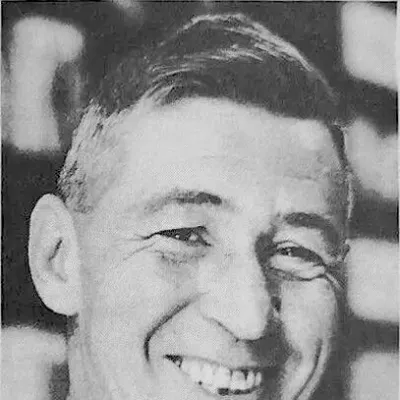
Photo: Wikimedia Commons
Martine Aubry
Human Design Chart
Biography
Aubry joined the PS in 1974 and was appointed Minister of Labour by Prime Minister Édith Cresson in 1991, but lost her position in 1993 after the Right won the legislative elections. However, she became Minister of Social Affairs when Lionel Jospin was appointed Prime Minister in 1997. She is mostly known for having pushed the popular 35-hour workweek law, known as the "Loi Aubry", reducing the nominal length of the normal full-time working week from 39 to 35 hours, and the law that created the Couverture maladie universelle (Universal health care coverage).
Aubry stepped down from her Cabinet post in 2001 to be elected Mayor of Lille in place of Pierre Mauroy. Aubry subsequently lost her seat in the National Assembly in the general election of 2002. In March 2008, she was reelected Mayor of Lille, with 66.55% of the votes.
In November 2008, she was elected to lead the Socialist Party, narrowly defeating Ségolène Royal; while Royal disputed the results, the Socialist Party declared on November 25, 2008 that Aubry had won the contested election. On 28 June 2011, Martine Aubry announced she would seek the Socialist nomination to run in the 2012 presidential election, ultimately losing to her predecessor as First Secretary, François Hollande.
What does Projector 3/5 mean for Martine Aubry?
Projector 3/5 — Design at a Glance
Martine Aubry showed an ability to recognize systems and their hidden flaws immediately. Her Human-Design type Projector endows her with a dense, focused aura that works like a bright flashlight: It sheds light on areas in the environment or within other people that are still in darkness. This intuitive diagnostic power is powerful but carries a risk. If she addresses these flaws directly and unfiltered, her presence can be perceived as intrusive or critical – similar to shining bright light into someone's face. This often provokes resistance rather than cooperation.
The strategic solution lies in holding back. Instead of actively correcting issues, she should attract others through her own harmony and presence. People will then come to her on their own and seek advice. The central imperative is waiting for a sincere, appreciative invitation. Only after this should she take over leadership.
Additionally, her design lacks a constant energy source due to the undefined Sacral Center. She experiences phases of high activity followed by necessary rest periods rather than a steady life force. Without this recovery, burnout threatens. Living according to the principle of patience and waiting for invitations will reward her with success. Ignoring this design and acting on self-initiative leads sooner or later to bitterness as an expression of her non-self.
Self-Projected Authority
Martine Aubry's design featured a rare Projector authority: authority in self. This configuration was characterized by extreme openness, coupled with high susceptibility to distraction through motoric energies. The central challenge lay in not sinking into this vastness or constantly chasing external energy.
Her inner truth resided in her identity. Decisions arose on two paths. First, through self-conversations or stimulated dialogues with others when invited. Crucial was listening within herself and distinguishing between the spontaneous expression of true essence and considered thoughts of the mind. This spontaneous speaking served as an expression of her uniqueness and made her recognizable to others.
Secondly, a physical pull sensation guided Martine Aubry geographically or thematically in a specific direction. She could feel drawn towards something or away from it. Her specific success potential lay in following this inner direction faithfully. By recognizing and maintaining her own alignment, she became a guide for others. This mechanism emphasized the need to trust bodily intuition and authentic self-expression rather than being distracted by external stimuli.
The 3/5 Profile — Martyr / Heretic
Martine Aubry's design inclined towards experimental action and building practical experience through trial and error. She emerged as someone who gains knowledge through personal experimentation and occasional failure, later solving problems for others. This pattern corresponds to the Profile 3/5: The Line 3 demands that everything be tested personally before it is believed; the resulting insights then serve the Line 5, which seeks recognition as a hero or savior. While this role flatters, it can also be painful if experiments fail in public.
Additionally, the Sun in Gate 7 (Line 3) shaped her attitude towards structures. Martine Aubry tended to reject institutional order and test leadership through trial and error rather than adopting predefined roles. Over time, a growing pessimism often developed regarding established leadership. She frequently sought her own role by rejecting groups that would accept her as a member. This tension between the need to be perceived as a competent guide and the necessity of distinguishing herself from convention shaped her characteristic profile of a humorous rebel and storyteller whose appeal rested on this rich reservoir of experience.
Split Definition — Defined & Open Centers
Martine Aubry's Human Design profile indicated a tendency towards constant mental pressure and clear, reliable communication. Her defined Head and Ajna centers created an ongoing internal drive to question and develop concepts – not just as mere thoughts but as inspiring impulses for others. This mental process was her consistent source: she always thought, processed data, and formulated theories in a specific, trustworthy way. Through her defined Throat Center, she could directly translate these mental contents into the world; her voice became the pivot point that transmuted messages from her mind into clear action or speech.
At the same time, she had a fixed G-Center, which gave her a stable self-identity and an inner compass for love and direction. She knew who she was without relying on external validation. This inner security allowed her to show others new perspectives without losing herself.
In contrast, her Heart, Sacral, Solar Plexus, Spleen, and Root Centers were open. This meant that willpower, vital energy, emotions, intuition, and stress were not constant internal resources but rather situational ones taken from the environment. Martine Aubry tended to question in moments of open-heartedness whether she had to do enough to be valuable – a classic pattern of conditioned validation-seeking. Her open Sacral Center made her vulnerable to amplifying others' energy until exhaustion, while her open Solar Plexus led her to absorb emotional waves from her surroundings and sometimes misinterpret them as her own instability. Instead of acting spontaneously out of the Spleen or under adrenal stress from the Root, she had to learn not to personalize these external influences but rather use her defined mental and identity-forming centers as a stable anchor.
Channel 8-1: Inspiration — Channels & Gates
Martine Aubry exhibited a fundamental disposition marked by two dominant energies: on one hand, the drive to act as an authentic role model; on the other, the need to translate complex mental images into meaningful stories. This tension between public expression and inner meaning-making shaped her essence.
The Inspiration Channel 1-8 connected her G-Center with her Throat Center. Through Gate 1, the individual entry for creative self-expression, and Gate 8, the Gateway of Contribution, she had a natural public presence. This channel enabled her to inspire through authentic living rather than primarily through words. She was designed to draw public attention by showcasing her unique identity; her impact arose from simply acting and living, but this exemplary leadership required recognition and praise to thrive. Without such validation, there was a lack of necessary social adaptability.
Parallel to this, the Abstraction Channel 64-47 worked as a Juxta-Channel. It linked her Head Center with her Ajna Center through Gate 64, the Gateway of Confusion, and Gate 47, the Gateway of Understanding. This mental process filtered every experience through a kaleidoscope of images. Martine Aubry constantly sought a story to share in order to find meaning. Since this channel does not offer an internal authority for personal decisions, her mind was ill-suited to understand her own life alone. Instead, clarity emerged only in exchange with others when mental unrest yielded a new image that she could then pass on as an inspiring insight. The combination of both channels created a dynamic where inspiration arose from the contribution made, while mental structuring served to make these experiences understandable for the collective.
Individual Circuitry — Circuit Signature
Martine Aubry was marked by a split definition showing two parallel, not directly connected energetic strands. On one hand, the Knowledge Circuit linked her Throat with her Identity Center through Channel 1-8 (Inspiration), creating a pulsating, acoustic power for individual expression and transformation. On the other hand, the Meaning-Finding Circuit formed a separate connection between Head and Ajna Centers via Channel 47-64 (Abstraction). Here, a cyclical visual processing of emotional waves from the past took place.
Since these circuits lay in different groups, they existed as separate forces alongside each other: The drive for new, inspired identity stood parallel to the need to abstractly reflect on past experiences. Martine Aubry navigated between this innovative expressive strength and deep, wave-like meaning-making without both energies forming a common flow.
Right Angle Cross of the Sphinx 3
Martine Aubry's Human Design reveals a tendency towards profound, often unconscious transformation. This is characterized by accepting life's journey as a sacred process. The Right Cross of the Sphinx 3 describes an archetypal path where life itself becomes the teacher. It’s not about conscious planning but rather being open to being shaped by circumstances. This mechanism works subtly and enduringly, demanding not active control but inner surrender to the flow of events. The challenge lies in letting go of resistance against unchangeable processes. Instead, experiences are used to gain wisdom often without direct intention or strategic planning. Focus is on what’s essential, hidden within everyday life. Through this attitude, a deep connection with one's destiny emerges. It’s not about control but integration. Life events are understood as necessary steps towards maturity. This path requires patience and trust in the natural unfolding of things.
Saturn Return · Uranus Opposition · Chiron Return · 2nd Saturn Return — Life Cycles
Martine Aubry’s career followed a clear progression from technical responsibility to social healing and then political leadership, triggered by astrological major cycles. In 1991, at age 41, she was appointed Minister for Labor. This falls within the Uranus Return cycle, often marking new innovative structures or breaks with established patterns, here signaling entry into high-level technical responsibility.
Six years later, in 1997 at age 47, she became Minister of Social Affairs. This corresponds to the Chiron Return, a fulfillment cycle between ages 49 and 51 where one’s incarnation cross unfolds and meaning becomes tangible. Here, her role deepened towards social healing and integration as her design increasingly manifested in life.
The peak of this development came in 2008 when she was elected to lead the Socialist Party at age 58. This occurred during the second Saturn Return cycle, marking maturity and consolidation. After years of groundwork, her experience now coalesced into a robust political leadership. The sequence of these events underscores how the cyclical structure of her design enabled a gradual expansion of influence: from implementing concrete labor policies to addressing societal tensions and strategic guidance of a large organization. Each cycle brought a new dimension of authority derived from the internal logic of her Human Design chart, confirmed through specific life stations.
Projector · Self-Projected Authority — Synthesis
Martine Aubry’s design reveals a thread of dynamic adaptability and deep understanding of others' patterns. As a Projector with an open Solar Plexus Center, she subtly absorbs emotions from her surroundings while a defined G-Center provides clear inner direction – a combination that allows her to be authentic and recognize the needs of others simultaneously. This ability is enhanced by Channel Inspiration (1-8), which naturally inspires others as she lives out her individuality. The Knowledge Circuit, linked with Head and Ajna Centers, points to a mind constantly seeking understanding and abstracting patterns to open new perspectives.
A central paradox lies in the tension between her open emotional nature and defined G-Center. While she intensely perceives and amplifies others' feelings, she also possesses a firm inner compass that prevents her from losing herself. This duality creates dynamic balance: she can be deeply empathetic without sacrificing her own identity, thus serving as both an understanding guide and clear leader.
2 Defined Channels
Incarnation Cross - Right Angle Cross of the Sphinx 3
Solar Return
The Solar Return shows the moment when the sun returns to its exact birth position - your personal solar year.
Life Cycles
Discover the life cycles with a detailed triple view (birth chart, cycle chart, composite).
Human Design Profile
- Type
- Projector
- Strategy
- Wait for the respectful invitation
- Authority
- Self-Projected Authority
- Profile
- 3/5 - Martyr / Heretic
- Definition
- Split Definition
- Incarnation Cross
- Right Angle Cross of the Sphinx 3
- Date of Birth
- 08.08.1950 15:15
- Place of Birth
- Paris Arrondissement 17, France
Frequently Asked Questions
What is Martine Aubry's Human Design type?
What are Martine Aubry's Profiles in Human Design?
What authority does Martine Aubry have in her Human Design?
What incarnation cross is active for Martine Aubry?
When was Martine Aubry born?
Discover your own Human Design
Are you also a Projector? Find out in a personal reading how to unfold your leadership qualities and recognize the right invitations.
More Personalities
Back to overviewSissy Spacek
Alain-Fournier
Anémone
Ann-Margret

Bourvil
Hergé