
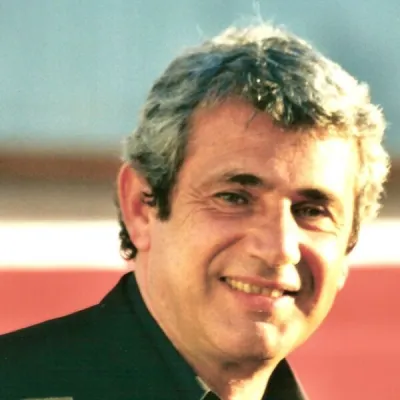
Michel Boujenah
Human Design Chart
Biography
The Human Design of Michel Boujenah: Generator 3/5
Generator 3/5 — Design at a Glance
Michel Boujenah's Human Design profile is characterized by high physical endurance and a tremendous work potential that flows steadily only when he reacts to external impulses rather than initiating actions himself. As a Generator, he possesses abundant sacral energy, which makes him like a strong working horse – provided the task aligns with his inner resonance. This energy unfolds primarily through responding to life signals; saying "yes" from the gut is the crucial trigger for effective action.
If he deviates from this strategy and tries to start things independently or acts against his inner interest, he quickly falls into frustration. Two specific risks characterize this profile: on one hand, the danger of burnout due to energy wasted on tasks without genuine enthusiasm, and on the other hand, a loss of power when he is distracted from his heart's project even though he still has plenty of drive left. Successfully materializing projects therefore only works in harmony with this reactive dynamic. Living according to this design – that is, consistently waiting for the signal and then acting accordingly – rewards him with a deep sense of fulfillment. Ignoring this mechanism and initiating instead inevitably leads to energy depletion and persistent dissatisfaction. His strength lies not in pushing forward but in powerfully responding to what life offers him.
Emotional Authority
Michel Boujenah's design suggests a tendency towards deep emotional foresight, which however requires time and distance. His inner authority stems from the defined Solar Plexus Center. In Human Design mechanics, this center always takes precedence over all other defined centers regardless of what else is active in the chart. This means that his decisions could never be based on momentary snapshots.
Michel Boujenah was subject to a constant emotional wave, a rhythm of ups and downs in his feelings. The world appeared colored by his current mood: A topic might seem absolutely brilliant at one moment, completely worthless the next. However, this immediate feeling was only an initial impression, not the final truth. Quick, spontaneous reactions from within this emotional heat often had negative consequences for him as they missed the full context.
Therefore, the mechanics of his design called for patience and consciously "sleeping on" important decisions. Only by letting the intense feelings subside did he gain the necessary emotional distance. Over time, clarity and calmness set in – only then was the process complete and true intuition accessible. This strategy was particularly crucial for long-term steps as it ensured that his actions were based on comprehensive understanding, not fleeting enthusiasm or rejection.
The 3/5 Profile — Martyr / Heretic
Michel Boujenah's design is characterized by a fundamental tension: the drive to present knowledge publicly as a problem-solver clashes with an inner compulsion for private preparation. As Profile 3/5, the Experimenter and Hero, he acquires insights primarily through personal experimentation and the resulting mistakes. Line 3 teaches him initial skepticism towards prefabricated truths; he must experience things himself to understand them. This process is often chaotic and leads to failures that are necessary for dismantling illusions and developing true adaptability.
Only after this phase of learning through experience does Line 5 come into play: the role of the Hero or Saviour, who provides practical knowledge during crises. But this line demands strict timing and privacy. Michel Boujenah must protect his reflections before sharing them. Premature revelation of his thoughts or unprepared public appearances risk confusing the audience and embarrassing himself. His appeal to others arises precisely from this contrast: he appears as a cool storyteller with a rich trove of life experience. Yet behind this facade lies the necessity to withdraw in order to distill what has been learned. Only when he chooses the right moment and keeps his intentions secret until full maturity can he effectively communicate his knowledge without falling into the trap of projections or public failure. His path is an ongoing balance between impulsive experimentation and strategic restraint.
Triple Split Definition — Defined & Open Centers
Michel Boujenah's Human Design profile is characterized by a rare, consistent inner autonomy. With defined centers in Sacral, G, Solar Plexus, Spleen, Root, Head, Ajna, and Throat, he had constant energy sources for vitality, identity, emotional depth, intuition, stress processing, as well as mental conceptualization and expression. This created a stable presence that was not dependent on external validation.
The open Heart Center formed the only situational access point for willpower. Here there was no consistent energy available to keep promises or maintain ego structures. Instead, the system tended to move in resonance with other egos: It could take on and reflect the integrity or fragility of others' commitments rather than generate them itself. This prevented the need to prove oneself through achievement, as willpower did not function as a permanent trait but rather as a reflective surface for the environment.
While the defined motor centers (Sacral, Root) provided a reliable basis for action and perseverance, the open Heart Center required a strategy of non-acceptance of commitments from the mind. Promises entered into without resonance with another stable ego often led to frustration or feelings of failure due to the lack of necessary energy. The strength lay in the ability to clearly recognize other egos and only engage when there was genuine mutual support.
The defined mental axis (Head-Ajna) generated constant inspirational pressure, which could be translated into clear communication through the defined Throat as long as it was not misunderstood as proof of one's own worth impulsively from the open Heart. The emotional authority of the Solar Plexus Center demanded patience to gain clarity before making decisions – a process supported by consistent sacral energy but not forced by willpower from an open heart.
Michel Boujenah's system thus showed high inner coherence in all areas except ego and material commitment stance. Openness in the Heart was not a lack, but a mechanism for differentiation: It allowed distinguishing between true partnerships and mere competitions by waiting for others' stability rather than having to generate pressure itself.
Channels for ambition, intuition, reflection, mysticism and clarity.
Michel Boujenah's design tended towards patient observation: He gathered experiences as a natural listener and guardian of secrets, reflecting them in withdrawal. This mechanism was shaped by the channel of The Lost Son 13-33, which connects Gate of Listeners (13) with Gate of Withdrawal (33). Here it is about storing information and thinking deeply before sharing deeper truths – a process where timing is crucial to not prematurely or never reveal secrets.
Alongside this reflection, the channel of Synthesis 19-49, which links Gate of Claims (19) with Gate of Principles (49), promoted a strong need for tribal belonging and emotional loyalty as well as the ability to find balance between feasibility and fairness. The emotional frequency of this channel served as glue for social bonds.
Mentally, Michel Boujenah was shown through the channel of Awareness 61-24, which connects Gate of Secrets (61) with Gate of Rationalizing (24). This provided mutative, inspiring knowledge that did not arise from logical deduction but from inner truth and sudden flashes of insight.
In social contexts, the channel of Transformation 54-32 drove ambition and a desire for advancement. By connecting Gate of Ambition (54) with Gate of Continuity (32), he sought recognition through talent and tribal support to improve his position.
Simultaneously, the channel of Power 34-57 offered intuitive survival intelligence. The connection between Gate of Power (34) and Gate of Intuitive Insight (57) created selective awareness and the ability to react spontaneously to dangers or vibrations in the environment.
Additionally, prioritized gates emphasized specific facets: Gate 44 underscored vigilance and transformation through interaction; Gate 7 projected leadership patterns; Gate 2 enabled receptivity for new directions; Gate 5 ensured rhythm and habits; and Gate 29 highlighted persistence and saying the right yes.
Tribal Circuitry — Circuit Signature
Michel Boujenah's design tended towards situational adaptation: As a Triple Generator without defined inner authority, he reacted completely to context, mirroring his environment. This flexibility required regular rest phases as there was no consistent life force flowing from the Sacral Center.
His Knowledge Circuit connected Head and Ajna Centers through Awareness (Channel 24-61). This drove him towards individual transformation and expression of new identities through innovative flashes of insight, separate from other energy flows. Parallel to this, the Meaning Circuit linked Throat with Identity Center via 'The Lost Son' (Channel 33-13). Here the focus was on emotional processing of past experiences and sharing them with the collective to learn together from history.
A third independent stream formed in the Ego Circuit. The channels 'Transformation' (32-54) and 'Synthesis' (49-19) connected Spleen, Root, and Solar Plexus Centers. This promoted cooperation and resource management within tribal contexts as well as balance between giving and taking. Since this group was not linked to sacral energy, it again emphasized the need for pauses for regeneration.
Finally, the Integration Circuit connected Sacral with Spleen Center through 'Power' (34-57). This highlighted the ability to draw strength from reacting to life and making effective use of this energy in the present through intuitive decisions. Overall, a pattern emerged that generated identity and energy not from a fixed source but through interaction – highly flexible yet dependent on the quality of the environment.
Right Angle Cross of the Four Ways 3
Michel Boujenah's design points towards a specific and goal-oriented energy tendency. This configuration is known as the right cross of the four paths 3. It does not describe a general life philosophy but rather a precise mechanistic approach to dealing with challenges and goals.
The term 'four paths' refers to the integration of various strategic approaches. Michel Boujenah's chart shows here a connection between intuition, logical analysis, and practical action. The focus is not on mere contemplation but on effective implementation in the real world. The number 3 in this cross's name emphasizes the importance of communication and exchange as means to an end.
For Michel Boujenah, this means that his success often depends on how well he can integrate different perspectives. He uses his natural ability to see through complex situations to identify clear paths. Here, the mechanics work with the tension between inner clarity and outer action. It is about choosing the right method for each problem and applying it consistently.
This structure promotes a pragmatic attitude. Michel Boujenah showed himself driven by a pursuit of efficiency that should not be understood as hectic but rather as a conscious selection of the most effective steps. His design supports him in seeing obstacles not as blockades, but as necessary stages on the way to a solution. The energy of this cross acts stable and result-oriented without losing sight of the human component.
Saturn Return · Uranus Opposition · Chiron Return · 2nd Saturn Return — Life Cycles
Michel Boujenah's design was characterized by a clear cyclical development that peaked in two decisive phases. In 1980, at age 28, he appeared on camera for the first time – marking his first Saturn return. This astrological-human-design synthetic turning point often signaled professional anchoring and maturity, where years of groundwork condensed into a solid result.
Later, in 2003 at age 51, with his directorial debut 'Père et fils', he experienced the Chiron return. From a Human Design perspective, this is not a process of healing wounds but a fulfillment cycle of blooming. Here, one's incarnation cross increasingly unfolds in life; if lived according to strategy and authority, meaning and purpose become tangible. For Michel Boujenah, this transition from acting to directing showed the healing integration of his experience into creative leadership. The Chiron return thus not only confirmed his artistic transformation but also clarified how his life task manifested concretely and effectively in everyday life during this phase – as a culmination of a long-term development process towards his own voice and responsibility.
Generator · Emotional Authority — Synthesis
Michel Boujenah's design reveals a deeply rooted drive to learn through experience and pass on that knowledge. The combination of emotional authority, the Profile of the Explorer/Hero, and strong sacral definition points to a personality oriented by action and reaction in life. He is destined to collect experiences himself – often through trial and error – before sharing his insights as a mentor or storyteller with others. The defined root base strengthens this tendency by creating a constant pressure to move in the world and become active, while the connection to Head and Ajna Centers provides strong mental capacity for inspiration and reflection.
A central paradox lies in the tension between his need for authentic emotional clarity and the urge for immediate reaction, which arises from his defined sacral energy. While he needs time to process emotions and weigh decisions, his sacral energy calls him to act in the moment. This field of tension between waiting and acting shapes his life path and challenges him to find a balance between inner reflection and outer expression.
5 Defined Channels
Incarnation Cross - Right Angle Cross of the Four Ways 3
Solar Return
The Solar Return shows the moment when the sun returns to its exact birth position - your personal solar year.
Life Cycles
Discover the life cycles with a detailed triple view (birth chart, cycle chart, composite).
Human Design Profile
- Type
- Generator
- Strategy
- To respond - wait for something to respond to
- Authority
- Emotional Authority
- Profile
- 3/5 - Martyr / Heretic
- Definition
- Triple Split
- Incarnation Cross
- Right Angle Cross of the Four Ways 3
- Date of Birth
- 02.11.1952 12:00
- Place of Birth
- Tunis, Tunisia
Frequently Asked Questions
What is Michel Boujenah's Human Design type?
What Profiles does Michel Boujenah have in Human Design?
Which Authority guides Michel Boujenah?
Which incarnation cross is assigned to Michel Boujenah?
When was Michel Boujenah born?
Discover your own Human Design
Are you also a Generator? Find out in a personal reading how to use your sacral energy correctly and discover deep satisfaction.
More Personalities
Back to overviewSissy Spacek

Aaliyah

Alexia

Anémone

Angèle

Ann-Margret
