
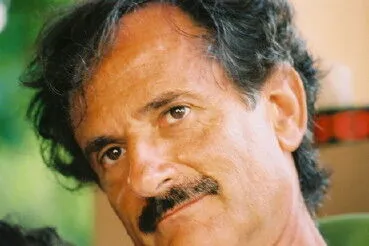
Michel Broué
Human Design Chart
Biography
He holds a chair at Paris Diderot University.
In 2012 he became a fellow of the American Mathematical Society.
He is the son of French historian Pierre Broué.
What does Generator 3/5 mean for Michel Broué?
Generator 3/5 — Design at a Glance
Michel Broué's design points to a tendency towards great endurance and inner strength, comparable to that of a workhorse. However, this energy was not available as a constant impulse but primarily unleashed through reactions to external signals. His path involved waiting for life impulses rather than taking the initiative himself and then responding from his gut.
As a Generator, Michel Broué had abundant sacral energy that he could use to make things in life happen effectively. Crucial was the strategy of reacting: when the sacral center gave a clear “yes,” he could act with full power and be rewarded with deep satisfaction. Living contrary to this rhythm, such as by constantly initiating or engaging in activities without inner resonance, led to frustration and energy loss.
Two stumbling blocks characterized this pattern: one was the risk of wasting energy on things that did not interest him, potentially leading to burnout. The other was being held back from heart projects despite still having full willingness to engage. Michel Broué's design thus showed a clear mechanism: success and fulfillment only arose when he responded to life signals and synchronized his actions with this inner confirmation.
Sacral Authority
Michel Broué's design points towards direct, physically anchored decision-making. As a Generator, he possessed sacral authority, meaning that his strategy and inner guidance were identical. This simplified his process: he did not need complex analysis but reacted to external stimuli with an immediate internal response. This manifested as gut feelings or bursts of energy - audible through grunts, hums, or affirming “mhm”s. Such a reaction signaled vitality and inexhaustible energy, enabling him to perform tasks with great enthusiasm and without rigid purposefulness. His design promoted joy in the work itself. Additionally, his activated spleen center acted as supportive authority. This gave him quick, spontaneous reactivity and reliable access to instinctive perception and physical well-being. Therefore, he could rely on both deeper sacral resonance and rapid spleen-driven instincts, making his decisions agile and intuitive.
The 3/5 Profile — Martyr / Heretic
Michel Broué's design is characterized by the configuration of the Explorer and Hero (Profile 3/5). He had a fundamental stance where he initially accepted nothing but everything needed to be tested himself. This Line 3 of the Adventurer drove him to take risks to gather practical life experiences - even at the cost of failures. From these personal experiments and mistakes, he developed thorough knowledge that he then used to solve others' problems (Line 5).
This combination made him attractive in his environment; others projected leadership qualities onto him and sought his solutions. For Michel Broué, however, this role was ambivalent: on one hand, it flattered the ego to be perceived as a hero, but on the other hand, public failure during experiments could be very painful. His development proceeded through cautious adventurousness (influence of Saturn), which taught him to rationally weigh risks and handle life goals more selectively. At the same time, he carried the burden of projection: the collective expected leadership from him despite his lack of external ambition for it. This led to an internal question about the meaning of this power position. His task was to find practical solutions within this influence context and lead himself without fully succumbing to the expectations of others or being overwhelmed by projected self-righteousness.
Split Definition — Defined & Open Centers
Michel Broué was characterized by a design that emphasized inner stability and direct reaction. His defined G Center gave him a clear sense of self-identity and a firm compass for his life direction; he intuitively knew where to go without having to control it. This inner security contrasted with his open Heart Center: Here, there was no consistent energy for willpower or competition. Instead of needing to prove himself through promises or performance—a trap of the non-self—he learned not to have to prove his worth and to disengage from the spiral of self-doubt.
His ability to act stemmed from his defined Sacral Center, a source of immense vitality. Michel Broué was designed to react to life rather than initiate it. His energy was only available and satisfying when he responded with a clear “yes” to an invitation or question. This was complemented by his defined Throat Center: He had a reliable voice to clearly express his truth and direct actions that sprang from his proper authority. Additionally, his defined Spleen Center provided spontaneous intuition in the here and now, protecting him from survival threats and allowing him to recognize what is essential immediately.
At the same time, Michel Broué was receptive to external influences through several open centers. His open Head and Ajna Centers meant that mental inspiration and concepts were not constant; he tended to get entangled in other people's questions or seek answers he could not give. The wisdom lay in seeing these mental pressures as temporary. His open Solar Plexus absorbed emotions from the environment, making him vulnerable to others' moods; he had to learn not to personalize feelings. Finally, his open Root Center took on external stress, which could lead to a tendency to relieve pressure through hectic activity rather than standing firm.
Channels for logical leadership and intuitive individual power.
Michel Broué was characterized by a configuration that combined logical leadership with instinctive survival intelligence. His design tended towards establishing authority not through mere command but through gaining trust and demonstrating competent patterns. This was effectively achieved through the Alpha Animal Channel 7-31, linking the G Center to the Throat Center. This connection allows understanding trends and playing a role as “the power behind the throne”: Leading by representing and gathering community consent rather than dominating. The success of this leadership depended on Michel Broué being invited by those who shared the same collective context; he could show the way but not take it.
Parallel to this, the Power Channel 34-57 linked his Sacral Center with his Spleen Center, creating deep intuitive awareness. The energy of this channel served individual self-preservation through spontaneous reactions to environmental vibrations, free from mental delay. It was about listening in the here and now and staying physically and energetically fit to recognize dangers or opportunities. This intuitive intelligence was purely individual and did not automatically consider others' needs but secured his own survival.
Additional nuances were provided by prioritized gates: Gate 28 demanded decisions in the here and now with risk assessment, while Gate 27 took on a genetic caregiver role that enriched activities through warmth. Gate 41 propelled evolutionary changes often accompanied by crises or emotional fluctuations to be integrated. In the background, gates like 35 (Change Through Interaction), 5 (Rhythm and Habits) as well as 14 (Skilled Power Preservation) played roles. Other aspects included the yes-saying of Gate 29, the mental storytelling power of Gate 56, the reflective withdrawal of Gate 33, the tribal energy of Gate 45, and the corrective function of Gate 18 in the collective process. Together they formed a profile that swung between strategic influence and instinctive vitality.
Individual Circuitry — Circuit Signature
Michel Broué's design tended towards clear, structured communication free from emotional coloring. This attitude resulted from the Understanding Circuit linking his Throat Center with his Identity Center. This channel, “The Alpha Animal,” promoted sharing logical and rational insights. Since the Solar Plexus Center was not involved here, it was a pure, emotionless ratio. Michel Broué showed himself as someone who focused on and visually structured information to improve things or guide society towards a better future.
Parallel to this existed a separate energetic area: The Integration Circuit linked Michel Broué's Sacral Center with his Spleen Center through the “Power” channel. This was independent of the above communication flow, as Michel Broué had a Split Definition. This connection ensured he drew strength from reacting to life and channeled it through intuitive knowledge. It was about securing his own survival in the here and now. The energy of this circuit was acoustically marked and served self-strengthening and highest individuality.
In summary, Michel Broué's design shaped two parallel, not directly connected forces: On one hand, rational, future-oriented sharing of insights through Head and Identity; on the other hand, intuitive, survival-securing reactions to immediate surroundings through Sacral Center and Spleen. This separation meant that his logical strategy did not automatically flow from his intuitive life energy but worked as an independent, parallel existing ability.
Right Angle Cross of the Unexpected 3
Michel Broué's Human Design profile suggests a tendency towards unpredictable turns that often prove necessary. This configuration is known in Human Design as the Right Cross of the Unexpected. It does not describe a predictable career or linear life, but rather a path marked by sudden events and surprises.
For Michel Broué, this meant that stability was achieved not through control, but through the ability to handle the unexpected. The design shows an energy that questions or breaks traditional structures when they hinder true development. This is not about chaos, but rather a deeper order that only makes sense in retrospect.
People with this configuration often experience moments where everything goes differently than planned. For Michel Broué, this was not a mistake but an integral part of his design. The challenge lay in not resisting these surprises but accepting them as clues to the next step. The Right Cross of the Unexpected demands trust in a process that often eludes conscious understanding. Thus, Michel Broué's path was defined by this dynamic: a life that could not be predicted yet always followed an inner logic visible only through the flow of events.
Saturn Return · Uranus Opposition · Chiron Return · 2nd Saturn Return — Life Cycles
Michel Broué's design set a trend towards structural anchoring and academic legitimization, crystallizing in clear milestones. In 1975, at age 29, he earned his doctorate from the University of Paris under Claude Chevalley and Jean-Pierre Serre. This coincided with his first Saturn Return, a cycle where years of groundwork often culminate in a solid, public achievement. For his chart, this moment was no coincidence but the natural maturation of his inner structure manifesting outwardly.
Later, another phase of confirmation emerged. In 1994, at age 48, he became Senior Member of the Institut universitaire de France and was appointed to ENS de Saint-Cloud. This fell during his Chiron Return (around ages 49–51), a fulfillment cycle where one's incarnation cross unfolds. If Michel Broué had lived according to his strategy and authority, this phase revealed the meaning of his path: not as healing old wounds but as a blooming period when his life purpose increasingly manifested in daily life. This career development underscores the mechanics of his design aimed at long-term integration and recognition by institutions.
Generator · Sacral Authority — Synthesis
A central red thread in this design is a deep, sacral energy (Generator Type) fueled by the need for authentic engagement and following gut feelings (Sacral Authority). This energy constantly seeks meaningful activities where it can flourish with joy – a process marked by Line 3 of Profile as experimenting and trying out. The experiences gained are then willingly shared (Line 5), implying a natural tendency towards leadership and guidance, especially regarding proven patterns (Channel of the Alpha Animal). This cycle of energy generation, experience gathering, and knowledge dissemination seems to be a lifelong motif underscored by career events.
Simultaneously, a paradox is revealed between the need for authentic, sacral-driven activity and the logical claim to leadership (Channel of the Alpha Animal). The design points to someone who intuitively knows what's right but also tends to recognize patterns and communicate them in a structured way. This creates tension between the spontaneous 'yes' or 'no' of sacral response and the desire to be perceived as a competent authority – an internal struggle between free flow and controlled presentation.
2 Defined Channels
Incarnation Cross - Right Angle Cross of the Unexpected 3
Solar Return
The Solar Return shows the moment when the sun returns to its exact birth position - your personal solar year.
Life Cycles
Discover the life cycles with a detailed triple view (birth chart, cycle chart, composite).
Human Design Profile
- Type
- Generator
- Strategy
- To respond - wait for something to respond to
- Authority
- Sacral Authority
- Profile
- 3/5 - Martyr / Heretic
- Definition
- Split Definition
- Incarnation Cross
- Right Angle Cross of the Unexpected 3
- Date of Birth
- 28.10.1946 12:30
- Place of Birth
- Paris, France
Frequently Asked Questions
What is Michel Broué's Human Design type?
What Profile does Michel Broué have in Human Design?
What Authority guides Michel Broué?
Which incarnation cross is active for Michel Broué?
When was Michel Broué born?
Discover your own Human Design
Are you also a Generator? Find out in a personal reading how to use your sacral energy correctly and discover deep satisfaction.
More Personalities
Back to overviewAaliyah

Alexia

Angèle

Anne-Marie

Arcángel

Arno
