
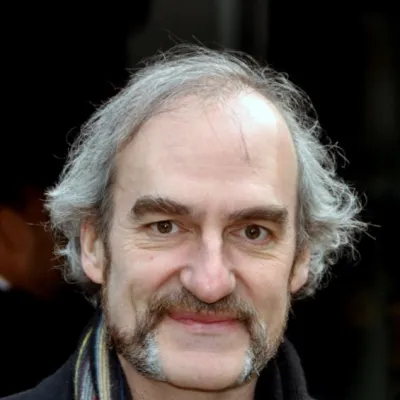
Michel Vuillermoz
Human Design Chart
Biography
Michel Vuillermoz — Generator with Profile 4/6
Generator 4/6 — Design at a Glance
Michel Vuillermoz's design established a foundation of endurance, which, however, strictly depended on the quality of external stimuli. As a Generator, he possessed a high degree of sacral energy, comparable to the strength of a workhorse ready to pull heavy loads – provided it is directed in the right direction. His energy was not an inexhaustible reserve to be freely squandered but a resource that was only activated through reaction. The motto for his actions was not 'initiate' but 'react'.
This mechanism created two clear danger zones. If he threw himself into tasks that internally repelled him, he wasted his energy uselessly and tended towards burnout. Conversely, he suffered when he was prevented from pursuing projects he wanted to continue with full commitment. His success depended on waiting for signals from life and then acting as soon as his Sacral Center gave a clear 'yes'.
If he lived by this principle, his design rewarded him with a deep sense of fulfillment and satisfaction. Ignoring this inner voice and instead trying to initiate things independently, without waiting for impulses, inevitably led to persistent frustration and a noticeable lack of energy. Therefore, his strength lay not in initiative but in the powerful, gut-driven response to what life offered him.
Emotional Authority
Michel Vuillermoz's design set a tendency towards emotional turbulence that shaped his inner decision-making. His inner authority was Emotional Authority, carried by the defined Solar Plexus Center. In Human Design mechanics, this authority always takes precedence over all other defined centers, regardless of further configurations in the chart. This meant that his feelings were not just accompanying phenomena but the central compass for his life.
Michel Vuillermoz was subject to a constant emotional wave that showed itself in a constant up and down. The world appeared to him always colored by his current mood: In one moment, he could be totally enthusiastic about something, in the next, he saw the same thing completely negatively. His immediate feeling was, however, only a snapshot, a first impression that did not necessarily represent his truth. Quick, spontaneous decisions that emerged directly from this emotional heat could therefore have negative consequences.
The mechanics of his authority required patience. The more time Michel Vuillermoz took to let a decision mature, the deeper and more comprehensive he could perceive the situation. This meant reconsidering decisions multiple times and ideally sleeping on them. Over time, the intense feelings subsided, he gained emotional distance, and clarity and calmness set in. Only then was the process complete. This necessity of delay was particularly important for long-term decisions that could have a significant impact on his life course.
The 4/6 Profile — Opportunist / Role Model
Michel Vuillermoz's design was characterized by a clear developmental line: In the first three decades of his life, he acted like an experimentalist, intensively seeking and testing relationships and friendships. This phase of Line 3 in Profile 4/6 served the purpose of gathering experiences.
With the return of Saturn, when Line 6 became active, an inner conflict came to light. Michel Vuillermoz faced the tension between the deep desire for belonging to a community (Line 4) and the need to withdraw to think about the meaning of life (Line 6). This contradiction between heart and head shaped his inner stance.
In his later years, he was expected to function as a wise role model and stand out through cooperation. His motivation was determined by Gate 11, which offered a view of the transpersonal level and wanted to convey ideas. At the same time, Gate 56 was active, which had a strong stimulating power and encouraged others to believe in fixed ideas.
The sixth line also brought a high form of reason into his life, which saw life as sacred. Michel Vuillermoz sought peace and justice, but controlled his emotions by setting conditions. He only entered into commitments if it was ensured that the children resulting from them would have a good life. His big heart remained cautious, to avoid opening up to the wrong people and getting hurt.
Split Definition — Defined & Open Centers
Michel Vuillermoz's design sets a tendency towards consequent willpower and persistent mental structure. His defined Heart Center gave him a natural authority that inclined him to determine his life and keep promises, which strengthened his self-esteem. This energy worked hand in hand with his defined Ajna Center, which provided a trustworthy, specific mental function. Michel Vuillermoz processed data and creativity in the same way consistently, making him largely independent of external mental influences. His mind served as an external authority that created concepts and used pressure to make others think.
This inner stability was reinforced by his defined Sacral Center with an enormous source of vital energy. As a Generator, he had a constant energy drive that only felt satisfying when he responded to questions rather than initiating. His strategy was to wait until the Sacral Center answered to ensure that the energy for the task was actually available. At the same time, his defined Solar Plexus Center indicated that emotional clarity required time for him; he was designed to wait out the emotional wave before making decisions to prevent impulsive actions.
In contrast, his open Head Center revealed a vulnerability to mental pressure and confusion that did not originate from him. Michel Vuillermoz tended to be distracted by doubts and questions from others, which could pull him into a vortex of non-self thoughts. His open G Center meant that he did not have a fixed identity or direction but was initiated through the environment and relationships. This made him vulnerable to "borrowed" identities but also required him to learn to find the right love and direction in the right place. Additionally, his open Root Center absorbed external stress, making him vulnerable to overload when he tried to release pressure he could not control. Finally, his open Spleen Center was sensitive to well-being and fears that came from the environment and required a careful distinction between his own health needs and conditioned reactions.
Channels for curiosity, intimacy and community.
Michel Vuillermoz's design points to a tendency towards intense, time-dependent intimacy and the telling of life parables. His essence is marked by the Union Channel 59-6, which links sacral sexuality with the emotional wave of pleasure and pain. This configuration created an electromagnetic connection that experienced intimacy as the core of creative essence. Since the Solar Plexus forms the inner authority here, any approach required patience: only by waiting for the emotional wave could clarity be gained about whether a relationship was fruitful or not. Spontaneity without this emotional maturation led to confusion; true depth only emerged through long nurturing.
Parallel to this, the Channel of Curiosity 11-56 translated abstract ideas into stories. Michel Vuillermoz acted as a storyteller who sought not facts but inspiration to share new perspectives. His creativity lay in weaving philosophical contemplations into entertaining parables that taught or stimulated others. This ability served less for self-guidance than for sharing experiences with the collective.
The Channel of Community 37-40 connected the need for belonging with the willpower to provide. Here, it was about fair agreements and building trust through direct, personal contacts. Michel Vuillermoz sought his place in the whole by building bridges between individuals and engaging in communities based on mutual respect, not hierarchy. A good business deal or relationship had to be carefully formulated and sealed over time to be beneficial for both sides.
Additionally, Gates 12 (restraint, poetry), 36 (crisis as movement), 4 (logical formulas for future security), 33 (reflection), and 55 (emotional awareness, genetic mutation) contributed to his inner dynamics. These gates underscored the necessity of withdrawal for processing, the use of crises for development, and the ability to transform emotional moods into creative expression.
Tribal Circuitry — Circuit Signature
Michel Vuillermoz's design reveals two separate, parallel operating energetic poles. On one side, his expression is shaped by a connection between the Ajna and Throat Centers. The "Purpose Circuit" (Channel 11-56, Curiosity) drives him to reflect on past experiences and visualize the meaning within them. This energy flows in waves: emotions from the Solar Plexus Center are processed to share insights with the collective. It is not about cold logic but about emotionally understanding history.
Completely independent of this, there exists a second, autonomous block connecting the Heart, Solar Plexus, and Sacral Centers. Here, two circuits operate side by side. The "Ego Circuit" (Channel 37-40, Community) regulates the relationship between giving and taking. Without a direct connection to the Sacral Center in this specific channel, it requires pauses to build resources for cooperation and mutual support. Parallel to this, the "Hunter Circuit" (Channel 59-6, Union) activates primal instincts. It links the life force of the Sacral Center with the emotions of the Solar Plexus to protect, nurture, and preserve family and genetics. These two systems – the communicative and reflective one, and the resource and protective oriented one – are not directly connected in Michel Vuillermoz, but form separate, equally powerful fields.
Right Angle Cross of Eden 4
Michel Vuillermoz's design carried the signature of the right cross of Eden 4. This configuration was characterized by a specific kind of perception that relied less on linear logic and more on a deep, often intuitive connection to the essence of things. It was an energetic alignment that tended not just to analyze complex connections but to grasp them in their entirety and hidden layers.
In Human Design, this cross represents a particular quality of attention. It allowed for looking beyond the obvious surface and recognizing patterns that remained hidden to others. This ability was not primarily cognitive but arose from a resonant openness to what is. Michel Vuillermoz was shown through this structure as someone capable of integrating information and experiences without immediately evaluating or categorizing them.
The energy of this cross fostered a stance of curiosity and exploration. It supported the understanding that truth is often multidimensional and cannot be confined to simple categories. For Michel Vuillermoz, this meant a natural tendency to engage with topics that required depth and complexity. It was less about finding a single correct answer than about recognizing the various facets of a situation. This orientation shaped his way of seeing and understanding the world, allowing him to immerse himself in the subtle nuances of a topic or relationship.
Saturn Return · Uranus Opposition · Chiron Return · 2nd Saturn Return — Life Cycles
Michel Vuillermoz's design indicated a tendency towards later, but lasting recognition. His first Saturn return marked the transition from preparation to visible presence. In 1989, at 27 years old, he debuted in the films 'The Four of Us' and 'A Father Comes Home from the Wars'. This point is mechanically significant: The first Saturn return condenses years of inner work into a solid, public result. It was not a sudden breakthrough but the logical consequence of a long-term positioning that now found its first firm foothold.
This build-up culminated in the Chiron return, a fulfillment cycle in which the individual's incarnation cross unfolds. In 2010, at 48 years old, Michel Vuillermoz was nominated for the César as best supporting actor for 'The Last for the Road'. This event confirms the mechanics of the Chiron return: If the person has lived according to their strategy and authority, the purpose and meaning of the design become experiential. The nomination was not a coincidence but the late bloom of previously laid foundations. The Chiron return here is not a healing process but the confirmation that the chosen path led to the full unfolding of the individual essence. Early career began with the Saturn return, deep recognition came with the Chiron return. Both phases show a clear line: From the first public presence to the affirming recognition of one's artistic identity.
Generator · Emotional Authority — Synthesis
A central red thread in this design is the deep connection between energy and emotional maturity. As a generator with defined sacral energy (Design view) and emotional authority (Authority), the focus is on recognizing and accepting one's own rhythm. The ability to develop concepts consistently (Centers: defined Ajna) is modulated by the emotional wave, leading to profound but time-consuming insights. The Line 4 in the profile (Profile Role) reinforces this aspect by emphasizing a natural inclination towards networking and building solid foundations, underpinned by emotional clarity. The channel of pairing (Channels/Gates) points to a strong, intimate energy that is also marked by emotional processing.
The central paradox lies in the interplay of deep feeling and the desire for meaning. The Perceiver Circuit (Circuit) emphasizes the cyclical nature of emotions and the need to reflect on the past, while the defined Mental Center (Centers) indicates a constant processing of information and concepts. This creates a tension between diving into emotional depth and the need to understand and contextualize these experiences. The documented events (Cycles) show how this dynamic manifests in creative and professional successes.
3 Defined Channels
Incarnation Cross - Right Angle Cross of Eden 4
Solar Return
The Solar Return shows the moment when the sun returns to its exact birth position - your personal solar year.
Life Cycles
Discover the life cycles with a detailed triple view (birth chart, cycle chart, composite).
Human Design Profile
- Type
- Generator
- Strategy
- To respond - wait for something to respond to
- Authority
- Emotional Authority
- Profile
- 4/6 - Opportunist / Role Model
- Definition
- Split Definition
- Incarnation Cross
- Right Angle Cross of Eden 4
- Date of Birth
- 18.12.1962 00:15
- Place of Birth
- Orléans, France
Frequently Asked Questions
What is Michel Vuillermoz's Human Design type?
What Profile does Michel Vuillermoz have in Human Design?
What Authority does Michel Vuillermoz have?
What incarnation cross does Michel Vuillermoz have?
When was Michel Vuillermoz born?
Discover your own Human Design
Are you also a Generator? Find out in a personal reading how to use your sacral energy correctly and discover deep satisfaction.
More Personalities
Back to overviewSissy Spacek

Aaliyah

Alexia

Anémone

Angèle

Ann-Margret
