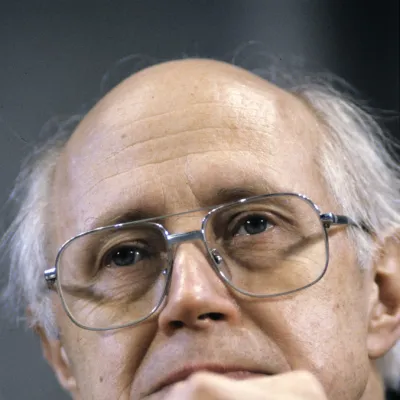
Mstislav Leopoldovich Rostropovich
Human Design Chart
Biography
forming long-standing friendships and artistic partnerships with composers including Dmitri Shostakovich, Sergei Prokofiev, Henri Dutilleux, Witold Lutosławski, Olivier Messiaen, Luciano Berio, Krzysztof Penderecki, Alfred Schnittke, Norbert Moret, Andreas Makris, Leonard Bernstein and Benjamin Britten.
Rostropovich was internationally recognized as a staunch advocate of human rights, and was awarded the 1974 Award of the International League of Human Rights. He was married to the soprano Galina Vishnevskaya and had two daughters, Olga and Elena Rostropovich.
Rostropovich received about 50 awards during his life.
He died on 27 April 2007 in Moscow from intestinal cancer.
Human Design Analysis: Mstislav Leopoldovich Rostropovich as Generator 3/5
Generator 3/5 — Design at a Glance
Mstislav Leopoldovich Rostropovich's design points to a tendency towards great endurance and inner strength. As a Generator, he had plenty of sacral energy that made him extremely strong and resilient – provided this energy was put to its proper use. His nature was less about initiating actions actively than responding to signals from his environment. The motto for his design is: not start but respond.
When an impulse came and his sacral center responded with a clear 'yes', he could utilize this energy to achieve things in his life. Living in harmony with this strategy rewarded him with deep satisfaction. However, if he went against his inner counsel or initiated actions without internal confirmation, it led sooner or later to frustration and loss of energy. Two main pitfalls shaped his potential: on the one hand, the risk of expending energy on tasks that did not suit him, which could lead to exhaustion; on the other hand, the obstacle of continuing work on his heart project when external circumstances prevented him from doing so, even though he was still full of power. His strength thus lay in reacting instinctively and then responding with consistent action.
Sacral Authority
Mstislav Leopoldovich Rostropovich's design points to a tendency towards spontaneous, physically grounded reactions. As a Generator, he possessed sacral authority, which simplified his decision-making process: his strategy was identical to his inner guidance. This mechanism presupposed an open emotional center so that he did not have to decide in his head but trusted immediate impulses.
Sacral authority manifested in him as gut feeling or surge of energy triggered by external stimuli. He learned to pay attention to bodily signals such as grunting, humming, or a confirming 'mm-hm'. When his sacral motor kicked in, he felt vital and alive. Then, almost inexhaustible energy was at his disposal with which he could accomplish his work with great enthusiasm. He was born to go through life with joy and satisfaction, fully immersed in his activities without having to pursue strict purposefulness.
Moreover, his activated spleen center acted as a supportive authority for the sacral center. This connection allowed him to react particularly quickly and spontaneously and make decisions. He had immediate access to his physical well-being and instinctive perception, which he could rely on reliably. This configuration shaped a lifestyle based on direct feedback from the body rather than intellectual deliberations or emotional fluctuations.
The 3/5 Profile — Martyr / Heretic
Mstislav Leopoldovich Rostropovich's design points to a tendency towards heroic experimentation. As a 3/5 profile ('Explorer/Hero and Saviour'), he was someone who initially did not accept anything at face value but had to try everything himself. This line of the adventurer learned from trial and error; failures were essential sources for practical knowledge. The understanding gained through personal experience made him attractive to others interested in his solutions. The fifth line, the Hero Line, used this self-acquired know-how to solve other people's problems. However, this role carried risks: failing in public could be painful since the 3/5 often acted under the spotlight. Additionally, the design demanded careful consideration of each experiment. Energy was only available for practical solutions; protective instincts remained important to avoid being distracted from the actual path by temptations. Resistance and defense were part of this dynamic – attacks were accepted as challenges without him losing himself in them. Shortcuts were avoided since they could neglect crucial details and limit the value of his judgments. Instead, the way went through detailed work and taking on or letting go of connections. Responsibility characterized this process: experiences at the end of the path were necessary to develop true understanding. Thus, a wealth of life experience emerged that he not only told others about but also lived out as functioning models.
Single Definition — Defined & Open Centers
Mstislav Leopoldovich Rostropovich revealed himself as someone with a fixed, reliable self-identity and a clear sense of direction. His defined G Center gave him the ability to love others without becoming dependent on them, along with the natural authority to show others new paths. This inner security was connected to his willpower: The defined Heart Center allowed him to determine his own life and consistently keep promises. He enjoyed working independently, following his internal rhythm of tension and relaxation, and putting his energy where he felt it was right.
The driving force of his design came from the defined Sacral Center. As a guardian of an enormous vital energy source, he had a constant motor pushing him towards activity. His strategy involved not initiating actions but waiting until life posed questions that his Sacral Center could respond to with a clear yes or no. Only through this affirmative reaction did he have the necessary energy for persistence and mastery; mental decisions alone would have led to frustration.
His defined Spleen Center fostered spontaneous intuition and strong body awareness in the present moment, while his defined Root Center provided the necessary pressure to rise materially and master existential challenges.
In contrast, he was receptive to external influences in other areas. His open Head and Ajna Centers meant that he did not have a constant mental inspiration but was open to others' ideas – a potential that could lead to confusion if he identified with foreign questions. His open Throat Center naturally attracted attention but required patience until invitations to speak came; attempting to force control over his expressions would have burdened him. Similarly, his open Solar Plexus absorbed the emotions of his surroundings and amplified them, leading to personalizing emotional waves from others as their own rather than registering them merely as information.
Channels for focus, self-exploration, logic and devotion.
Mstislav Leopoldovich Rostropovich's design tended towards precise focus and instinctive perfection. The Channel of Concentration 52-9 connected the Root Center with the Sacral Center, creating a calm pressure to stay focused and avoid distractions in order to logically assess details. This format energy contained qualities of understanding and challenged patterns to correct and perfect them once the Sacral Center responded.
Parallel to this, the Channel of Exploration 34-10 between the Sacral and G Centers promoted self-love and courage to follow one's own convictions regardless of societal resistance. Through this connection of inner strength (Gate 34) and authentic behavior (Gate 10), individuality was reinforced, encouraging others to live their uniqueness as well.
The Channel of Judgment 58-18 connected the Root with the Spleen Center and nurtured a drive to examine patterns through comparison with past experiences to improve them. This was not mere perfectionism but a logical watchman ensuring that life remains harmonious for the collective by correcting imbalances.
Additionally, the Channel of Devotion 44-26 connected the Spleen with the Heart Center. It endowed an instinctive vigilance to recognize threats or suggest improvements combined with the willpower to mobilize resources for personal goals. This created a sense of what others needed before they knew it and enabled these needs to be convincingly represented.
Individual Gates like 17 (Succession), 15 (collective rhythm) and 27 (care) underscored themes of logical organization and serving care in the background, while Gate 54 marked a desire for worldly success as a path towards spiritual development.
Collective Circuitry — Circuit Signature
Mstislav Leopoldovich Rostropovich's design tended towards solid individuality. The Centering Circuit connected his Sacral with the Identity Center, strengthening inner convictions without necessarily carrying them outwardly. Parallel to this, two additional circuits worked as separate segments. The Understanding Circuit linked Sakral-, Root- and Spleen Centers; this promoted a focused, rational strategy for improving the future free from emotional influence. The Ego Circuit connected Heart and Spleen Centers through the Channel of Devotion. This supported cooperation and give-take in communities but required pauses for resource regeneration as no direct life force flowed from the Sacral Center into this circuit. As a simply defined system, all energies – from sacral power over root urgency to heart appreciation and spleen-based intuition – flowed in one continuous stream. This unity created a coherent yet complex internal dynamics where rational planning, individual constancy, and cooperative action intertwined without external expression structures like the Throat Center directly channeling these energies.
Right Angle Cross of Service 1
Mstislav Leopoldovich Rostropovich's Human Design profile indicated a tendency towards deep, often unconscious devotion to the well-being of others. This configuration, known as the Right Service Cross, shaped his life through a strong desire to serve community or higher values. It was not a conscious choice in the traditional sense but an energetic structure that led him to take responsibility for others and prioritize their needs over his own. This orientation created an inner dynamic of self-sacrifice where his ego often receded to make space for collective goals or the welfare of fellow humans. The energy of this cross acted like a silent engine in the background, significantly influencing his actions and reactions. It promoted empathy and care as central life principles without always needing explicit discussion. Thus, Mstislav Leopoldovich Rostropovich was someone whose identity was closely intertwined with the concept of service. This structure provided him with clear direction, although it sometimes led to overextension when boundaries between self and others blurred. The Right Service Cross 1 therefore did not describe a single action but a fundamental pattern of interaction with the world that permeated his entire existence and largely determined how he lived and acted.
Saturn Return · Uranus Opposition · Chiron Return · 2nd Saturn Return — Life Cycles
Mstislav Leopoldovich Rostropovich's Human Design profile was characterized by a clear tendency towards public recognition and structural validation. His life cycles reflected periods where inner maturity went hand in hand with external validation. In 1966, at the age of 39, he received the title 'People's Artist of the USSR'. This moment coincided with his Uranus opposition, a phase of breaking free from old bonds and embarking on new paths; here, this energy crystallized into state recognition.
Ten years later in 1976 at age 49, he was awarded the Ernst von Siemens Music Prize. This marked his Chiron Return, a fulfillment cycle of about two years where living according to one's incarnation cross and authority leads to blooming and experiencing life's purpose. For Rostropovich, this purpose manifested not as healing but as concrete recognition of his artistic integrity.
The second Saturn return around the age of 54 often brings a phase of consolidation and seriousness. In 1981 he received the Léonie Sonning Music Prize. This event underscored the enduring significance of his work within a framework based on responsibility and long-term impact. The sequence of these awards illustrates how astrological cycles in his design became concrete milestones of professional validation without needing to draw on biographical details beyond those mentioned.
Generator · Sacral Authority — Synthesis
He was a Generator whose life was marked by deep sacral energy. This power source not only fueled his enduring work ethic but also a natural ability to find joy and satisfaction in his tasks – as long as they aligned with his inner drive (Sacral Authority). The Profile of the Experimenter and Helper points to someone who learned through personal experiences and then shared this knowledge with others. The Channel of Concentration (52/9) underscores the capacity for intense focus on details, while the Centering Circuit fosters a strong internal conviction and individuality – a synergy that shaped his work.
A central paradox lay in the tension between the need for free experimentation (Line 3) and the role as a Hero providing solutions for others (Line 5). Although he learned through trial and error, others expected answers and guidance from him. This dynamic led to an internal field of tension that was evident in repeated successes (documented events), but also carried the risk of losing himself in others' expectations and wasting his own energy – a pitfall of Generators.
4 Defined Channels
Incarnation Cross - Right Angle Cross of Service 1
Solar Return
The Solar Return shows the moment when the sun returns to its exact birth position - your personal solar year.
Life Cycles
Discover the life cycles with a detailed triple view (birth chart, cycle chart, composite).
Human Design Profile
- Type
- Generator
- Strategy
- To respond - wait for something to respond to
- Authority
- Sacral Authority
- Profile
- 3/5 - Martyr / Heretic
- Definition
- Single Definition
- Incarnation Cross
- Right Angle Cross of Service 1
- Date of Birth
- 27.03.1927 15:00
- Place of Birth
- Baku, AZE
Frequently Asked Questions
What was Mstislav Leopoldovich Rostropovich's Human Design type?
What Profiles did Mstislav Leopoldovich Rostropovich have?
What Authority did Mstislav Leopoldovich Rostropovich possess?
What incarnation cross did Mstislav Leopoldovich Rostropovich have?
When was Mstislav Leopoldovich Rostropovich born?
Discover your own Human Design
Are you also a Generator? Find out in a personal reading how to use your sacral energy correctly and discover deep satisfaction.
More Personalities
Back to overviewAaliyah

Alexia

Alizée
Angèle

Anne-Marie

Arcángel