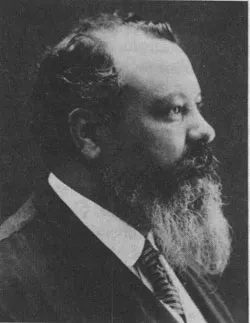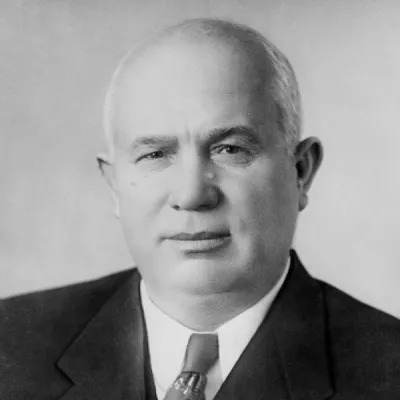
Nikita Khrushchev
Human Design Chart
Biography
Nikita Khrushchev was born in a village in western Russia on 15 April 1894. He was employed as a metal worker during his youth and was a political commissar in the Russian Civil War. Under the sponsorship of Lazar Kaganovich, Khrushchev rose through the ranks of the Soviet hierarchy. During Stalin's rule, he actively supported the Great Purge and approved thousands of arrests. In 1938, Stalin sent him to govern the Ukrainian SSR, and he continued the purges there. During the Great Patriotic War, Khrushchev was again a commissar, serving as an intermediary between Stalin and his generals. He was also present at the defense of Stalingrad, a fact in which he took great pride. After the war, Khrushchev returned to Ukraine before being recalled to Moscow as one of Stalin's close advisers.
On 5 March 1953, the death of Stalin triggered a power struggle in which Khrushchev ultimately emerged victorious upon consolidating his authority as First Secretary of the party's Central Committee.
The Human Design of Nikita Khrushchev: Manifestor 5/2
Nikita Khrushchev is a Manifestor in Human Design – the only type designed to initiate things independently. Manifestors make up only about 9% of humanity and are naturally independent.
The Manifestor's strategy is to inform others clearly and early enough about their intentions before taking action. This reduces resistance and allows the Manifestor's natural impact to unfold freely.
When Nikita Khrushchev lives in alignment with their design, they experience deep peace. The Manifestor's not-self theme is anger – a sign that the natural urge to initiate is being suppressed or obstructed.
Nikita Khrushchev has Splenic Authority – a spontaneous, intuitive authority. The Spleen speaks softly and only once, in the moment. It manifests as instinctive knowing, a subtle body signal that immediately recognizes what is healthy and safe. Those with this authority must learn to trust the first impulse.
Nikita Khrushchev carries the profile 5/2 – Heretic / Hermit. The 5th line represents the Hero and Savior: others project expectations and hopes onto this line, which can deliver practical solutions for universal problems. The 2nd line represents the Natural: a natural talent that is often unconscious and only activated when called out by others.
The incarnation cross "Left Angle Cross of Limitation 1" describes the overarching life purpose and direction of Nikita Khrushchev in Human Design. It consists of the four gate activations of Sun and Earth (personality and design) and only becomes felt when one lives their strategy and authority.
In Nikita's Bodygraph, we find a Single Definition.
Of the 9 centers in the Bodygraph, 4 are defined for Nikita: G Center, Throat Center, Splenic Center and Root Center. 5 centers remain open.
Circuit distribution: Individual (Knowing): 1 channel, Collective (Understanding): 1 channel, Tribal (Ego): 1 channel. Nikita is particularly shaped in the "Individual" area - unique self-expression and mutation.
3 Defined Channels
Incarnation Cross - Left Angle Cross of Limitation 1
Solar Return
The Solar Return shows the moment when the sun returns to its exact birth position - your personal solar year.
Life Cycles
Discover the life cycles with a detailed triple view (birth chart, cycle chart, composite).
Human Design Profile
- Type
- Manifestor
- Strategy
- To inform others before acting
- Authority
- Splenic Authority
- Profile
- 5/2 - Heretic / Hermit
- Definition
- Single Definition
- Incarnation Cross
- Left Angle Cross of Limitation 1
- Date of Birth
- 15.04.1894 12:30
- Place of Birth
- Kalinovka, Russia
Frequently Asked Questions
What Human Design type is Nikita Khrushchev?
What Human Design profile does Nikita Khrushchev have?
How does Nikita Khrushchev best make decisions?
When and where was Nikita Khrushchev born?
What is Nikita Khrushchev's incarnation cross?
Discover your own Human Design
Are you also a Manifestor? Find out in a personal reading how to use your initiation power peacefully and dissolve resistance.
More Personalities
Back to overviewChristian-Jaque
Kesha

Laurent-Eynac
Lucebert
Masaccio
Papus