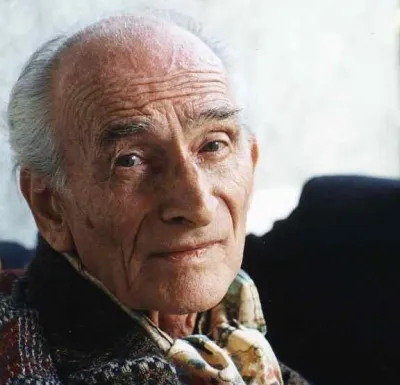
Norbert Elias
Human Design Chart
Biography
During his Breslau years, until 1925, Elias was deeply involved in the German Zionist movement, and acted as one of the leading intellectuals within the German-Jewish youth movement "Blau-Weiss" (Blue-White). During these years he got acquainted with other young Zionists like Erich Fromm, Leo Strauss, Leo Löwenthal and Gershom Scholem. In 1925, Elias moved to Heidelberg, where Alfred Weber accepted him as a candidate for a habilitation (second book project) on the development of modern science. In 1930 Elias chose to cancel this project and followed Karl Mannheim to become his assistant at the University of Frankfurt.
However, after the Nazi take-over in early 1933, Elias fled to Paris. His elderly parents remained in Breslau, where his father died in 1940. On 30 August 1942 his mother was deported to Theresienstadt concentration camp, and on 29 September she was transferred to and killed in Treblinka, dates and places Elias himself never got to know.
In 1935, he moved on to Great Britain, where he worked on his magnum opus, The Civilizing Process, until 1939, now supported by a scholarship from a relief organization for Jewish refugees.
Towards the end of World War II, he worked for British intelligence, investigating hardened Nazis among German prisoners of war.
In 1954 – at the very late age of 57 – he at last gained his first secure academic post, at University College Leicester (which soon became the University of Leicester), first as Lecturer and later as Reader in Sociology. Outside his sociological work he always also wrote poetry.
Elias died at his home in Amsterdam on 1 August 1990, aged 93.
Norbert Elias — Manifesting Generator with Profile 4/6
Manifesting Generator 4/6 — Design at a Glance
Norbert Elias revealed himself as a Hybrid being that combined the constant energy of a Generator with the lightning-fast assertiveness of a Manifestor. This design inclined towards great speed: He could skip steps and quickly pull things into his life. Yet, this rapid pace carried risks. Often, his actions were too quick, overlooking essential stages which forced him to backtrack later and fill in missing pieces. Such setbacks frequently led to frustration, the specific non-self theme of this type.
Furthermore, he tended to pursue multiple projects simultaneously as he responded to many different impulses. Without strict adherence to his strategy – namely waiting until the sacral center gave a clear 'yes' before acting – his creative enthusiasm quickly turned into dissatisfaction. Only through this conscious reaction to inner signals could he harness energy without overburdening himself. When strategy and authority aligned, he enjoyed working on various tasks at once. The pressure to finish one thing before starting another complicated the process for him more than it helped. In this playful switching between projects, he found deep satisfaction and was able to channel his natural dynamism productively without falling into the trap of haste.
Emotional Authority
Norbert Elias exhibited a decision-making stance that did not solidify in the first impulse but gained clarity after a phase of emotional condensation. His inner authority lay in the defined Solar Plexus Center, meaning he stood under a constant wave of rising and subsiding emotions. This emotional dynamism shaped his perception: The world appeared to him always colored through the lens of his current mood. What seemed overwhelmingly positive or inspiring at one moment could appear negative in the next – not because the situation itself changed but because his inner state fluctuated.
For Norbert Elias, therefore, the first emotional impression was no final truth but merely a snapshot. Quick, spontaneous decisions based on this immediate feeling often proved problematic as they rested on transient waves. His strategy involved taking time. By letting decisions rest overnight and asking himself multiple times, he gained emotional distance. Only when intense feelings subsided did calm set in. This process of patience was essential for him, especially with long-term life decisions, as only then could a deep, comprehensive insight be achieved. Emotional authority always took precedence over other defined centers; it determined the rhythm of his orientation in life.
The 4/6 Profile — Opportunist / Role Model
Norbert Elias revealed himself as someone who cultivated a strong experimental drive during his first three decades of life. His Profile 4/6 appeared in this phase like a pure Line 3: he actively sought out new paths, especially within the social fabric of friendships and partnerships. This early restlessness served to explore one's own position before life structured itself.
With Saturn's return, his fundamental attitude changed fundamentally. The internal conflict between heart and head became effective: On one hand, he felt a deep desire for belonging and community (Line 4), on the other hand, it drew him into isolation to reflect on higher existential questions (Line 6). This tension shaped his entire subsequent existence. The fourth line brought natural modesty with it as a protective mechanism against feelings of inadequacy. At the same time, Jupiter's influence helped him partially compensate for these weaknesses and integrate them into the flow of life rather than fighting them.
In later years, he developed an attitude of spiritual observation. The sixth line allowed him to clearly recognize and judge unwarranted actions by others. He lost naive innocence through repeated experiences with social fractures but gained wisdom in return. Norbert Elias became a role model who did not act through dominant presence but rather through cooperation and the example of a wise outsider. His great heart remained cautious, opening only to the right people to prevent hurt.
Single Definition — Defined & Open Centers
Norbert Elias revealed himself as someone who possessed a reliable inner direction and spoke from a deep wellspring of identity. His defined G Center gave him a stable sense of self-love and life mission; he knew intuitively who he was and where it led him, without being confused by external expectations. This firm identity flowed directly into his defined Throat Center: His communication was not merely the product of intellect but the authentic expression of his Higher Self. He spoke clearly, honestly, and with ease, as his voice was directed by this central truth.
At the same time, he possessed enormous vital energy through his defined Sacral Center. As a Generator, he had a constant energy reserve that only felt satisfying when he responded to what was offered to him – not when he initiated. His strategy involved waiting until his inner self said “yes” before acting to avoid frustration and exhaustion. Additionally, his perception went through an emotional wave; his defined Solar Plexus required patience. He learned not to make decisions in the hectic moment but to wait for emotional clarity at the end of the wave, which allowed him deep insights.
In contrast, his vulnerabilities were revealed in the undefined centers. His open Head and Ajna Centers made him receptive to mental inspirations from the environment but also prone to doubts when trying to force answers within the mind. He was not designed to establish conceptual security but rather to flexibly take in ideas. His open Heart Center lacked consistent willpower; he easily fell into a cycle of wanting to prove himself through promises, which led him into self-doubt upon failure. Furthermore, his open Root Center absorbed external stress, making him vulnerable to chaos that did not originate from within himself. Finally, his undefined Spleen was sensitive to well-being; spontaneous decisions were risky for him as they often stemmed from conditioned fear of survival security rather than true intuitive knowledge.
Channels for powerful leadership, self-acceptance and emotional change.
Norbert Elias revealed himself through a profound connection between inner conviction and material creative power. His design laid the foundation to think of new directions not only in thought but also to set them into the world with concrete resources. This primarily happened through the channel of Beat 14-2, which connected the Sacral Center with the G Center. Gate 14 brought the ability to use power and material means strategically to drive mutation, while Gate 2 acted as a conductor for movement through space and time. This combination allowed Norbert Elias to transform innovative impulses into an empowering life force by trusting his generative reaction from the Sacral without having to predict the exact outcome.
Parallel to this, the channel of Exploration 34-10 also came into play, connecting the Sacral with the G Center. Here it was about perfecting personal behavior through self-love and inner strength (Gate 34), combined with the role of authentic self-expression (Gate 10). Norbert Elias lived this independence by following his own convictions, which helped others find their own identity through his aura.
In the realm of leadership and communication, he was shaped by the channel of Alpha Animal 7-31 between G and Throat Centers as well as the channel of Transience 36-35 between Solar Plexus and Throat. The Alpha Animal channel endowed him with logical competence (Gate 7) to understand collective patterns and lead from a position of influence, while Gate 31 represented the voice of the collective leader. He sought the right context to offer his leadership. At the same time, the channel of Transience drove him to deepen experiences emotionally (Gate 36) and seek change through the need for newness (Gate 35), which often kept him in motion.
Additional facets came from prioritized gates: Gate 25 promoted a mystical stance of innocence and centering, while Gate 46 emphasized dedication to the physical process and the here-and-now. In his design, Gate 13 supported reflection on collective continuity and memory, and Gate 9 enabled detailed work in the Sacral Center. On a personality level, Gate 15 acted as a logical rhythm for collective behavior, and Gate 16 with its focus on experimenting and mastery. Norbert Elias used these constellations to locate himself in his time and influence his environment through authentic action and experiential wisdom.
Individual Circuitry — Circuit Signature
Norbert Elias was marked by a simple, coherent energetic structure. His design connected Identity, Sacral Center, Throat and Solar Plexus into one flow. The Knowledge Circuit worked through this: Channel "The Beat" (2-14) linked the Identity Center directly to the Sacral Center. This created a pulsing, acoustic energy that supported his unique path and individual creativity from life force energy. Parallel to this, the Centreing Circuit was at work. Here, Channel "Exploration" (10-34) also connected the Identity Center with the Sacral Center. This fostered confident, brave personalities with strong inner convictions and individual self-worth, even though the connection to external expression form in this specific channel was missing.
Communication occurred through two additional circuits. The Understanding Circuit used Channel "The Alpha Animal" (31-7), which linked the Throat Center with the Identity Center. This allowed for logical, rational insights and strategic structures to be shared focusedly and future-oriented, free from emotional coloring. Complementarily, the Meaning-Finding Circuit worked through Channel "Transience" (35-36). This connected the Throat Center with the Solar Plexus Center. Here, emotional waves and experiences from the past flowed in to be shared together. Norbert Elias’ design thus combined cool reason with emotional reflection: He could look strategically into the future as well as emotionally process and express past meaning questions. All these forces did not work isolated but as an integrated whole of his simple definition.
Right Angle Cross of the Vessel of Love 2
Norbert Elias carried the right cross of the Love Vessel 2 in his design. This configuration shaped his inner disposition through a deeply rooted tendency towards care and nurturing others. In Human Design, this cross represents the ability to offer emotional warmth and support without losing one's own identity. It is an energetic alignment aimed at fostering community and cohesion by making others feel seen and valued.
For Norbert Elias, this meant that he often acted as a stabilizing, caring force in his relationships and interactions. His design suggested that he found strength in emotionally supporting others and providing them with a safe space. This energy is not actively demanding but rather works through quiet presence and reliable attention. It allowed him to take on roles within social contexts based on empathy and the desire to ensure the well-being of fellow humans. Through this configuration, his way of interacting was characterized by a fundamental dedication to the good of the community, from which he himself drew nourishment.
Saturn Return · Uranus Opposition · Chiron Return · 2nd Saturn Return — Life Cycles
Norbert Elias showed a phase of structural consolidation in his late fifties. In 1954, at age 57, he received his first academic position at University College Leicester – an event that coincided precisely with his second Saturn return. This cycle often marks a time in Human Design when internal maturation and years of groundwork condense into a stable external reality. Elias' design suggested that this point was not just a career shift but the integration of earlier experiences into a sustainable life structure. The second Saturn return acts like a foundational process: what was previously experimental or fluid gains permanence and weight. For Elias, this meant that his intellectual approaches now found an institutional framework that could hold their complexity. The mechanics of this cycle promoted the ability to take responsibility for one's creation and place it in a long-term perspective. Elias' path illustrates how such astrologically-specific Human Design windows offer moments of confirmation where inner development synchronizes with external opportunities. This happened not through dramatic upheavals but through gradual anchoring of his work within an academic context.
Manifesting Generator · Emotional Authority — Synthesis
Norbert Elias lived a life marked by a profound drive for understanding and transformation. His design as a Manifesting Generator (with defined Sacral Center) pointed to constant availability of energetic resources – the ability to respond to impulses and quickly set things in motion (Channel 14-2). This dynamic energy was, however, modulated by his emotional authority, which required slow maturation of decisions. The profile as Networker/Role Model reflected a development: initially experimenting and gathering experiences (Line 4), later transitioning into a role where he should impart knowledge and forge connections (Line 6). The combination of quick reaction and emotional maturity shaped his ability to grasp and represent complex social processes.
Central for Norbert Elias was an internal tension field between the desire for innovation and the necessity to anchor this in an established context. The Knowledge Circuit emphasized the importance of individual insights and their expression through the Throat Center, while simultaneously the defined Heart Center focused on relationships and cooperation. This dynamic led him always to seek new perspectives (Gate 2), only to then convey these within a comprehensible framework – a process accompanied by melancholy and awareness of the complexity of social phenomena. A notable event occurred at age 57 when he received an academic position, reflecting the expression of his transformative energy in an established system.
4 Defined Channels
Incarnation Cross - Right Angle Cross of the Vessel of Love 2
Solar Return
The Solar Return shows the moment when the sun returns to its exact birth position - your personal solar year.
Life Cycles
Discover the life cycles with a detailed triple view (birth chart, cycle chart, composite).
Human Design Profile
- Strategy
- To respond - wait for something to respond to
- Authority
- Emotional Authority
- Profile
- 4/6 - Opportunist / Role Model
- Definition
- Single Definition
- Incarnation Cross
- Right Angle Cross of the Vessel of Love 2
- Date of Birth
- 22.06.1897 16:00
- Place of Birth
- Breslau, Germany
Frequently Asked Questions
What was Norbert Elias' Human Design type?
Which Profile did Norbert Elias have in Human Design?
What was Norbert Elias' Authority?
What incarnation cross did Norbert Elias have?
When was Norbert Elias born?
Discover your own Human Design
Are you also a Manifesting Generator? Find out in a personal reading how to unfold your multi-talents and direct your energy wisely.
More Personalities
Back to overviewAldair

Alizée

Angeli

Arletty

Artus
Balthus