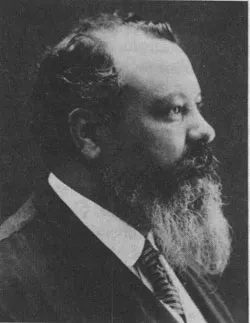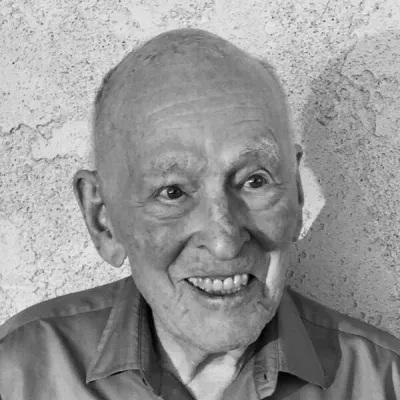
Paul D. Boyer
Human Design Chart
Biography
He authored or co-authored over 150 scientific papers in biochemistry and molecular biology. Boyer died on 2 June 2018 at the age of 99, less than 2 months shy of his 100th birthday.
The Human Design of Paul D. Boyer: Manifestor 6/2
Manifestor 6/2 — Design at a Glance
Paul D. Boyer revealed himself as a pioneer and visionary whose design aimed to lead the world into a new future. His Human Design type was that of a Manifestor, a configuration that made him similar to an emperor in ancient Rome: He had the great vision of an empire but did not wage the necessary wars himself; instead, he sent others out to conquer foreign lands for him. This role came with a specific pain body. Because he often thought ahead more than his environment, Paul D. Boyer was misunderstood and polarized strongly. His huge visions led to being loved and followed by some due to their magnitude, while others disliked or even hated him because of it. To find the right followers, it was crucial for his design to inform others about his plans in a timely and precise manner. This strategy of informing formed the core of how he operated. If Paul D. Boyer lived according to this pattern and followed his inner authority, his system rewarded him with a sense of inner peace. When he acted against this design, however, he felt instead a persistent, deep anger within himself. Thus, his life was marked by the tension between the necessity to clearly communicate his visions and the inevitable reaction of his environment to this pioneering role.
Emotional Authority
Paul D. Boyer showed decision-making that did not conclude at the moment of first excitement or rejection. His design carried Emotional Authority, meaning that his defined Emotional Center took over inner guidance – regardless of which other centers were also defined. This configuration marked him by a constant emotional wave: His perception was always colored by the current mood, with enthusiasm and criticism often alternating quickly. Since these feelings merely represented snapshots and not yet deeper truths, his system required patience at important crossroads. Spontaneous reactions from temporary emotions would have misled him; instead, it was crucial for Paul D. Boyer to allow time for initial intensity to subside. Only through repeatedly 'sleeping on' decisions did he gain the necessary emotional distance. This process allowed him to find clarity and calmness before acting. The inner authority challenged him to hesitate and ask questions until intense fluctuations subsided. Only then would his true direction emerge, positively influencing his life path rather than falling into short-term emotional traps.
The 6/2 Profile — Role Model / Hermit
Paul D. Boyer's design laid a tendency towards a two-phase life development: first experimental exploration, later wise reflection. As a 6/2-line, he acted in his youth like a 3-line – characterized by trial and error. He gathered many personal experiences but withdrew after setbacks to reorient himself. This phase served the practical learning curve through direct action.
After Saturn's return, around age 30, the sixth line fully activated. Boyer then showed a need to reflect on his earlier experiments from a distance. This period was one of intense reflection, healing, and deep self-awareness. He metaphorically retreated into his 'cave' to process accumulated data.
The mechanics of Line 6 emphasized trust in the process and the necessity of absolute certainty for the future. Acting and speaking had to align to ensure success; without assurance of support, Boyer withdrew and refused leadership. The earlier phase of Line 2 projected spontaneous adaptation to new forms often without inner reflection, sometimes leading to conflicts when projections were not comparable.
Once maturity was complete, Paul D. Boyer emerged from his isolation as a wise person. Others recognized his life wisdom and sought him out to partake in his insights and learn the ability for deep introspection. His path demonstrated the transition from superficial adaptation through energy deficiency to profound, trustworthy authority.
Split Definition — Defined & Open Centers
Paul D. Boyer's Human Design profile revealed a reliable inner identity and clear direction supported by his defined G Center. This endowed him with stable self-worth and the ability to show others new perspectives without being dependent on them. His willpower was equally set; the defined Heart Center ensured that he kept promises and used his resources autonomously. He tended to work independently, following his own inner mechanisms, which gave him a natural authority in the material world.
This structure was complemented by his defined Throat Center, serving as a pivot for communication. His voice was steady and honest, drawing directly from his identity and willpower. He did not speak impulsively but expressed his truth with clarity, coupled with the ability to transform through interaction.
At the same time, Paul D. Boyer showed openness in areas susceptible to external influences. His open Head Center made him vulnerable to mental pressure and the temptation to seek answers for others' questions rather than pursuing his own inspiration. He tended to engage with doubts that were not his own, which could distract him. The open Ajna Center amplified this; he absorbed many concepts but risked holding foreign opinions as his own truth or feeling compelled to appear logical where abstraction was natural.
Especially defining was his open Sacral Center. Without a constant source of generative energy, he relied on absorbing the vitality of his environment and reflecting it back. This led him to easily overextend himself if he did not mindfully navigate his boundaries. He had to learn to distinguish between borrowed energy from others and his own need for rest, as his body was not designed to carry continuous high workloads independently. His open Solar Plexus is missing in the list of open centers in the raw content, but the defined Root Center provided him with a firm foundation for existential awareness and dealing with pressure to rise materially or make corrections.
Channels for leadership, devotion, drive and emotional change.
Paul D. Boyer's Human Design profile indicated a tendency towards collective, logical leadership based on community trust. The Alpha Animal Channel 7-31 connected his G Center with his Throat Center, giving him the ability to act as a 'power behind the throne': he analyzed existing patterns (Gate 7) and communicated derived future perspectives (Gate 31). This configuration required an invitation from the majority; his leadership role was only effective if recognized by the collective.
Parallel to this, an entrepreneurial instinct emerged through the Devotion Channel 26-44 between Heart and Spleen Centers. Here, willpower (Gate 26) combined with instinctive vigilance (Gate 44), enabling him to intuitively recognize which ideas or products benefited the 'tribe' – often before they themselves realized their need. This channel functioned as a capitalist who mobilized resources and claimed his fair share in exchange for services.
Emotionally, Paul D. Boyer was driven by a restless search for new experiences. The Recognition Channel 30-41 connected Root pressure (Gate 41) with emotional intuition (Gate 30), leading to desires and fantasies that needed clarification through the emotional wave. This stood in tension with the Transience Channel 35-36 between Solar Plexus and Throat Centers, which actively sought change (Gate 35) and sometimes even used crises (Gate 36) to break out of stagnation and experience emotional depth.
Additional facets of his design came from isolated gates: Gate 24 brought mental mutations and renewal while Gate 45 in the Throat Center embodied the expression of possession and hierarchical structure. In his design, Gate 15 acted as a logical gate for collective flow and humility, complemented by the reflective pause of Gate 33 and the creative restraint of Gate 12. This combination marked him as someone who balanced between the urge for new experience and the necessity of logical, recognized leadership.
Collective Circuitry — Circuit Signature
Paul D. Boyer's Human Design profile indicated a tendency towards structured, rational analysis free from emotional coloring. This was evident in his Understanding Circuit: The Alpha Animal Channel connected his Throat Center directly with his Identity Center. This connection allowed him to articulate clear logical insights and strategic visions for the future – a form of 'emotionless ratio' based purely on logic.
Parallel to this, there was a strong need for emotional meaning-making from the past. His Meaning Circuit linked Paul D. Boyer's Throat, Solar Plexus, and Root Centers. Here, experiences flowed in wave-like cycles: emotions were not only felt but actively shared to collectively learn from past events. This energetic wave contrasted with the cool ratio of another part of his design.
A third aspect concerned cooperation and resources. The Ego Circuit linked Heart and Spleen Centers via the Devotion Channel, promoting a pragmatic understanding of giving and taking as well as the accumulation of material means through joint efforts. As there was no connection to his Sacral Center, this dynamic required necessary rest pauses for energy regeneration.
As someone with split definition, these forces coexisted side by side: One group connected Throat, Identity, Solar Plexus, and Root Centers into a cohesive flow of communication and emotional learning. The other group linked Heart and Spleen Centers for strategic resource building. Both systems were energetically separate, leading Paul D. Boyer to live these different impulses as parallel, not directly mergeable experiences.
Left Angle Cross of the Alpha 1
Paul D. Boyer's Human Design profile indicated a tendency towards deep, often painful confrontation with suffering. The 'left cross of Alpha 1' does not describe an external action but rather an internal process of transformation through experience. It is a configuration aimed at not avoiding the inevitable – pain and loss – but using it as a catalyst for spiritual growth and wisdom.
This mechanism worked less through active shaping of circumstances, but more so through an inner attitude of enduring and understanding. Paul D. Boyer was marked by the necessity to integrate dark experiences in order to gain higher clarity or empathy from them. It was not a path of easy success, but one of alchemical transformation: The raw material was cleansed and transformed into understanding through experience.
The energy of this cross demanded patience and dedication to the process itself. It did not create external structures but formed an inner resilience. Paul D. Boyer lived this dynamic as a constant invitation to see suffering not as an end, but as the beginning of deeper insight. The challenge lay in not taking pain personally, but recognizing it as a universal lesson that ultimately contributed to healing and understanding the human condition.
Saturn Return · Uranus Opposition · Chiron Return · 2nd Saturn Return — Life Cycles
Paul D. Boyer's Human Design profile indicated a tendency towards structured buildup and long-term anchoring, especially visible at career turning points. In 1946, at age 28, he followed a call to the University of Minnesota in St. Paul – initially as an Assistant Professor. For his Human Design, this was a typical moment of the first Saturn return: During this phase, years of groundwork often crystallized into a solid result that enabled new areas of responsibility.
Later, in 1968 at age 50, he was admitted to the American Academy of Arts and Sciences. This fell within his Chiron Return period, an achievement cycle between ages 49 and 51. During this phase, one's incarnation cross increasingly unfolds in life if lived according to strategy and authority. Meaning and purpose become experiential, not as healing old wounds but as the blossoming of one's destiny. Boyer's admission to the Academy marked a point where his life mission was publicly acknowledged and his inner direction became visible outwardly – a sign that he had consistently followed his path.
Manifestor · Emotional Authority — Synthesis
Paul D. Boyer was a Manifestor whose life was characterized by an internal vision and drive for leadership. His design points to a pioneer (Manifestor type, Alpha Animal Channel) who not only blazed new trails himself but also guided others in a certain direction. This ability stemmed from a deeply rooted need for logical structure and future orientation (Understanding Circuit), combined with natural authority that distinguished itself through clear communication (defined Throat Center). Early years were marked by an experimental spirit (6/2 Profile as 3rd Line before Saturn Return), followed by a phase of intense reflection and wisdom-seeking.
A central paradox in Boyer's design lay in the interplay between his emotional authority and the logical focus of the Understanding Circuit. He needed time for feelings to mature (Emotional Authority) while his inner drive was based on quick, goal-oriented decisions – a tension field between intuitive wisdom and rational action. This paradox manifested in him accepting a call (Saturn Return event), but also gaining recognition from academic societies (Chiron Return event) – both results of carefully weighing feeling and logic.
4 Defined Channels
Incarnation Cross - Left Angle Cross of the Alpha 1
Solar Return
The Solar Return shows the moment when the sun returns to its exact birth position - your personal solar year.
Life Cycles
Discover the life cycles with a detailed triple view (birth chart, cycle chart, composite).
Human Design Profile
- Type
- Manifestor
- Strategy
- To inform others before acting
- Authority
- Emotional Authority
- Profile
- 6/2 - Role Model / Hermit
- Definition
- Split Definition
- Incarnation Cross
- Left Angle Cross of the Alpha 1
- Date of Birth
- 31.07.1918 02:45
- Place of Birth
- Provo, UT, United States
Frequently Asked Questions
What was Paul D. Boyer's Human Design type?
What profile did Paul D. Boyer have?
Which authority guided Paul D. Boyer?
What incarnation cross did Paul D. Boyer carry?
When was Paul D. Boyer born?
Discover your own Human Design
Are you also a Manifestor? Find out in a personal reading how to use your initiation power peacefully and dissolve resistance.
More Personalities
Back to overviewChristian-Jaque
Kesha

Lucebert
Masaccio

Nadar
Papus