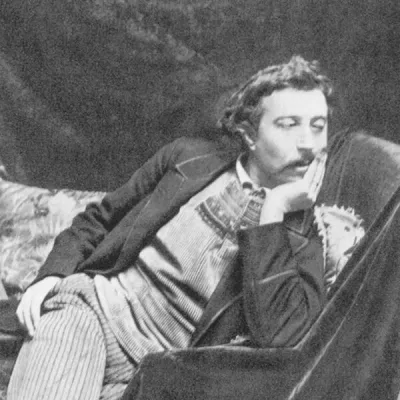
Paul Gauguin
Human Design Chart
Biography
Gauguin was born in Paris in 1848, amidst the tumult of Europe's revolutionary year. In 1850, Gauguin's family settled in Peru, where he experienced a privileged childhood to the age of six, that left a lasting impression on him. Later, financial struggles led them back to France, where Gauguin received formal education. Initially working as a stockbroker, Gauguin started painting in his spare time, his interest in art kindled by visits to galleries and exhibitions. The financial crisis of 1882 significantly impacted his brokerage career, prompting a shift to full-time painting. Gauguin's art education was largely self-taught and informal, shaped significantly by his associations with other artists rather than academic training. His entry into the art world was facilitated by his acquaintance with Camille Pissarro, a leading Impressionist. Pissarro took on a mentor role for Gauguin, introducing him to other Impressionist artists and techniques.
What does Manifesting Generator 6/2 mean for Paul Gauguin?
Manifesting Generator 6/2 — Design at a Glance
Paul Gauguin revealed himself as a Hybrid being: He possessed the constant, sacral energy of a Generator, yet also had the ability for lightning-fast, step-skipping implementation typical of a Manifestor. This configuration significantly shaped his approach to work. Instead of proceeding linearly, he could quickly bring things into his life and often worked on several projects simultaneously.
However, this speed carried risks. Sometimes Paul Gauguin was too quick and skipped important intermediate steps. In such cases, he had to backtrack and make up for the missing stages, which rapidly led to frustration – the specific non-self theme of this type. Also, responding simultaneously to many different impulses could turn his joy in creation into dissatisfaction if strategy and inner authority were not aligned.
To use this dynamic constructively, his strategy was that of a Generator: Not initiating but reacting to impulses. Only when his sacral center responded with a clear "yes" did he begin to act. Regular checks to see if ongoing projects still received this internal approval were crucial. When this was the case, Paul Gauguin drew deep satisfaction from his work. The pressure to finish one thing before starting another became a problem for him; instead, he found his true strength in "play mode," where variety and fun were the driving forces.
Emotional Authority
Paul Gauguin exhibited a decision-making structure that required patience and temporal distance. His inner authority lay in the defined Solar Plexus Center, meaning his deepest truth did not lie in the first reaction but became visible only after emotional waves subsided. He experienced a constant oscillation of feelings; the world appeared to him always colored by his current mood. At one moment he could be totally enthused about something, and in the next view it completely negatively.
This design required "sleeping on" decisions. Quick, spontaneous judgments based on immediate emotion were unreliable for him and could have negative consequences since the feeling at that moment was just a snapshot—a first impression, not yet the truth. The more time he took, the deeper his understanding became. The process of maturation demanded that he hesitate and ask questions multiple times. Over time, intense feelings subsided, emotional distance grew, clarity and calmness emerged. Only then had he gone through the process. This mechanism was particularly important for long-term decisions with significant influence on his life course. Paul Gauguin needed to wait until the emotional wave had ebbed to find his authentic direction rather than reacting to enthusiasm or rejection in the moment.
The 6/2 Profile — Role Model / Hermit
Paul Gauguin's development followed a clear two-phase dynamic. In his younger years, before the age of 30, a pattern of experimenting, trial and error dominated. The driving principle was trying out different paths, followed by withdrawal after failures. This phase served to gather many personal life experiences and learn about one’s own limits through direct confrontation with reality.
After the age of 30, this dynamic fundamentally changed. The energy shifted from active experimentation to deep reflection. Paul Gauguin metaphorically withdrew to gain distance from earlier experiences. This period of isolation was not a passive pause but an intense process of healing and self-discovery. He looked back on past mistakes with new understanding and processed them.
The result of this long inner work was increased wisdom. Emerging from this withdrawal, he became someone who mastered deep introspection. His ability to learn from his own mistakes and structure these insights became visible to others. People were drawn to him by this authority to share in his life wisdom. The earlier search for correction through crises had transformed into a stable internal stance that served as an example to others.
Split Definition — Defined & Open Centers
Paul Gauguin revealed himself as someone with a strong internal structure and clear identity, connected to a permanent access to generative energy. His design showed a tendency to act from his own will and personal direction, provided that communication was steady and authentic when sourced from these defined centers. The defined centers – Throat, G Center, Heart, Sacral, Solar Plexus, and Root – formed the constant mechanical foundation. The defined G Center gave him reliable self-understanding and inner direction, while the defined Heart Center allowed independent willpower and resource control. His energy source came from the defined Sacral Center, which provided continuous vitality if he responded to requests rather than initiating them. Decisions were governed by the rhythm of his defined Solar Plexus Center; emotional clarity emerged only through patience and waiting for the emotional wave. The defined Root Center offered a set way of dealing with stress and pressure. In contrast, Head, Ajna, and Spleen were open. These areas reflected the environment: There was no constant mental inspiration (Head/Ajna), but rather openness to ideas from the surroundings. His open Spleen was vulnerable to conditioned fears about survival and well-being; spontaneous decisions here were risky because intuitive security depended on the environment. Paul Gauguin tended to be influenced by external impulses instead of trusting his inner authority. The interplay of strong internal structure and open receptivity in mental as well as intuitive areas shaped his essence: He acted with clear identity and willpower, but had to learn not to misinterpret his open centers as his own truth.
Channels for intimacy, pioneering spirit, change and emotions.
Paul Gauguin's life was marked by a deep drive for intense fusion, which constantly collided with the need for new, often crisis-ridden experiences. This dynamic resulted from Channel of Union 59-6 in his personality: Here, sacral sexuality (Gate 59) merged with the emotional wave of pleasure and pain (Gate 6). This created a strong desire for intimacy that was determined by the emotional wave movement. Paul Gauguin had to wait until this wave brought clarity to determine if a connection was truly fruitful; otherwise confusion and extreme complications in social interactions were likely.
Simultaneously, Channel of Transience 36-35 propelled him forward. This Juxta-channel connected the Gate of Crisis (36) with the Gate of Change (35). He restlessly sought new impressions, often by provoking crises to set things in motion and explore the depth of his feelings. This conflicted with the stabilizing power of Union: While he needed intimacy, his search for novelty destabilized relationships as partners felt pressured into adventures that were not right for them.
In his design, Channel of Initiation 51-25 was also at work. Here, Gate of Shock (51), which always wanted to be first and competitive, merged with the Gate of Self Spirit (25), representing beauty and universal love. This structure led Paul Gauguin to be initiated through competition and 'shocks'. He awakened competitiveness in others while overstepping his limits. Initiation did not occur through planning but as a mystical process he had to survive by living authentically.
Additionally, channels like Channel of Emotional Release 39-55 (Juxta) were influential, using moodiness and provocation to strengthen the spirit. Paul Gauguin learned to accept his emotional wave rather than rationalize it. His strength lay in entering transformative connections through authentic living and waiting for emotional clarity, even if this came with the price of transience.
Individual Circuitry — Circuit Signature
Paul Gauguin's design inclined towards a strongly fortified, courageous personality that radiated unique individuality. This inner stability stems from the Centering Circuit, which connected his Identity and Heart Centers in him. This created an individual core of self-worth and divine identity, but remained without direct expression through Throat Center; thus, his firm convictions often stayed internalized and unverbalized.
Parallel to this, the Knowledge Circuit acted as a driving force for transformation and his own path. In Paul Gauguin's case, this circuit linked Solar Plexus with Root Centers, releasing emotional waves. This energy supported the expression of new identity through emotional pulsations, driven by the necessity to bring change into the world.
Two more circuits shaped his experience: The Meaning Circuit connected Throat and Solar Plexus Centers, allowing him to reflect on past experiences and express them emotionally in wave-like patterns. Simultaneously, the Archer Circuit linked Sacral and Solar Plexus Centers, endowing him with primordial energies for protection and preservation of his genetics as well as care for family.
In Paul Gauguin's case, these forces existed as divided definitions: The groups around the Solar Plexus Center (connected to Root, Throat, and Sacral) formed a continuous flow of emotion, expression, and instinct. Separately stood the second group from Identity and Heart Centers as an isolated, individual core. This structure marked him as someone who deeply experienced emotional transformations while his inner value claim remained independent and non-negotiable.
Left Angle Cross of Separation 1
Paul Gauguin's design indicated a tendency towards radical separation. He defined himself as someone who needed to establish his identity by breaking away from groups and collective expectations. This inner necessity to separate from social structures served the protection of his own authenticity.
This dynamic stemmed from the influence of the left Separation Cross 1 in his chart. This constellation pattern described a higher life task: cutting through bonds that no longer fit true nature. For Paul Gauguin, this distancing was not an arbitrary act of rebellion but a mechanical prerequisite for clarity. Only by letting go of external guidelines could he create space for his own essence.
The mechanics of this cross emphasized separation as a constructive process. It showed that Paul Gauguin often found his greatest integrity in moments of isolation or breaking with the collective. This demarcation was thus not an end but a means to self-discovery. His design challenged him repeatedly to free himself from foreign norms so he would not fall into the role of a conformist. This constant recalibration through distance shaped his path and secured for him the ability to act independently rather than adapt to given patterns.
Saturn Return · Uranus Opposition · Chiron Return — Life Cycles
Paul Gauguin's development unfolded in three distinct phases, structured by astrological cycles. The first Saturn Return around his 25th year marked entry into binding responsibility. This was concretely seen in 1873 when he married the Dane Mette-Sophie Gad. This cycle laid the foundation for social anchoring and assuming familial duties.
With the Uranus Opposition around age 40, a break with previous structures occurred. It involved freeing oneself from established patterns to develop an independent expression. In 1888, Paul Gauguin began developing a new, independent painting style. This step marked the turning point away from conventional expectations towards individual artistic identity and autonomy.
The Chiron Return around age 49 represented the phase of fulfillment. Here, one's own incarnation cross unfolds if one has lived according to strategy and authority beforehand; meaning and purpose become experiential. It was not about healing old wounds but about the blossoming of one's essence. This became effective in 1897 with the appearance of 'Noa Noa', which Paul Gauguin himself illustrated. This work stood for the completion of his creative expression and the visibility of his life purpose.
Manifesting Generator · Emotional Authority — Synthesis
He lived a life marked by a deep drive towards authentic expression. The combination of manifesting Generator energy and emotional authority (Sacral Center connected with Throat Center) led to a personality that acted both impulsively and reflectively. He did not follow the conventional path but always sought new ways to express his inner truth – a process amplified by the defined communication and manifestation center. The 6/2 Profile line points towards development where early experiments (up until around age 30) were followed by a phase of intense reflection, and finally wise guidance for others.
A central paradox lay in the tension between the need for quick action brought about by the manifesting component and the emotional wave requiring thorough engagement with feelings (Channel 59-6). He tended to initiate things quickly but had to repeatedly backtrack to gain clarity. This interplay of initiation and reaction shaped his path, as well as the search for individual affirmation in the knowledge feedback loop – a cycle of creative impulse, emotional processing, and the desire to manifest new things in the world.
4 Defined Channels
Incarnation Cross - Left Angle Cross of Separation 1
Solar Return
The Solar Return shows the moment when the sun returns to its exact birth position - your personal solar year.
Life Cycles
Discover the life cycles with a detailed triple view (birth chart, cycle chart, composite).
Human Design Profile
- Strategy
- To respond - wait for something to respond to
- Authority
- Emotional Authority
- Profile
- 6/2 - Role Model / Hermit
- Definition
- Split Definition
- Incarnation Cross
- Left Angle Cross of Separation 1
- Date of Birth
- 07.06.1848 10:00
- Place of Birth
- Paris, France
Frequently Asked Questions
What was Paul Gauguin's Human Design type?
What profile did Paul Gauguin have in Human Design?
Which authority guided Paul Gauguin?
Which incarnation cross was active for Paul Gauguin?
When was Paul Gauguin born?
Discover your own Human Design
Are you also a Manifesting Generator? Find out in a personal reading how to unfold your multi-talents and direct your energy wisely.
More Personalities
Back to overviewAldair

Alizée

Angeli

Arletty

Artus

Baekhyun