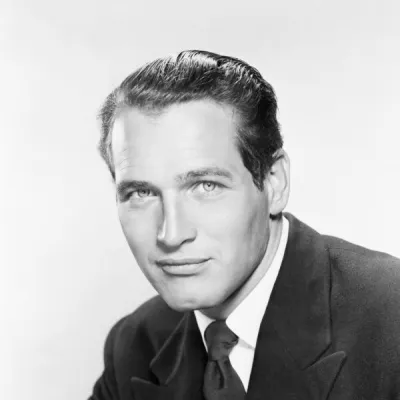
Paul Newman
Human Design Chart
Biography
Born in Cleveland Heights, Ohio, and raised in Shaker Heights, the eastern suburbs of Cleveland, Newman showed an interest in theater as a child and at age 10 performed in a stage production of Saint George and the Dragon at the Cleveland Play House. He received his Bachelor of Arts degree in drama and economics from Kenyon College in 1949. After touring with several summer stock companies including the Belfry Players, Newman attended the Yale School of Drama for a year before studying at the Actors Studio under Lee Strasberg. His first starring Broadway role was in William Inge's Picnic in 1953 and his final was in Thornton Wilder’s Our Town in 2003.
Newman won the Academy Award for Best Actor for his performance in The Color of Money (1986).
Paul Newman as a Projector 5/1 in Human Design
Projector 5/1 — Design at a Glance
Paul Newman lived as a Projector whose design was characterized by a specific way of perception and interaction. His aura appeared like a focused beam of light that instantly revealed weaknesses or 'dark' areas in others. This ability to quickly identify systemic flaws was his natural instinct. However, this intensity required careful handling: Direct confrontation with the faults of others would often provoke resistance, as if shining a bright light directly into someone's face.
Instead, his most effective strategy involved setting an example through his own actions. By embodying harmonious states, he naturally drew others to him who then sought his advice. His design suggested that he should wait for honest invitations rather than independently entering systems. Without a constant intrinsic energy source from the Sacral Center, his rhythm was marked by phases of high activity and necessary recovery. These cycles were crucial to avoid burnout. If he followed this strategy – waiting on invitation and leading instead of forcing – he was rewarded with success. Ignoring this path and trying to fight against it or impose his insights led to bitterness in the Non-Self. His life thus illustrated the tension between his sharp diagnostic ability and the necessity to use it only when invited.
Emotional Authority
Paul Newman exhibited an inner decision-making structure deeply influenced by emotional waves. His design carried Emotional Authority, meaning that his defined Emotional Center always held the highest priority in decisions – regardless of which other centers were also defined in his graph. This configuration generated a constant up-and-down of feelings; his perception of the world was always colored by the current mood. What appeared inspiring at one moment could be perceived negatively in the next.
For Paul Newman, therefore, immediate feeling was only a snapshot and not necessarily the truth. Quick, spontaneous decisions based on emotional peaks risked negative consequences as they were grounded in transient impulses. His strategy involved taking time to let decisions mature. He should practice patience and consider important questions multiple times 'overnight'. Through this delay, intense feelings subsided, he gained emotional distance, and clarity and calmness eventually set in. This process of waiting was essential for long-term decisions that significantly influenced his life course. Only by navigating through the emotional phase did he make choices based on true inner truth.
The 5/1 Profile — Heretic / Investigator
Paul Newman emerged as someone who, through his 5/1 configuration, possessed almost magnetic appeal. Others instinctively sought him out for solutions to their problems, sensing that he had deep reservoirs of knowledge to offer. This profile combined the intense research line 1 with the heroic line 5: He gathered knowledge in depth and made it available to the collective. Yet this gift carried a risk. Without clear boundaries, there was a danger of him becoming overworked like an expert, drained by the endless demands of others. His energy could be easily sapped if he did not learn to say no.
Additionally, Gate 41 shaped his personality through themes of empowerment and fantasy. Others projected high expectations on him, which often led to internal frustration when external constraints limited this freedom. The limitation forced him, however, to choose a single clear vision. Simultaneously, Gate 44 with its focus on hierarchies and agreements played a role. For economic success and lasting harmony, he needed clear rules in social structures. Through this structure, he could leverage his superior pattern recognition without being overwhelmed by the collective. The balance between retreating to research and stepping forward as a problem-solver was central to his life process. Only through setting boundaries could he optimally utilize his gifts without burning out.
Split Definition — Defined & Open Centers
Paul Newman revealed himself as someone with a clear inner direction and strong willpower, yet his decisions were always filtered through an emotional wave. His defined G Center gave him reliable self-worth and a sense of life mission; he knew where he belonged without being dependent on others. This inner security was reinforced by the also defined Heart Center, which endowed him with the strength to keep promises and act autonomously. He had the energy to take responsibility and work towards his goals.
At the same time, his defined Solar Plexus as an internal authority fostered deep emotional intelligence. Paul Newman was designed not to make impulsive decisions but to wait until the emotional wave clarified itself. Only in this calm did he find his truth. His defined Spleen Center complemented this with spontaneous intuition in the present moment, while the defined Root Center provided the necessary pressure to remain existentially vigilant and move forward. Communication occurred through a defined Throat Center that translated these inner energies into clear expressions.
In contrast, his open Head and Ajna Centers revealed a vulnerability to mental confusion. He tended to engage with questions not of his own making or sought answers externally rather than trusting his internal authority. This was especially evident in his open Sacral Center: here, there was no consistent generative energy. Instead, he unconsciously absorbed the life force of his environment, leading him to overextend and neglect boundaries because he mistook foreign energy for his own. This openness required him to be careful with his energy level and not react to conditioned expectations.
Channel 31-7: The Alpha — Channels & Gates
Paul Newman exhibited a foundational stance of collective leadership based on logical analysis and gaining trust. The Alpha Animal Channel 7-31 connected his G Center with the Throat Center; he did not act as an autocrat but rather as someone invited by demonstrating competence to guide the community. His voice carried the weight of the collective leader (Gate 31), supported by the logical role of self (Gate 7). Success came when recognized by the majority, since his answers were rarely universal.
Parallel to this, he possessed an instinctive awareness to recognize needs before they became conscious. The Channel of Devotion 44-26 connected his Spleen Center with the Heart Center. This configuration gave him the ability to use historical memories and ego strength to convincingly sell improvements. He functioned as an entrepreneur or promoter who generated resources and in exchange asked for what felt justified to him. His instinct served as a filter: if he could not “smell” something, he would avoid it.
Another defining aspect was his stubborn fight for individual integrity. The Channel of Life Struggle 38-28 connected Root Center with Spleen Center. Here, it was about finding meaning in struggles and resisting external forces that diverted him from his true nature. This adrenalized energy drove him to follow his own path even if it risked security.
Additionally, he experienced a pulsating emotional wave. The Channel of Emotion Release 39-55 connected Root Center with Solar Plexus Center. He was prone to mood swings oscillating between ecstatic joy and melancholic insecurity. Authenticity in this emotional alchemy allowed him to provoke the right spirit in others and express deep truths.
Individual Gates complemented this picture: Gate 41 (Evolution/Crisis) and Gate 24 (mental mutation/inner stillness) at the crossroads emphasized the need to go through change. Personality Gates like Gate 13 (collective memory), Gate 58 (pattern recognition/perfectionism), and Gate 1 (creative mutation here-and-now) supported his ability to forge new paths. Design Gates such as Gate 49 (sacrifice/principles), Gate 6 (friction/fertility), and Gate 22 (openness/calmness) rounded out his profile by providing a sensitive response to the tribe and the capacity for listening.
Individual Circuitry — Circuit Signature
Paul Newman's design laid a tendency towards emotional intensity and strategic clarity. As a person with Split Definition, he possessed two separate, parallel existing energetic blocks: one in Throat and G Centers and another broader block comprising Heart, Spleen, Root, and Solar Plexus Centers. These centers were not directly connected but formed distinct experiential fields.
The Knowledge Circuit linked his Spleen, Root, and Solar Plexus Centers into a single flow. Through the Channel 'Life Struggle' (28-38), pulsating energy of survival struggle worked, while the Channel 'Emotions Release' (55-39) triggered emotional waves. This shaped his inner dynamics through auditory, now-generated impulses and melancholic creativity that remained emotionally filtered.
In contrast, the Understanding Circuit connected Throat and Identity Centers via the Channel 'The Alpha Animal' (31-7). Here it was about focused visual thinking and sharing logical insights free from emotions – a pure ratio energy for the future.
The Ego Circuit linked Heart and Spleen Centers through the Channel 'Devotion' (26-44). This promoted traditional values, tactile sensitivity, and giving in exchange without direct connection to the constant life force of the Sacral Center. Paul Newman thus revealed himself as someone who combined emotional depth with strategic distance and devoted cooperation, where these forces always worked as separate systems within him.
Left Angle Cross of the Alpha 2
Paul Newman carried the design of the left cross of Alpha 2. This configuration established a specific life dynamics that did not exhaust itself in a single linear career path but was characterized by a fundamental tension between two very different forms of expression.
The left cross of Alpha 2 connects, in Human Design, the energy of creative, often chaotic or revolutionary inspiration with the structure and discipline of an established system or traditional order. For Paul Newman, this meant that his life and work were determined by a constant oscillation between these poles. He showed himself to be someone who possessed both the potential to go radically new ways and challenge existing norms as well as the ability to work within defined parameters and stabilize them.
This duality could generate internal conflicts since both energies sought expression but required different strategies. The challenge lay in not suppressing one side for the sake of the other, but rather utilizing the interaction between them. His design indicated that true fulfillment and effectiveness only occurred when he managed to integrate these seemingly contradictory forces—the unpredictable and the structured—in a harmonious interplay.
This shaped his way of presenting himself to the world: never one-dimensional, always in dialogue between innovation and tradition.
Saturn Return · Uranus Opposition · Chiron Return · 2nd Saturn Return — Life Cycles
Paul Newman revealed himself as someone who strengthened his professional identity through concrete milestones. His design indicated a tendency to translate inner impulses into visible results, with external events often acting as catalysts. This became evident in 1954: At the age of 29, he played his first film role in "The Silver Chalice." This marked his first Saturn return, a cycle during which years of groundwork and internal maturity often coalesce into a solid professional foundation. The role was not just a job start but the consolidation of a life direction.
Later, in 1968 at the age of 43, he made his directorial debut with "The Secret Life of Walter Mitty." This fell during the Uranus opposition phase, a period of intense internal tensions and a drive for autonomy. Here, the dynamic to question established structures and explore new creative paths was evident. Instead of just acting, he took control over the work – a typical sign of how this cycle often leads to breaking free from old role models and asserting one's artistic sovereignty. Both events illustrate how Paul Newman’s design aimed to anchor and expand inner developmental steps through external actions.
Projector · Emotional Authority — Synthesis
Paul Newman was a Projector whose life seemed marked by a profound desire to bring light into the darkness for others. His Profile as Hero and Investigator (5/1) suggests that he gathered knowledge and offered solutions to other people's problems – a tendency amplified by his defined Throat Center. He quickly identified flaws in systems (Gate 11), yet his emotional makeup required time to process decisions, which may have held him back from direct confrontations. This pattern recognition combined with the logical leadership style of the Alpha Animal Channel created an ongoing dynamic where he both provided insights and set direction.
A central paradox lay in the tension between his Projector nature and his ability to lead. While Projectors wait to be invited before sharing their wisdom, his defined Throat Center indicated a natural inclination to express himself and take charge. A Spoke event (1968) illustrated this in his directorial debut – a position of active shaping. This apparent discrepancy between waiting for recognition and an inner drive for influence shaped his path, often requiring him to reposition himself to use his energy effectively.
4 Defined Channels
Incarnation Cross - Left Angle Cross of the Alpha 2
Solar Return
The Solar Return shows the moment when the sun returns to its exact birth position - your personal solar year.
Life Cycles
Discover the life cycles with a detailed triple view (birth chart, cycle chart, composite).
Human Design Profile
- Type
- Projector
- Strategy
- Wait for the respectful invitation
- Authority
- Emotional Authority
- Profile
- 5/1 - Heretic / Investigator
- Definition
- Split Definition
- Incarnation Cross
- Left Angle Cross of the Alpha 2
- Date of Birth
- 26.01.1925 06:30
- Place of Birth
- Cleveland, Ohio, United States
Frequently Asked Questions
What was Paul Newman's Human Design type?
What profile did Paul Newman have?
What authority did Paul Newman possess?
What incarnation cross did Paul Newman have?
When was Paul Newman born?
Discover your own Human Design
Are you also a Projector? Find out in a personal reading how to unfold your leadership qualities and recognize the right invitations.
More Personalities
Back to overviewSissy Spacek

Alain-Fournier

Anémone

Ann-Margret

Arletty

Arno