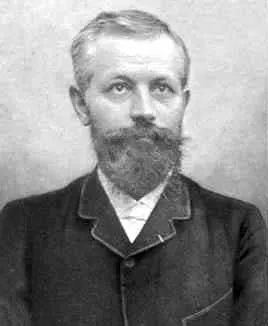
Paul Tannery
Human Design Chart
Biography
It was in Paris that Tannery took on his first two major editorial works. In 1883, he began an edition of Diophantus's manuscripts, and in 1885, he and Charles Henry began an edition of one of Fermat's works. This work was made possible by access to the Bibliothèque Nationale, and so Tannery had to reduce his efforts in 1886 when he was transferred to Tonneins. Even without access to the Bibliothèque, Tannery remained hard at work, however, as he published two books composed of articles he had been writing for the Revue philosophique de la France et de l'étranger and for the Bulletin de sciences mathematiques.
Tannery died on 27 November 1904 in Pantin, just outside Paris. His wife, Marie, would survive until 1945, and she published several of his works posthumously, helping to ensure that his legacy would live on.
Paul Tannery — Projector with Profile 6/3
Projector 6/3 — Design at a Glance
Paul Tannery revealed himself as a person with an intense, focused aura that shone like a bright flashlight. His design indicated that he immediately recognized where errors lay in systems or within other people and things were not functioning properly. This ability to 'shed light on the dark' was his core characteristic as a Projector.
However, this direct perception could sometimes be perceived as unpleasant by his environment, similar to glaring light shining directly into someone's eyes. If he addressed his observations openly and immediately, he risked encountering resistance or rejection. The most effective strategy for him was therefore not to push himself forward but to wait for a respectful, honest invitation from others. Through his own harmonious glow, he attracted people who then actively sought out his advice.
Since Paul Tannery as a Projector did not have a defined Sacral Center, he lacked a constant intrinsic energy source. Instead, he experienced phases of high productivity and rapid workability followed by necessary rest periods for recovery. Ignoring this rhythm led to exhaustion. Living in harmony with the strategy of invitation and respect for his energy balance rewarded him with success. If he deviated from this path, sooner or later feelings of bitterness as an expression of not being himself would arise. His life task lay in illuminating others' paths without depleting his own strength through unchecked action.
Splenic Authority
Paul Tannery's design indicated a tendency towards intuitive and immediate decision-making. His inner authority was located in the defined Spleen Center, a configuration that only appears in Projectors or Manifestors with open Emotional and Sacral Centers. The Spleen served as his health and alarm system, equipped with an acute survival intelligence. This did not manifest as reflective analysis but rather as spontaneous internal knowledge about whether a situation or environment was right for him. His instinct and physical well-being served as reliable indicators; the first impulse was always correct and immediately served his health. This allowed him to rigorously distance himself from harmful influences and take good care of himself.
However, this Spleen impulse was very subtle and only effective in the moment, requiring high vigilance not to be drowned out by other voices. A brief retreat could be helpful during decision-making. Since Paul Tannery could only know what was right in the moment, plans often changed at short notice. Long-term commitments were therefore difficult; he needed a lot of freedom and flexibility to accommodate his spontaneous nature. This mechanism shaped his lifestyle through constant adaptability to the immediate present.
The 6/3 Profile — Role Model / Martyr
Paul Tannery lived his life driven by an insatiable urge for experimentation. His Profile 6/3 defined this fundamental attitude: In the first three decades, he acted like a pure adventurer who learned through numerous self-experiments. Although this phase of intensive testing slowed around age thirty, it never ended completely as the line of the experimenter remained present throughout his life.
Tannery did not seek ordinary perfection or standard solutions but aimed for an extraordinary existence. Internally, he often felt restlessness, as if the ideal was always unattainable. This tension between the adventurous drive of Line 3 and the increasing responsibility later in life shaped his development. With age, he used his unusual experiences to become a visionary role model.
His design promoted adaptability when dealing with transitions and impermanence. He understood ideas as transient and learned to recognize the right time for intervention. At the same time, he went through a process of trial and error that knocked him off balance but was crucial for his growth. Instead of prematurely projecting the future as present, he learned to draw from mistakes. This combination of speculative foresight and practical experience gained from errors enabled him to develop humor and wisdom that made him an example for others.
Single Definition — Defined & Open Centers
Paul Tannery was marked by a defined Spleen Center, which gave him an intuitive, moment-to-moment perception of reality. His design promoted spontaneous judgments and an instinctive protection mechanism based on the immediate "now." This existential awareness was supported by his equally defined Root Center, providing constant physical pressure to secure material stability and survival. The combination of intuitive spleen energy and driving root pressure created a foundation for cautious action in the present, free from rational deliberation.
At the same time, his chart revealed several undefined centers, making him vulnerable to external conditioning. His open Head Center left him without consistent mental inspiration; he tended to engage with foreign questions or doubts rather than trust inner clarity. His open Ajna Center meant that conceptual thinking was flexible but lacked a firm truth – concepts were taken in and reflected upon but not held as personal certainty.
His undefined G Center lacked a fixed identity or direction. Paul Tannery relied on initiating interactions with his environment and other people to find his path; he did not actively seek love or purpose, but waited for correct initiations. His open Heart Center lacked consistent willpower; he was not designed to make promises or prove himself through competition, which protected him from the trap of self-proving.
Furthermore, his Sacral and Solar Plexus Centers were also undefined. The lack of a defined Sacral Center meant no constant energy flow for work; he had to learn to respect exhaustion and avoid running on borrowed energy from others. His open Solar Plexus absorbed emotional moods from the environment, making him sensitive to foreign moods. He learned not to personalize these emotions as his own but to observe them as passing waves to stay emotionally healthy and make decisions free from external influence.
Channels for ambitious transformation through persistent effort.
Paul Tannery showed himself to be someone whose drive was deeply rooted in the connection between instinct and social ascent. His design featured the Channel of Transformation 54-32, a configuration that fueled ambition through constant effort. Driven by the desire to be seen and improve his position in life, he used this energy to work his way out of his original layer. Fear of failure or the inability of the "tribe" to keep up played a driving role; it forced him towards excellence to ensure survival and continuity.
This dynamic force was further shaped by additional energetic facets. Gate 46 brought dedication to the process: success did not come from chance but through full involvement and physical presence in the here and now. His perception was also influenced by Gate 11, which promoted visual memories and a harmonious assessment of the situation before acting – ideas served here for analysis, not just blind action.
In his expression, Gate 12 came into play, combining restraint and mutative creativity; emotional moods colored his communication and gave it a poetic quality. Spiritually, he sought innocence and individuation through Gate 25, a mystical process of self-love and centering. Finally, Gate 58 in the Root Center fostered an experimental drive towards perfection; he recognized patterns, corrected errors, and sought cheerfulness even under pressure to ensure a secure future. Together, these elements formed a Profile of a person who propelled his transformation through hard work, intuitive analysis, and spiritual depth.
Tribal Circuitry — Circuit Signature
Paul Tannery's design featured cyclical phases of activity and necessary recovery. As a person with a simple definition, he did not have a constant energy source like the Sacral Center; instead, his defined centers—the Spleen and Root Centers—functioned as one continuous unit. This connection occurred exclusively through the Transformation Channel (32-54), which was part of the Ego Circuit. This circuit focused on cooperation and the collective creation of resources within a group or tribal structure. Since Paul Tannery had no connection to the Sacral Center, he lacked the constant life force that would have allowed for uninterrupted engagement. Instead, his system required regular rest periods to generate new energy for supporting others. Energy flowed directly between the Spleen and Root Centers: The intuitive perception of the Spleen, identifying what was useful or valuable, triggered an immediate, instinctive readiness in the Root Center. This created a mechanism where spontaneous insights were quickly translated into action-oriented impulses to stabilize his own cycle and the community. Without these pauses, his energy would have been depleted; with them, he could effectively contribute to prosperity and mutual support without burning himself out.
Left Angle Cross of Education 2
Paul Tannery's design indicated a tendency towards deep, often unconscious devotion to the dissemination of knowledge and the preservation of intellectual traditions. His chart contained the left cross of Education 2, a configuration marked by specific energetic connections in the diagram. This structure linked the Self Center with the emotional center through channels that connected intuition with strategic planning and logical understanding.
For Paul Tannery, this meant that his inner truth had to be not only lived personally but also actively translated into structures that offered guidance to others. The energy of this cross urged him to organize complex relationships in a way that made them learnable and transferable. This was a process of synthesis: intuitively grasping principles and anchoring them in clear, understandable systems.
Paul Tannery emerged as someone whose life mission was to build bridges between abstract knowledge and practical application. The mechanics of his design promoted an attitude of patient guidance. He did not seek short-term attention but rather aimed at laying foundations that would endure. This configuration described a path where sharing insights was seen as service to the community. Paul Tannery lived this dynamic by using his understanding of connections to clear paths for others, enabling them to pursue their own intellectual development.
Saturn Return · Uranus Opposition · Chiron Return · 2nd Saturn Return — Life Cycles
Paul Tannery's design featured a clear structuring of life phases in which external events marked internal developmental cycles. His first Saturn return around age 31 condensed years of preparatory work into a solid result: in 1874, his first publications on the history of mathematics appeared. This cycle established his professional identity and laid the groundwork for his later authority in the field of the history of science.
With the Uranus return, the opposition to natal Uranus around age 40, a phase of expansion and new connections began. In 1883, he was transferred to Paris, which allowed him expanded scientific contacts. This cycle promoted exchange with like-minded individuals and opened new perspectives for his work, moving from isolation towards networking.
The Chiron return around age 50 marked the beginning of a phase of fulfillment in which his incarnation purpose increasingly reflected in everyday life. In 1893, he became director of the tobacco factory in Pantin near Paris. This position was not only a career advancement but also an expression of a stabilized role that allowed him to exercise his expertise within a structured framework and thus contribute to society.
Finally, his second Saturn return around age 60 brought a phase of reflection and possible turning points. In 1903, the chair for the history of science at the Collège de France became vacant, hinting at internal questions about the further orientation of his career. This cycle challenged him to review his previous achievements and find new ways to disseminate his knowledge.
Projector · Splenic Authority — Synthesis
Paul Tannery was a projector whose life was marked by a keen sense for recognizing errors and inefficiencies. Through the defined Spleen Center authority (and Channel 54/32), he possessed a strong intuitive ability to recognize what would be beneficial for his well-being and acted on it spontaneously. This combined with a deep desire for improvement and the pursuit of perfection – not for himself, but in service of a greater whole, the tribe (Ego Circuit). The repeated professional turns and search for the right role (Profile 6/3) showed an ongoing experimental spirit that did not abate beyond age 30.
A central paradox in Paul Tannery's design lay in the interplay between projection and the need for recognition. As a projector, he was geared towards illuminating darkness for others and pointing out weaknesses. At the same time, his ambition (Gate 54) drove him to be seen and valued himself – a tension that was amplified by recognizing errors in others, as this could potentially lead to rejection. The cycles showed that he repeatedly found himself in situations where his skills were sought after for improvement but also faced crises when these were not adequately recognized.
1 Defined Channel
Incarnation Cross - Left Angle Cross of Education 2
Solar Return
The Solar Return shows the moment when the sun returns to its exact birth position - your personal solar year.
Life Cycles
Discover the life cycles with a detailed triple view (birth chart, cycle chart, composite).
Human Design Profile
- Type
- Projector
- Strategy
- Wait for the respectful invitation
- Authority
- Splenic Authority
- Profile
- 6/3 - Role Model / Martyr
- Definition
- Single Definition
- Incarnation Cross
- Left Angle Cross of Education 2
- Date of Birth
- 20.12.1843 16:00
- Place of Birth
- Mantes la Jolie, France
Frequently Asked Questions
What was Paul Tannery's Human Design type?
What Profile did Paul Tannery have in Human Design?
What Authority did Paul Tannery possess?
What incarnation cross was assigned to Paul Tannery?
When was Paul Tannery born?
Discover your own Human Design
Are you also a Projector? Find out in a personal reading how to unfold your leadership qualities and recognize the right invitations.
More Personalities
Back to overviewSissy Spacek
Alain-Fournier
Anémone

Ann-Margret

Bourvil
Hergé