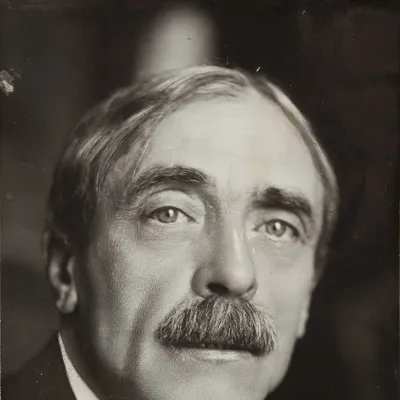
Paul Valéry
Human Design Chart
Biography
Valery worked as a civil servant in the French War Office 1897-1900, than as private secretary to the director of Havas News Agency, 1900-1922. He was elected to the French Academy in 1925, President of the Committee for Intellectual Cooperation of League of Nations, 1936, and professor of poetry at College de France in 1937.
He was married in 1900 to Jeanne Gobillard.
Valery died on 20 July 1945, Paris, France
Human Design Analysis: Paul Valéry as Generator 6/2
Generator 6/2 — Design at a Glance
Paul Valéry possessed immense, enduring strength, which he could channel not through self-initiated actions but through reactive behavior. As a Generator, he had access to a great deal of sacral energy, driving him like a strong workhorse – provided he followed his inner impulses. His design suggested that he generated energy by reacting to signals from his environment rather than taking the first step himself. This strategy of “reacting” was crucial: when his sacral center clearly signaled “yes,” he could act with full power and experience deep satisfaction.
If he did not follow this inner confirmation, but forced himself to do tasks that did not appeal to him, or was prevented from pursuing his heart project despite still having energy, he was in danger. Such deviations from his natural rhythm led to frustration or a lack of energy, up to exhaustion. His success depended on learning to respond from the gut rather than initiate. Only by maintaining this reactive stance could he effectively deploy his intrinsic creative power and reward himself with sustained, deep fulfillment. Any other approach, especially constant initiative without inner confirmation, inevitably led to resistance and energy loss.
Emotional Authority
Paul Valéry showed himself to be someone who never made decisions based on the first emotional wave. His design indicated a tendency towards deep inner reflection before making a decision. This resulted from his emotional authority, rooted in his defined solar plexus center. In Human Design mechanics, this center always carries inner authority once it is defined – regardless of other configurations.
Paul Valéry was subject to an emotional wave that manifested in a constant up and down of his feelings. He saw the world colored by his current mood. In one moment, he could be totally enthused about something, in the next, he would view the same thing negatively. His feeling in the moment was merely a snapshot, a first impression, not necessarily his truth. Quick, spontaneous decisions based on emotion often had negative consequences for him.
The more time he took to let a decision mature, the deeper and more comprehensive he could understand something. This required patience and repeatedly pondering a question. He took his time and asked himself multiple times. Over time, the intense feelings subsided, he gained emotional distance, and clarity and calmness set in. Then he was through the process. This mechanism was particularly important for long-term decisions that could have a significant impact on his life course.
The 6/2 Profile — Role Model / Hermit
Paul Valéry showed himself to be someone who divided his life into two clearly distinct phases: an early period of intense experimentation and a later era of detached reflection. In his youth, before the age of thirty, his design followed the pattern of Line 3. This meant constant experimentation, coupled with the principle of trial and error. After each mistake, he withdrew to process the experience before diving deep again.
With the onset of his third decade, Line 6 was activated. Paul Valéry metaphorically retreated into a “hollow on the mountain.” This distance was necessary to organize the previously collected, often risky experiences. The configuration combined the willingness to take extreme risks – driven by the desire to win at all costs – with the later necessity to submit to these strong forces to develop his own strengths.
From this phase of intense introspection and healing emerged a profound self-awareness. Once this maturation was complete, Paul Valéry emerged from his withdrawal period. He now appeared as a wise person, whose insights were shaped by the previous willingness to sacrifice and venture to the limits of the possible. Others recognized this wisdom and sought his counsel to partake in the ability for deep self-reflection, which arose from the interplay of glory and necessary concealment.
Split Definition — Defined & Open Centers
Paul Valéry revealed through his design as someone whose thinking and actions were driven by a constant, mechanical energy. His defined Sacral Center provided a continuous source of vital energy that he used by reacting to life rather than initiating effort. This energy flowed into his defined Ajna Center, which ensured a reliable, specific kind of conceptual thinking; he processed data and creativity in the same way, less influenced by external mental currents. His defined G Center gave him a firm sense of self-identity and a clear sense of direction, while his defined Solar Plexus Center required him to wait out emotional waves until clarity emerged before he acted. His defined Root Center provided the necessary pressure to push these processes forward in the material world.
At the same time, Paul Valéry was vulnerable through his open centers to specific conditioning. His open Head Center lacked a constant way to process inspiration; he tended to get stuck in mental monologues or take on questions from others, which could confuse him if he did not trust his inner authority. His open Heart Center lacked the constant energy for willpower and competition; he was susceptible to the temptation to make promises to prove his worth, often ending in a cycle of self-doubt when he failed. Additionally, his open Spleen Center was vulnerable to fears and a false sense of security; he could tend to cling to people or situations that were not good for him, just to feel the soothing frequency of a defined Spleen, rather than making spontaneous decisions based on this unstable foundation. This configuration shaped his life as a balance between an inner, defined structure and the necessity to critically filter external influences on his own worth and health.
Channels for awareness, curiosity, principles and maturation.
Paul Valéry revealed himself as someone whose existence was marked by a profound, constant awareness. His design indicated a tendency to live not just to experience life but to consciously shape it as an expression of self-love and trust. This occurred through the Awakening Channel 10-20, which connected the G Center with the Throat Center. He used the Presence Gate (10) and the Now Gate (20) to transform personal knowledge into appropriate action. For him, every moment was an opportunity to recognize principles; his survival depended on accepting himself in each moment and carrying this clarity outward through his speech and behavior.
Parallel to this, the Channel of Curiosity 11-56, which linked the Ajna Center with the Throat Center, was active within him. Through the Ideas Gate (11) and the Inspiration Gate (56), he constantly sought new perspectives. His creativity lay in weaving ideas into stories that illustrated not primarily facts but philosophical reflections. He was a storyteller who taught and entertained others by engaging their imagination.
Emotionally grounded, he was through the Channel of Synthesis 19-49, which connected the Root Center with the Solar Plexus Center. Through the Claims Gate (19) and the Principles Gate (49), he sought belonging and loyalty. He was sensitive to his position in the whole and needed emotional affirmation to feel secure. This channel determined who belonged to his "tribe" based on an emotional wave of acceptance or rejection.
The process of his experiences was steered by the Channel of Maturation 42-53, which connected the Root Center with the Sacral Center. Through the Beginnings Gate (53) and the Growth Gate (42), he entered new cycles to complete them and reflect on them. Only through this completion could he gain wisdom and make the experience useful for others.
Additionally, individual Gates shaped his approach: Gate 28 pushed him to take risks in the here and now, while Gate 27 exercised genetic care for the tribe. Gate 33 demanded active reflection and withdrawal to process experiences. Gate 45 expressed a royal hierarchy and willpower, Gate 15 adapted to collective rhythms. Gate 29 demanded a persistent yes to challenges, Gate 6 regulated emotional waves through friction, Gate 58 experimented for perfection, and Gate 23 allowed for the introduction of difference into the world through explanation.
Collective Circuitry — Circuit Signature
Paul Valéry showed himself as someone whose inner processing was strongly marked by cyclical emotional waves. This trait originated from the Meaning-Making Circuit, which in him formed two separate segments: On one hand, it connected the Ajna Center with the Throat Center, which translated intuitive understanding into words. On the other hand, the Sacral Center was connected to the Root Center, creating a rhythmic, vital foundation. These two areas were not directly energetically linked, but existed in parallel.
Another aspect was his need for synthesis and emotional exchange, carried by the Ego Circuit. Here, the Solar Plexus Center was connected to the Root Center, meaning that feelings and reactions were directly translated into readiness for action. This occurred, however, without a direct connection to the constant life force of the Sacral Center, which made regular rest pauses for regeneration necessary.
Furthermore, Paul Valéry possessed a clear line for self-affirmation. The Integration Circuit connected the Throat Center with the Identity Center through the Awakening Channel. This allowed him to translate inner intuition and proper behavior directly into external expressions and actions in the here and now. His split definition meant that these forces – the connected group of Ajna, Throat, and Identity on one side, and Sacral, Solar Plexus, and Root on the other – acted as separate, coexisting energies without forming a continuous flow between all defined centers.
Left Angle Cross of Alignment 2
Paul Valérys Design legte eine Tendenz zu einer tiefen, strukturellen Ausrichtung an, die weniger auf äußere Anpassung als auf innere Kohärenz abzielte. Diese Konfiguration, bekannt als das linke Kreuz der Ausrichtung 2, beschrieb eine Lebensdynamik, in der das Individuum bestrebt war, sich selbst und seine Umgebung nach klaren, logischen Prinzipien zu ordnen. Es handelte sich nicht um eine passive Hingabe an Umstände, sondern um einen aktiven Prozess der Selbstverortung.
Die Mechanik dieses Kreuzes förderte eine Haltung der präzisen Beobachtung und des analytischen Denkens. Paul Valéry zeigte sich als jemand, der Wert auf Klarheit und Definition legte, um Chaos zu reduzieren und verständliche Strukturen zu schaffen. Dies wirkte sich auf seine gesamte Existenz aus, da er bestrebt war, seine Gedanken und Handlungen in ein zusammenhängendes Ganzes zu integrieren. Die Energie dieses Designs unterstützte eine methodische Herangehensweise an Probleme, bei der Intuition durch rationale ürberprüfung ergänzt wurde. So entstand eine Persönlichkeit, die sich durch geistige Disziplin und das Streben nach innerer Wahrheit auszeichnete, ohne dabei die Komplexität der Realität zu vereinfachen, sondern sie vielmehr zu durchdringen.
Saturn Return · Uranus Opposition · Chiron Return · 2nd Saturn Return — Life Cycles
Paul Valéry zeigte sich als jemand, dessen Leben durch klare, zyklische Phasen der Strukturierung und Anerkennung geprägt war. Sein Design legte eine Tendenz an, in bestimmten Altersabschnitten entscheidende Weichen für Stabilität und öffentliche Bestätigung zu stellen, was sich in seinen Saturn-Returns widerspiegelte.
Der erste Saturn-Return um das 29. Lebensjahr markierte oft den Übergang von der Suche zur festen Verankerung. 1900 heiratete Paul Valéry Jeannie Gobillard. Dieses Ereignis unterstrich die Funktion dieses Zyklus: die Schaffung einer tragfähigen privaten Basis, auf der sich weitere Entwicklungen aufbauen konnten. Es war weniger ein spontanes Gefüllsspiel als vielmehr die bewusste Entscheidung für eine dauerhafte Struktur.
Später, mit dem Chiron-Return um das 49. Lebensjahr, trat eine Phase der Blüte und Erfüllung ein. Dieser Zyklus ermöglichte es, das eigene Potenzial in seiner vollen Breite zu entfalten und von der Äußenwelt anzuerkennen. 1920 galt Paul Valéry als der größte französische Lyriker seiner Zeit. Dies war kein Zufall, sondern die logische Konsequenz eines Lebens, das seine innere Autorität folgte und so seinen Zweck erfahrbar machte.
Der zweite Saturn-Return um das 54. Lebensjahr festigte diese Position durch institutionelle Bestätigung. 1925 wurde Paul Valéry in die Académie française aufgenommen. Dieser Schritt zeigte, wie sich persönliche Reife und gesellschaftliche Integration im späteren Leben ergänzen. Die Mechanik seines Designs förderte somit einen Weg von der privaten Verankerung über die könsterliche Blüte hin zur etablierten Anerkennung, wobei jeder Schritt auf dem vorherigen aufbaute und eine kohärente Lebenslinie bildete.
Generator · Emotional Authority — Synthesis
Paul Valéry war ein Generator, dessen Leben von einer tiefen, sakralen Energie geprägt war. Diese Energie speiste seine Fähigkeit, Konzepte zu entwickeln und zu verarbeiten (definiertes Ajna-Zentrum), und drängte ihn zu kontinuierlicher Aktivität. Der Kanal des Erwachens verband seine Prinzipientreue mit dem Ausdruck im Moment, was auf eine starke innere Verpflichtung zur Authentizität hindeutete. Sein Profil als Rollenvorbild und Naturtalent deutet darauf hin, dass er zunächst durch Erfahrung lernte und sich später, nach einer Phase intensiver Reflexion, als weiser Ratgeber etablierte. Diese Entwicklung korrespondierte mit den Saturn-Rückkehr-Zyklen, die jeweils Phasen der Experimentierfreude und anschließender Auswertung markierten.
Valérys Design offenbarte ein zentrales Paradox: die Spannung zwischen seinem sakralen Antrieb zur ständigen Aktivität und seiner emotionalen Autorität, die Zeit zur Reifung von Entscheidungen erforderte. Er lebte in einem permanenten Auf und Ab von Gefühlern (emotionales Zentrum), was ihn dazu zwang, Entscheidungen nicht spontan zu treffen, sondern sie über einen längeren Zeitraum zu prüfen. Dies führte zu einer inneren Zerrissenheit zwischen dem Drang, sofort zu handeln, und der Notwendigkeit, die eigenen Gefühlern zu verstehen und zu integrieren, um authentische und nachhaltige Ergebnisse zu erzielen.
4 Defined Channels
Incarnation Cross - Left Angle Cross of Alignment 2
Solar Return
The Solar Return shows the moment when the sun returns to its exact birth position - your personal solar year.
Life Cycles
Discover the life cycles with a detailed triple view (birth chart, cycle chart, composite).
Human Design Profile
- Type
- Generator
- Strategy
- To respond - wait for something to respond to
- Authority
- Emotional Authority
- Profile
- 6/2 - Role Model / Hermit
- Definition
- Split Definition
- Incarnation Cross
- Left Angle Cross of Alignment 2
- Date of Birth
- 30.10.1871 19:00
- Place of Birth
- Sète, France
Frequently Asked Questions
What was Paul Valéry's Human Design type?
What Profile did Paul Valéry have in Human Design?
What Authority did Paul Valéry have in his Design?
What incarnation cross was active for Paul Valéry?
When was Paul Valéry born?
Discover your own Human Design
Are you also a Generator? Find out in a personal reading how to use your sacral energy correctly and discover deep satisfaction.
More Personalities
Back to overviewAaliyah

Alexia

Angèle

Anne-Marie

Arcángel

Arno