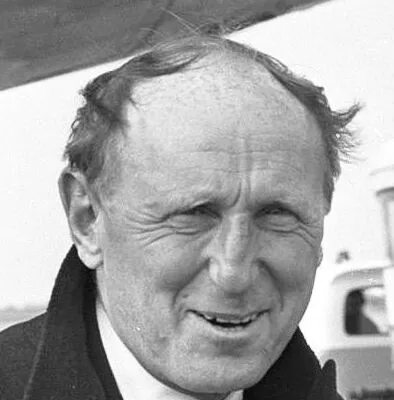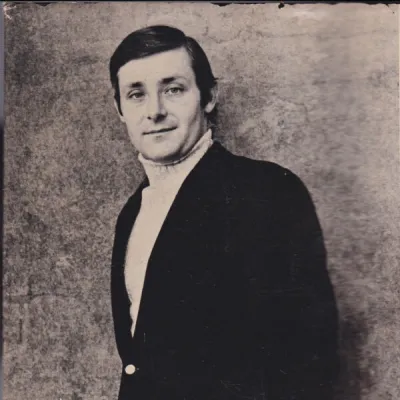
Peter Benchley
Human Design Chart
Biography
Benchley was the son of author Nathaniel Benchley and Marjorie (née Bradford), and grandson of Algonquin Round Table founder Robert Benchley. His younger brother, Nat Benchley, is a writer and actor.
Benchley married Winifred "Wendy" Wesson in 1964 and in 1967 their daughter Tracy was born.
Peter Benchley died of pulmonary fibrosis on 11 February 2006 at age 65 in Princeton, New Jersey.
Human Design Analysis: Peter Benchley as Projector 6/2
Projector 6/2 — Design at a Glance
Peter Benchley's Design inclined towards an immediate system diagnosis. He was someone who could instantly recognize structural flaws and inefficiencies in his environment – comparable to a bright flashlight that focuses on dark spots. This ability to see the essential and malfunctioning aspects immediately was characteristic of his Projector type.
The challenge of this configuration lay in communication: Direct criticism was often perceived as unpleasant or intrusive by those around him, similar to a light beam shining directly into someone's face. To avoid resistance and make his insights effective, his design required an indirect approach. Instead of correcting issues right away, he worked best by attracting others through his own harmony and quality. Others should feel drawn to his clarity and ask for his advice themselves. His strategy involved waiting for honest, appreciative invitations before sharing his knowledge.
Furthermore, Peter Benchley lacked a defined Sacral Center, meaning that he did not have constant intrinsic life energy available to him. Instead, he experienced phases of high activity that had to be balanced by periods of rest to prevent burnout. Living according to this rhythm and his invitation strategy led to success. Deviations from it tended to result in bitterness as an expression of his non-self-experience.
No Inner Authority
Peter Benchley did not have inner physical authority for decision-making. His strategy involved gathering information through exchanges with others and evaluating these impressions in solitude. As a mental projector, he had no center activation below the Throat Center. This allowed him to have high resonance capability: In dialogue, latent potentials in his open centers were activated, enabling him to view and express issues from multiple perspectives. This exchange helped him find the right environment and people.
However, evaluating this complex information required time and withdrawal. Only alone could Peter Benchley discern the thread of his intelligence, distinguishing what made sense and truly belonged to him. His capital for success lay in filtering out the essential from a mass of data, organizing it meaningfully, and structuring it. Over time, his sense of his own specificity deepened. This configuration emphasized the necessity of stimulating his intellect through external resonance contact and then reinforcing it with inner clarity to develop a coherent life direction.
The 6/2 Profile — Role Model / Hermit
Peter Benchley's Human Design unfolded as a dynamic process: In his early years, an experimental "trial and error" approach dominated. Before the age of 30, his configuration functioned like a pure three-line system, driven by the necessity to learn through personal experiences. Mistakes here did not signify failure but served as essential corrective mechanisms; after each mistake came a withdrawal period to integrate the lesson.
Entering his third decade marked a fundamental shift in this approach. The activation of the six-line brought about a transition to distant introspection. Instead of continuing to experiment within the flow of events, Peter Benchley metaphorically retreated into a "cave on the mountain." This retreat served for healing and deep self-awareness. He looked back at his earlier experiments with new distance, no longer rationalizing them superficially but understanding their deeper mutation.
From this phase of inner work emerged eventually the role of a wise role model. Peter Benchley appeared as a natural talent who had gained clear wisdom through intensive self-reflection. Others recognized this clarity and sought his advice to learn from his ability for deep introspection. His life task was to make the insights gained from personal mistakes accessible, not as abstract theory but as lived experience beyond mere rationalization.
Single Definition — Defined & Open Centers
Peter Benchley's Human Design configuration created a constant internal mental pressure that operated independently of external circumstances. This setup originated from his defined Head and Ajna Centers, which formed a permanent source for inspiration, questions, and conceptual thinking. He was always in the process of thinking and understanding; his mind was perpetually active to create concepts and understand connections. However, since these centers were not connected to the energy-carrying motors, there was no direct power available to immediately translate these thoughts into reality. Attempting to prematurely convert this intellectual impulse into action typically led to frustration or hasty decisions. Instead, his mental energy served to inspire others through stimulating questions and new perspectives, while he had to wait for the right timing to avoid resistance.
In contrast, seven open centers shaped his experience: Throat, G Center, Heart, Sacral, Solar Plexus, Spleen, and Root were undefined. This meant that he did not have a constant internal source for communication, identity, willpower, vital energy, emotions, intuition, or stress resilience. These areas absorbed and amplified the corresponding energies of his environment situationally. As such, he tended to identify with absorbed emotional waves or feel pressured to gain attention, even though his open Throat Center naturally invited him to speak when he waited for the right moment. His undefined G Center made him susceptible to "borrowed" identities and directions; he found his path not through personal seeking but by being initiated by the correct environment. Similarly, his open Heart Center drew him into spirals of proving himself, while the open Sacral Center could lead him to take on foreign vital energy and exhaust himself. The challenge lay in not interpreting these absorbed energies as his own self but using them as information to act wisely with strategy and authority.
Channels for the doubting, formulating mind.
Peter Benchley's Human Design configuration inclined him towards a penetrating, skeptical analytical approach. He was someone who rejected unfounded beliefs and only accepted answers that were consistent, reliable, and practically verifiable. This attitude stemmed from Channel of Logic 63-4, which connected the Head Center to the Ajna Center. This channel represented the doubting mind: Doubt was essential here because logical formulations could be flawless yet still incorrect. Peter Benchley constantly filtered for patterns to test their consistency. When inconsistency arose, mental pressure intensified and led to a question that required an answer.
His skepticism served not to destroy but to prove. It had to start from logical experimentation to reach the necessary proof. For him, there was little room for speculation without foundation; a statement was only valid if it resulted in a verifiable pattern. This benefited the collective through well-founded predictions based on data. Peter Benchley sought out discernible patterns and integrated current information to assess future events. There was always the temptation to share both the posed question and the found answer, regardless of whether the other party was open to this or not.
However, his busy mind was not designed to resolve doubts that concerned his own life or personal future. When he tried to solve these individual questions purely logically and mental pressure could not be alleviated, fear would arise. This emotional reaction signaled that the mind had reached its limits. The drive to understand patterns was primarily aimed at being useful to others since Channel of Logic is a collective channel. Clarity did not come for him through inner certainty about his own fate but rather through external verification and exchange with the collective.
Collective Circuitry — Circuit Signature
Peter Benchley's Design featured a tendency towards clear and structured thinking. His chart was marked by the Understand Circuit, which channeled energy to initiate improvements through logic and strategy. This circuit focused on rational insights that remained free from emotional coloring – a process of "emotionless ratio," as the Solar Plexus Center was excluded.
In Peter Benchley's case, this circuit specifically connected the Head Center with the Ajna Center via the Logic Channel (Gates 63 and 4). This connection created a direct flow between initial inspiration or intuition in the Head Center and the Ajna Center’s ability to focus these impulses and translate them into clear concepts. It was a visual and mental structuring force aimed at presenting complex relationships in an understandable manner.
The energy of this circuit oriented towards the future and the desire to share logical insights with others. Peter Benchley emerged as someone who not only processed information but also formatted and focused it to make it useful. The connection between Head and Ajna allowed him to transform inner images or thoughts into a structured form that was comprehensible to others. This supported an approach based on clarity and strategic thinking, driven by the will to improve things through reason. The energy always operated rationally and purposefully, without being distracted by momentary moods.
Left Angle Cross of Defiance 1
Peter Benchley's Human Design had the signature of Challenge 1's left cross. This configuration indicated a fundamental tension arising from the interplay of specific energetic centers. Without detailed information about the underlying mechanics, the impact of this structure remained open and not further specified. No clear behavioral pattern or character trait could be directly derived from it. The energy of this cross functioned as a neutral foundation without producing definite impulses or reactions. Peter Benchley lived with this indeterminate potentiality that neither pushed outward nor generated internal conflicts in the sense of a defined challenge. His design did not offer a clear path forward but remained diffuse in its effect. There were no signs that this configuration directed his actions or brought certain themes to the forefront. Instead, it existed as a silent background factor that stayed without apparent impact on his way of living. The absence of a defined description meant that this energy was neither activated nor blocked, simply present without specific demands on Peter Benchley.
Saturn Return · Uranus Opposition · Chiron Return · 2nd Saturn Return — Life Cycles
Peter Benchley's design showed a tendency towards maturation and identity consolidation, intensifying in the phase after youth. This mechanism describes the first Saturn return cycle: a period when internal structures are hardened and taking responsibility becomes the central theme. It was not just aging but a structural condensation of personality where youthful experiments were replaced by clear self-definition.
This process manifested concretely in 1967, when Peter Benchley, at age 27, became father to his daughter Tracy. The birth marked for his design a typical moment of this Saturn phase: A new deep relationship demanded long-term responsibility and stabilized the self-image. Instead of moving further into the uncertainty of youth, he anchored his identity through this familial bond. The cycle acted as a catalyst for the transition from individual to responsible person, where the parental role translated the abstract necessity of maturation into tangible daily practice. This development strengthened his foundation and prepared the ground for later life stages by creating clarity about his role in social structures.
Projector · No Inner Authority — Synthesis
Peter Benchley lived a life marked deeply by the ability to recognize patterns and uncover flaws in systems (Channel 63-4). This analytical sharpness, fueled by an activated mental center (defined Head and Ajna), led him to understand the underlying mechanisms of stories and human behavior. He was not someone who simply accepted what is but always sought after the deeper principle, the red thread that connects everything. This tendency towards analysis went hand in hand with openness for the emotional landscape of others (open Solar Plexus Center), developing a fine sense for what moves people and which unspoken fears drive them.
At the same time, however, Peter Benchley seemed torn by an inner paradox: the desire for clarity and structure (Logic Channel) collided with deep emotional openness and a lack of firm internal compass (undefined G-, Root, and Solar Plexus Centers). He was an observer who recognized patterns but was also vulnerable to the energies of his environment. This led to a constant interplay between the need for control and allowing the unpredictable – a tension that fueled his creativity but also made him vulnerable.
1 Defined Channel
Incarnation Cross - Left Angle Cross of Defiance 1
Solar Return
The Solar Return shows the moment when the sun returns to its exact birth position - your personal solar year.
Life Cycles
Discover the life cycles with a detailed triple view (birth chart, cycle chart, composite).
Human Design Profile
- Type
- Projector
- Strategy
- Wait for the respectful invitation
- Authority
- No inner authority - learn more
- Profile
- 6/2 - Role Model / Hermit
- Definition
- Single Definition
- Incarnation Cross
- Left Angle Cross of Defiance 1
- Date of Birth
- 08.05.1940 23:30
- Place of Birth
- New York, NY, United States
Frequently Asked Questions
What is Peter Benchley's Human Design type?
What profile did Peter Benchley have?
What authority did Peter Benchley have?
What incarnation cross did Peter Benchley have?
When was Peter Benchley born?
Discover your own Human Design
Are you also a Projector? Find out in a personal reading how to unfold your leadership qualities and recognize the right invitations.
More Personalities
Back to overviewSissy Spacek

Alain-Fournier

Anémone

Angeli

Ann-Margret

Bourvil