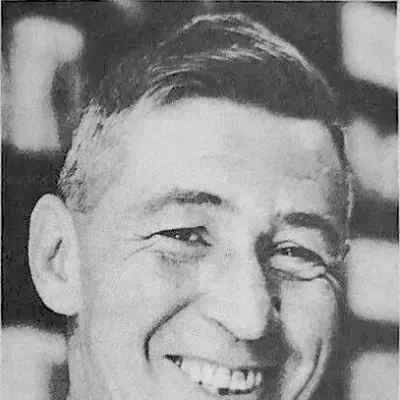
Peter Blake
Human Design Chart
Biography
Blake was shot to death by river pirate in the Amazon on 5 December 2001 when he resisted their boarding of his yacht. He was on a world-wide expedition to monitor global warming and pollution aboard his 119-ft yacht, the Seamaster, moored at the mouth of the Amazon near Macapa, 1,600 miles north of Sao Paulo. Several masked men approached in a rubber dinghy of the type commonly used by river rats in search of victims. They came over the rail and held the crew at gunpoint and when Sir Peter came charging up, they shot him in the chest at least twice. Two members of his crew of ten were slightly injured in the ensuing melee before the pirates fled.
Blake headed the Cousteau Society from 1973 and was knighted in 1995. In July 2001, he was appointed goodwill ambassador of the U.N. Environmental program. He and his crew had come from a three-month study of wildlife in the Antarctic region before arriving in Brazil in October. They spent two months in the upper reaches of the Amazon and Rio Negro where they encountered friendly, warm and hospitable people before their present mooring.
He is survived by his wife Pippa and two kids. He had been sailing from the time he was five years old and his mom said, "He loved boats, he loved racing and the water."
Seven suspects were arrested in the following days.
Human Design Analysis: Peter Blake as Projector 4/6
Projector 4/6 — Design at a Glance
Peter Blake revealed himself as someone with a focusing aura that immediately recognized system errors. His design acted like a bright flashlight, illuminating the dark and guiding others. This ability to identify weaknesses in his environment right away was characteristic of his Projector type.
Since Projectors do not have constant intrinsic life energy due to an undefined Sacral Center, Peter Blake lived through phases of high activity and intense rest. His design required these pauses to prevent burnout – a necessity often ignored by conventional schooling systems and many jobs. The danger lay in working against this natural rhythm and thus wasting energy.
His strategy involved passively waiting for an honest invitation. By respecting this, he avoided bitterness, his non-self theme. Instead of directly addressing errors, which often provoked resistance, he worked more elegantly through role modeling. When he embodied harmony himself, others were drawn to him and sought his advice voluntarily. This attraction was more powerful than direct correction.
Living by this design, Peter Blake was rewarded with success. Recognition did not come from constant action but from the targeted application of his focusing energy upon invitation. His path was marked by the balance between sharp observational skills and the discipline to act only when the environment was ready to accept his insights.
Splenic Authority
Peter Blake's design indicates a tendency towards intuitive survival intelligence that acts in the moment. He was someone who did not make decisions through long-term planning but reacted to spontaneous impulses that protected his health and well-being. This mechanism came from his Spleen Authority, an inner guidance system possessed only by Projectors or Manifestors because their Emotional Center and Sacral Center are open.
His defined Spleen Center functioned as his health and alarm system. It provided a reliable physical signal indicating whether an environment or situation was right for him. His instinct and intuition served as immediate indicators; the first thought was always the correct one, directly serving his protection. This allowed him to rigorously distance himself from harmful influences and take good care of himself.
However, since this impulse was very subtle and only occurred once in each moment, his lifestyle required high vigilance. External influences could easily drown out or ignore this fine signal tone. Therefore, it was counterproductive for him to get entangled in rigid plans, as his inner knowledge changed situationally. Instead, he prioritized flexibility and freedom. Long-term commitments were difficult, so spontaneous action and the protection of his well-being through situational behavior took precedence. A brief retreat to make a decision could be helpful in hearing the original impulse clearly again.
The 4/6 Profile — Opportunist / Role Model
Peter Blake's Human Design profile draws a lifelong arc between the heart’s desire for community and the head’s need for spiritual distance. As a person with Profile 4/6, the Networker/Role Model, he demonstrated throughout his first three decades of life the experimental energy of Line 3, driven by a desire for belonging and intense interpersonal connections. This phase was characterized by the Line-4 dynamics: a cautious heart fearing injury from "false" people and often struggling under pressure to correct perceived inadequacies – an issue linked with fear of failure and suffering from perceived incompetence.
Only after his first Saturn Return did Line 6 become active, fundamentally changing his basic approach. The conflict between wanting to be part of the group (Line 4) and needing to withdraw to contemplate life’s meaning (Line 6) would henceforth shape his daily existence. Line 6 seeks peace and inner calm but is vulnerable to self-deception or concealment until the Inner Authority circuit is fully satisfied. Thus, Peter Blake lived out the transformation from a searching experimenter to a reflective role model who had to learn not only to hold wisdom in their head but also to make it effective through cooperation with others – always wary of blindly plunging into communities.
Single Definition — Defined & Open Centers
Peter Blake's Human Design profile established a foundation of constant willpower and physical forward momentum. His defined Heart Center endowed him with the ability to actively steer his life and use resources self-determinedly; he was someone who kept promises and knew his own worth. Complemented by the defined Spleen Center, he had a reliable survival instinct that enabled intuitive decisions in the present moment. The also defined Root Center provided the necessary adrenaline-driven push to move forward in the world and constructively utilize stress.
This inner stability contrasted mechanically with his open centers, situating him as dependent on environmental impulses. His open Head and Ajna Centers meant he did not have a constant mental inspiration; instead, he tended to identify with questions or concepts of others rather than trusting his own internal clarity. Similarly, his open Throat Center made him susceptible to the pressure of needing to force attention through constant speaking, though spontaneous communication only worked at correct timing.
Especially defining was his open G Center: Peter Blake had no fixed identity or life direction. He tended to orient outwardly to find out who he is or where it's going, rather than waiting for initiations from his environment. His open Sacral Center led him to absorb energy levels of others and work beyond his own limits easily since he lacked the generative power for self-regulation. Finally, his open Solar Plexus took on emotional waves of the environment; he risked personalizing foreign moods as his own and getting entangled in emotional confusion rather than staying a neutral observer. This configuration created high adaptability but also vulnerability to conditioning.
Channels for logical clarity and instinctive devotion.
Peter Blake was marked by two dominant channels that generated tension between inner critique and outer salesmanship. The Judgment Channel 58-18 connected the Root Center with the Spleen, driving an insatiable urge for pattern correction. This mechanism demanded logically better and more by checking if current states served life in the collective or needed to be corrected. It was a perfectionism that used constant questioning as means to maintain vitality.
Simultaneously, the Channel of Devotion 44-26 connected Spleen with Heart, giving instinctive vigilance and entrepreneurial tactics. Peter Blake could see what the tribe needed – often before people knew it themselves – and had the ability to convincingly 'sell' these improvements. He selectively used historical memory to present products or ideas as necessary progress.
The challenge lay in balancing these forces: The critical correction of judgment must not act as disruptive noise but be translated into acceptable solutions accepted through the Channel of Devotion. Peter Blake was geared towards identifying his perfectionist impulses and strategically applying them to win over markets or collectives for necessary changes. His mechanics required him to wait until his sense of others' needs and his corrective suggestions were invited to effectively work. Additional Gates like 17 (Succession) and 52 (Pattern Correction) supported this logical structuring, while Gate 28 evaluated risk in the here and now.
Collective Circuitry — Circuit Signature
Peter Blake's profile set a tendency towards structured, rational knowledge acquisition free of emotional coloring. This resulted from the Mind Circuit, which linked his Spleen Center with the Root Center. This configuration promoted clear judgment and the ability to focus on logical connections for better future use.
Parallelly, the Ego Circuit worked, connecting Heart and Spleen Centers. Here it was not about individual self-awareness but tribal dynamics: cooperation and joint resource building. The Channel of Devotion supported communication within these groups. Since there was no connection to the Sacral Center in this circuit, constant life energy was missing. This made regular rest pauses for regeneration necessary to maintain strength for mutual support and material creation.
Peter Blake lived this mechanics as an integration of 'emotionless ratio' and cooperation-oriented resource building. His energy flowed in separate channels: on one hand in rational structuring and sharing knowledge, on the other in building prosperity through exchange and support within the community. Both aspects required awareness of personal limits, especially regarding rest, since his energy was not inexhaustible but needed cyclical regeneration.
Right Angle Cross of Service 3
Peter Blake lived with a profound and often unconscious drive to serve others. His design was marked by the right service cross, implying a dynamic and active dedication in this role. This energy could be passionate, sometimes also associated with suffering, as it represented not just an action but a fundamental archetypal imprint.
For Peter Blake, the need to be useful was character-defining and permeated his entire life. It wasn't situational adaptation but a constant inner structure. The right service cross described a life task of dedication where fulfillment was sought in serving others. This mechanism worked independently of external circumstances as a continuous presence. It manifested in an attitude that prioritized the well-being or benefit for others, often without conscious planning. It was an energy of giving and supporting that shaped his existence and pointed out a specific path of self-realization inseparable from acting on behalf of other people.
Saturn Return · Uranus Opposition · Chiron Return — Life Cycles
Peter Blake experienced his knighting by the British Queen in 1995 at age 47. For his design, this moment marked the beginning of the Chiron Return, a cycle of fulfillment and bloom. During this phase, one's incarnation cross unfolds increasingly in life if one follows their strategy and authority. The meaning and purpose become experiential not as healing old wounds but as confirmation of the lived path.
The knighting was not an isolated event but an expression of this inner condensation. It appeared as external recognition of a previously completed integration. Peter Blake's design suggested that at this age, long-term work on his nature matured into a sustainable result. The Chiron Return functioned here as a turning point where the previous life was not only summarized but confirmed in its deeper meaning.
This mechanism describes a natural process: when one lives according to their design, a phase occurs where inner truth becomes visible externally. The honor by the crown served as concrete evidence that Peter Blake had walked his path. It wasn't about correction or repair but the completion of a cycle. Life became clearer and more meaningful because external circumstances now aligned with internal structure. This moment of confirmation shaped further development and underscored the validity of his individual design.
Projector · Splenic Authority — Synthesis
Peter Blake lived a creative path, marked by a sharp eye for what doesn't work (Gate 18) combined with a deep ability to intuitively grasp others' needs (Gate 44). This combination of critical judgment and instinctive understanding formed the red thread of his creation – an ongoing correction of patterns to shape a more harmonious environment for others. He acted as a projector, directing his light on areas that needed improvement, where his authority in the Spleen Center helped him recognize in the present moment when he was welcome with his insights and when not. The ability to recognize patterns (Gate 48) and correct them through judgment (Channel 58-18) shaped his work and actions.
A central paradox in Peter Blake's design lay in the tension between his open G Center and defined Heart. He was designed to derive identity from interaction with his environment, yet also possess a strong ego and desire for self-determination. This likely led to an internal conflict: the need for recognition and validation by others versus the urge to express his unique vision. His ability to amplify other people's energy (Channel 44-26) stood in contrast to the necessity of protecting himself from emotional conditioning, as he lacked a firm inner foundation for identity.
2 Defined Channels
Incarnation Cross - Right Angle Cross of Service 3
Solar Return
The Solar Return shows the moment when the sun returns to its exact birth position - your personal solar year.
Life Cycles
Discover the life cycles with a detailed triple view (birth chart, cycle chart, composite).
Human Design Profile
- Type
- Projector
- Strategy
- Wait for the respectful invitation
- Authority
- Splenic Authority
- Profile
- 4/6 - Opportunist / Role Model
- Definition
- Single Definition
- Incarnation Cross
- Right Angle Cross of Service 3
- Date of Birth
- 01.10.1948 06:00
- Place of Birth
- Auckland, New Zealand
Frequently Asked Questions
What Human Design type was Peter Blake?
Which Profile did Peter Blake have?
What Authority did Peter Blake have?
What incarnation cross did Peter Blake have?
When was Peter Blake born?
Discover your own Human Design
Are you also a Projector? Find out in a personal reading how to unfold your leadership qualities and recognize the right invitations.
More Personalities
Back to overviewSissy Spacek

Alain-Fournier

Anémone

Ann-Margret

Bourvil

Hergé