
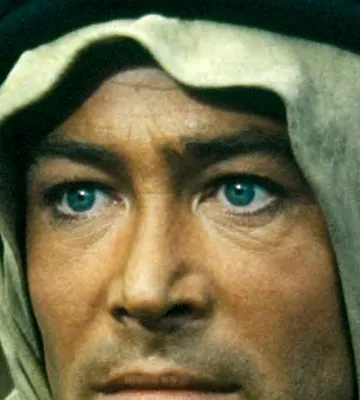
Peter O'Toole
Human Design Chart
Biography
His other films included: "The Stuntman," "How To Steal A Million," with Audrey Hepburn, and "My Favorite Year," a film which parodied his own life.
The son of an Irish bookie and a nurse, Peter grew up in a Dickensian back-street of a northern industrial town under the shadow of Nazi Germany. He flirted a bit with journalism, enough to give a credible and enjoyable later set of autobiographies. After three years at Leeds College of Commerce and two years in the Royal Navy, in 1953 he entered the Royal Academy of Dramatic Art where he learned a lifetime lover of fine theater. With his first film sweeping successes, he became a drinker and carouser of mythic proportions.
In 1959 he married Welsh actress Sian Phillips and they had two daughters. "I was very happily married," he said but apparently Sian was not. In 1977, she left him for a younger man.
Cheerful and unrepentant after years of boozing and brawling, he gave up liquor in 1970. He was worn but still magical in the '80s, when his girlfriend, Karen Sommerville, bore him a son, Lorcan, on 17 March 1983 in Dublin. A custody battle raged from then on.
Troubled with his stomach from the time he was a kid, O'Toole had great flare-ups of pain from the time he was 19. In his 40's, he hemorrhaged badly and nearly died before surgery removed "something in my innards that was not benign." In his later years he dealt with throat problems.
What does Manifesting Generator 2/5 mean for Peter O'Toole?
Manifesting Generator 2/5 — Design at a Glance
Peter O'Toole was someone who could quickly draw things into his life. His Manifestor Generator design combined the constant energy of the sacral center with the ability to skip steps in action. This hybrid nature allowed him an enormous speed in creation but carried the risk of missing important stages and having to return later.
His success depended on not initiating himself, but reacting to impulses from his environment. Only when his sacral center responded with a clear 'yes' was it advisable to start something new. This strategy protected him from frustration, the typical non-self issue for this type that arises when working against inner resistance or acting too hastily.
Peter O'Toole tended to tackle several projects at once as he reacted to many different impulses. Rather than focusing on one thing, he drew deep satisfaction from variety and a playful mode. As long as his inner authority agreed, this parallelism was not a distraction but the source of his creative power. His design required him to regularly check if the work in progress still brought joy, staying in this state of flow and fulfillment rather than being slowed down by hasty action or multitasking without internal consent.
Emotional Authority
Peter O'Toole had a fundamental attitude marked by emotional wave movements: His perception of the world changed strongly with his current mood. What appeared inspiring at one moment could turn negative in the next. This fluctuation came from his defined Emotional Center, which also carried his inner authority. In Human Design mechanics, this emotional authority always takes precedence over all other defined centers regardless of further configurations. However, his feeling in the moment was only a snapshot and not yet the deep truth of a situation. Quick decisions based on this immediate emotion could therefore be misleading. His design strategy required patience: He needed time for a decision to mature. Only after 'sleeping on it' and cooling down from intense feelings did clarity set in. This process of waiting was no sign of hesitation but rather the necessary method to gain emotional distance and calmness. Only when the wave movement had ebbed could he recognize his true direction. This mechanism particularly shaped long-term life decisions, where an impulsive step based on current mood could easily lead into a wrong direction. The necessity to take time and ask again multiple times formed the foundation of his inner navigation.
The 2/5 Profile — Hermit / Heretic
Peter O'Toole's design tended towards deep self-reflection, which was often overshadowed by external expectations. His Profile 2/5, the natural talent and Hero-and-Savior profile, created an internal conflict: Line 2 called for withdrawal to strengthen his own power, while line 5 presented him as a problem-solver for others. Others instinctively sought help from him in crisis times, expected immediate answers, and projected their hopes onto him. This contradicted the need for solitude to process experiences and gain inner clarity. Without these withdrawal phases, his identity risked being obscured by environmental demands. The second line promoted the ability to reflect, even if this was not always visible externally; it required withdrawal to build future success and yield to superior forces. Simultaneously, the fifth line demanded courage to admit past mistakes. This 'confession' of former ignorance served justification and healing but was strongly dependent on the right timing. Peter O'Toole had to learn to strategically use his alone time to make clear decisions about what he would stand for and when he would say no, without forgetting himself or uncritically giving in to others' expectations.
Single Definition — Defined & Open Centers
Peter O'Toole's design inclined towards a powerful, self-determined presence. His defined Heart Center provided him with constant access to willpower and ego strength; he was designed to actively shape his life and keep promises. This energy drove him to be successful and gain recognition for his contributions. Simultaneously, his defined G Center offered a reliable inner identity and a clear sense of direction. He had the confidence to be loved without being dependent on others, and could carry this stability outward.
His ability to express himself was shaped by his defined Throat Center, serving as a pivot point for translating messages from within into the world. As his throat was connected to motor centers, he possessed the ability to express himself directly and action-oriented – whether through words or deeds. This did not happen impulsively but rather based on the reaction of his defined Sacral energy. As a Generator, he had an enormous vital energy source that only became activated by inner consent ("Yes" tone). Only then was the necessary energy available for him to master tasks with persistence and find satisfaction.
He made decisions not in mental Head Center but guided by emotional authority. His defined Solar Plexus required patience: He needed to wait out the emotional wave until clarity emerged before taking action. This protected him from impulsive mistakes at the peaks or troughs of the feeling wave.
In contrast, his Head, Ajna, and Spleen Centers were open. These areas made him vulnerable to conditioning: He tended to take on mental confusion of others as his own problems or be unsettled by external uncertainties regarding health and well-being. Instead of reacting spontaneously or seeking intellectual answers, he was dependent on perceiving these open spaces not as personal issues but as mirrors reflecting the environment while orienting himself towards inner authority.
Channels for intimacy, leadership, openness, love and maturation.
Peter O'Toole's design inclined towards intense, wave-like intimacy. The Pairing Channel 59-6 connected sacral sexuality with emotional friction, making relationships personal and penetrating. This configuration required patience; only after building a friendship could deep connection unfold as the emotional wave determined the timing of closeness.
Simultaneously, his chart showed a structure for collective leadership. The Alpha Animal Channel 7-31 linked logical roles with the ability to lead. This was not autocratic but an influence based on trust and invitation by the community. Peter O'Toole sought his own "pack" context in which he could guide from a position without taking away others' paths. Success depended on being recognized as a competent representative by the majority.
His social interaction was strongly mood-dependent. The Openness Channel 22-12 connected emotional mood with articulation. When in the right emotional phase, his voice and presence could deeply touch or transform others. However, if he acted impulsively or was pushed into social situations against his inner rhythm, misunderstandings or withdrawal occurred. Gate 12's caution regulated openness so that it only worked when the mutative potential of listeners matched.
Another aspect was his competitive drive towards individualization. The Initiation Channel 51-25 linked ego shock with universal love. This promoted a natural urge to transcend boundaries and prove oneself through challenges. However, this initiation had to come as an invitation; forced attempts to transform others led to disappointment. His path involved living authentically, thereby becoming an example for others.
Finally, the Maturity Channel 42-53 shaped his relationship with experiences. He lived cycles fully – from beginning to end – and reflected on them afterwards to gain wisdom. Each experience had to have a satisfying conclusion before a new cycle could begin. This created a deep connection to history and allowed him to learn from past lessons rather than repeating mistakes.
Individual Circuitry — Circuit Signature
Peter O'Toole's design inclined towards inner strength and emotional openness. As a simply defined type, he possessed a continuous energetic flow that shaped his essence as a coherent whole. This unity was evident in how his central forces did not act independently but interwove.
The Knowledge Circuit connected his Throat with Solar Plexus Center, allowing the expression of authentic feelings and individual identity through voice. Simultaneously, the Centering Circuit linked Identity with Heart Center, leading to solidified convictions and strong self-worth, even if these inner certainties were not always outwardly communicated.
The Understanding Circuit Element connected Throat and Identity Centers, enabling rational strategies to directly flow into personal expression form. In contrast, the Meaning Circuit ensured a connection between Sacral and Root Center; here it was about learning from past experiences through cyclical emotional waves. Finally, the Protector Circuit linked Sacral with Solar Plexus Center, reinforcing instinctive care and environmental protection with emotional intensity. All these streams formed a coherent pattern in Peter O'Toole of individual affirmation, rational expression, and deep emotional engagement for his environment.
Right Angle Cross of the Four Ways 2
Peter O'Toole's Human Design profile indicated a tendency towards a complex and multi-layered identity. His chart contained the configuration of the 'right cross of the four paths.' This specific arrangement did not describe a linear development path but rather a web of different, often contradictory impulses and life areas. It was a structure that simultaneously maintained several parallel directions - professionally, emotionally, spiritually or socially - without these converging into one clear focus.
This mechanism acted as an internal compass, urging Peter O'Toole to explore and integrate various facets of his self. Instead of following one path, he faced the challenge of stepping onto four different paths at once and enduring their tensions. This shaped his experience as someone who did not fit neatly into a single category but whose essence was composed of the synthesis of many partial aspects. The energy of this cross promoted the ability to understand complex connections yet also required constant adaptation to changing life demands. Thus, Peter O'Toole appeared as a person whose inner dynamics were determined by this multidirectional orientation, which endowed him with a particular depth and complexity reflected in his way of being and reacting to the world.
Saturn Return · Uranus Opposition · Chiron Return · 2nd Saturn Return — Life Cycles
Peter O'Toole married Sian Phillips, a Welsh actress, in 1959 at the age of 27. For his Human Design profile, this marked the first Saturn Return, often leading to binding life decisions due to inner maturity and structuring. The Uranus opposition was reflected in 1972 when he received the National Board of Review Award for his roles in *The Ruling Class* and *Man of La Mancha* at the age of 40. This configuration often brings unexpected breakthroughs and public recognition when old patterns are broken through. His Chiron Return occurred in 1981 at the age of 49 with the National Society of Film Critics Award for *The Long Goodbye*. This cycle is not a healing process but a blooming period where one's Incarnation Cross and life purpose fully unfold. Finally, the phase of his second Saturn Return culminated in 1988 at the age of 56 with the David di Donatello award for *The Last Emperor*. This time point often solidifies long-term work into a stable, recognized result and anchors the achieved position sustainably in life.
Manifesting Generator · Emotional Authority — Synthesis
Peter O'Toole was a Manifesting Generator who possessed a unique dynamic through the connection between Sacral Center and Throat Center. This configuration not only gave him constant energy but also the ability to seize opportunities quickly and draw things into his life (Channel 59-6). At the same time, the profile indicated that others often expected solutions from him (Line 5), while he simultaneously felt a strong inner urge towards withdrawal and self-discovery (Line 2). This combination of external expectations and internal need for isolation shaped his lifestyle.
A central paradox in his design lay in the tension between emotional authority and the desire to act quickly. The emotional wave required time for clarification (Center), yet the manifesting component urged him to skip steps. This led to an inner conflict, evident in recurring experiences of success and recognition (Cross of Four Paths 2) - followed by phases of withdrawal and reflection, intensified by the necessity to let decisions mature.
5 Defined Channels
Incarnation Cross - Right Angle Cross of the Four Ways 2
Solar Return
The Solar Return shows the moment when the sun returns to its exact birth position - your personal solar year.
Life Cycles
Discover the life cycles with a detailed triple view (birth chart, cycle chart, composite).
Human Design Profile
- Strategy
- To respond - wait for something to respond to
- Authority
- Emotional Authority
- Profile
- 2/5 - Hermit / Heretic
- Definition
- Single Definition
- Incarnation Cross
- Right Angle Cross of the Four Ways 2
- Date of Birth
- 02.08.1932 00:20
- Place of Birth
- Leeds, UK
Frequently Asked Questions
What is Peter O'Toole's Human Design type?
What profile did Peter O'Toole have in Human Design?
What authority did Peter O'Toole have?
What incarnation cross did Peter O'Toole have?
When was Peter O'Toole born?
Discover your own Human Design
Are you also a Manifesting Generator? Find out in a personal reading how to unfold your multi-talents and direct your energy wisely.
More Personalities
Back to overviewSissy Spacek

Aldair

Alizée

Anémone

Angeli

Ann-Margret
