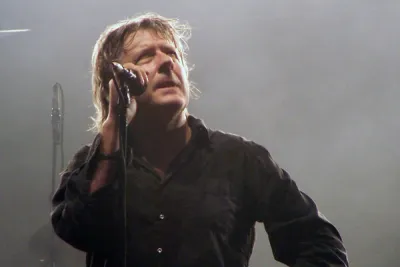
Photo: Wikimedia Commons
Peter Tatchell
Human Design Chart
Biography
Tatchell was selected as Labour Party Parliamentary candidate for Bermondsey in 1981. He was then denounced by party leader Michael Foot for supporting extra-parliamentary action against the Thatcher government. Labour subsequently allowed him to stand in the Bermondsey by-election in February 1983. In the 1990s he campaigned for LGBT rights through the direct action group OutRage!, which he co-founded. He has worked on various campaigns, such as Stop Murder Music against music lyrics allegedly inciting violence against LGBT people and writes and broadcasts on various human rights and social justice issues. He attempted a citizen's arrest of Zimbabwean President Robert Mugabe in 1999 and again in 2001.
In April 2004, he joined the Green Party of England and Wales and in 2007 was selected as prospective parliamentary candidate in the constituency of Oxford East, but in December 2009 announced he was standing down due to brain damage he says was caused by a bus accident as well as damage inflicted by Mugabe's bodyguards when Tatchell tried to arrest him in 2001, and by neo-Nazis in Moscow while campaigning for gay rights.
Human Design Analysis: Peter Tatchell as Generator 2/4
Generator 2/4 — Design at a Glance
Peter Tatchell's design points to a tendency towards extreme endurance, comparable to a workhorse that provides immense strength as long as it has energy for its task. As a Generator, he had a lot of sacral energy, but it was released not through initiatives but through reactions to impulses. His system's motto was: not to initiate, but to react.
This mechanism created two specific pitfalls. One was to persistently do things he had no interest in, wasting his energy and leading to burnout. The other danger was being prevented from working on his heart project, even though he wanted to continue with full power. His most successful strategy was to react to signals from life and then, when the sacral center clearly said 'yes', to act on it.
If Peter Tatchell lived in harmony with this design, nothing could stop him. He was then rewarded with a sense of deep fulfillment. If he acted against this nature, for example by constantly initiating instead of waiting, he likely encountered a feeling of persistent frustration or a lack of energy. His path to effectiveness therefore always lay in reacting from the gut, not in pushing against the current.
Emotional Authority
Peter Tatchell's design points to an emotional wave movement that shaped his perception and decision-making. His inner authority was Emotional Authority, carried by the defined Solar Plexus Center. In Human Design mechanics, when the Solar Plexus Center is defined, it takes on the role of inner authority, regardless of other defined centers in the chart. This means that Peter Tatchell was under a permanent emotional wave, showing in a constant up and down of his feelings.
His view of the world was always colored by his current mood. In one moment, he could be totally enthusiastic about something, in the next, he could see the same thing completely negatively. However, his feeling in the moment was just a snapshot, a first impression, not necessarily his truth yet. Quick, spontaneous decisions based on emotion could therefore have negative consequences.
The mechanics of his design required patience and time to let decisions mature. The more time he took, the deeper and more comprehensive he could perceive situations. This meant reconsidering decisions multiple times and taking time until the intense feelings subsided. Only then did he gain emotional distance, and clarity and calmness set in. This process was particularly important for long-term decisions that could have a significant impact on his life course. By waiting out the emotional wave, he could recognize his true, deeper truth, rather than being guided by passing moods.
The 2/4 Profile — Hermit / Opportunist
Peter Tatchell's design points to a clear tendency towards a pendulum rhythm between deep withdrawal and close social exchange. He showed himself as someone who first sought absolute isolation for his clarity and impact on others, only then re-engaging in his familiar network. This dynamic arises from his 2/4 Profile: Line 2, the Hermit, requires undisturbed time to order inner processes and transform fantasies into tangible realities. Only when this need for security and inner peace is satisfied does Line 4, the Community, become active. Then he seeks contact with his favorite people to share and reflect on what he gained in solitude.
The challenge lies in clearly communicating this interplay. Peter Tatchell had to learn to clearly signal when he needs company and when he needs to withdraw undisturbed. Without this clear boundary, contradictions or a feeling of not being understood threatened. The energy of Line 2 brings a cautious, almost conservative attitude that prioritizes personal security. In contrast, Line 4 stands with its persistence and the desire to use knowledge in the interest of a higher good. If he managed to integrate these two poles, he could evaluate the knowledge of his network during his alone time and develop brilliant, well-thought-out ideas from it. His success therefore depended on how well he could steer this rhythm of solitude and community.
Split Definition — Defined & Open Centers
Peter Tatchell's Human Design shows a tendency towards constant mental pressure and a clear, unshakable identity. He was someone who asked questions and formed concepts without needing to immediately put them into action. This results from the definition between Head and Ajna Centers: a permanent state of inspiration that forms questions but does not provide the energy for direct implementation. The attempt to relieve this pressure through hasty action leads to frustration here; the strength lies in waiting until the right inspiration reaches willing listeners.
At the same time, he had a reliable inner direction and willpower. The defined G Center gave him a firm sense of self and a sense of his mission, while the defined Heart Center gave him the resources to keep promises and determine his own life. This combination of clear identity and willpower shaped his attitude without him needing to force others to follow.
As a Generator with a defined Sacral Center, he was dependent on reaction. His energy was only fully available when he waited for questions or invitations and then responded with a clear yes or no. Initiatives that came from the mind rather than the sacral response led to resistance and exhaustion.
His emotional system was characterized by the defined Solar Plexus Center, meaning that he did not make decisions in the moment but had to wait for the emotional wave to gain clarity. His inner authority lay in these shifting feelings, which only revealed a deep truth after going through the cycle.
Despite these inner strengths, he was vulnerable to the pressure to demand attention through the open Throat Center. The non-self pattern tended to question whether he was noticed or tried to find an audience through persuasion or interruption. However, the mechanics of his design showed that his open throat naturally attracts attention when he waits for the invitation rather than forcing it. This conflict between the desire for recognition and the necessity of waiting shaped his communicative dynamics.
Channels for ambition, intuition, care, community, emotions and abstraction.
Peter Tatchell's Human Design shows a tendency towards intuitive, self-determined action that is characterized by deep inner security. This attitude stems from Channel of Perfect Form 57-10, which connects intuitive insight with self-behavior. He acted spontaneously and appropriately, guided by acute awareness of his surroundings rather than future anxieties. This allowed him to move through the world existentially and unburdened, with his unique behavior serving as a model.
At the same time, there was a strong commitment to the collective and its values. Channel of Preservation 27-50 connected his sacral care with the preservation of traditional tribal laws. He took responsibility for others not out of duty but from a natural, selfless concern that secured the survival of the community. This energy created a strong defense mechanism for the fundamental values he saw as essential for the well-being of all.
His ambition was driven by Channel of Transformation 54-32. Here, the awareness of the fragility of the tribal stock drove a constant upward drive. He sought ways to use talents to improve his position and bring about lasting transformations. However, this never happened in isolation but always within the support of allies.
In interpersonal dynamics, Channel of Community 37-40 was at work. He sought recognition and his place in the whole, built bridges between individuals, and negotiated carefully to close fair deals. Emotional waves were expressed through Channel of Feelings Release 39-55, which used provocation to activate the minds of others and generate authentic emotional depth.
Mentally, he worked with Channel of Abstraction 64-47, which filtered experiences through a kaleidoscope of mental images. He sought stories and perspectives to understand the mysteries of life, although the mind could not offer him final security. Additional tones like Gate 18 (Human Rights Correction) and Gate 17 (Logical Teaching for the Future) underscored his focus on political justice and structural change.
Tribal Circuitry — Circuit Signature
Peter Tatchell's Human Design shows a tendency towards pulsating emotional waves that rhythmically move between intense feelings and the need for rest. The Knowledge Circuit connected his Solar Plexus with his Root Center. This generated an energy that came and went in waves: moments of high emotional intensity alternated with phases of exhaustion that required rest.
Parallel to this, a separate cognitive impulse was evident. The Meaning Circuit connected his Head with his Ajna Center. Here, it was about reflecting on the past and finding meaning in past experiences, driven by intuitive flashes, but not directly connected to the emotional waves of the Solar Plexus.
Another independent area concerned community and transformation. The Ego Circuit consisted of two separate parts: a connection between Heart and Solar Plexus Centers, and one between Spleen and Root Centers. This described a tension between the will to cooperate and the instinctive knowledge of resources, without these areas forming a common flow.
Additionally, the Archer Circuit connected his Sacral with his Spleen Center. This gave a primal, instinctive power for protection and preservation of the family or one's own genetics, fueled by the constant life force of the Sacral Center.
Finally, the Integration Circuit connected his Identity with his Spleen Center. This led to his unique identity being guided by intuitive knowledge and proper actions in the present to secure his own survival. All these circuits existed as parallel, non-directly connected energies, offering Peter Tatchell different, side-by-side challenges and strengths.
Right Angle Cross of the Unexpected 4
Peter Tatchell's Human Design profile indicates a tendency towards unexpected turns, often described as a right cross in Human Design. This configuration signals a life task that is propelled forward by seemingly random or surprising events. Instead of following a linear, predictable path, his chart shows a structure that relies on disruption and new perspectives to fully unfold its effects.
The 'Right Cross' typically connects various energy centers and channels that often conflict in everyday life or present different demands. For Peter Tatchell, this means that his development was marked by significant, often surprising insights rather than steady, small steps. This mechanism challenges the ability to deal with the unexpected rather than fighting it. It is not about chaos but a deeper order that only makes sense in retrospect.
The term 'Unexpected' underscores that the solutions or insights his design aimed for rarely followed conventional paths. Instead, they were often triggered by external circumstances or sudden experiences that broke through existing viewpoints. This created a dynamic where Peter Tatchell was forced to remain flexible and open to new information rather than clinging to old beliefs. The challenge lay in accepting this erratic development as a coherent process and not interpreting it as a disruption of his own path. Thus, the apparent unpredictability became the driving force of his personal evolution.
Saturn Return · Uranus Opposition · Chiron Return · 2nd Saturn Return — Life Cycles
Peter Tatchell's design is characterized by a structure that tends towards high visibility and public confrontation in certain life phases. This configuration sets a tendency towards polarizing moments where one's positioning is put to the test.
In 1981, at the age of 29, he was selected as a Labour Party candidate for the Bermondsey constituency. This coincided with his first Saturn Return, a cycle often marking structural confirmation or the solidification of one's role in the social fabric. Here, years of groundwork condensed into a concrete political mandate.
The dynamics shifted with the Uranus Opposition in 1995. At the age of 43, he was vilified by the Daily Mail as a 'gay terrorist.' This phase typically brings sudden breaks and external attacks on the established identity, manifesting here in the form of intense public defamation.
Later, in 2006 at the age of 54, the second Saturn Return followed. That year, the magazine New Statesman ranked him sixth among the 'Heroes of Our Time.' This cycle serves the long-term confirmation and integration of lived values. The earlier crisis and political entry were here transformed into an acknowledged, stable position that underscores the meaning of the previous paths.
Generator · Emotional Authority — Synthesis
A central thread runs through the design: the dynamic interaction between inner clarity and external expression. The sacral energy (Generator type) conditions a deep, enduring power that is, however, bound to authentic alignment. This energy is channeled through emotional authority (emotional center), requiring a careful maturation of decisions to recognize inner truth. The profile as a natural talent and networker (Lines 2/4) reinforces this process by emphasizing both phases of withdrawal for inner collection and the need for connection and exchange – a give-and-take that fosters creative integration (Channel 57-10) and releases the potential for transformation (Knowledge Circuit).
The design reveals a central paradox between the need for inner definition and the experience of the unexpected. The defined mental center generates a constant flow of questions and inspiration, which is, however, confronted by the unexpected right cross (Cross) with unpredictable events. This leads to a tension between the desire for control and the acceptance of the unforeseeable, manifesting in the placements of the cycles: career success and recognition stand alongside crises and public hostility. This alternation between confirmation and challenge seems to be a driving force for further development and the unveiling of new paths.
6 Defined Channels
Incarnation Cross - Right Angle Cross of the Unexpected 4
Solar Return
The Solar Return shows the moment when the sun returns to its exact birth position - your personal solar year.
Life Cycles
Discover the life cycles with a detailed triple view (birth chart, cycle chart, composite).
Human Design Profile
- Type
- Generator
- Strategy
- To respond - wait for something to respond to
- Authority
- Emotional Authority
- Profile
- 2/4 - Hermit / Opportunist
- Definition
- Split Definition
- Incarnation Cross
- Right Angle Cross of the Unexpected 4
- Date of Birth
- 25.01.1952 02:30
- Place of Birth
- Melbourne, AUSTL
Frequently Asked Questions
What is Peter Tatchell's Human Design type?
What Profile does Peter Tatchell have in Human Design?
What authority does Peter Tatchell have?
What incarnation cross is Peter Tatchell associated with?
When was Peter Tatchell born?
Discover your own Human Design
Are you also a Generator? Find out in a personal reading how to use your sacral energy correctly and discover deep satisfaction.
More Personalities
Back to overviewAaliyah

Alexia

Angèle

Anne-Marie

Arcángel

Arno