
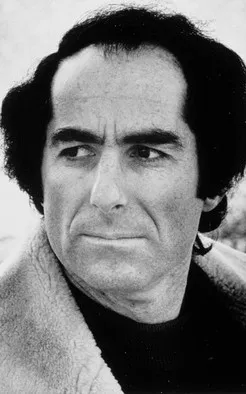
Philip Roth
Human Design Chart
Biography
Roth and his older brother, Sandy, were the kids of Jewish Polish immigrants. Their dad, Herman, was an insurance man who spent the first part of his professional life pounding the pavements of Newark, NJ to get overdue three-cent premiums from clients. With only an eighth-grade education, his dad worked his way into management. He was an opinionated man who ruled the family with an iron fist while Philip's mom, Bessie was a gentle martyr to his dad's domestic tyranny. She died in 1981.
After college Roth served in the Army. He was discharged in 1955 and then taught at the University of Chicago while writing "Goodbye, Columbus" which won a National Book Award for fiction and was made into a motion picture. In 1960 he won a Guggenheim grant and went to live in Italy and then England. During the span of his career he scandalized his fellow Jews with his voyeuristic rendering of conventional Jewish mating habits in "Goodbye, Columbus," then in 1969 with the lurid, uproarious and sexually graphic "Portnoy's Complaint." He received critical acclaim for other books but none sold as well as that outrageous best-seller.
He had a brief, tempestuous marriage to Margaret Martinson, a divorcee whom he met when they were both graduate students at the University of Chicago. It ended in a bitter divorce in 1963. In 1976, after a variety of female companions, he met actress Claire Bloom at a party. They lived together and were married in Manhattan on 29 April 1990. She had a daughter, Anna, from her former husband, actor Rod Steiger. They too had a later divorce, in 1994, that was lethal.
Human Design Analysis: Philip Roth as Generator 6/3
Generator 6/3 — Design at a Glance
Philip Roth revealed himself as someone who did not release his strength through spontaneous initiatives but through a deeply rooted endurance. His design as a Generator laid down immense inner energy, comparable to that of a workhorse: strong, durable, and ready to implement things into reality. Yet this power was conditional. It did not ignite through sheer will but required an external impulse. Roth's strategy was to respond to signals from his environment rather than take the first step himself. When his sacral center—the motor of his actions—sent a clear "yes," he responded with full devotion.
This responding was the key to his effectiveness. If he initiated purely from his head or compulsion, he fell into frustration and lost his energy. Two dangers marked his potential: First, wasting energy on tasks that felt alien to him, leading to exhaustion. Second, being held back from his true creation, even though his inner driving force still had full power. Living in harmony with this rhythm of waiting and responding rewarded him with a feeling of deep fulfillment. His satisfaction did not arise from the action itself but from the confirmation that he had seized the right impulse. Thus, his endurance became the driving force as long as he followed the inner command and did not swim against the current.
Emotional Authority
Philip Roth's design shows a tendency towards emotional intensity and subsequent clarity. He was subject to a constant wave movement of feelings that significantly colored his perception of the world. What appeared overwhelmingly positive in one moment could be experienced as deeply negative in the next. However, these fluctuations did not mean that the initial impression was the truth; they were merely a snapshot.
This mechanism resulted from the emotional authority carried by the defined Emotional Center. In Human Design mechanics, this authority always takes precedence over all other defined Centers, regardless of the type. Quick, spontaneous decisions made directly from a current mood often proved problematic, as the emotional wave had not yet subsided.
Philip Roth's strategy was to take his time. By consciously delaying and repeatedly "sleeping on" decisions, the initial emotional heat could subside. Only when the feelings had subsided and emotional distance had been gained did the necessary calmness and clarity set in. This process of maturation was particularly crucial for long-term, life-defining steps, as it ensured that the choice was based not on a passing mood but on a deeper, more stable insight.
The 6/3 Profile — Role Model / Martyr
Philip Roth lived his first third of life as an intense experimenter, driven by the Line 3 of the Explorer. This phase was marked by numerous self-experiments and a constant search for the extraordinary, far from any ordinary standards. For him, experimenting was never just a means to an end, but a permanent state that did not fully end even after his 30th year, the first Saturn return. Internally, there was a certain restlessness that stemmed from the deep soul of a 6/3 configuration: the feeling of endlessly searching for a perfect, extraordinary life form without ever finding it definitively.
With advancing age, this experimental energy transformed. The responsibility and wisdom that became natural for people of this Profile after the 30th year allowed him to integrate his unusual experiences. He developed into a role model, distinguished by humor and foresight. At the same time, he retained the core quality of Line 6: justice as a development line without rigid expectations. Experiences were not valued as tools for a goal but were valued for themselves. Crises served to correct from pure feelings, shifting the focus from the meaning-finding circuitry to innocence. Simultaneously, he carried the potential of Line 3 within him, marked by adaptation and martyrdom – a striving for attention that always served the mutation and preservation of his own essence.
Split Definition — Defined & Open Centers
Philip Roth's Human Design profile indicated a tendency towards constant mental pressure and deep emotional processing. His Head and Ajna Centers were defined, creating a perpetual state of inspiration, questioning, and conceptualization. This mental process was not only internally active but also influenced others, prompting them to think or placing them under pressure. Since these centers did not have their own energy for implementation, it was crucial for him to accept the pressure rather than converting it into hasty actions, which would otherwise lead to frustration and self-doubt.
His defined Throat Center allowed him to reliably translate these mental processes and concepts into communication and action. The connection between Ajna and Throat meant that he articulated what he thought, with his voice serving as a focal point for the manifestation of these ideas. At the same time, he had a defined G Center, which gave him a firm sense of self-identity and direction. This enabled him to express his truth without relying on others and allowed him to show others new perspectives.
Additionally, his Heart Center was defined, giving him access to willpower and ego strength. He could make promises and keep them, which strengthened his self-esteem. However, he had to be careful not to expect others to have the same level of willpower, which could otherwise lead to resistance. His Solar Plexus Center was also defined, forming his emotional authority. He was designed to wait for the emotional wave to gain clarity before making decisions, protecting him from impulsive reactions and allowing a deep, sensitive perception of emotional dynamics in his environment.
An open Root Center made him vulnerable to external stress and adrenaline. He absorbed the pressure from his environment, which could lead to a feeling of restlessness and attempts to release this pressure through hyperactivity. The wisdom lay in recognizing that this pressure was not his own and finding ways to avoid or use it purposefully, rather than being overwhelmed by it. This combination of defined mental and emotional structure with an open Root created a complex internal balance between inspiration, expression, and the handling of external burdens.
Channels for intimacy, intuition, community and mental clarity.
Philip Roth's Human Design profile indicated a tendency towards intense, often stormy intimacy, coupled with a strong drive for individual self-validation. The Channel of Union 59-6 connected sacral sexuality with the emotional wave of the Solar Plexus. This configuration created personal and penetrating relationships, but required patience to find clarity in emotional fluctuations. Simultaneously, the Channel of Research 34-10 shaped his behavior: he sought confirmation of his own beliefs through sacral reactions, making him independent and centered on his own essence.
This individuality was refined by the Channel of Perfect Form 57-10. Here, intuitive insight from the Spleen guided his behavior to secure his survival and uniqueness in the moment. This gave him a spontaneous, unburdened way of moving through the world, based on deep trust in his own intuition.
In interpersonal relationships, the Channel of Community 37-40 was active. He sought his place in the group, but only through carefully coordinated agreements that linked willpower and emotional clarity. He waited for the right invitation to engage, as spontaneous entries often failed.
Mentally, the Channel of Abstraction 64-47 was evident. His mind explored experiences to find patterns and stories, often leading to mental confusion until clarity suddenly emerged. Parallel to this, the Channel of Acceptance 17-62 organized details logically. It translated visual impressions into language to structure and communicate his worldview, relying on being invited to speak to avoid resistance.
The Channel of Power 34-57 reinforced this structure with a strong survival intuition. He responded spontaneously to dangers and protected his vitality by tuning into the acoustic and physical signals of his environment, free from mental or emotional delay.
Individual Circuitry — Circuit Signature
Philip Roth was someone who carried inner convictions with almost unyielding firmness. His design connected the Sacral with the Identity Center (Centering Circuit), creating a deep, pulsating individuality. He knew who he was, but the lack of a direct connection to the Throat meant that this firm self-assurance was not always easy to express in words. Parallel to this, the Understanding Circuit connected his Ajna with the Throat Center. Here lay the ability to articulate logical, rational insights clearly and focused, free from emotional distortion.
Another characteristic was his way of processing the past. The Meaning Circuit connected Head and Ajna Centers. This generated a cyclical, visual energy aimed at giving meaning to the past and sharing these insights. Simultaneously, the Ego Circuit through the connection of Heart and Solar Plexus Centers fostered an awareness of mutual support and the relationship of giving and taking. His emotional waves were here more rat-like than flowing.
In the Protector Circuit, the Pairing Energy connected the Sacral with the Solar Plexus Center. This gave him a primal, instinctive power for protection and preservation of his genetic line. Finally, the Integration Circuit integrated Identity, Spleen, and Sacral Center. Through the Channels of Perfect Form and Power, he channeled intuitive, instinctive perceptions into a powerful, self-determined action in the present. This shared definition created two parallel, not directly connected power blocks: an emotional-physical and a cognitive-communicative.
Left Angle Cross of the Plane 1
Philip Roth's Human Design indicated a tendency towards clear, direct, and often abrupt ways of acting. He was someone who expressed his intentions and actions openly and without much preamble, which could be perceived as domineering or even disruptive in his environment. This attitude stemmed from the left cross of Level 1, a configuration that describes a natural inclination towards initiating and propelling processes. People with this expression tended to show their energy and intentions immediately and clearly, without much concern for the reactions of others. This could lead to misunderstandings, as the direct approach was often interpreted as rude or intrusive, though it usually was just an expression of inner clarity and a drive to set things in motion. Philip Roth lived with this energy, which led him to situations where he had to clearly express his opinions or intentions. This direct way of acting characterized his interactions and often led to quick, but also controversial results.
Saturn Return · Uranus Opposition · Chiron Return · 2nd Saturn Return — Life Cycles
Philip Roth's Human Design indicated a tendency towards structural consolidation and public recognition, which crystallized into clear life phases. This mechanism often manifests during the first Saturn Return, when years of groundwork ripen into a solid result. In 1960, at the age of 27, *Goodbye, Columbus* won the National Book Award and the Daroff Memorial Award of the Jewish Book Council – a typical moment when recognition and professional validation institutionalize.
Later, the pressure to break free from old bonds, characteristic of the Uranus Opposition, often forcing new life designs, was felt. In 1972, at 39, Roth bought a farm in northwestern Connecticut. This step marked a career-accompanying shift, creating more space and independence away from urban constraints.
The Chiron Return, a fulfillment cycle where one's incarnation cross unfolds and meaning becomes tangible, marked the time around his 48th year. In 1981, Roth published *Zuckerman Unbound*. This work expressed a deep, personal artistic bloom, carrying his inner purpose outward.
Finally, the second Saturn Return, often leading to the final stabilization of partnerships, in 1990, at 57, saw his marriage to Claire Bloom. This relationship anchored as a firm structure in his later life, solidified by Saturn's heavy gravity, emphasizing stability and responsibility. Philip Roth's path followed these cyclical patterns of consolidation, liberation, and fulfillment.
Generator · Emotional Authority — Synthesis
Philip Roth was a Generator whose life was marked by a deeply rooted sacral energy. This energy drove him to sustained creative productivity, yet it was always tied to the necessity of finding tasks that truly fulfilled him (Generator Design). Emotional authority required careful consideration, as spontaneous decisions could lead to confusion, evident in the maturity of his works. The profile as a role model and experimenter points to a search for extraordinary life designs beyond conventional norms, coupled with a responsibility that grew stronger with age. The connection between Sacral and Identity Centers (Centering Circuit) reinforced a strong, individual conviction and a deep sense of self-worth.
A central paradox in Roth's design lay in the tension between the need for deep intimacy and the accompanying emotional intensity (Pairing Channel) and the mental pressure to constantly question and understand (defined Head Center). This constellation led to internal unrest, an eternal search for the 'ordinary perfect' (6/3 Profile), manifesting in recurring themes of his work and turning points in his life cycles – from early successes to later relationships.
7 Defined Channels
Incarnation Cross - Left Angle Cross of the Plane 1
Solar Return
The Solar Return shows the moment when the sun returns to its exact birth position - your personal solar year.
Life Cycles
Discover the life cycles with a detailed triple view (birth chart, cycle chart, composite).
Human Design Profile
- Type
- Generator
- Strategy
- To respond - wait for something to respond to
- Authority
- Emotional Authority
- Profile
- 6/3 - Role Model / Martyr
- Definition
- Split Definition
- Incarnation Cross
- Left Angle Cross of the Plane 1
- Date of Birth
- 19.03.1933 01:00
- Place of Birth
- Newark, NJ, United States
Frequently Asked Questions
What was Philip Roth's Human Design type?
What Profile did Philip Roth have in Human Design?
Which Authority determined Philip Roth's decisions?
What incarnation cross did Philip Roth have?
When was Philip Roth born?
Discover your own Human Design
Are you also a Generator? Find out in a personal reading how to use your sacral energy correctly and discover deep satisfaction.
More Personalities
Back to overviewAaliyah

Alain-Fournier

Alexia

Angèle

Angeli

Anne-Marie
