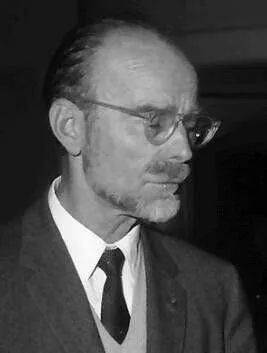
Pierre Auger
Human Design Chart
Biography
He died on 24 December 1993, aged 94, in Paris.
The world's largest cosmic ray detector, the Pierre Auger Observatory, is named after him.
What does Generator 6/2 mean for Pierre Auger?
Generator 6/2 — Design at a Glance
Pierre Auger had remarkable endurance and served as a powerhouse whose strength was fully unleashed only through the right method of utilization. His design as a Generator meant that he was not primarily destined to initiate actions but rather to respond to external signals. This strategy of responding instead of anticipating formed the foundation for his well-being and effectiveness.
The mechanics behind this lie in the sacral center: Here, energy is not created by willpower or planning, but as a direct response to impulses from the environment. When Pierre Auger responded to such a signal and felt his inner "yes," he could work with high intensity without becoming exhausted. He was like a workhorse that remains strong as long as it is used for the right task.
Deviation from this pattern led to clear negative consequences. If he acted against his inner feeling or did things he had no desire to do, he wasted his resources and tended towards frustration up to burnout. Similarly problematic was when he was hindered in his activity even though he still had plenty of energy. The deepest satisfaction and sense of fulfillment came exclusively for him when he used this sacral energy to respond to life's issues rather than depleting it through self-initiated actions. This protected him from exhaustion and enabled sustainable performance.
Sacral Authority
Pierre Auger based his decisions on sacral authority, which serves as an internal instance for generators. This structure simplified the decision-making process because strategy and inner guidance were identical. A prerequisite for this was an open emotional center that prevented immediate intellectual assessment and instead waited for physical signals.
When Pierre Auger reacted to external stimuli, it showed through physical resonance: a gut feeling or a surge of energy. He learned to pay attention to these bodily sounds – grunts, hums, or a confirming "mm-hm". As long as the sacral motor was activated, he felt vital and alive. An apparently inexhaustible energy was available to him, enabling him to tackle tasks with great enthusiasm.
This state shaped his life through joy and contentment. He immersed himself in his activities without them needing an external purpose. The authenticity of his choice did not lie in the head but in this immediate physical confirmation. Through this mechanism, he could reliably follow his inner rhythm, providing a stable foundation for his actions, far from exhausting deliberation or doubt.
The 6/2 Profile — Role Model / Hermit
Pierre Augers design is characterized by a clear division of his life path into two parts. In the first three decades, Gate 30 on the second line dominated. This marked him as a pragmatic experimenter who learned through trial and error. His energy was productive, yet he had to be selective in turning inner desires into concrete experiences and finding balance between extremes.
After the age of thirty, this dynamic changed fundamentally with the activation of the sixth line, represented by Gate 23. This transition marked the shift from active role experimentation to deep reflection. Pierre Auger metaphorically retreated into a "cave on the mountain." During this phase, he dedicated himself to synthesizing his earlier experiences. It was no longer about external action but rather the integration of knowledge and intensive introspection. This retreat served both healing and gaining deeper self-awareness.
The result of this process was a wise presence. When he emerged from this phase of synthesis, he radiated clarity that attracted others. People sought his advice to learn from his ability for deep self-reflection and the life wisdom gained from it. His path thus exemplified the classic 6/2 Process: first, pragmatic data collection through experience, followed by wise integration into a coherent whole.
Triple Split Definition — Defined & Open Centers
Pierre Auger revealed himself as someone with an extremely dense internal structure. Seven of his nine centers were defined, resulting in a constant, reliable presence in willpower (Heart Center), identity (G Center), mental thinking (Ajna Center), communication (Throat Center), vital energy (Sacral Center), intuition (Spleen Center), and stress management (Root Center). He possessed a clear will, a firm direction, and the ability to translate concepts directly into the world. His strategy was to wait for an answer from his Sacral Center, supported by his intuitive Spleen authority. This meant that he did not initiate but reacted as soon as energy became available.
In contrast, his Head and Solar Plexus Centers were open. Here, he lacked a constant source of inspiration and emotions. Instead, he absorbed these from the environment. This led him to question whether he was inspiring enough or if he needed to avoid emotional confrontations to prevent rejection. These open areas made him susceptible to external influences while his defined core remained stable. The combination of this massive internal strength and situational flexibility in head and emotions shaped his unique mechanics: a strong, reactive motor that was nevertheless open to the inspirational and emotional currents of his environment without identifying with them.
Channels for structure, focus, reflection, devotion and maturation.
Pierre Auger showed himself as someone who clearly articulated innovative concepts, thereby changing others' ways of thinking. This ability stemmed from Channel 23-43: Spontaneous insights from Ajna Center (Gate 43) were assimilated through Gate 23 and expressed in the Throat Center. This mutative process promoted efficiency but was dependent on correct timing to find acceptance; premature action without strategy often led to rejection of his unique perspectives.
His work style was also influenced by Channel 52-9. Here, Gate 52 (Non-action) in Root Center connected with Gate 9 (Focusing) in Sacral Center, linking a passive urge to remain still with the ability to maintain focus on details and facts once his internal pressure held him in place. This format energy allowed him to devote himself entirely to something, keep distractions at bay, and logically perfect patterns as soon as his inner drive kept him grounded.
Additionally, Channel 13-33 of the Lost Son affected his reflective ability. Through Gate 13 (Listeners) in G Center, he gathered information and secrets while Gate 33 in Throat Center prompted withdrawal to reflect on these experiences. This created a cyclical process of maturation: He patiently waited for deeper truths to surface beneath the surface before communicating them. This combination of structured communication, focused logic, and patient reflection shaped his approach to not only generate knowledge but also deliver it timely and precisely into the world.
Collective Circuitry — Circuit Signature
Pierre Auger's design leaned towards a tendency for structured, emotional knowledge transmission. His personality was significantly influenced by the Knowledge Circuit, which connected Ajna Center (thinking) with Throat Center (expression). This allowed him to not only think about new knowledge but also carry it into the world through the structuring of expression. The pulsating energy of this circuit fostered a unique individuality supported by the emotional pulse from Solar Plexus – although not directly in the channel, it provides emotional coloring.
Parallel to this, the Understanding Circuit, which linked Sacral Center (life force) with Root Center (survival), gave him focused strategic endurance to share logical insights and keep an eye on the future. This rational side contrasted with the Meaning-making Circuit, which formed two separate segments: one connecting Throat and Identity Centers for expressing personal experiences, another linking Sacral and Root Centers. This underscored the need to reflect on past emotions and existential questions and share them with the collective.
Additionally, the Ego Circuit connected Heart Center (will) with Spleen Center (instinct). This promoted cooperation and resource exchange within the tribe, where the absence of a direct Sacral connection in this circuit necessitated periods of rest for regeneration. Overall, Pierre Auger was someone who structuredly expressed new knowledge, strategically acted, and brought both emotional depth and instinctive cooperation into play.
Left Angle Cross of Dedication 1
Pierre Auger's design carried the signature of the left cross of Devotion. This configuration marked a specific energetic alignment characterized by deep connection and strong engagement for certain goals or communities. Without further mechanical details about Gates or Channels provided in this material, this designation remains as an isolated element that points to a fundamental life approach: the readiness to immerse oneself deeply and live devotion as a central value.
As no specific descriptions of the underlying mechanics are given, it is not possible to draw a more detailed picture of its everyday impact. The focus lies solely on the name of this cross, which in the Human Design system represents a particular archetypal quality. For Pierre Auger, this meant that his chart contained this specific energy of devotion as a structural element. It was a fixed aspect of his energetic map, shaping his style of engagement and commitment, even though the exact expressions are not further specified in this context. Mentioning this cross serves as an indication of an underlying motivation towards devotion without adding more biographical or mechanical explanations.
Generator · Sacral Authority — Synthesis
Pierre Auger lived a life marked by a deeply rooted ability to pay attention to subtle signals from his body and translate them into purposeful action. This sacral reaction (Sacral Authority), combined with a defined G Center, points to someone who instinctively recognized their own inner direction and could give orientation to others through authentic presence. The process of maturation (Channel 53-42) seemed central to his path – a cyclical flow of experience, reflection, and sharing wisdom that nourished his capacity for deep introspection and understanding complex connections. This combination of instinctive response and reflective experience formed the thread of his life's journey.
However, Auger's design also revealed a tension between the need for authentic expression (defined Throat Center) and the ability to process and structure information (Ajna definition). This apparent discrepancy suggests that he constantly strived to bring his inner truth into coherent form to share with others. The knowledge gained through the connection of Head and Throat Centers required, however, a process of maturation and letting go (Channel 33-13) to truly become effective – an ongoing interplay between inner insight and outer expression.
5 Defined Channels
Incarnation Cross - Left Angle Cross of Dedication 1
Solar Return
The Solar Return shows the moment when the sun returns to its exact birth position - your personal solar year.
Life Cycles
Discover the life cycles with a detailed triple view (birth chart, cycle chart, composite).
Human Design Profile
- Type
- Generator
- Strategy
- To respond - wait for something to respond to
- Authority
- Sacral Authority
- Profile
- 6/2 - Role Model / Hermit
- Definition
- Triple Split
- Incarnation Cross
- Left Angle Cross of Dedication 1
- Date of Birth
- 14.05.1899 17:15
- Place of Birth
- Paris, France
Frequently Asked Questions
Which Human Design Type was Pierre Auger?
Which profile did Pierre Auger have?
Which authority did Pierre Auger have?
What incarnation cross did Pierre Auger have?
When was Pierre Auger born?
Discover your own Human Design
Are you also a Generator? Find out in a personal reading how to use your sacral energy correctly and discover deep satisfaction.
More Personalities
Back to overviewAaliyah

Alexia

Angèle

Anne-Marie

Arcángel

Arno