
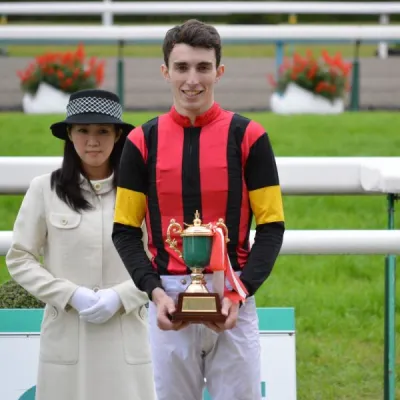
Pierre-Charles Boudot
Human Design Chart
Biography
Human Design Analysis: Pierre-Charles Boudot as Generator 2/4
Generator 2/4 — Design at a Glance
Pierre-Charles Boudots Design sets a tendency for high endurance, which is unfolded not through self-initiated actions but rather in response to internal impulses. As a Generator, he possesses a great deal of sacral energy – comparable to a strong workhorse – that only effectively uses its strength when reacting to external signals. The motto was clear: Not initiate, but react.
This pattern brought two central stumbling blocks with it. On the one hand, there was a risk of burnout if he wasted energy on tasks that did not require his internal consent. On the other hand, it led to deep frustration when he was prevented from pursuing his heart project, even though his inner self still had plenty of power and wanted to continue.
The key to his satisfaction lay in the strategy of waiting for a signal from life and then acting as soon as the sacral center gave a clear "yes." Living in harmony with this design, reacting rather than initiating, resulted in deep fulfillment. Deviating from it – such as by constantly initiating against inner resistance – instead led to persistent frustration and a noticeable energy deficit. His strength thus did not lie in pushing forward but in powerfully responding to life.
Sacral Authority
Pierre-Charles Boudot's decision-making was oriented towards a clear inner authority: the Sacral Authority. As a Generator, this authority also served as his strategy, simplifying his process and directly relating it to his body. Instead of cognitively planning, he responded to external stimuli with physical resonance. This manifested as gut feelings or bursts of energy – audible through grunts, hums, or loud "mmms." Such signals marked a positive response.
When Pierre-Charles Boudot encountered this inner resonance, he immediately felt vitality and enthusiasm. His energy became inexhaustible, and he engaged in his activities with great joy without needing an external goal or sense of duty. This zest for life arose from correctly responding to his nature.
Additionally, his Spleen Center acted as a supportive instance to the Sacral Authority. This gave him the ability for quick, spontaneous reactions and immediate access to instinctive perception. He could reliably orient himself towards this physical well-being. Crucial was distinguishing: The fast spleen reaction complemented the deeper sacral resonance but did not replace it. Only the sacral response guaranteed full energetic replenishment and lasting satisfaction in his actions.
The 2/4 Profile — Hermit / Opportunist
Pierre-Charles Boudot's Human Design reveals a tendency for constant switching between isolated reflection and network-based influence. He demonstrated the need to withdraw to synthesize information and then act on these insights within his social environment. This configuration describes the tension of Profile 2/4: Line 2, "Solitude," retreats to engage in independent mental activity and avoid conditioning from external influences. During this phase of isolation, clarity emerges. Simultaneously, Line 4, "Social Network," aims for recognition and influence within a familiar community.
For Pierre-Charles Boudot, it was crucial to communicate clear boundaries: when he sought company and when he needed solitude. Only once the need of Line 2 for alone time was satisfied could he emerge from his "cave" and utilize the relationship dynamics of Line 4. In this structure, the withdrawal phase serves to evaluate the accumulated knowledge of the network. From there, brilliant ideas develop that he then brings into his community. Without a clear distinction between "now seeking company" and "do not disturb," Line 4 risked unreliability or fixation on its own process, while Line 2 could develop anger over disrupted independence in exile. The balance lay in using solitude as essential space for mental fertility before reactivating the network.
Single Definition — Defined & Open Centers
Pierre-Charles Boudot's Human Design profile established a tendency towards constant inner direction and available vitality that was only activated through patient waiting for external impulses. His defined G Center gave him a reliable sense of self-identity and deep knowledge of his life mission; he knew where he belonged without having to direct others. Parallel to this, his defined Sacral Center served as a powerful engine generating an enormous amount of energy – palpable as constant humming or restlessness. This power was only available to him when he responded to questions or invitations; his strategy involved not initiating actions but waiting for his Sacral Center to respond with a clear "yes" or "no". Initiating actions without such confirmation quickly led to exhaustion and frustration, as the energy source would then be interrupted.
At the same time, Pierre-Charles Boudot was extremely sensitive to environmental influences due to seven open centers (Head, Ajna, Throat, Heart, Solar Plexus, Spleen, Root). His open Head Center tended to interpret mental pressure waves and others' questions as his own necessities, which could confuse him if he did not trust his inner authority. Similarly, his open Solar Plexus absorbed other people's emotions; he risked personalizing the emotional climate of his environment and feeling responsible for moods that were not his own. His open Heart Center lacked consistent willpower, making him vulnerable to pressure to constantly prove himself or make promises to demonstrate his worth – a cycle ending in self-doubt without relying on his Sacral authority. Additionally, his open Spleen Center often drew him towards people with defined Spleens through existential fears and the desire for security, even if these connections were unhealthy. Furthermore, his open Root Center took on external stress, leading him to rush unnecessarily or develop hyperactivity to escape the pressure. Finally, his open Throat sought attention through speaking, although he actually needed to wait for an invitation to speak. The wisdom of his design lay in using these open antennae as mirrors for the world without confusing their contents with his own truth.
Channels for fixed rituals and extreme life span.
Pierre-Charles Boudots Design established a tendency towards constant, magnetic presence. He was shown to be someone who is carried along by the natural flow of life and possesses an intuitive sense for timing. This aura results from the Rhythm Channel 5-15, which connects the Sacral Center with the G Center. Gate 5 holds onto fixed habits and rituals, while Gate 15 integrates the diversity of society into the life stream. This mechanism is neither governed by intellect nor emotions but follows a profound logic of repeating patterns. As a personality element, this channel fundamentally determined his timing: it drew others into his energy flow and could unconsciously direct groups forward. His success depended on whether he remained in his natural rhythm; deviations led to chaos for him and his surroundings. Additional gates like 10 (Integration), 46 (Devotion), 25 (Innocence), 14 (Power) and 13 (Continuity) complemented this Profile by bringing aspects of genetically predetermined behaviour, physical presence, mystical centring, skilled navigation, and collective memory into play. Yet the Rhythm Channel 5-15 remained the central force that connected Pierre-Charles Boudot to the universal pulse and enabled him to effortlessly work in the here and now as long as he followed his own reactions.
Collective Circuitry — Circuit Signature
Pierre-Charles Boudot's design sets a tendency towards focused, visual energy of dividing and formatting. This configuration clearly oriented itself toward the future. The Understanding Circuit formed the basis: He used logic, strategy, and structure to improve things or advance society. A central characteristic was sharing rational insights ideally free from conditioning. Since the Solar Plexus Center is not involved here, it was an "emotionless ratio."
In Pierre-Charles Boudot's case, this circuit specifically connected the Identity and Sacral Centers. This direct connection created a common flow between essence (Identity) and life energy (Sacral). The energy was thus stable and rhythmic, carried by Channel "Rhythm." This allowed for consistent alignment with future developments through clear structuring. As a simple definition, there was no inner conflict; the forces worked together in unity. Pierre-Charles Boudot showed himself as someone who not only analysed logical connections but also conveyed them with deep, physical conviction. The visual component supported making complex strategies tangible and understandable. It was less about emotional persuasion and more about the clarity of the argument itself. This mechanism shaped an attitude of factual dissemination of knowledge aimed at establishing better conditions in the future.
Right Angle Cross of the Vessel of Love 4
Pierre-Charles Boudot's Human Design reveals a tendency towards deep emotional devotion coupled with the willingness to endure vulnerability. His chart features the right cross of the Love Vessel four on. This configuration describes not superficial affection but an intense destiny of unconditional love. The symbol of the 'Vessel' represents the inner capacity to carry large emotional waves and pain without breaking.
For Pierre-Charles Boudot, this meant that true connection often came through readiness to sacrifice and enduring extreme emotions. The mechanics of this cross show transformation through suffering in love. It is about experiencing total surrender even when it comes with pain. This energy shapes an attitude seeking deep intimacy while learning that surrender is a process of letting go of control. Pierre-Charles Boudot demonstrated someone who not only felt these intense feelings but used them as a path to insight. The ability to carry this emotional weight formed the foundation of his relationships and inner growth.
Saturn Return — Life Cycles
Pierre-Charles Boudot's Human Design points towards a tendency for structured responsibility, culminating in the first Saturn Return phase. This cycle marks the transition from youthful experimentation to adult reliability by strengthening the internal compass and teaching clear handling of one’s own strengths as well as limits. It is a time of maturation where the foundation for long-term capability forms.
In 2019 at age 27, Pierre-Charles Boudot led 'Waldgeist' to victory in the Prix de l'Arc de Triomphe. This event exemplifies the mechanics of this period: years of groundwork condensed into a reliable, visible result. The triumph was no coincidence but an expression of matured competence stabilized by Saturn's influence. Here it showed how the design learns to use responsibility not as a burden but as a structure for outstanding performance. The energy of this cycle helped transform inner clarity into external success and thus establish his position in the professional field sustainably.
Generator · Sacral Authority — Synthesis
A central red thread runs through the design: deep connection to vitality and the natural flow of life. Sacral authority, paired with a defined Sacral Center and Channel of Rhythm (Gate 5/15), points towards someone whose energy arises from reacting to impulses and pulses in a firm yet adaptable rhythm. This energetic foundation is strengthened by open centers – Head, Ajna, Solar Plexus, Root, and Heart – meaning high sensitivity to external influences and continuous absorption of energies from the environment. The ability to absorb these energies does not come with an internal fixation but rather serves understanding and perception of the larger whole.
The central paradox lies in the tension between this open receptivity and the need for authenticity. While open centers allow a deep connection to the outside world, the design simultaneously requires not losing oneself in others' energies or being influenced by conditioning. Lines 2/4 in Profile reinforce this inner conflict: the desire for withdrawal and self-reflection contrasts with the wish for community and exchange. Life seems an ongoing navigation between isolating for clarity and seeking connections to share knowledge and inspiration.
1 Defined Channel
Incarnation Cross - Right Angle Cross of the Vessel of Love 4
Solar Return
The Solar Return shows the moment when the sun returns to its exact birth position - your personal solar year.
Life Cycles
Discover the life cycles with a detailed triple view (birth chart, cycle chart, composite).
Human Design Profile
- Type
- Generator
- Strategy
- To respond - wait for something to respond to
- Authority
- Sacral Authority
- Profile
- 2/4 - Hermit / Opportunist
- Definition
- Single Definition
- Incarnation Cross
- Right Angle Cross of the Vessel of Love 4
- Date of Birth
- 21.12.1992 12:10
- Place of Birth
- Paray le Monial, France
Frequently Asked Questions
What is Pierre-Charles Boudot's Human Design type?
What Profile does Pierre-Charles Boudot have?
What Authority does Pierre-Charles Boudot have?
What incarnation cross does Pierre-Charles Boudot have?
When was Pierre-Charles Boudot born?
Discover your own Human Design
Are you also a Generator? Find out in a personal reading how to use your sacral energy correctly and discover deep satisfaction.
More Personalities
Back to overviewAaliyah

Aldair

Alexia

Angèle

Anne-Marie

Arcángel
