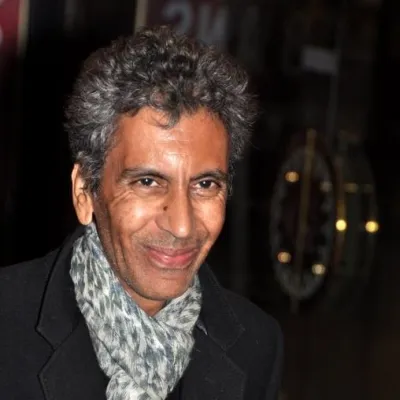
Rachid Bouchareb
Human Design Chart
Biography
His "Poussières de vie" (Dust of Life) received an Academy Award nomination in 1995 for Best Foreign Language Film.
The Human Design of Rachid Bouchareb: Generator 3/6
Generator 3/6 — Design at a Glance
Rachid Bouchareb's design established a fundamental architecture of high endurance and sacral power. However, this energy was not available to him as spontaneous initiative but primarily unleashed through reactions to external impulses. The central mechanism of his system was 'reacting' rather than 'initiating', which is key to energy efficiency and protection from frustration.
As a Generator, Rachid Bouchareb possessed considerable power, comparable to a workhorse that is strong and enduring if it has the right task. His design had two specific pitfalls: first, the risk of burnout through activities without inner joy, thereby wasting energy. Second, the danger of being held back from his heart project despite still having plenty of power left to continue working.
Successful use of this architecture required waiting for signals from life. When his sacral center gave a clear 'yes', Rachid Bouchareb responded with action. This principle of reacting from the gut was crucial. Living in harmony with it rewarded him with deep satisfaction and fulfillment. Initiating independently without such an impulse, however, sooner or later led to persistent frustration and energy loss. His strength thus lay not in pushing forward but in powerfully responding to what came his way.
Emotional Authority
Rachid Bouchareb's inner compass was marked by a fundamental wave movement: his perception of the world constantly swung between enthusiasm and skepticism depending on his current mood state. This emotional authority, carried by the defined Solar Plexus Center, significantly determined his decision-making process. In this system, emotional authority always takes precedence over all other defined centers, regardless of which additional structures are present in the design.
For Rachid Bouchareb, this meant that spontaneous reactions or immediate judgments were often misleading. A moment of euphoria could make a situation appear positive, while the same matter an hour later would seem negative. His feeling at any given moment was merely a snapshot and not necessarily the deeper truth. Quick decisions from an emotional peak thus risked frequent negative consequences.
The mechanics of his design required patience and conscious waiting for clarity. By sleeping on important steps and giving himself time, intense emotions subsided. Only when this emotional wave had died down and calmness set in could Rachid Bouchareb recognize his true inner truth. This cooling process was essential for long-term life decisions as it allowed him to judge beyond the transient mood coloring and become action-ready.
The 3/6 Profile — Martyr / Role Model
Rachid Bouchareb's design is characterized by a clear division of his life energy into two parts. In the first three decades, an impulsive urge to experiment and learn through trial and error dominated, typical for Line 3 of Profile 3/6. This phase was marked by playful curiosity but also required protection from negative influences, often through periods of solitude.
Only after the Saturn Return around age thirty did a fundamental shift occur. Reflective Line 6 became active and called for withdrawal to integrate accumulated experiences. Rachid Bouchareb carried within him both the energy of an eight-year-old child and the wisdom of an eighty-year-old elder. This inner tension between the desire for play and the longing for deep insight often led to a feeling of internal disintegration, even though he appeared controlled outwardly.
Over time, he learned to balance his initial gullibility and vulnerability to propaganda through sharpened discernment. The earlier uncertainty transformed into a calm authority. Around age fifty, he could use this integrated experience to become an example for others by charm and wise overview, explaining complex connections not only understood but also made comprehensible.
Split Definition — Defined & Open Centers
Rachid Bouchareb's Human Design profile establishes a massive, constant energy base: defined Heart, Sacral, Solar Plexus, and Root Centers create consistently available willpower, vital endurance, emotional depth, and existential pressure. This configuration marks him as someone with strong self-determination; the defined Heart Center allows him to control his life and resources independently, while the defined Sacral provides an immense source of generative power.
This combination generates a self-driven work energy. However, the defined Solar Plexus as inner authority requires patience: decisions demand waiting for emotional waves since truth reveals itself over time. Impulsive action at the peaks or troughs of these waves often leads to chaos; clarity arises only during calm phases. The defined Root pressure drives him physically forward but also poses a risk of obsessive stress if not channeled through strategy and authority.
In contrast, open Head, Ajna, Throat, G, and Spleen Centers are present. These areas are not consistently part of his personality but reflect the environment. Rachid Bouchareb tends to absorb mental inspiration or concepts from the surroundings without identifying them as personal truth. The open G Center signifies a lack of fixed identity or direction; these emerge only through the right place and compatible people. At wrong places, he feels lost, at correct ones he flourishes due to his open center reflecting environmental energy.
The open Spleen Center makes him vulnerable to survival fears and absorbing others' health conditions. He relies on feeling secure around individuals with defined Spleen energy but risks unhealthy dependencies. The open Throat means attention arises not through active seeking but waiting for the right invitation. Together, these open centers create situational receptivity requiring guidance from his inner authority rather than yielding to external pressures.
Channels for community spirit and evolutionary change.
Rachid Bouchareb's design inclines towards strategic bridge-building: he seeks mutual agreements fostering community. This attitude stems from Personality Sun in Gate 40, part of the Community Channel 37-40. This channel connects emotional clarity (Solar Plexus) with willpower (Heart). Rachid Bouchareb understands the principle 'I do this for you if you do that for me.' Given the emotionally and will-driven energy, he needs time to resonate before engagement. Gate 40 works willingly to serve his loved ones but demands reward and retreat periods. Without these breaks, exhaustion looms; with them, he builds bridges uniting individuals in a respected structure.
Alongside this social focus, the Mutation Channel 60-3 influences his design. It links Root (Gate 60) with Sacral (Gate 3), bringing evolutionary change through limitation and order. The energy is pulsating, often accompanied by melancholy when impulses cease. Rachid Bouchareb must learn to patiently endure these 'on/off' phases rather than rationalizing them. During quiet times, underlying new developments emerge; the task involves waiting for spontaneous mutations and then reacting spontaneously. This channel conditions his environment through unexpected impulses for renewal.
Other gates provide context: Gate 16 and Gate 9 support experimental mastery and detail work. Gate 59 introduces genetic strategy in bonds while Gate 53 fosters a pioneer spirit for new cycles. Gate 41 contributes to the evolutionary development of feeling. Yet, the primary dynamic remains balancing need-driven community building (Channel 37-40) with accepting mutation's melancholic phases (Channel 60-3). Rachid Bouchareb creates connections through fair agreements while respecting his own rhythm of work and retreat as well as unpredictable pulses of change.
Tribal Circuitry — Circuit Signature
Rachid Bouchareb's design is characterized by a clear separation of two parallel life domains: individual transformation and collective resource conservation. This divided structure means these forces do not overlap but operate as independent systems.
In the Knowledge Circuit, Rachid Bouchareb connects Sacral with Root Centers through the Mutation Channel (Gates 3-60). This creates a pulsating energy aimed at creating new things and moving away from old ones. It's about expressing unique identity through innovative deviations from the known. This power is acoustically grounded in the present, driven by the life force of Sacral Center that becomes immediate implementation in Root.
Independently, the Ego Circuit connects Heart and Solar Plexus Centers via the Community Channel (Gates 40-37). Here a rhythm of giving and taking within a social structure emerges. Since this group is not connected to the Sacral Center, there's no constant life force; instead, regular rest periods are required for emotional resource regeneration. The Sun in Gate 40 emphasizes mutual support focus and conservative preservation of 'the tribe'.
Rachid Bouchareb thus moves between two poles: on one hand, the impulsive, mutating power to create new knowledge and individual expressions; on the other, the emotional necessity to conserve resources within a community based on reciprocity. These two systems run parallel without directly mixing, requiring balance between personal innovation and social responsibility.
Right Angle Cross of Planning 3
Rachid Bouchareb's design inclined towards strategic orientation and long-term alignment. This manifested in a stance that did not react to spontaneous impulses but maintained a clear view of the bigger picture. The underlying mechanics are described by the right cross of Planning 3. This configuration grants a natural ability to oversee complex situations and plan actions within the context of a long-term goal. It is not about rigid control, but rather an intuitive assurance of finding the right path in uncertain times.
Thus, Rachid Bouchareb acted as someone who set his steps consciously, guided by an inner compass that linked direction and purpose. The energy of this cross supports a calm steadiness that allows focusing on what truly matters even amidst external uncertainties. This alignment helped him make decisions not in isolation but as part of a coherent whole, creating an internal stability less dependent on momentary environmental conditions and more rooted in strategic clarity. This shaped his way of seeing challenges not as isolated problems but as stages in a longer process, allowing him to proceed with patience and purposefulness.
Saturn Return · Uranus Opposition · Chiron Return · 2nd Saturn Return — Life Cycles
Rachid Boucharebs design shows a clear structuring of his career through cyclical maturation processes. This development is concretely visible at four key events, each corresponding to an astrological cycle. In 1983, at the age of 30 during his first Saturn return, he founded the production company 3B Productions. This cycle often marks the transition from searching for stability and responsibility.
Thirteen years later, in 1995 when he was 42, his Uranus opposition occurred. That year, his film "Poussières de vie" was nominated for an Oscar in the category of "Best Foreign Language Film." This cycle often brings sudden changes or unexpected recognition that confirms and expands on the previous path.
At the age of 48, in 2001 during his Chiron return, he represented "Little Senegal" at the Berlinale competition, showcasing his work at a high level. This cycle is not a healing process but a phase of bloom where one's essence and life purpose increasingly unfold and become experientially meaningful.
Finally, in 2010 when he was 57, his second Saturn return followed. He was invited to the Cannes Film Festival competition for his feature film "Hors-la-loi." This cycle cements the achieved position and brings a deep, mature confirmation of long-term work. The sequence of these events underscores how cyclical processes in Rachid Bouchareb's life are not just temporal markers but driving forces for structural milestones in his professional career.
Generator · Emotional Authority — Synthesis
Rachid Boucharebs design reveals a central thread of dynamic adaptation. As a Generator with emotional authority and a 3/6 Profile, he navigates life by reacting to external impulses (Sacral Center) and filtering these through the lenses of his deep, time-ripened emotions (Solar Plexus). This interplay of reaction and reflection is amplified by his open centers – particularly Head and Ajna – which make him receptive to a variety of influences. At the same time, Root and Spleen Centers require an ongoing struggle with stress management and personal resilience.
The recurring theme is thus finding authenticity within a constantly changing environment by absorbing others' energy and transforming it through his inner processing.
A central paradox lies in the tension between his need for reaction and emotional maturation. While his Sacral Center drives him to respond to life, his emotional authority demands patience and waiting for the full wave before acting. This leads to an internal conflict between the urge for immediate action and the necessity of gaining clarity through time and reflection. His open centers further amplify this ambivalence by constantly confronting him with new information that can influence his decisions while he simultaneously tries to maintain his own inner compass.
2 Defined Channels
Incarnation Cross - Right Angle Cross of Planning 3
Solar Return
The Solar Return shows the moment when the sun returns to its exact birth position - your personal solar year.
Life Cycles
Discover the life cycles with a detailed triple view (birth chart, cycle chart, composite).
Human Design Profile
- Type
- Generator
- Strategy
- To respond - wait for something to respond to
- Authority
- Emotional Authority
- Profile
- 3/6 - Martyr / Role Model
- Definition
- Split Definition
- Incarnation Cross
- Right Angle Cross of Planning 3
- Date of Birth
- 01.09.1953 08:10
- Place of Birth
- Paris, France
Frequently Asked Questions
What is Rachid Bouchareb's Human Design type?
Which Profile does Rachid Bouchareb have?
What authority determines Rachid Bouchareb's decisions?
What is Rachid Bouchareb's incarnation cross?
When was Rachid Bouchareb born?
Discover your own Human Design
Are you also a Generator? Find out in a personal reading how to use your sacral energy correctly and discover deep satisfaction.
More Personalities
Back to overviewAaliyah

Alexia

Angèle

Anne-Marie

Arcángel
Arno