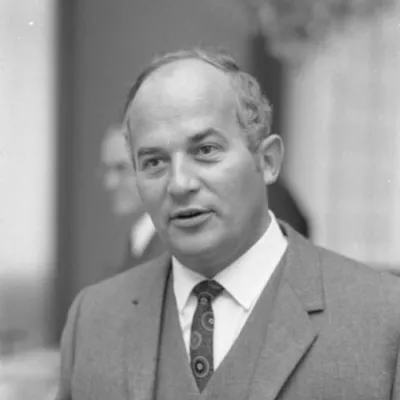
Rainer Barzel
Human Design Chart
Biography
The Human Design of Rainer Barzel: Generator 2/4
Generator 2/4 — Design at a Glance
Rainer Barzel's design established a fundamental way of working: He had high sacral energy and great endurance, but it was conditional. His effective power did not manifest through constant initiation but rather by responding to internal impulses. This configuration described a mechanism where satisfaction could only arise from answering a clear inner signal – the sacral 'yes'.
As a Generator, he possessed much energy to materialize things, similar to a strong workhorse that has strength as long as it burns for its task. The key strategy was not to take initiative himself but to wait for impulses from life and then respond with action. If he ignored these signals or was forced to do things without inner consent, this led to frustration and energy loss. Even holding back on his heart project, despite still being full of power, posed a significant stumbling block.
Living in harmony with this design by reacting from the gut earned Rainer Barzel deep satisfaction. In contrast, constant initiative against his inner signal led to persistent frustration and a lack of energy. His endurance was thus not an unlimited resource but directly dependent on the resonance of his actions with his internal impulse.
Emotional Authority
Rainer Barzel's design established a tendency towards patient decision-making: He showed himself as someone who did not act immediately on impulses, but waited until emotional waves had clarified. This resulted from his emotional authority anchored in the defined Emotional Center. In Human Design mechanics, this center always carries inner authority regardless of other defined areas.
Barzel was subject to a permanent emotional wave, an up and down of feelings coloring his perception. What appeared inspiring at one moment could seem negative in another. His immediate feeling was merely a snapshot, a first impression that did not necessarily correspond with deeper truth. Quick, spontaneous decisions based on this emotion would often have negative consequences.
The mechanics required him to take time and sleep between impulse and decision. The longer he waited, the deeper his insight could be. Patience was his strategic tool: He let decisions mature, slept on them multiple times, and repeatedly questioned himself. Over time, intense feelings subsided, emotional distance emerged, clarity and calm set in. Only then was the process complete. This path served primarily long-term decisions with significant influence on his life course, as only this way could the 'snapshot' be distinguished from true inner truth.
The 2/4 Profile — Hermit / Opportunist
Rainer Barzel's design established a tendency towards a pendulum rhythm between deep withdrawal and the urge for connection. He showed himself as someone who constantly oscillated internally between two poles: the need of the hermit (Line 2) to go inward, and the desire of the community-oriented person (Line 4) to spend time with familiar people. This tension required clear communication of his availability limits. Only when he clearly indicated when he sought company and when he wanted solitude did he find balance.
During his withdrawal phases, Rainer Barzel immersed in internal processes. There he gained calm and clarity. Once this need for solitude was satisfied, the other side of his design emerged: He sought contact with his network again. This cycle was productive. Knowledge from his social relationships could be reflected upon and evaluated in silence. Often brilliant ideas developed out of this process. Line 2 brought a certain vulnerability but also the ability to be humble within his rhythm. Simultaneously, Line 4 influenced his environment through its contagious nature. It helped him maintain innocence and authenticity in the community while exercising social influence at the same time. His profile thus described not only an internal conflict but a mechanism that functioned via clear signals outward: withdrawal for processing, connection for participation.
Split Definition — Defined & Open Centers
Rainer Barzel was a Generator with emotional authority, whose design featured a massive, constant energy base. His defined G-, Sacral, and Root Centers created a foundation of reliable self-identity and inexhaustible vitality in correct reaction. The defined Solar Plexus Center served as inner authority: He had to wait for the emotional wave to gain clarity rather than acting impulsively on highs or lows of his feelings. This configuration required patience; truth revealed itself only over time.
At the same time, open Head-, Ajna-, Throat-, Heart-, and Spleen Centers characterized him. Without constant mental concepts (open Head/Ajna), he was flexible, took inspiration without needing to identify it as his own fixed truth. The open Throat Center made him communicatively reactive; he did not need initiative for self-assertion but waited for invitations to speak. Free from the burden of will (open Heart), he had nothing to prove or promises to keep to demonstrate his worth. Instead, his open Spleen Center mirrored environmental fears; it was sensitive to well-being but not a reliable source for spontaneous decisions. The mechanics showed: His strength lay in not initiating but waiting until life asked him, then reacting correctly with his sacral energy and emotional depth.
Channels for rhythm, extremes and emotional release.
Rainer Barzel's design set a tendency towards a deep biological life rhythm that magnetically attracted others. This configuration did not manifest as personal charisma but rather as an impersonal flow driving group processes and integrating people into a shared energy stream.
This trait originated from the Rhythm Channel 5-15, a defined Personality Channel connecting the Sacral Center to the G Center through the Gate of Fixed Rhythms (5) and the Gate of Extremes (15). Gate 5 held fast to fixed habits and rituals while Gate 15 loved the diversity of humanity in its extremes and integrated this into the life flow. This connection established a universal rhythm neither steered by intellect nor emotional waves but rather as collective magnetism binding all forms of life together. When Rainer Barzel aligned with this inner rhythm, everything felt effortless and subtly influenced those around him by bringing them into their own timing. Deviations would have led to chaos.
Additionally, the Feelings Release Channel 39-55 acted as a Juxta-Channel connecting the Root Center to the Solar Plexus Center through the Gate of Provocation (39) and the Gate of Spirit (55). This channel set the pulsating on/off wave of moods in motion, a continuum between joy and sorrow. Rainer Barzel could thereby provoke and perceive the spirit of individuals or groups. His provocation opened others to mutative qualities depending on where he was on his emotional wave. Authentic life in this alchemy allowed him to delve into the depths of his mind and transmit spiritual passion to others.
Individual Gates like Gate 10 (Complexity/Integration) or Gate 25 (Innocence/Mysticism) supported these dynamics through genetically programmed behaviors and mystical centering but were overlaid by the dominant channel mechanics.
Collective Circuitry — Circuit Signature
Rainer Barzel's design set a tendency towards dual working: emotional impulses drove change while rational structures secured implementation. This configuration arose from his Split Definition, whereby these energies only fully activated in resonance with others.
The Knowledge Circuit directly connected his Solar Plexus and Root Centers through the Feelings Release Channel (Gates 55-39), creating emotional waves that promoted creativity and a drive for individual identity. This pulsating energy served to transform new knowledge and initiate change by transporting inner feelings outward.
Parallel to this, the Understanding Circuit linked his Identity and Sacral Centers via the Rhythm Channel (Gates 15-5). Here came rational structuring over the channel 'Rhythm'. This connection enabled strategic thinking and sharing logical insights for the future, free from emotional influence.
The tension between these two separate groups shaped his dynamics: While the Knowledge Circle worked through emotional inspiration and individual mutations, the Understanding Circle provided focused logic and strategy. As no direct link existed between the groups, these forces coexisted as distinct segments. Rainer Barzel thus showed in a dance of impulsive transformation and cool rationality, with activation of these patterns always depending on interaction with his environment.
Right Angle Cross of the Vessel of Love 2
Rainer Barzels Human Design shows the configuration of the right cross of the Vessel of Love. This structure shaped a profound, often quiet dedication to what was felt as sacred or deeply meaningful. It wasn't about superficial affection but an existential orientation towards serving a higher good or a deep connection that went beyond the ego.
In Human Design, this Cross describes a specific energetic alignment: The 'Vessel of Love' symbolizes the space where deep emotional and spiritual resonance accumulates. The right side of this configuration often emphasized internal processing and the ability to hold and transform this intensity without projecting it outward immediately. It was about the quality of dedication itself – a process of enduring and carrying meaning.
For Rainer Barzel, this meant a way of living based on inner loyalty and almost ascetic concentration on what is essential. The energy of this configuration did not manifest through loud demands for attention but through a quiet yet unshakable presence in areas he considered central. It fostered an attitude of humility before the mystery of life and relationships with others or to life itself, which were less about exchange than one-sided, pure dedication. This created inner stability that was also burdened by the weight of deep, often unshared internal experiences.
Saturn Return · Uranus Opposition · Chiron Return · 2nd Saturn Return — Life Cycles
Rainer Barzels design shows a clear structuring through recurring cycles marking structural turning points and maturation phases. In 1954, at age 30, he entered his first Saturn Return – a phase where long-term groundwork often condenses into solid results. This was evident when he became a member of the CDU and soon joined the state board of the CDU Westfalen-Lippe.
Ten years later in 1964 at age 40, the Uranus Opposition took effect. This cycle often brings sudden changes or new responsibilities. Barzel then assumed leadership of the CDU/CSU Bundestag faction, underscoring this characteristic push of this astrological aspect.
In 1973 at age 49, he reached his Chiron Return. In Human Design mechanics, this is a fulfillment cycle ('Bloom'), where one's incarnation cross unfolds and meaning becomes tangible – provided the strategy was followed. Here, a crisis emerged: Helmut Kohl replaced him as CDU chairman. This moment was part of deep maturation, not just withdrawal.
Finally in 1982 at age 58, his second Saturn Return occurred. This phase often solidifies life structure and brings new authority. Barzel became Minister for German-German Relations again. The sequence of these cycles illustrated how his design was marked by clear milestones: building up, taking responsibility, inner clarification, and finally consistent return to leadership positions.
Generator · Emotional Authority — Synthesis
Rainer Barzel was a Generator whose life was characterized by the ability to react to impulses and release energy – as long as this reaction came from the gut. His defined Sacral Center provided endurance for engagement, while his emotional authority system compelled him not to rush decisions but wait in the emotional wave to gain clarity. This combination led to an inner rhythm reinforced by the connection between G-Center and Sacral – a steady forward movement visible throughout different life phases. The profile as a natural talent and networker reflected his need for both alone time for reflection and exchange with others.
A central paradox lay in the tension between his ability for deep engagement and open Heart Center, making him vulnerable to external influences. Though he was designed to passionately commit himself to something, there was also the risk of giving promises he couldn't keep or letting himself be guided by others' expectations. This field of tension between inner strength and outer sensitivity shaped his path and revealed a search for authenticity in dealing with his energy and need for recognition.
2 Defined Channels
Incarnation Cross - Right Angle Cross of the Vessel of Love 2
Solar Return
The Solar Return shows the moment when the sun returns to its exact birth position - your personal solar year.
Life Cycles
Discover the life cycles with a detailed triple view (birth chart, cycle chart, composite).
Human Design Profile
- Type
- Generator
- Strategy
- To respond - wait for something to respond to
- Authority
- Emotional Authority
- Profile
- 2/4 - Hermit / Opportunist
- Definition
- Split Definition
- Incarnation Cross
- Right Angle Cross of the Vessel of Love 2
- Date of Birth
- 20.06.1924 22:40
- Place of Birth
- Braunsberg, Polska
Frequently Asked Questions
What was Rainer Barzel's Human Design type?
What profile did Rainer Barzel have?
What authority did Rainer Barzel possess?
What incarnation cross did Rainer Barzel have?
When was Rainer Barzel born?
Discover your own Human Design
Are you also a Generator? Find out in a personal reading how to use your sacral energy correctly and discover deep satisfaction.
More Personalities
Back to overviewAaliyah

Alexia

Angèle

Anne-Marie

Arcángel

Arno