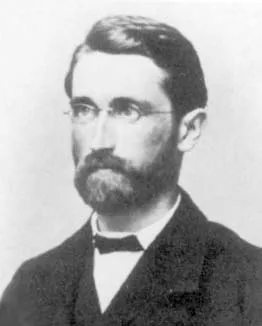
Richard Dedekind
Human Design Chart
Biography
Dedekind was the first at Göttingen to lecture on Galois theory. Around this time, he became one of the first to understand the fundamental importance of the notion of groups for algebra and arithmetic.
In 1858, he began teaching at the Polytechnic in Zürich (today ETH Zürich). In 1862, Dedekind returned to his native Braunschweig, where he spent the rest of his life, teaching at the Institute. He retired in 1894, but did occasional teaching and continued to publish. He never married, instead living with his unmarried sister Julia.
Dedekind was elected to the Academies of Berlin (1880) and Rome, and to the French Academy of Sciences (1900). He received honorary doctorates from the universities of Oslo, Zurich, and Braunschweig.
Dedekind made a number of highly significant contributions to mathematics. Dedekind's brilliance consisted not only of the theorems and concepts that he studied but, because of his ability to formulate and express his ideas so clearly, he introduced a new style of mathematics that been a major influence on mathematicians ever since.
He died on 12 February 1916 at age 84 in Braunschweig.
Richard Dedekind as a Projector 4/6 in Human Design
Projector 4/6 — Design at a Glance
Richard Dedekind revealed himself as someone who possessed the ability to immediately recognize structural flaws in systems. His Human Design type is Projector, which shapes a specific way of perceiving and interacting with the environment. Projectors act like a focused flashlight: They shine directly on areas that are dark or not functioning optimally for others. This dense aura allowed Richard Dedekind to quickly identify weaknesses.
However, this gift required sensitivity. Directly addressing these flaws would often trigger resistance in his surroundings, similar to shining bright light into someone's face. The more effective approach was to attract through harmony and clarity, so that others would seek advice on their own accord. His strategy lay in waiting for an honest, appreciative invitation before sharing insights or taking the lead.
Since Projectors do not have a defined Sacral Center, they lack a constant internal energy source. Instead, Richard Dedekind experienced phases of high activity and rapid work speed, followed by necessary rest periods for regeneration. This rhythmic structure was essential to avoid burnout. Living according to this design and waiting for the invitation rewarded him with success. Ignoring this dynamic led sooner or later to feelings of bitterness, a typical non-self theme of this type.
Emotional Authority
Richard Dedekind showed an inner orientation guided by emotional waves that significantly shaped his perception and decision-making. His inner authority was Emotional Authority, carried by the defined Solar Plexus Center. This configuration meant he was subject to constant fluctuations in emotions; the world appeared colored by his current mood state. What seemed highly inspiring at one moment could be negatively evaluated in the next. For his design, this emotional intensity was only a temporary snapshot and not necessarily the deeper truth of a situation. Spontaneous decisions made directly from this emotional heat often proved problematic or misleading. The key to clarity lay in time. By allowing himself to let decisions rest and reconsider them multiple times – ideally at night – he could allow initial emotional frenzy to subside. With increasing distance, intense feelings would dissipate, making way for calmness and a grounded insight. This process of waiting was essential for long-term, life-defining steps as it allowed him to penetrate through the emotional noise to the essence of the matter.
The 4/6 Profile — Opportunist / Role Model
Richard Dedekind's design laid a tendency that moved between the need for belonging and the call to isolated wisdom. As someone with Profile 4/6, he experimented intensively in his first three decades of life, particularly in friendships and partnerships, often resembling Line 3: fast-paced, learning-oriented, and marked by many short connections. With the activation of Line 6, however, a deep conflict between Heart (Line 4) and Head (Line 6) emerged. While the great heart was always cautious about opening up to the wrong people and getting hurt, the sixth line pulled him onto a metaphorical mountain to contemplate the meaning of life. This duality shaped his later role as an example: He was expected to meet high standards through cooperation with others. At the same time, he carried within him the gift of problem-solving – a capacity meant altruistically to enable the right spirit in others but often unwanted or provocative due to its mutative nature. The restructuring tendencies of his design also demanded interruptions to build new depth and reconsider short-term restrictions for long-term goals, which intensified his frustration with unaccepted solutions.
Split Definition — Defined & Open Centers
Richard Dedekind's Human Design profile suggests a tendency towards consistent, authentic communication that flows from a clear inner compass. His defined G Center provided him with a reliable sense of self-identity and direction; he knew who he was and where it led him without needing external validation. This internal security manifested in his defined Throat Center: His voice spoke directly from this identity, honestly and clearly, not driven by external pressure or the need to prove himself.
Crucial for his way of perceiving was his defined Solar Plexus as an inner authority. He had an emotional wave he needed to wait out to gain clarity. Truth did not reveal itself in impulsive moments but through navigating emotional cycles. This process was supported by his defined Root Center, which provided a constant pressure to move forward and address existential questions without falling into panic stress.
In contrast, his Head, Ajna, and Heart Centers were open. This meant he lacked consistent mental inspiration or willpower. He tended to be influenced by others' mental confusion or felt the pressure to find answers that weren't his own. His open Heart Center made him vulnerable to the conditioning field of a competitive world; he risked making promises to prove his worth, which went against his nature. Additionally, his Sacral and Spleen Centers were also open. He had no constant energy flow available and needed to learn not to be overwhelmed by generative energies from his environment or make spontaneous decisions out of fear of uncertainty. His strength lay in using these open areas as mirrors for the environment rather than interpreting them as personal deficits.
Channels for inner reflection and vital synthesis.
Richard Dedekind was someone who gathered experiences to share later with deeper understanding. His design was marked by Channel 13-33, The Lost Son. This connects his G Center with his Throat Center and promotes listening and withdrawal for reflection. He listened, stored information and thoughts, then organized them in peace before sharing them further. This ability served continuity and stability in collective learning.
At the same time, Channel 19-49, The Synthesis, influenced him. It connects his Root Center with his Solar Plexus Center and fosters emotional bonds within his community. He sought principles that supported cohesion and rejected what threatened it. His sensitivity was towards belonging and protecting shared resources and traditions.
Further influences came from Gate 48, which promotes pattern recognition but often without direct implementation in solutions. It helped him see deeper connections but sometimes led to frustration in the collective. Gate 39 added a selective process through analysis and re-evaluation, with provocation playing a role to activate spirit. Gate 38 set boundaries to preserve individual integrity and showed resistance against harmful forces.
Gate 21 directed his actions in material life by exercising control over resources and seeking recognition. Gate 6 regulated emotional waves and ensured growth was only possible with the necessary emotional drive. Gate 35 promoted change through interaction and new experiences, while Gate 15 organized collective behavior and enabled adaptation to natural rhythms.
Together these elements formed a profile based on reflection, community bonding, and structured action.
Collective Circuitry — Circuit Signature
Richard Dedekind's design suggests a tendency towards emotional reflection separate from rhythmic adaptability. As someone with Split Definition, he had two independent energetic blocks: the Seeker Circuit and the Ego Circuit. These were not directly connected; they acted as parallel, isolated forces in his life without forming a common flow.
The Seeker Circuit linked his Throat Center to his Identity Center through Channel 'The Lost Son'. This shaped a cyclical way of sharing: emotions and experiences from the past were processed to then be passed on to others as visual or felt insights. The goal was collective learning from earlier events, with energy flowing in waves – clearly beginning, peaking, and ending.
Parallel to this existed the Ego Circuit, which linked his Solar Plexus Center to his Root Center (Channel 'Synthesis'). This block focused on cooperation and resource exchange within a group. Without connection to the Sacral Center, there was no constant life force; instead, this configuration required regular rest periods for energy regeneration for shared tasks. The two circuits thus formed separate spheres: one for emotional processing and communication, the other for group support and rhythmic renewal.
Right Angle Cross of Tension 3
Richard Dedekind's Human Design profile featured a specific configuration known as the 'right cross of tension.' This structure characterized his internal dynamics through an ongoing interplay between different energetic poles. Instead of a calm equilibrium, he exhibited constant movement driven by the need to balance tensions.
In Human Design mechanics, this cross describes the connection of certain centers that are not static but generate energy through their interaction. It functions via friction and balancing. For Richard Dedekind, this meant his inner state rarely remained in absolute rest; rather, he was dependent on navigating these internal forces. The tension did not serve as a disruptive factor but as a motor for his development and perception.
This configuration suggested that his way of grasping the world was determined by this dynamic balance. He lived in a state requiring him to maintain the flow between opposing impulses. Without this tension, the characteristic energy of his design would not have been activated. Thus, this cross-shaped arrangement was a central component of his personal mechanics and shaped how he approached challenges by demanding constant adaptation and movement.
Saturn Return · Uranus Opposition · Chiron Return · 2nd Saturn Return — Life Cycles
Richard Dedekind exhibited an inner structure oriented towards precise definitions and logical clarity. This attitude found expression in working on the foundations of mathematics. In 1858, at age 27, he became Ordinarius at the Polytechnikum Zurich. This marked his first Saturn Return, a phase where years of groundwork often condenses into a solid result and stabilizes one's positioning.
His design promoted a deep understanding of continuity and the invisible between visible points. This was reflected in 1872 when he published 'Stetigkeit und Irrationalzahlen' at age 41. This event fell during his Uranus Opposition, a period of breaking from tradition for newer structures. Here, his ability to describe abstract concepts like continuity through clear definitions and logical frameworks became evident. The mechanics of his design supported the process of making the hidden – in this case, the nature of irrational numbers – accessible via rigorous logic without being bound by superficial perceptions.
Projector · Emotional Authority — Synthesis
Richard Dedekind was a Projector who gained profound insights through his ability to recognize patterns (Gate 13). However, these insights did not immediately lead to action but were initially reflected upon quietly (Gate 33). This process of listening, remembering, and contemplating shaped his approach to complex connections and allowed him to uncover hidden structures. Emotional authority reinforced this internal rhythm by permitting decisions only after a phase of emotional maturation – a slower process that led to deep and reliable conclusions.
A central paradox in his design lay in the interplay between Heart and Head (Profile 4/6). On one hand, there was a desire for belonging and cooperation (Line 4), on the other, a strong drive towards isolation and contemplative engagement with abstract ideas (Line 6). This tension manifested in a life marked by phases of intense reflection followed by a need to share insights – always from a distant, observational position. The connection between past and meaning-making in the Perception Circuit underscored this tendency to process experiences and draw far-reaching conclusions.
2 Defined Channels
Incarnation Cross - Right Angle Cross of Tension 3
Solar Return
The Solar Return shows the moment when the sun returns to its exact birth position - your personal solar year.
Life Cycles
Discover the life cycles with a detailed triple view (birth chart, cycle chart, composite).
Human Design Profile
- Type
- Projector
- Strategy
- Wait for the respectful invitation
- Authority
- Emotional Authority
- Profile
- 4/6 - Opportunist / Role Model
- Definition
- Split Definition
- Incarnation Cross
- Right Angle Cross of Tension 3
- Date of Birth
- 06.10.1831 16:00
- Place of Birth
- Braunschweig, Germany
Frequently Asked Questions
What was Richard Dedekind's Human Design type?
What profile did Richard Dedekind have?
What authority did Richard Dedekind have?
What incarnation cross did Richard Dedekind have?
When was Richard Dedekind born?
Discover your own Human Design
Are you also a Projector? Find out in a personal reading how to unfold your leadership qualities and recognize the right invitations.
More Personalities
Back to overviewSissy Spacek
Alain-Fournier
Anémone
Ann-Margret
Bourvil
Hergé