
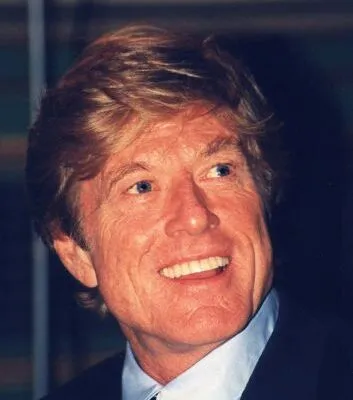
Robert Redford
Human Design Chart
Biography
Redford began his career on television in the late 1950s, appearing in anthology series such as Alfred Hitchcock Presents and The Twilight Zone. He made his Broadway debut in Neil Simon's comedy Barefoot in the Park (1963) before taking film roles in War Hunt (1962) and Inside Daisy Clover (1965). He then achieved Hollywood stardom with Barefoot in the Park (1967), Butch Cassidy and the Sundance Kid (1969), Downhill Racer (1969), Jeremiah Johnson (1972), The Candidate (1972) and The Sting (1973), with the last earning him an Academy Award nomination.
His stardom continued with films such as The Way We Were (1973), The Great Gatsby (1974), Three Days of the Condor (1975), The Great Waldo Pepper (1975), All the President's Men (1976), The Electric Horseman (1979), The Natural (1984) and Out of Africa (1985).
Robert Redford as a Manifesting Generator 2/4 in Human Design
Manifesting Generator 2/4 — Design at a Glance
Robert Redford appeared as a hybrid being that combined the constant energy of a Generator with the lightning-fast assertiveness of a Manifestor. His design tended to pull things into his life extremely quickly, often skipping steps in the process. However, this speed was a double-edged sword: Often starting multiple projects simultaneously and driven by various impulses, he would quickly become frustrated when lacking inner alignment – the specific non-self theme for this type.
The mechanics of his design called for a clear strategy: He should not act on his own initiative but react to life. Only when his Sacral Center gave a clear "yes" was it time to start. This feedback loop served as a filter against the risk of skipping important steps or getting lost in too many simultaneous undertakings.
If he followed this strategy and regularly checked whether his authority still affirmed his current path, potential frustration would turn into deep satisfaction. Then he maximized his nature: He enjoyed working on various tasks simultaneously and entering a playful mode. Variety and fun were not distractions but the fuel for his creative power. Thus, his design did not appear as a linear path but rather as a dynamic game where the balance between rapid implementation and resonant reaction determined the difference between exhaustion and fulfillment.
Sacral Authority
Robert Redford's design inclined towards immediate, body-based decision-making. As a Generator, he possessed sacral authority, meaning his strategy and internal guidance were the same: to respond to external stimuli with an instantaneous gut reaction. This mechanism greatly simplified his process, as he did not have to choose between different inner voices but listened directly to his physical feedback.
His authority manifested in bursts of energy or sounds like grunts and hums in response to stimuli. Crucial was the condition of his open Emotional Center; this prevented him from making decisions based on transient emotional waves, instead requiring clear, instant confirmation from his sacral center. When his sacral motor kicked in, he felt vital and had inexhaustible energy. This allowed him to dive into activities with great enthusiasm without needing external purpose. The joy of the work itself was paramount.
Additionally, his activated Spleen Center acted as a supportive authority. This connection gave him immediate access to instinctive perception and physical well-being. As such, he could react particularly quickly and spontaneously, guided by a reliable inner intuition that emerged directly from the interplay between Sacral and Spleen Centers.
The 2/4 Profile — Hermit / Opportunist
Robert Redford's Design established a tendency towards a pendulum rhythm: between the deep need for withdrawal and the longing for connection. As a person with Profile 2/4, he constantly oscillated between two poles. Line 2, the "Hermit" principle, demanded time alone to go within himself, gain clarity, and process experiences. Here, there was a natural selectivity; he was cautious and persistent when called upon, but otherwise withdrew to maintain his own harmony.
At the same time, Line 4, the "Community" principle, drove him into his network. There, he sought respect, recognition, and exchange with his favorite people. This line helped him recognize the gifts of others and make a unique contribution to the community. For Robert Redford, it was therefore essential to create a safe environment in which he could communicate clearly: when did he want company, and when did he need absolute silence? Only by carrying this need for alternation outward could he effectively reflect on his network's knowledge during his alone time and develop brilliant ideas from it. His life was marked by this necessary dance between cave and community, with the clear delineation of both states being key to his success.
Split Definition — Defined & Open Centers
Robert Redford revealed himself as someone who was constantly under mental pressure to ask questions and understand connections. His defined Head and Ajna centers created a trustworthy, specific form of conceptual thinking that lacked direct energy for implementation. This state required patience: The mental pressure was meant as inspiration, not an impulse for immediate action. Through his defined Throat Center, he could reliably communicate these concepts and bring them into the world, with his voice serving as a pivot point that transformed information.
At the same time, Robert Redford had a defined G Center, which gave him a firm sense of self-identity and a clear sense of personal direction. He knew where he belonged without having to rely on others for this knowledge. This inner security contrasted with his open centers. His open Heart Center made him vulnerable to the pressure of proving his worth through willpower or promises – a trap that he had to avoid to prevent spiraling into cycles of self-doubt.
His open Solar Plexus absorbed and amplified the emotions of his environment. Robert Redford tended to personalize foreign feelings as his own, making him emotionally vulnerable. It was essential for him not to identify with these waves but rather use them as a barometer of his surroundings and withdraw when necessary to regain calmness.
Additionally, he carried an open Spleen Center, which brought a fundamental fear of survival and discomfort into the world. This led him to unconsciously seek the security of defined Spleen Centers at times even leaning towards unhealthy dependencies just to maintain a sense of well-being. Spontaneous decisions were risky for him as they often stemmed from conditioned fears. His open Root Center absorbed external stress and adrenaline. He amplified the pressure of his environment but could not sustain it long-term. The wisdom lay in recognizing which pressures belonged to him and when he needed to withdraw to avoid burnout.
Channels for rhythm, resources, presence and abstraction.
Robert Redford's design was characterized by a deep connection to generative life force, presenting him as a carrier of innovative impulses. Channel Beat 14-2 connected his Sacral Center with the higher knowledge in the G Center, linking competence in handling power and resources with deeper wisdom. This configuration gave him the ability to initiate new directions through spontaneous reactions from Sacral energy and encourage others in their development without needing to fully oversee the path.
Parallel to this, Channel Rhythm 5-15 determined his internal time structure. The interplay of firm habits (Gate 5) with a love for human diversity and extremes (Gate 15) kept him living in a continuous biological flow. This magnetism drew others into his energy circle and ensured that his timing was felt as natural and binding, so long as he adhered to his own reactions.
In the manner of expression, Channel Awakening 10-20 came into play. It connected the Gate of Appearance with the Gate of Now, allowing Robert Redford to radiate presence simply by being and accepting himself. This stance served as a silent proof of self-love and trust that inspired people in his environment to act authentically without him having to lead actively.
Mentally, the complexity of Channel Abstraction 47-64 was evident. It filtered every experience through a kaleidoscope of mental images, often leading to confusion until suddenly an inspiring story or perspective became clear. This process did not solve his own problems but rather discovered new perspectives that he could then communicate.
Additionally, Gates like 29 (Persistence), 30 (Feeling Recognition) and 8 (Contribution to Mutation) contributed to him using challenges as learning processes and generating attention through individual uniqueness. His mechanics promoted an attitude oscillating between deep rhythm, innovative direction, and mental storytelling.
Collective Circuitry — Circuit Signature
Robert Redford's design inclined towards pulsing, acoustic creativity. As a Generator with split definition, he possessed two energetically independent poles: a powerful expression channel and a separate center for rational analysis. This separation meant that his emotional intuition did not directly translate into logical strategies; they existed as parallel forces.
The Knowledge Circuit in him connected Identity and Sacral Centers through the Beat Channel. This gave him rhythmic life energy based on expressing his unique individuality. Parallel to this, the Understanding Circuit worked over the same center pairing but with a focus on logical structure and future visions – separate from emotional waves.
A third aspect was seen in the Meaning Circuit: Here, the Abstraction Channel connected Head and Ajna Centers. This allowed him to visually reflect past experiences and extract intuitive insights from the past without directly mixing them with his action power.
Finally, the Integration Circuit secured his survival through the Awakening Channel connecting Throat and Identity Centers. This enabled him to draw strength from reactions to life and express it in the present through correct behavior. Overall, these separate yet complementary energies shaped his ability to develop both creative impulses and rational concepts – always as independent streams that did not automatically merge.
Right Angle Cross of Contagion 3
Robert Redford's Human Design profile indicates a tendency towards a deep, often unconscious connection with collective currents. He is someone whose inner compass is not primarily focused on individual boundaries but rather on absorbing and transmitting shared energies. This configuration, known as the right-hand infection cross 3, describes a specific way of being together: the ability to emotionally and energetically integrate into groups or communities without completely dissolving one's own identity. It was not about passive adaptation but an active process of "infection" in a positive sense – sharing visions, moods, or ideas so that they resonate with others and spread. For Robert Redford, this meant that his greatest impact often unfolded where he acted as a bridge between the individual and the collective. He lived in a dynamic that allowed him to feel foreign energies and shape them into something tangible and infectious for others. This characterized his way of interacting: less through dominant assertion and more through resonant emanation, which encouraged others to participate and feel part of a larger whole. His presence acted as a catalyst for group dynamics by making the invisible threads between people visible and palpable.
Saturn Return · Uranus Opposition · Chiron Return · 2nd Saturn Return — Life Cycles
Robert Redford's Design indicated a tendency towards strategic turning points that synchronized with planetary cycles. His first Saturn return around the age of 31 often marked the transition from preparation to established presence. This was evident in 1967 when, at the age of 31, he celebrated his breakthrough as a movie star with "Barefoot in the Park" – a moment where years of groundwork condensed into a sustainable success.
Later, his Uranus return around the age of 40 presented a phase of expansion and redefinition. This cycle often promoted a desire for greater autonomy and creative control over one's forms of expression. Robert Redford utilized this energy by first working as a film producer in 1976 at the age of 40, specifically with "The Great Gatsby." This was not just a career step but a structural shift towards self-governance of his artistic visions.
His life purpose involved not only experiencing these cyclical impulses but also transforming them into concrete, visible results. The synchronicity between astrologically-human-design-based time windows and his professional milestones underscores the effectiveness of his design: He followed an inner logic where external recognition (Saturn) and internal liberation (Uranus) acted as complementary forces. His path was characterized by the ability to pour these energetic waves into sustainable structures without losing sight of original intuition.
Manifesting Generator · Sacral Authority — Synthesis
Robert Redford was a Manifesting Generator whose life was characterized by a constant dynamic between initiation and reaction. His sacral authority (and the associated energy) allowed him to respond immediately and powerfully to external stimuli – a tendency that was amplified by his connection between the Sacral Center and Throat Center, enabling him to seize opportunities quickly and set things in motion, though it also carried the risk of skipping important steps. The profile as a natural talent and networker points to an interplay between the need for inner reflection and the desire for connection; this tension led him to alternate phases of isolation with intense exchanges.
A central paradox in his design lay in the combination of the pulsing knowledge circuit and his sacral energy source. He was both inclined to be driven by inspiration and creativity to forge new paths (Channel 14-2) while also being deeply rooted in the present moment, dependent on concrete experiences. This constellation led him to be propelled by innovative ideas on one hand, while always feeling the necessity to translate these into tangible results – a pattern that manifested in professional successes and spurred bold ventures.
4 Defined Channels
Incarnation Cross - Right Angle Cross of Contagion 3
Solar Return
The Solar Return shows the moment when the sun returns to its exact birth position - your personal solar year.
Life Cycles
Discover the life cycles with a detailed triple view (birth chart, cycle chart, composite).
Human Design Profile
- Strategy
- To respond - wait for something to respond to
- Authority
- Sacral Authority
- Profile
- 2/4 - Hermit / Opportunist
- Definition
- Split Definition
- Incarnation Cross
- Right Angle Cross of Contagion 3
- Date of Birth
- 18.08.1936 20:02
- Place of Birth
- Santa Monica, United States
Frequently Asked Questions
What is Robert Redford's Human Design type?
What Profile did Robert Redford have in Human Design?
What Authority did Robert Redford have?
What incarnation cross did Robert Redford have?
When was Robert Redford born?
Discover your own Human Design
Are you also a Manifesting Generator? Find out in a personal reading how to unfold your multi-talents and direct your energy wisely.
More Personalities
Back to overviewSissy Spacek

Aldair

Alizée

Anémone

Angeli

Ann-Margret
