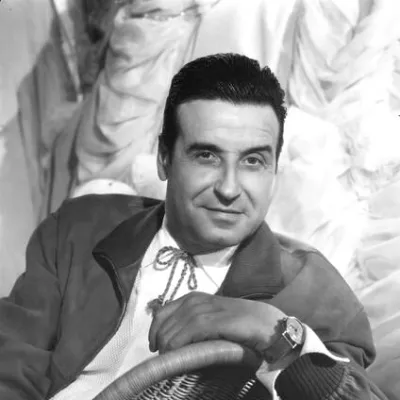
Roger Schawinski
Human Design Chart
Biography
In 1979, he founded Switzerland's first commercial radio station Radio 24, which originally transmitted illegaly from a peak in the Italian alps to the Zürich area. In 1994, he launched a nationwide television channel called Tele Züri, later expanded to the nation wide Tele 24. In 2003, he gained international status when he joined the German Television network "Sat. 1" and became the managing director for three consecutive years.
On 2 March 2014, he published his autobiography "Wer bin ich" (Who am I).
Roger Schawinski — Projector with Profile 4/6
Projector 4/6 — Design at a Glance
Roger Schawinski's design had a tendency towards focused perception: He could immediately identify friction points in systems or within other people. As a projector, his aura acted like a bright light beam directed precisely at blind spots in the environment. This ability to spot errors in the system was effective only if it wasn't perceived as direct criticism. Addressing these weaknesses directly would often trigger resistance from others, similar to shining a bright light straight into someone's face.
Instead, his mechanism worked most effectively through a radiant and harmonious presence. When Roger Schawinski embodied integrity and clarity himself, he became attractive to others; they sought contact and asked for his perspective rather than imposing their knowledge. His strategy involved waiting for respectful invitations. With his undefined Sacral Center, he did not have constant life energy but worked in intense phases followed by necessary rest periods for regeneration. Living according to this pattern rewarded him with success; ignoring the need for invitations and pauses led to bitterness.
Splenic Authority
Roger Schawinski displayed a fundamental orientation of momentary instinct: His inner compass was his defined Spleen Center, which acted as an authority figure. This configuration is possible only if both the Emotional and Sacral Centers are open – a structure characteristic of projectors or manifestors. The Spleen Center functions here as a highly sensitive health and alarm system with pronounced survival intelligence. It does not provide long-term strategic knowledge but offers spontaneous, physical feedback about whether a situation, environment, or person is beneficial or harmful.
For Roger Schawinski, this meant that decisions had to be made in the immediate moment. The first impulse was the most reliable indicator of his well-being and served to rigorously distance himself from negative influences. Since this Spleen impulse is subtle and occurs only once, its use required high vigilance; it could easily be drowned out by external advice or deliberation. A brief retreat for demarcation was often helpful in hearing his own voice again.
Long-term planning stood against this spontaneity. As the right thing only became apparent in the moment, fixed commitments were difficult and flexibility essential. Roger Schawinski needed a lot of space to avoid being constrained by rigid structures in his natural adaptability. His strength lay in focusing briefly on what confirmed his health and intuitive sense of security here and now rather than orienting himself towards abstract future predictions.
The 4/6 Profile — Opportunist / Role Model
Roger Schawinski emerged as someone who acted experimentally during the first three decades of life before later taking up the role of a wise role model. His design features Profile 4/6: Initially, Line 6 acts like Line 3, leading to much experimentation in relationships and friendships. Later, an internal conflict arises between the desire for community (Line 4) and the need to reflect distantly on life's meaning (Line 6). This tension field of heart and mind shapes his entire life.
Additionally, Channel from Gate 45 to Gate 22 is active. Gate 45 directs material actions in service of higher principles, with recognizing opportunities for the tribe being central. Gate 22 stands for maturity and metamorphosis; it brings leadership qualities through social interaction and establishes new models through nonconformist openness. The connection between these gates means that Roger Schawinski exerts a transformative effect on his environment by creating material foundations and utilizing opportunities. He must learn to navigate between the tight circle of familiar people (Line 4) and broader societal responsibility (Line 6), without being hurt by false support. His effectiveness unfolds when he combines this direction with the ability to mutate, so that material successes benefit the whole while simultaneously enabling new social structures.
Single Definition — Defined & Open Centers
Roger Schawinski was characterized by a defined Spleen Center: His decision-making occurred in the present moment, driven by an immediate, non-rationalizable intuition. This existential awareness provided him with spontaneous judgments about health and well-being that he had to trust without logical justification. Simultaneously, his defined Root Center served as a source of constant inner pressure. This stress did not overwhelm him but rather acted as a consistent energy for moving forward in the material world and correcting problems. The connection between the Root and Spleen centers ensured that this pressure was directly translated into an orientation towards survival consciousness – a kind of physical impulse that grounded him and kept him action-ready, so long as he followed this inner rhythm.
In contrast to this stable foundation stood his open centers as areas of receptivity. His open Head Center meant that mental inspiration was not a constant companion; instead, he tended to engage with the questions and doubts of others when he stopped searching for answers in his mind. The open Ajna Center allowed him to flexibly absorb concepts but led to the risk of interpreting foreign opinions as his own truth or getting lost in endless pondering. Particularly defining was his open G Center: It lacked a fixed identity or life direction, reflecting instead the energy of its surroundings. This made him vulnerable to finding himself in relationships or places that were not correct for him because he tried to find a direction through the mind rather than waiting for it to be shown through initiation. His open Heart Center also lacked consistent willpower; attempting to prove his worth through promises or competition often led into cycles of self-doubt and overextension, as he could not generate this energy himself.
Channels for logical judgment and precise correction.
Roger Schawinski exhibited a fundamental disposition towards precise pattern recognition: an insatiable drive to prove logic and test existing structures for their correctness. This inclination rooted in the Judgment Channel 58-18, connecting the Root Center with the Spleen Center. Gate 58 provided the living energy for stability and the impulse “better and more,” while Gate 18 functioned as a corrective mechanism to identify imbalances. This mechanism acted like a sentry that assessed whether perceptions promoted collective well-being or needed correction. For Roger Schawinski, this ability to check patterns was not merely a criticism but a tool to create satisfaction through perfect processes.
Additionally, further configurations shaped his profile: Gate 45 gathered energy on the tribal level and emphasized the attraction of like forces as a benefit for the collective. Gate 26 enabled him to convey innovations in such a way that even conservative structures accepted them to prevent genetic retardation – a trait typical for sales chiefs who need their breaks. In social fields, Gate 22 worked with openness and calmness; it promoted listening until the end to support individual mutations without imposition.
On the level of consciousness, Gate 47 contributed to recognizing meaningful connections from arbitrary past experiences and transforming confusion in the subconscious into collective clarity. Simultaneously, Gate 39 prepared adrenaline through selective analysis and provocation necessary for mutations. In his design, Gate 53 supported him as a pioneer to embark on new paths and leave old cycles behind, seeking freedom for new experiences. Gate 54 connected his worldly success with mystical insight while Gate 52 gave him a self-imposed pause to focus on pattern correction – a Buddha aspect requiring stillness and focus to avoid stress.
Collective Circuitry — Circuit Signature
Roger Schawinski was characterized by a design that emphasized logical clarity and strategic structure. His Understanding Circuit was active, describing a tendency towards “emotionless ratio”: the ability to analyze and improve things free from conditioned feelings. This served the goal of preparing insights in such a way that they could lead society or systems into a better future.
Central to this orientation was the Judgment Channel (Gates 18 and 58), connecting the Spleen Center with the Root Center. As Roger Schawinski had a Simple Definition, these two centers formed the only directly connected energetic group in his chart. The Spleen Center provided here the intuitive ability to recognize patterns and separate the essential from the superfluous. The Root Center transformed this insight into concrete action-oriented energy.
This connection allowed him to immediately focus on visual or strategic information and evaluate it with clear judgment. It was not about emotional resonance but precise formatting of knowledge. Energy flowed directly from intuitive perception into root power, facilitating quick, rational decision-making. Other centers were energetically isolated; there were no further direct connections between the groups. His design thus suggested a strength in logical processing and sharing rational insights driven by an inner focus on efficiency and structure.
Right Angle Cross of Rulership 2
Roger Schawinski demonstrated an inner authority that did not assert itself through external dominance but rather through quiet effectiveness in the background. His design suggested he understood power and influence as something hidden—not as obvious control, but as subtle guidance of processes without stepping into the spotlight himself. This configuration describes an energy that works behind the scenes: it supports structures without being their visible face. Roger Schawinski tended to influence decisions and directions so they appeared natural, as if coming from the system itself rather than him personally. This aligns with the mechanics of the "right cross of governance," which establishes a deep connection to collective intelligence and the subconscious. Here, it is less about awareness of one's own power and more about its seamless integration into daily life. He often acted as an invisible catalyst enabling change without seeking or needing recognition for it. His strength lay in not fighting against resistance but dissolving it through his quiet presence. This required patience and trust in the process since results were often visible only later. Roger Schawinski embodied a form of leadership based on resonance rather than command—a way of working behind the scenes to bring the whole into balance without being the focus himself.
Saturn Return · Uranus Opposition · Chiron Return · 2nd Saturn Return — Life Cycles
Roger Schawinski revealed himself as someone who laid the structural foundations to enable radical innovations later on. His design shows a tendency to first establish solid foundations before initiating expansive changes – a pattern that mirrored the cyclical phases of his astronomical life.
In 1973, at age 28, he earned his doctorate in economics. This coincided with his first Saturn return, a time when years of groundwork often culminate in stable professional structures. This consolidation phase paved the way for subsequent expansion.
Ten years later, in 1983 at age 38, an Uranus opposition occurred. This cycle often brings unexpected breaks or new freedoms. In this year, Radio 24 was licensed in Switzerland – a step that broke through traditional media markets and solidified Schawinski's role as a pioneer of private radio.
The Chiron return around the age of fifty marks the bloom time in Human Design when one’s personal purpose unfolds. In 1994, at age 49, Schawinski founded TeleZüri, Switzerland’s first private local television station. This was not just a business success but the concrete manifestation of his incarnation task: establishing new communication structures.
In 2001 came the second Saturn return with a crisis: Tamedia AG bought Radio 24 and TeleZüri for 80 million Swiss francs, and Tele24 was shut down. This cycle often demands a redefinition of boundaries and responsibility after long-term buildup.
Projector · Splenic Authority — Synthesis
A central red thread in this design is the ability to recognize patterns and make corrections (Channel Judgment, defined Spleen Center). This gift goes beyond mere analysis—it is an instinctive knowledge of what promotes or harms well-being in the present moment. The Projector Design amplifies this by emphasizing the ability to shed light on others' darkness and reveal errors in systems. Recurring career turning points (Saturn Return, Uranus Opposition, Chiron Return) indicate that this pattern recognition and correction skill is not just an internal trait but also manifests in the outer world through initiating new paths.
The central paradox lies in the interplay of distance and connection. The Profile as Networker/Role Model indicates a desire to be part of a community and inspire others (Line 4), while Line 6 signals a tendency towards withdrawal and reflection on larger contexts. This internal conflict between Heart and Head is further intensified by the defined Spleen Center, which relies on spontaneous intuition that is difficult to fit into logical explanations or social conventions—an independent judgment that contrasts with the desire for belonging.
1 Defined Channel
Incarnation Cross - Right Angle Cross of Rulership 2
Solar Return
The Solar Return shows the moment when the sun returns to its exact birth position - your personal solar year.
Life Cycles
Discover the life cycles with a detailed triple view (birth chart, cycle chart, composite).
Human Design Profile
- Type
- Projector
- Strategy
- Wait for the respectful invitation
- Authority
- Splenic Authority
- Profile
- 4/6 - Opportunist / Role Model
- Definition
- Single Definition
- Incarnation Cross
- Right Angle Cross of Rulership 2
- Date of Birth
- 11.06.1945 11:45
- Place of Birth
- Zürich, SWTZ
Frequently Asked Questions
What is Roger Schawinski's Human Design type?
Which profile does Roger Schawinski have?
What authority does Roger Schawinski possess?
What incarnation cross does Roger Schawinski have?
When was Roger Schawinski born?
Discover your own Human Design
Are you also a Projector? Find out in a personal reading how to unfold your leadership qualities and recognize the right invitations.
More Personalities
Back to overviewSissy Spacek

Alain-Fournier

Anémone

Ann-Margret

Bourvil
Christian-Jaque