
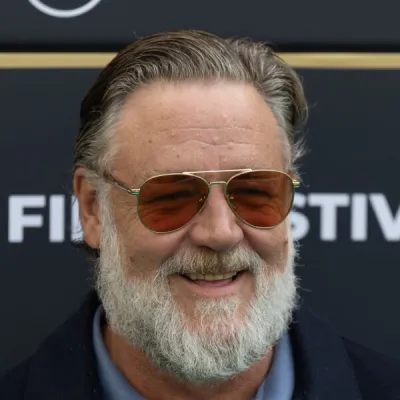
Russell Crowe
Human Design Chart
Biography
Crowe was born in New Zealand, moving to Australia at the age of four and residing there permanently by the age of 21. He began acting in Australia and had his break-out role in Romper Stomper (1992) for which he won the AACTA Award for Best Actor in a Leading Role. He gained international recognition in the late 1990s for his starring roles in L.A. Confidential (1997) and The Insider (1999). Crowe gained wider stardom for playing the title role of Gladiator (2000), which earned him the Academy Award for Best Actor, having been previously nominated for The Insider. Further acclaim came for portraying real-life mathematician John Forbes Nash Jr. in A Beautiful Mind (2001), for which he was nominated for a third Academy Award.
Other films he starred in include Master and Commander: The Far Side of the World (2003), Cinderella Man (2005), 3:10 to Yuma (2007), American Gangster (2007), Robin Hood (2010), Les Misérables (2012), Man of Steel (2013), Noah (2014), The Nice Guys (2016), Thor: Love and Thunder (2022), The Pope's Exorcist (2023), and Nuremberg (2025). In 2014, he made his directorial debut with the drama The Water Diviner, in which he also starred.
Russell Crowe as a Generator 2/4 in Human Design
Generator 2/4 — Design at a Glance
Russell Crowe reveals himself as someone with immense inner endurance who unfolds his power most effectively when reacting to external impulses. His Generator design is marked by significant sacral energy, making him comparable to a workhorse in terms of extreme strength and resilience – provided this energy is utilized for tasks he truly enjoys.
The mechanics of his chart highlight two central pitfalls: On the one hand, persistently performing tasks without inner enthusiasm leads to rapid energy depletion up to burnout. On the other hand, frustration arises when hindered from working on his heart project despite having full power available. The key for Russell Crowe lies not in taking initiative but in reacting. His energy is released only when the sacral center gives a clear „yes“ and he then actively responds.
Living by this strategy of gut feeling rewards him with deep satisfaction and a sense of fulfillment. Ignoring this inner signal and instead trying to force or initiate things without waiting for the corresponding impulse inevitably leads to lasting frustration and a noticeable lack of energy. His strength thus unfolds exclusively in harmony with this reactive dynamic.
Emotional Authority
Russell Crowe's design revealed a tendency towards intense internal fluctuations that significantly shaped his decision-making process. He was someone who thought and acted in emotional waves: being totally enthusiastic about something one moment, then completely negative about the same situation the next. This polarity stemmed from his Emotional Authority. Whenever the Emotions Center is defined – as it is with him –, it takes on the role of inner authority, regardless of which other centers are also active. This is a central rule of his system: The emotional wave has priority over all other impulses.
However, his feeling in any given moment was only a snapshot, an initial impression, not necessarily the deeper truth yet. Quick, spontaneous decisions based on this immediate emotion could therefore have negative consequences as they were based on fleeting moods. His design's mechanics required patience: He had to let decisions mature, take time and sleep on the issue multiple times. Only when intense feelings subsided and emotional distance was gained did clarity and calm set in. This process of waiting was crucial for long-term life decisions to ensure that not just the transient affect but also his deeper essence spoke.
The 2/4 Profile — Hermit / Opportunist
Russell Crowe's design revealed a tendency towards a pendulum rhythm between deep withdrawal and close community living. As someone with Profile 2/4, he constantly swung between two basic needs: Line 2, which demands isolation and solitude to find inner clarity, and Line 4, which seeks time with chosen favorite people in a familiar network. This tension required clear communication outwardly to make his needs transparent – when he needed company and when he wanted to be left alone.
During his „Me-Time“, Russell Crowe immersed himself in internal processes to calm down. Only once this need for rest was fulfilled did he return from his „cave“ to connect with his social circle. This cycle allowed him to reflect on the knowledge and impulses of his network (Line 4) during alone time, evaluate them, and develop brilliant ideas from it. Line 2 fostered a specific aura of willpower; it withdrew when ego was threatened to gather courage and initiation. Simultaneously, the more mystical side of Line 4 brought a desire for recognition through higher powers into his network, giving his social interaction a deeper, transformative quality.
Split Definition — Defined & Open Centers
Russell Crowe's design points towards a tendency for powerful, direct communication that stems from deep inner resonance. His defined Throat Center served as a reliable channel for this expression, connected to the immense vitality of his defined Sacral Center. This configuration meant that his words and actions were not impulsive but based on an authentic physical response - a 'yes' or 'no' that came from the gut.
At the same time, a complex emotional depth was revealed through his defined Solar Plexus Center. Here lay his inner authority: Russell Crowe was designed to make decisions not in the heat of the moment but to wait for the waves of his feelings until clarity emerged. This patience allowed him to transform his emotional highs and lows into a more mature intelligence rather than reacting impulsively. His defined Spleen Center supported this through spontaneous, intuitive warning signals in the present moment that protected his survival and well-being, while the defined Root Center provided the necessary pressure to move forward and master existential challenges.
In contrast, his open G Center revealed an openness to identity questions. Without a set inner direction, he tended to blend with his environment or look outward to understand who he is and where he belongs. This could lead to an internal dialogue questioning whether he had chosen the right path or who truly loved him. His open Heart Center amplified this dynamic: lacking consistent energy for willpower and promises, he was vulnerable to exhausting himself by proving his worth rather than trusting in his natural authority. The combination of strong sacral power and open centers related to identity and will created a tension between inner strength and the search for external validation.
Channels for intuitive clarity, transformation and emotional depth.
Russell Crowe's design points towards sudden, profound transformation processes paired with the ability to clearly express intuitive truths in the moment. This configuration shows someone who experiences evolutionary change not as linear progress but as unexpected mutation - a process that requires patience because it runs in cycles of chaos and order.
The Mutation Channel 60-3 connects the Root Center with the Sacral Center through the Gate of Limitation (60) and the Gate of Order (3). This potential for evolutionary change depends on accepting limitation and moving beyond the confusion of a new beginning. The powerful, pulsing on/off energy of this configuration permeates how Russell Crowe lives out his unique design and also conditions his environment. Spending time alone with his inner muse while the pulse is still allows this internal journey to deepen as something grows beneath the surface before it's ready to emerge.
Parallel to this, the Lightning-Strike Channel 57-20 connects the Spleen Center with the Throat Center. Through the Gate of Intuitive Insight (57) and the Gate of Now (20), individual intuition is given its clearest voice. This allows for penetrating self-awareness expressed in the consciousness 'I know that I am living now.' Spontaneous verbal outbursts get to the core of a matter faster than others, having a deep impact on the environment when the timing is right.
Additionally, the Channel of Emotion Release 39-55 shapes the emotional landscape. It connects the Root Center with the Solar Plexus Center through the Gate of Provocation (39) and the Gate of Mind (55). Here, a pulsing wave of moods, passion, and melancholy sets in motion. Russell Crowe can use this energy to tease out the minds of others and perceive who resonates with his frequency. Authentic living within this emotional alchemy allows for exploring the depths of one's mind without being controlled by fleeting moods.
Individual Circuitry — Circuit Signature
Russell Crowe's design points towards a tendency for impulsive, creative breakthroughs paired with deep emotional resonance. This configuration shows someone who initiates new paths and changes not through slow planning but through spontaneous intuition and emotional clarity.
This arises from the Knowledge Circuit which he shares. Two energetically separate blocks exist parallel: The first connects the Throat Center to the Spleen. Here, the Channels 'Lightning-Strike' (20-57) and 'Mutation' (3-60) are active. They promote innovative ideas, deviations from the known, and acoustic expression - a pulsing now-experience that emphasizes creativity and individuality. The second block links Sacral-, Root-, and Solar Plexus Centers through the Channel 'Emotions Free' (55-39). This sets emotional waves in motion connecting action impulses from the Sacral Center with the emotional depth of the Solar Plexus.
Since these groups are not directly connected, these forces experience themselves as coexisting poles: on one side, intuitive creative expression in head and throat; on the other, emotional physical drive below. Russell Crowe was thus marked by this duality - quick mental innovations meet deep emotional streams that together mark his unique path and enable transformation through authentic expression.
Right Angle Cross of Penetration 1
Russell Crowe revealed himself as someone who brought a clear and often relentless clarity to his surroundings through his presence and direct communication. His design tends towards seeing things not just intellectually but with an almost physical intensity, bringing them into the foreground for others to see. This attitude was shaped by the right cross of penetration 1.
This configuration combines the power of self-expression with a drive to uncover truths that were previously hidden or unclear. It's about directness and sometimes harshness in revealing facts rather than subtle diplomacy. Those who carry this structure tend to break through illusions and present situations as they truly are, regardless of whether it is pleasant or not.
For Russell Crowe, this meant his interactions often carried a strong force of assertion. He did not seek compromises that would dilute the truth but aimed to reveal the essence. This could be challenging because it disrupted the status quo and forced others to confront uncomfortable realities. His way of being was always authentic and unfiltered, driven by an inner imperative to clarify things and leave no half-truths.
Saturn Return · Uranus Opposition · Chiron Return · 2nd Saturn Return — Life Cycles
Russell Crowe's design shows a tendency towards cyclical phases of solidification and transformation that are evident in his career as clear patterns. The first Saturn return often marks the transition from training to established identity. In 1992, at age 28, he received the AFI Award for his role in *Romper Stomper*. This success crystallized years of groundwork into a sustainable result and confirmed his place in the professional sphere.
While Saturn builds structure, the Uranus opposition often brings unexpected turns or a need for freedom within existing commitments. In 2003, at age 39, he married Danielle Spencer. This step into a stable relationship happened precisely during a phase where his design had to balance internal tensions between the desire for stability and the drive for individual unfolding.
The Chiron return is a fulfillment cycle in which one's incarnation cross unfolds and meaning becomes experiential. In 2013, at age 49, Crowe played the lead role of Noah in *Noah*. This role represented a flourishing period where his deeper life mission became visible through a central artistic achievement.
The second Saturn return cements one's long-term status and mastery in their field. In 2020, at age 56, he won the Golden Globe for best actor for *The Loudest Voice*. This success underscored the maturity of his position and showed how his design built consistency and recognition over decades.
Generator · Emotional Authority — Synthesis
Russell Crowe seems to be marked by a deep inner dynamism that manifests through strong sacral energy (Generator type) and a pronounced drive towards self-discovery. The connection between emotional authority and the profile as natural talent/networker points to someone who needs intensive internal processes for clarity and authentic action, while also possessing a natural ability to form relationships and work in community. The channel of mutation (3-60) amplifies this inner impulse towards change and breaking conventional paths, with acceptance of limitations being an essential part of this process. Successes and turning points in life (events in cycles) seem to be connected to the expression of this authentic energy.
A central paradox lies in the simultaneous need for withdrawal and deepening of internal processes (line 2), as well as the desire for connection and exchange with others (line 4). This tension is reinforced by the knowledge circuit, which requires both individual creativity and emotional depth. The melancholy that comes with the channel of mutation suggests that this process is not always easy but often accompanied by a certain longing and feeling of otherness – an inner world that can only fully unfold in interaction with others.
3 Defined Channels
Incarnation Cross - Right Angle Cross of Penetration 1
Solar Return
The Solar Return shows the moment when the sun returns to its exact birth position - your personal solar year.
Life Cycles
Discover the life cycles with a detailed triple view (birth chart, cycle chart, composite).
Human Design Profile
- Type
- Generator
- Strategy
- To respond - wait for something to respond to
- Authority
- Emotional Authority
- Profile
- 2/4 - Hermit / Opportunist
- Definition
- Split Definition
- Incarnation Cross
- Right Angle Cross of Penetration 1
- Date of Birth
- 07.04.1964 02:00
- Place of Birth
- Wellington, Wellington, New Zealand
Frequently Asked Questions
What is Russell Crowe's Human Design type?
Which Profile does Russell Crowe have?
What Authority Does Russell Crowe Have?
What is Russell Crowe's Incarnation Cross?
When was Russell Crowe born?
Discover your own Human Design
Are you also a Generator? Find out in a personal reading how to use your sacral energy correctly and discover deep satisfaction.
More Personalities
Back to overviewAaliyah

Alexia

Alizée

Angèle

Anne-Marie

Arcángel
