
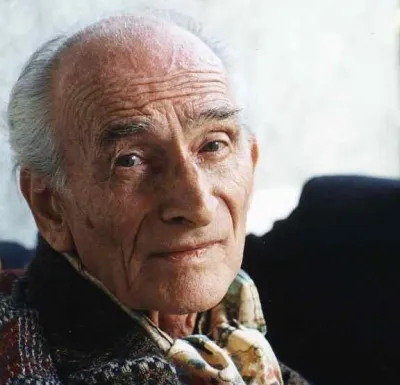
Serge Lutens
Human Design Chart
Biography
Serge Lutens is most well known for his art direction and photography for Japanese cosmetics company Shiseido in the 1980s.
What does Manifestor 1/3 mean for Serge Lutens?
Manifestor 1/3 — Design at a Glance
Serge Lutens presented himself as someone with a clear, often polarizing vision, and was concerned with structuring his environment accordingly. His design tends to act as a pioneer who does not fight every battle himself but sets others in motion to achieve his goals. This aligns with the mechanics of the Manifestor type: a person meant to lead the world in a new direction, similar to a king sending soldiers into battle rather than lying in the trench himself.
This way of operating naturally led to Serge Lutens being loved by some and rejected by others. The pain point of this design lies in being misunderstood, as his perspectives often extend beyond those of his surroundings. To navigate this polarization and find the right following, the strategy of informing was crucial. By communicating his intentions and visions in a timely and precise manner, he could minimize resistance and promote cooperation.
If Serge Lutens followed this strategy of informing, his design rewarded him with a sense of inner peace. If he lived against this natural alignment, persistent anger would arise. His path was thus marked by the tension between the necessity to proclaim his vision and the reaction of the outside world, with clear communication being the key to inner balance.
Emotional Authority
Serge Lutens showed himself to be someone who did not leave decisions to the first impulse but consciously let them rest until the emotional wave had subsided. His design carries emotional authority, meaning that his defined Emotional Center is always the final instance for his internal guidelines – regardless of which other centers are also defined. This priority is a central mechanism: emotions always have the final say, even if other areas offer clarity.
As a result, Serge Lutens was subject to constant fluctuations of feelings. The world appeared to him, depending on his current mood, either enthusiastically positive or deeply negative. However, an immediate impression was never the final truth but only a snapshot. Quick, spontaneous judgments from this heat would often prove misleading. Instead, his nature required patience. Long, life-relevant decisions had to be thought through multiple times and left to rest. Only when the intense feelings subsided and emotional distance was established, did the necessary clarity and calmness set in. This process of pondering and waiting was no obstacle but the path to deep, comprehensive insight. Only in this way could he ensure that his choice was not guided by a passing mood but by a mature inner truth.
The 1/3 Profile — Investigator / Martyr
Serge Lutens showed himself to be someone who not only gathers knowledge but also puts it to the test through rigorous practice. His design tends to connect theoretical foundations with the necessity of testing. As a researcher and experimenter (Profile 1/3), he was dependent on validating self-acquired insights. Only when he understood something intellectually and practically tested it did he trust his judgment. This reflects the dynamics of Line 1, which understands resistance and crisis as a foundation. Without the willingness to overcome uncertainty, no real progress could arise in him. At the same time, Line 3 of Gate 11 demands the courage to try and make mistakes. Here, it was about acknowledging the impermanence of ideas and testing them through adaptation. Serge Lutens had to learn that beautiful but untested concepts often end in self-deception. His path was marked by the tension between the desire for perfect planning and the reality that mistakes are inevitable. Only through these repeated tests and the resulting adaptations did his work gain substance. His judgment was considered reliable because it was based on this double test: deep exploration followed by pragmatic implementation.
Split Definition — Defined & Open Centers
Serge Lutens' design established a tendency towards a continuous, deep mental process, paired with a strong emotional depth. His defined Head and Ajna Centers created a constant internal pressure to question and develop concepts. However, this mental stream was not directly actionable, as no energy source was connected to it; instead, it served to inspire or pressure others to think for themselves. His defined Throat allowed him to articulate these thoughts and concepts clearly, while his defined Solar Plexus acted as an inner authority. He was designed to wait for the emotional wave before acting, which gave him a deep, time-based clarity. His defined Root Center provided the necessary adrenaline-driven pressure to move forward in the world and manage stress.
In contrast, Serge Lutens showed himself to be vulnerable to external influences through his open centers. His open G Center meant he did not have a fixed, unchanging identity but rather blended with his environment and needed to be initiated by others to find direction and love. He tended to question whether he was in the right place to discover his true identity. His open Heart Center made him sensitive to the need to prove his worth, which could lead him into spirals of self-doubt when he tried to keep promises he could not fulfill. His open Sacral Center led to him absorbing and amplifying the vital energy of others, which could lead to exhaustion if he did not pay attention to his own limits. Finally, his open Spleen Center made him vulnerable to fears and the search for security from others, which led him to cling to things that were not good for him to feel a sense of well-being.
Channels for emotional depth, mysticism, change and vision.
Serge Lutens showed himself to be someone whose social presence and creative expression were strongly determined by the emotional wave. His design established a tendency to swing between intense openness and cautious restraint, depending on his inner mood. This dynamic was shaped by Channel of Openness 22-12, which connects the Solar Plexus Center with the Throat Center. Here, the caution of Gate 12 regulates the passion of Gate 22, so that communication only becomes effective when the emotional resonance is right. Serge Lutens used this ability to achieve a deep, often dramatic impact on his environment through voice and word, waiting for the right moment to share his unique perspective.
At the same time, a deep need for belonging and clear structures drove him, manifesting through Channel of Synthesis 19-49 between the Root and Solar Plexus Centers. This channel links the pressure for tribal connection (Gate 19) with the rejection of what goes against one's own principles (Gate 49). For Serge Lutens, this meant that he carefully checked relationships and cooperations for loyalty and emotional depth before engaging. He sought a balance between feasibility and fairness to create a secure foundation for his work.
Additionally, Serge Lutens constantly sought new experiences to deepen his emotional wisdom, a trait fostered by Channel of Transience 36-35 between the Solar Plexus and Throat Centers. The combination of crisis (Gate 36) and the urge for change (Gate 35) led him to resist the status quo and take new paths, even if this brought uncertainty. His mental landscape was marked by Channel of Abstraction 64-47 between the Head and Ajna Centers, which tended to filter experiences through a kaleidoscope of images. This often created mental confusion, but over time it led to unique, inspiring insights that he shared with others.
Individual Gates like Gate 6 (Friction) and Gate 11 (Visual Memory) supported these processes by setting emotional boundaries and analyzing collective ideas. Gate 63 (Doubt) and Gate 30 (Feeling Recognition) promoted the search for security and the understanding of illusions, while Gate 20 (Here and Now) and Gate 23 (Understanding) enabled the integration of the authentic self and the communication of difference. Gate 8 (Contribution) and Gate 31 (Transmission) rounded out his profile by focusing on individual contributions and the transmission of energy.
Collective Circuitry — Circuit Signature
Serge Lutens was marked by a split definition, which means two independent, not directly connected energetic streams in his design. This separation created a specific dynamic where different life areas existed parallel but without direct exchange.
A central aspect was the Knowledge Circuit. Here, Serge Lutens connected the Throat Center with the Solar Plexus Center through the Channel of Openness. This allowed him to express emotional waves directly and authentically, making his unique identity pulsing and present in the now.
Parallel to this, the Meaning Circuit worked in two separate segments. The first segment connected the Head Center with the Ajna Center (Channel of Abstraction), which fostered the ability to process past experiences visually and abstractly. The second segment again connected the Throat Center with the Solar Plexus Center (Channel of Transience), which enabled the expression of this reflected past. Both segments of this circuit served to learn from the past and share these insights with the collective.
The third active area was the Ego Circuit. Through the Channel of Synthesis, the Solar Plexus and Root Centers were connected in Serge Lutens. This created a rhythmic energy aimed at mutual support and the joint creation of resources. Since there was no connection to the Sacral Center, it was essential for him to take rest periods to regenerate the necessary energy for these cooperative processes. This configuration emphasized the importance of tradition and conservative structures within the community.
Right Angle Cross of Eden 1
Serge Lutens' Human Design suggests a tendency towards a profound, often fateful connection with the concept of redemption or liberation. This was not superficial spirituality but a structural imprint that filtered life through the lens of sacrifice, suffering, and the subsequent light. The right cross of Eden 1 describes a configuration where the experience of pain or loss is not seen as an end but as a necessary precursor for a deep transformation. It is a pattern indicating that true clarity or 'redemption' is often only achievable through confrontation with the dark or the uncomfortable. For Serge Lutens, this meant that his inner orientation was focused on navigating the dynamic tension between suffering and liberation. The mechanics of this cross underscore that the search for meaning does not lie in avoiding difficulties but in the ability to develop a new, purer form of understanding or expression from them. It is an energy that requires resilience, as the path to personal or creative liberation often leads through phases of testing. Serge Lutens thus moved within an energetic field that saw suffering not as punishment but as a catalytic process for a deeper truth.
Saturn Return · Uranus Opposition · Chiron Return · 2nd Saturn Return — Life Cycles
Serge Lutens showed a development where professional responsibility and personal autonomy condensed into clear, cyclical phases. His design indicated a tendency to initially use external commissions as a structure before transforming them into an independent, holistic work.
This process became visible through his Saturn Returns. The first Saturn Return often marks the transition from education to established professionalism, where years of groundwork condense into a sustainable result. In 1967, at the age of 25, Christian Dior commissioned Serge Lutens to create a makeup line. This was not just a job start but the moment when his skills were institutionally recognized and structurally anchored.
The second Saturn Return brings deep maturity and the ability to fully integrate one's life mission. Here, the focus shifts from fulfilling external expectations to exercising one's own authority. In 2000, at the age of 58, Serge Lutens launched his own perfume and beauty brand, Parfums-Beaute Serge Lutens. This was the logical consequence of his development: the previously accumulated expertise and reputation allowed him to take full control of his creation and realize his vision without mediation by other houses. Both events underscore how his design was geared towards gradually assuming responsibility and ultimately acting in full self-determination.
Manifestor · Emotional Authority — Synthesis
A central red thread runs through the design: the dynamic interaction between inner inspiration and the urge to carry this outwards. The defined connection between Head and Ajna Centers (mental pressure) generates a constant stream of questions and ideas, which seeks expression through the open Throat (Channel 22-12) – an expression colored by the emotional wave. This interplay is reinforced by the Profile of the Researcher/Experimentor, who tests insights both theoretically and practically before sharing them. The key moments in the Saturn Return (1967, 2000) illustrate this process: the initiation of creative projects that ultimately led to independent brand building, based on thorough testing and personal experience.
The design reveals a central paradox between being a pioneer (Manifestor type) and emotional depth. While the Manifestor is destined to develop and inspire visions, they are simultaneously subject to an emotional wave that complicates quick decisions and requires a thorough engagement with their feelings. This tension between the impulse to initiate and the need to navigate the emotional landscape shapes a character that is both inspiring and introspective – a creative mind that draws its visions from a deep, personal source.
4 Defined Channels
Incarnation Cross - Right Angle Cross of Eden 1
Solar Return
The Solar Return shows the moment when the sun returns to its exact birth position - your personal solar year.
Life Cycles
Discover the life cycles with a detailed triple view (birth chart, cycle chart, composite).
Human Design Profile
- Type
- Manifestor
- Strategy
- To inform others before acting
- Authority
- Emotional Authority
- Profile
- 1/3 - Investigator / Martyr
- Definition
- Split Definition
- Incarnation Cross
- Right Angle Cross of Eden 1
- Date of Birth
- 14.03.1942 16:50
- Place of Birth
- Lille, France
Frequently Asked Questions
What is Serge Lutens' Human Design type?
What Profile does Serge Lutens have in Human Design?
What Authority does Serge Lutens have?
What is Serge Lutens' incarnation cross?
When was Serge Lutens born?
Discover your own Human Design
Are you also a Manifestor? Find out in a personal reading how to use your initiation power peacefully and dissolve resistance.
More Personalities
Back to overviewBaekhyun

Balthus
Beyoncé

Christian-Jaque

Fergie

Halston