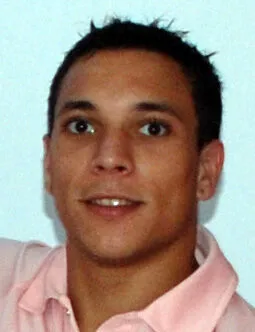
Thomas Bouhail
Human Design Chart
Biography
What does Generator 2/4 mean for Thomas Bouhail?
Generator 2/4 — Design at a Glance
Thomas Bouhail had high endurance and served as an energy carrier, whose effectiveness strictly depended on the reaction to external impulses. His design as a Generator determined that he did not have the initiative but only became action-ready when his sacral center gave internal confirmation – an intuitive “yes” from the gut. This reactive strategy was key to his deep fulfillment and satisfaction.
The mechanics of his design compared him to a workhorse: strong and durable, so long as he had energy for the task at hand. Two main pitfalls shaped his potential experience. Doing things without inner desire wasted his strength and led to burnout. Being held back from his heart project despite being full of power equally frustrated him.
Unlike the Manifestor type who acts through initiating, Thomas Bouhail had to wait until life sent a signal. Only then could he respond with action and thus effectively utilize his sacral energy. Living by this principle, no one was his match. Initiating independently or ignoring inner signals inevitably led to lasting frustration and a noticeable lack of energy. His strength lay not in pushing forward but in the precise response to what came from outside.
Sacral Authority
Thomas Bouhail showed a decision-making stance based solely on the physiological reaction of his body. His design indicated that valid answers were not found through intellectual analysis, but as spontaneous physical signals in response to external stimuli. This mechanism is specific to the Generator type where strategy and inner authority are identical: waiting for a stimulus before reacting.
Sacral authority manifested in Thomas Bouhail through a “gut feeling” or an immediate surge of power. Concrete signs were sounds like an affirming “Mhm” or a rejecting “Hm-hm,” as well as the feeling of vitality and inexhaustible energy when the sacral motor was activated. This reaction served as his sole valid decision-making basis. As long as the emotional center remained open, this physical intuition stayed clear and unclouded by mood waves.
Thomas Bouhail was inclined to perform tasks with great enthusiasm without needing external purpose. The joy in the activity itself drove him forward. Through this configuration, he could immerse himself fully in his tasks and experience satisfaction. Trusting this spontaneous physiological response replaced the need for prior planning or logical weighing, as the energy of the sacral center directly indicated where his engagement would be fruitful and where it would be misplaced.
The 2/4 Profile — Hermit / Opportunist
Thomas Bouhail was marked by an inner rhythm that swung between a deep desire for withdrawal and the wish to connect. His design as Profile 2/4, the Natural Talent-Netwoker profile, indicated a tension: Line 2 demanded solitude for internal clarity while Line 4 sought contact with familiar people. This dynamic required him to create a safe environment where he could clearly communicate his availability – when he needed company and when he needed to be alone.
During his withdrawal phases, Thomas Bouhail immersed himself in internal processes to find peace. This was not isolation in the negative sense but a necessary phase of reflection. Here he could evaluate and process knowledge from his network. Once this need of Line 2 was satisfied, he returned to spend time with his “favorite people.” This shift allowed him to condense external impulses during his alone time and develop new ideas from them. Clear communication of these boundaries was essential for him to maintain both his inner order and the quality of his relationships. Without this structure, the tension between hermit and community needs would have been conflict-ridden; with it, it became a source of creative power and strategic clarity.
Single Definition — Defined & Open Centers
Thomas Bouhails Design provided a constant foundation of inner clarity and vital endurance. His defined G Center gave him a reliable sense of self-identity and direction, while the defined Sacral Center supplied a steady source of generative energy. Supported by the intuitive moment-to-moment intelligence of the defined Spleen Center and the persistent forward momentum of the defined Root Center, his profile was optimized for responding rather than initiating. This configuration required trust in inner strategy: Only when an invitation or question came could the Sacral Center respond with a yes or no answer to make energy available. Initiated actions without such feedback typically led to resistance and frustration as the sacral power did not support the decision.
At the same time, open centers acted as mirrors for environmental energies that did not belong to his consistent personality. The open Head and Ajna Centers made Thomas Bouhail susceptible to mental inspirations or doubts from the environment, which he could easily interpret as his own problems. Without constant mental authority, there was a risk of falling into endless questions or internalizing other people's concepts. Similarly, the open Heart Center lacked the consistent energy for willpower and competition, leading him to want to prove himself through promises to demonstrate his worth – a cycle that led to self-doubt in case of failure. The open Solar Plexus Center also absorbed others' emotional moods, putting him at risk of experiencing foreign moods as his own instability and avoiding confrontation out of fear of rejection. Decoconditioning these open centers – letting go of mental pressure, the need for proof, and identification with other people's emotions – was essential to not cloud the clarity of his defined foundation.
Channels for transformation, self-expression and meaningful struggle.
Thomas Bouhails Design set a tendency towards evolutionary change driven by inner tensions and the pursuit of individual integrity. This dynamic did not manifest as a steady flow but rather as pulsating power that required acceptance of limitation and conscious struggles.
Central was Channel 60-3, connecting Root with Sacral Center. It brought potential for unexpected change through Gate 60 (Limitation) and Gate 3 (Order). This energy acted adrenalized and melancholic; it demanded patience between impulses to bring new orders out of chaos.
Parallel to this, Channel 34-10 promoted self-love and authenticity. Through Gate 34 (Power) and Gate 10 (Self Behavior), it supported inner strength to follow one's own convictions even if they seemed unusual. This strengthened trust in oneself and enabled living out individuality without external resistance.
The third active channel, Channel 38-28, connected Root with Spleen Center. It drove the struggle for personal meaning: Gate 38 (Fighter) preserved individual integrity against outer distractions, while Gate 28 (Player) recognized which fights had value. This configuration promoted a stubborn determination to walk one's own path and find significance in challenges.
Together these channels shaped a personality marked by inner tension and potential for sudden breakthroughs. The adrenalized energies demanded acceptance of internal contradictions as precursors to new orders. Individual gates like 39 (Provocation/Analysis) or 21 (Control/Material Life) complemented this picture but emphasized less the core mechanics of the three main channels. Thomas Bouhail thus showed himself as someone who brought about change through conscious confrontation with oneself and one's environment.
Individual Circuitry — Circuit Signature
Thomas Bouhail was characterized by an energetic, inward-directed firmness and a drive for transformation. His design connected Sacral, Root, and Spleen Centers directly (Knowledge Circuit). This created pulsating energy for innovation and deviation from the norm (Channel 3-60) as well as the strength to master challenges as life struggles (Channel 28-38). This connection allowed him to intuitively grasp new knowledge and express it through emotional waves.
Parallel to this, the Centering Circuit connected his Identity with the Sacral Center via Channel 10-34 (Research). This gave him a fortified, courageous personality with strong inner convictions and clear self-worth. The energy was strongly individualistic: 'I am who I am.'
Since these two circuits were linked through the common Sacral Center, his inner firmness directly influenced his transformation drive. However, the Centering Circuit lacked direct connection to Throat Center. This meant that his deepest convictions and identity aspects did not always easily communicate outwardly, while the Knowledge aspect enabled expression through emotional resonance. Thomas Bouhail thus carried a unique individuality supported by internal affirmation but whose full manifestation depended on emotional timing and inner clarity.
Right Angle Cross of Tension 2
Thomas Bouhail's design established a fundamental approach where inner and outer contradictions were not seen as obstacles but rather as necessary catalysts for transformation. Instead of avoiding conflicts, there was a tendency to consciously endure tensions in order to develop a higher synthesis or truth from them. This configuration corresponds to the archetypal pattern of the Right Cross of Tension (Cross 13). Here, enduring friction points serves as a path to maturity; energy is not channeled for short-term relief but invested in resolving apparent paradoxes. Thus, Thomas Bouhail appeared as someone whose deeper motivation lay in achieving an integrative insight through confrontation with complex opposites. His life task was less about finding simple answers and more about navigating these contradictions until they dissolved into a new understanding. Tension was not seen as a flawed state but rather the engine of growth. This pattern shaped his approach to challenges: he did not seek the path of least resistance, but rather where friction was greatest, precisely because there lay potential for profound change. The energy of this cross demands patience and perseverance, as synthesis only emerges after full negotiation of conflicts. Thomas Bouhail's design illustrated how a coherent structure can emerge from the chaos of seemingly incompatible forces when one accepts and utilizes the process of tension building.
Saturn Return · Uranus Opposition — Life Cycles
Thomas Bouhail appeared in 2016 at the age of 30 as a commentator for France Télévisions during the Olympic Games. For his design, this moment marked the first Saturn Return cycle, a crucial turning point. This cycle initiates adult responsibility and identity; it forms the bridge between youth and an established social role. Often, this phase leads to a redefinition of self in public context.
Taking on this highly visible assignment clearly demonstrated how this astrological mechanism concretely manifested: Thomas Bouhail assumed a position of significant reach and authority. The first Saturn Return demands structure and confirmation of one's competence in the broader world. By taking up this role in 2016, he solidified his professional identity sustainably. This was not merely a career step but an anchoring of his adult function within societal structures. This cycle sets the foundation upon which future developments can build. The clear affiliation with an established institution like France Télévisions reflects the typical desire during this period: recognition through structured belonging and visible capability.
Generator · Sacral Authority — Synthesis
Thomas Bouhail's design reveals a central thread of dynamic exchange between inner power and external impulse. His sacral center, as a Generator, is a reservoir of energy that only becomes active in response to external stimuli—a built-in tension between initiating and responding. This responsiveness is amplified by the definition in the Root and Spleen centers, creating an instinctive, powerful access to life force energy that is simultaneously bound to external signals. The Channel of Mutation (3-60) indicates a capacity for constant reinvention driven by inner melancholy and the urge to transcend limits.
A central paradox in his design lies in the interplay between individuality and community. His profile as a natural talent/networker points to an oscillation between the need for introspective work (Line 2) and the desire for connection and exchange with others (Line 4). At the same time, the Heart Center is open, implying a constant search for validation and appreciation, while the definition in the G Center signals a firm self-identity. This tension between the desire for autonomy and the longing for belonging shapes his inner dynamics.
3 Defined Channels
Incarnation Cross - Right Angle Cross of Tension 2
Solar Return
The Solar Return shows the moment when the sun returns to its exact birth position - your personal solar year.
Life Cycles
Discover the life cycles with a detailed triple view (birth chart, cycle chart, composite).
Human Design Profile
- Type
- Generator
- Strategy
- To respond - wait for something to respond to
- Authority
- Sacral Authority
- Profile
- 2/4 - Hermit / Opportunist
- Definition
- Single Definition
- Incarnation Cross
- Right Angle Cross of Tension 2
- Date of Birth
- 03.07.1986 12:05
- Place of Birth
- Montfermeil, France
Frequently Asked Questions
What is Thomas Bouhail's Human Design type?
What Profiles does Thomas Bouhail have in Human Design?
What authority does Thomas Bouhail have?
What incarnation cross does Thomas Bouhail have?
When was Thomas Bouhail born?
Discover your own Human Design
Are you also a Generator? Find out in a personal reading how to use your sacral energy correctly and discover deep satisfaction.
More Personalities
Back to overviewAaliyah

Aldair

Alexia

Angèle

Anne-Marie

Arcángel