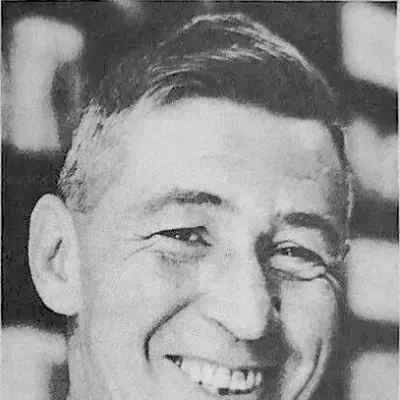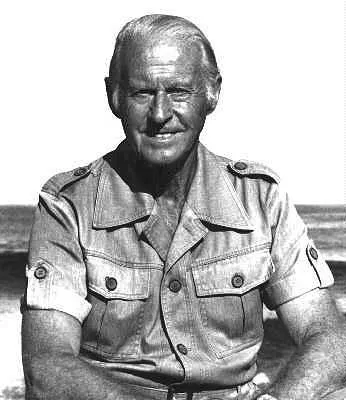
Thor Heyerdahl
Human Design Chart
Biography
The Human Design of Thor Heyerdahl: Projector 4/6
Projector 4/6 — Design at a Glance
Thor Heyerdahl's design indicated a tendency towards focused perception. As a projector, he did not have a constant, intrinsic life energy source in the sacral center but worked in phases of high intensity followed by necessary rest periods for regeneration. His aura acted like a bright flashlight: It projected light directly onto weak spots in his environment's system and immediately identified errors or inconsistencies. However, this ability to illuminate the 'dark' could be perceived as unpleasant when he addressed these flaws directly. The most effective strategy for him was to wait for a respectful invitation from his surroundings. Instead of actively pushing forward, he let his own harmony and clarity work, which caused others to come to him naturally seeking advice. If Thor Heyerdahl lived by this principle of acknowledgment and waiting for an invitation, he was rewarded with success. Ignoring this strategy and acting independently or forcefully promoting his insights led sooner or later to his non-self theme: Bitterness. His design therefore did not require constant action but rather targeted shining and the readiness to be sought out and invited by others to positively influence them.
Emotional Authority
Thor Heyerdahl showed a decision-making stance characterized by emotional wave movements. His design carried Emotional Authority in the defined Emotional Center, meaning his inner truth was not fixed at any single moment but clarified over time through ups and downs of emotions. What deeply excited him one minute could be negatively assessed the next; this shift was not a sign of unreliability but the natural mechanism of his authority.
Quick, spontaneous decisions based on current mood were risky for his system as they only reflected a snapshot in time. His design's strategy lay in taking time and letting decisions mature. Only when intense feelings subsided and emotional distance was gained did clarity and calmness set in. This process of maturation was essential for long-term orientation. Since the Emotional Center was activated, it served as his primary inner authority – independent of other defined areas in his chart. Thor Heyerdahl had to learn to be asked multiple times before acting. Only through this patience could he recognize the deeper, comprehensive truth behind fleeting moods and ensure that his steps aligned with his inner core rather than being driven by transient whims.
The 4/6 Profile — Opportunist / Role Model
Thor Heyerdahls design indicated a tendency towards experimental behavior in the first decades of life. The Profile 4/6 acted similarly to Profile 3/4 before Saturn's return, which led him to intensely engage with relationships and friendships. Later, an internal conflict emerged between the desire for community belonging (Line 4) and the need for distant reflection on the meaning of life (Line 6). This contradiction of heart versus head shaped his development towards a role expected from outside as a wise role model. The fourth line of Gate 48 connected talent with the risk of deep frustration; reason and limitation served to critically rethink long-term goals, while short-term projects were preferred. Interruptions were necessary to build new depth. At the same time, the sixth line of Gate 39 represented a natural problem-solving ability meant altruistically to enable others the right spirit. This gift often provoked and was not accepted due to its slow effectiveness for a long time. Thor Heyerdahl had to learn to cautiously open his big heart to avoid being hurt by false people while simultaneously carrying high expectations for his role as an exemplary figure.
Single Definition — Defined & Open Centers
Thor Heyerdahl's Human Design showed a tendency towards self-determined willpower and emotional depth. He was someone who enjoyed controlling his life and resources himself, which was enabled by his defined Heart Center. This center gave him the ability to keep promises and recognize his own worth without relying on external validation. At the same time, he possessed an inner emotional authority, shaped by his defined Solar Plexus Center. This meant that he did not make decisions impulsively but took the time to wait for clarity in his feelings before acting.
His defined Spleen Center provided a strong body awareness and intuitive security in the present moment. He trusted spontaneous judgments about health and well-being, which helped him feel protected and comfortable in the material world. The also defined Root Center supplied the necessary pressure to move forward and master existential challenges, transforming this stress into constructive energy.
In contrast, Head, Ajna, and Throat Centers were open. This made him vulnerable to mental confusion and the pressure to provide answers for others' questions. He tended to identify with foreign concepts or feel compelled to gain attention through speaking when he did not follow his inner authority. His open G Center meant that he had no fixed identity but rather took it from the environment; he relied on being initiated in the right direction by others. The open Sacral Center led him to lack a consistent generative energy and easily become exhausted when taking over other people's life force without setting boundaries.
Channels for meaning, community, synthesis and emotional release.
Thor Heyerdahl appeared as someone whose existence was marked by a deep need for tribal belonging. Channel Synthesis 19-49 connected his Root Center with the Solar Plexus, creating an emotional frequency that determined who belonged to the "tribe." This pushed him to seek unity and reject anything not meeting the highest ideals; loyalty was the key securing his survival. At the same time, he possessed the stubborn determination of Channel Life Struggle 38-28. This channel connected Root with Spleen Center and gave him the ability to find meaning in struggle. He resisted external forces to preserve his individual integrity and actively sought out struggles worth leading – not from reason but from inner necessity.
Social bonds formed for him only through carefully weighed agreements. Channel Community 37-40 linked Solar Plexus with Heart Center and required time to build trust. He sought recognition as a whole, yet was willing to work to provide for his loved ones; a good deal had to benefit both sides before it was sealed. Emotional moods also shaped his mind. Channel Release Emotions 39-55 connected Root with Solar Plexus and generated a pulsing wave between joy and melancholy. It provoked the minds of others to reveal their true nature, living in the alchemy of these moods rather than rationalizing them.
Additionally, specific Gates influenced him. Gate 48 gave him the ability for pattern recognition and understanding deeper connections, though this often came with frustration within the collective. Gate 21 steered his actions through a desire for control over material things; he sought respect in the community and overcame obstacles through power to guide his material life. This configuration created a person standing between the urge for tribal loyalty and the necessity of individual struggles, where emotional clarity and social agreements framed his interactions.
Individual Circuitry — Circuit Signature
Thor Heyerdahl's Human Design showed a tendency towards rhythmic, emotional impulsivity embedded in a strong sense of community. As a simply defined person, he had a continuous energetic flow between Spleen, Root, Solar Plexus, and Heart Centers. This unity created a stable basis for spontaneous actions always serving the collective.
The Knowledge Circuit connected his Spleen, Root, and Solar Plexus Centers in him. The channel "Life Struggle" (Gates 28/38) gave an instinctive ability to push through difficult situations and survive. Additionally, the channel "Release Emotions" (Gates 55/39) allowed for direct outward carrying of inner feelings. This resulted in a pulsing, acoustic expression making new insights emotionally tangible.
Parallel to this, the Ego Circuit connected his Heart, Solar Plexus, and Root Centers. Here cooperation was at the forefront. The channel "Community" (Gates 40/37) promoted an even balance of giving and taking – a foundation for mutual support without selfish intentions. Additionally, the channel "Synthesis" (Gates 49/19) brought the ability to integrate various information and communicate it clearly. Since this circuit did not have a direct connection to the Sacral Center, its activity required regular rest periods for resource regeneration. Overall, Thor Heyerdahl appeared as someone who used individual creativity and emotional authenticity to strengthen communal structures and share knowledge in a way that directly spoke to others.
Right Angle Cross of Tension 3
Thor Heyerdahl's design established a tendency towards a specific internal dynamic often perceived as challenging. This configuration is referred to in the Human Design system as 'The Right Cross of Tension 3'. It does not describe a fixed personality trait but rather an energetic state created by a particular arrangement of defined centers and channels.
This structure generated a constant interaction between the desire for calm and the restlessness that arose from a deep, often unconscious tension. Thor Heyerdahl's internal state was shaped not just by external circumstances but by this internal architecture. The mechanics of this cross worked as an ongoing background process influencing his experience of stability and change. It was an energetic reality structuring his being without him having conscious control over it. This configuration defined how he responded to life events, providing a specific quality of inner tension that existed neither as good nor bad but simply as part of his biological logic. This setup determined the flow of energy in his system and where resistance or pathways emerged.
Saturn Return · Uranus Opposition · Chiron Return · 2nd Saturn Return — Life Cycles
Thor Heyerdahl's design showed a tendency to translate internal impulses into concrete, often public projects. This configuration promoted a lifestyle where theoretical convictions were proven through practical actions. In 1939, at age 25, he traveled to the northwest coast of Canada to complete his manuscript on Polynesian settlement. This first Saturn Return marked the moment when years of groundwork condensed into a viable result and solidified his career as a researcher.
The energy of his design continued to work in 1952 when, at age 38, he was invited to the XXX International Americanists Congress in Cambridge during Uranus opposition. There, he impressed the audience with his lectures, showcasing the typical effect of this cycle: a sudden opening and recognition by broader circles validating his previous views.
His Chiron Return around 1961 at age 47 marked the bloom of his life mission. The first volume of 'Archeology of Easter Island' was published, impressing the Pacific Science Association Congress and establishing him as an acknowledged scientist. This was not a healing process but rather the fulfillment phase where his incarnation purpose became visible.
The second Saturn Return in 1971 at age 57 crowned this development: Heyerdahl received the Order of Merit from Egypt and was appointed Grand Officer of the Royal Order of Alaouites of Morocco. These honors reflect the final anchoring of his work within the international community, a sign that his strategy had been consistently lived.
Projector · Emotional Authority — Synthesis
He was a projector whose life was marked by a deep-rooted need to recognize patterns (defined Heart Center) and make these insights accessible to others. This drive to find and highlight 'errors in the system' (Projector type), combined with emotional depth (Emotional Authority), allowed him to perceive moods and approach evaluations more differentiated. The Line 4 in his profile indicates that he sought relationships and connections to share his insights, while Line 6 simultaneously pushed him to seek meaning and principles from a distance – an ongoing oscillation between belonging and isolation.
This interplay manifested in a central paradox: He was both an observer who could recognize and highlight the potential of others (Synthesis Channel) and someone seeking recognition and validation himself (Knowledge Circuit). The repeated events throughout his cycles, from early career successes to later honors, showed that he found fulfillment both through discovering new perspectives and sharing these insights with the world.
4 Defined Channels
Incarnation Cross - Right Angle Cross of Tension 3
Solar Return
The Solar Return shows the moment when the sun returns to its exact birth position - your personal solar year.
Life Cycles
Discover the life cycles with a detailed triple view (birth chart, cycle chart, composite).
Human Design Profile
- Type
- Projector
- Strategy
- Wait for the respectful invitation
- Authority
- Emotional Authority
- Profile
- 4/6 - Opportunist / Role Model
- Definition
- Single Definition
- Incarnation Cross
- Right Angle Cross of Tension 3
- Date of Birth
- 06.10.1914 16:40
- Place of Birth
- Larvik, Norge
Frequently Asked Questions
What was Thor Heyerdahl's Human Design type?
Which profile did Thor Heyerdahl have?
What authority did Thor Heyerdahl have?
What incarnation cross was assigned to Thor Heyerdahl?
When was Thor Heyerdahl born?
Discover your own Human Design
Are you also a Projector? Find out in a personal reading how to unfold your leadership qualities and recognize the right invitations.
More Personalities
Back to overviewSissy Spacek

Alain-Fournier

Anémone

Ann-Margret

Bourvil

Hergé