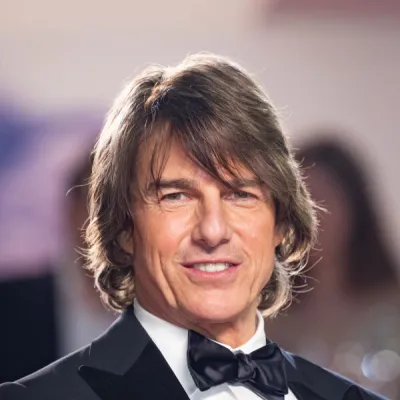
Tom Cruise
Human Design Chart
Biography
Cruise began acting in the early 1980s and made his breakthrough with leading roles in Risky Business (1983) and Top Gun (1986), the latter earning him a reputation as a sex symbol. Critical acclaim came with his roles in the dramas The Color of Money (1986), Rain Man (1988), and Born on the Fourth of July (1989). For his portrayal of Ron Kovic in the latter, he won a Golden Globe Award and received a nomination for the Academy Award for Best Actor. As a leading Hollywood star in the 1990s, he starred in commercially successful films, including the drama A Few Good Men (1992), the thriller The Firm (1993), the horror film Interview with the Vampire (1994), and the sports comedy-drama Jerry Maguire (1996); for the latter, he won a Golden Globe Award for Best Actor and his second nomination for the Academy Award for Best Actor.
The Human Design of Tom Cruise: Manifestor 2/5
Manifestor 2/5 — Design at a Glance
Tom Cruise's Design established the foundational structure of a Pioneer: someone who has visions and inspires others to realize them. This pattern resembles the role of an emperor in ancient Rome, who designed the great empire but did not fight in battles himself; instead, he sent his soldiers into battle. For Tom Cruise, this meant an inherent tendency towards polarization. His big dreams and ideas resonated with some people immediately, inspiring them to follow him. However, others rejected or even hated him precisely because his thinking often exceeded that of the majority.
This conflict between love and misunderstanding is a central pain point for this type. The solution did not lie in fighting against criticism but in clear communication. By informing about his intentions and visions early and accurately, Tom Cruise could find the right supporters – those who supported his direction. If he followed this strategy of informing, he was rewarded with a deep sense of inner peace. However, if he lived against this design without informing or confronting resistance, without creating clarity, it manifested as persistent, deep anger within him. His path was thus marked by the balance between radiating his vision and the necessary transparency to create peace rather than frustration.
Emotional Authority
Tom Cruise exhibited a decision-making dynamic that required strict temporal distance from emotional waves. Spontaneous impulses proved misleading for him; true clarity emerged only after emotions subsided, often through conscious reflection on a situation overnight.
This mechanism stems from his Emotional Authority. The defined Emotions Center carries this inner authority – a configuration possible for all types except Reflectors. He is subject to constant emotional ups and downs: the world appears enthusiastically positive one moment, then negatively colored the next. This immediate feeling is only a snapshot, not a reliable compass for long-term truth. Quick decisions based on fleeting mood risk negative consequences.
Instead, his design demands patience and multiple reviews. By taking time, intense emotions subsided, emotional distance gained strength, and calmness ensued. This process of maturation is essential for decisions with significant influence on life's course. The emotional wave must be traversed before the deeper, comprehensive truth becomes visible. Tom Cruise had to endure this process to distinguish between momentary mood and actual insight – a protective mechanism against superficial misjudgments.
The 2/5 Profile — Hermit / Heretic
Tom Cruise exhibited a basic stance that oscillated between an urgent need for isolated retreat time and external expectations of him as an immediate problem solver. His design established a fundamental inner conflict: Line 2 required strategic isolation to gain clarity about his role, while Line 5 unconsciously drew people in crisis situations seeking a hero figure.
This configuration describes the dynamics of Profile 2/5, Natural Talent and Hero. Line 2, often referred to as the Hermit Line, ensured that Tom Cruise needed much time for himself to secure self-preservation. This retreat was not about escape but preparation for targeted engagement. Simultaneously, Line 5 meant others sought solutions to their problems and expected him to immediately come to their aid.
The necessity of strict boundaries was central: Tom Cruise had to actively decide for whom and when he would invest his energy to avoid being exhausted by constant demands for rescue actions. Additionally, Line 2 brought the natural talent of provocation – a necessary nudge to overcome obstacles or draw attention. This stood in tension with Line 5's demand for objectivity and impartiality in crisis management. Tom Cruise thus used his alone time to look inward and determine what he wanted to engage with without losing himself.
Triple Split Definition — Defined & Open Centers
Tom Cruise's Human Design shows a tendency towards permanent mental and emotional intensity, sustained by a stable identity. His defined Head and Ajna Centers created a constant internal pressure to question and form concepts – a state of inspiration that did not provide direct energy for implementation. This mental flow moved into his defined Solar Plexus Center, his inner authority: He relied on waiting for an emotional wave to gain clarity rather than acting impulsively.
His fixed identity (defined G Center) and willpower (defined Heart Center) gave him a clear direction and the ability to fulfill promises. However, this strength contrasted with his open Sacral Center. Since he did not generate his own vital life energy, he absorbed energy from the environment. This led to fluctuations between high activity and exhaustion; he tended to push himself to extremes using borrowed energy rather than taking breaks.
The open Spleen Center complemented this dynamic with a dependence on external security. He was prone to clinging to people or situations that radiated well-being, even if they were not healthy, to avoid the deep fear of survival. His defined Root Center provided constant stress pressure to move forward while his open Sacral Center warned against balancing this pressure through overwork. The challenge lay in accepting mental restlessness and emotional wave movements without turning them into hasty actions and instead trusting the right environment for energy and security.
Channels for logic, leadership, reflection, will and emotion.
Tom Cruise's basic disposition was characterized by authentic living within the emotional wave to tickle others' minds and provoke mutative changes. This dynamic originated from Channel Release Emotions 39-55, which steers the pulsating on/off wave between ecstasy and melancholy between Root and Solar Plexus Centers. The mechanics of this connection required not rationalizing moods but accepting them as alchemy, thereby releasing a profound creative force.
However, this provocation was based on verifiable patterns secured by Channel Logic 63-4. This channel connects the Head Center with the Ajna Center and represents the doubting mind. Doubt here was essential for logic; the channel permanently filtered patterns to test their consistency. Only when a consistent, practical, and verifiable pattern emerged did an answer qualify as logical. This ensured that emotional provocation was not arbitrary but based on healthy skepticism and a drive for evidence.
Additionally, situational Juxta-Channels were activated by environmental context. Channel The Alpha Animal 7-31 introduced logical collective leadership with foresight based on verified patterns and the need for majority recognition. Channel The Lost Son 13-33 promoted reflection and memory; it gathered experiences to pass them forward as lessons after patient processing. Finally, Channel The Money Line 21-45 acted on the material level by bringing willpower for control and responsibility over resources, with balance between work and rest being crucial. These channels shaped Tom Cruise's situational interactions while Personality Channels formed his constant inner structure.
Collective Circuitry — Circuit Signature
Tom Cruise's Human Design points towards a tendency of pulsating, acoustic expression. His unique identity did not manifest as a static trait but acted situationally: only in resonance with the environment was this intense emotional expression activated. This results from his Triple Definition – three separate energetic groups exist parallel without direct internal flow between them.
The Knowledge Circuit shaped this dynamic side. For Tom Cruise, it connected the Solar Plexus Center to the Root Center (Channel 55-39). This configuration allowed initiating new knowledge transformations through emotionally carried expression. The energy was pulsating and aimed at bringing change into the world.
Parallel to this, a second group comprised Throat, Identity, and Heart Centers. Here, the Understanding Circuit (Channels 63-4 Logic; Channel 7-31 Alpha Animal) and the Meaning Circuit (Channel 13-33 Lost Son) were active. These channels promoted sharing logical insights as well as reflecting past experiences. Since Head and Ajna Centers were also connected, there was a focus on rational future orientation.
The third group included Throat and Heart Centers via Ego Circuit (Channel 21-45 Money Line). This concerned the accumulation of resources within cooperation. Important: The three groups were energetically isolated from each other. Tom Cruise thus had to switch between emotional transformation, rational strategy, and resource-oriented collaboration without these areas automatically overlapping.
Right Angle Cross of Tension 2
Tom Cruise's Human Design shows a tendency towards continuous inner tension that acts as his constant life dynamic. This energy does not present itself as a temporary state but rather as a structural challenge and driving force of his personality. The right cross of Tension 2 defines this fundamental configuration: It is an intersection of several channels, resulting in an energy that is not situational but deeply rooted. This inherent tension functioned as a background motor influencing actions and reactions without necessarily needing conscious control. The mechanics of this cross describe a dynamic always present – a permanent pressure point shaping experience. For Tom Cruise, this meant the tension was not a problem to be solved but the natural ground on which his character traits grew. It created continuous strain providing energy while simultaneously generating constant internal friction. This configuration shows how specific energetic intersections in Human Design can form a stable and unchanging basis for individual experience, independent of external circumstances or conscious decisions.
Saturn Return · Uranus Opposition · Chiron Return · 2nd Saturn Return — Life Cycles
Tom Cruise's design is characterized by recurring cycles of relationship building and dissolution that act as central life patterns. This dynamic manifests concretely in three key phases: In 1990 he began an affair with Nicole Kidman – a time corresponding to his first Saturn return. At this age, years of internal groundwork often crystallizes into tangible results; here it manifested as an intense relationship entry.
However, the structure also contained potential for breaks. In 2001 at the age of 39 and during Uranus opposition, Cruise and Kidman separated. This astrological aspect typically marks a phase of dissolving old structures when individuals seek new freedoms or perceive existing bonds as limiting. The separation was thus not a random crisis but an expression of this mechanical necessity for change.
The cycle closed in 2012 with the Chiron return, when the couple publicly announced their split. In Human Design, the Chiron return is not a moment of wound healing in the traditional sense but a fulfillment cycle: The individual's incarnation cross unfolds increasingly if one follows their strategy. Public confirmation of the distancing was part of this blooming phase where inner truths come to light and meaning becomes experiential. This sequence illustrates how Tom Cruise's chart structures relationship dynamics not as static states but as transformative processes.
Manifestor · Emotional Authority — Synthesis
A central red thread runs through the design: the dynamic between internal pressure and the need for recognition. The Manifestor type (Design View) with emotional authority generates constant mental pressure to question and filter patterns (Centers, Channels/Gates). This inner struggle for understanding is intensified by the Profile as a natural talent/hero and savior – the expectation to offer solutions while simultaneously needing withdrawal. The Knowledge Circuit fuels this process further, driving innovation and transformation but also potentially with melancholy.
The central paradox lies in the tension between the urge to act as a pioneer (Manifestor) and the emotional wave that wants decisions to mature (Emotional Authority). The design seems geared towards quick initiation but is slowed by the necessity of emotional weighing. Recurring crises in relationships could be expressions of this internal conflict: the desire for control and following one's own path versus the need for connection and validation from others.
5 Defined Channels
Incarnation Cross - Right Angle Cross of Tension 2
Solar Return
The Solar Return shows the moment when the sun returns to its exact birth position - your personal solar year.
Life Cycles
Discover the life cycles with a detailed triple view (birth chart, cycle chart, composite).
Human Design Profile
- Type
- Manifestor
- Strategy
- To inform others before acting
- Authority
- Emotional Authority
- Profile
- 2/5 - Hermit / Heretic
- Definition
- Triple Split
- Incarnation Cross
- Right Angle Cross of Tension 2
- Date of Birth
- 03.07.1962 15:06
- Place of Birth
- Syracuse, New York, United States
Frequently Asked Questions
What is Tom Cruise's Human Design type?
What Profile does Tom Cruise have in Human Design?
Which Authority guides Tom Cruise?
Which incarnation cross is assigned to Tom Cruise?
When was Tom Cruise born?
Discover your own Human Design
Are you also a Manifestor? Find out in a personal reading how to use your initiation power peacefully and dissolve resistance.
More Personalities
Back to overviewSissy Spacek

Anémone

Ann-Margret

Arletty

Arno

Artus