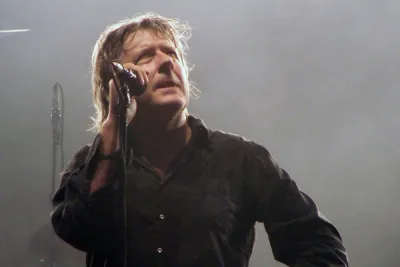
Tom Segura
Human Design Chart
Biography
Tom Segura as a Projector 6/2 in Human Design
Projector 6/2 — Design at a Glance
Tom Segura's design is characterized by a focusing aura that acts like a bright flashlight, highlighting weaknesses in the environment. He has the ability to immediately recognize where systems or people are not functioning optimally. However, this direct perception can be counterproductive if he addresses these flaws without restraint; similar to a light beam shining directly into someone's face, it is often perceived as unpleasant or aggressive and triggers resistance.
The more effective way for him to express his design lies in subtly radiating competence. By embodying harmonious patterns himself, he magnetically attracts others who come to him voluntarily seeking advice rather than having him impose his observations on them. Therefore, the central strategy is to patiently wait for an honest and respectful invitation from the environment before sharing his knowledge or exerting influence.
Since Tom Segura as a projector does not have a defined Sacral Center, he lacks a constant flow of life energy. Instead, he experiences phases of high intensity and productivity that must be followed by necessary rest periods to avoid burnout. Conformist work structures demanding continuous performance without breaks are in conflict with this biological rhythm. If he follows his invitation strategy and listens to his energy flow, he will be rewarded with success. Ignoring these mechanisms threatens the feeling of not belonging as a warning signal for a wrong life path.
No Inner Authority
Tom Segura's design shows a rare configuration: he lacks inner authority. This marks him either as a mental projector or a reflector, two of the most unusual types in Human Design. For Tom Segura, this means that decisions do not stem from a fixed internal compass but are formed through external resonance. As a mental projector, he activates dormant potentials in his open centers only through interaction with other people. This dialogue provides him with the necessary information to view issues from various perspectives and develop his specific intelligence. The key here is not immediate action but the evaluation of this complex data. Tom Segura needs time and solitude to recognize the thread, filter out what's essential, and structure it meaningfully. His ability to gain clarity from a mass of information is his central success capital. Alternatively, if he were a reflector, his decision-making would be tied to the 28-day lunar cycle, requiring a slow, cyclical orientation. Regardless of the exact type, the environment is crucial: Tom Segura must remain in an environment where he feels comfortable and can exchange trustfully. Only there does his sense for what truly belongs to him deepen over time. He should never be rushed into decisions as his orientation is based on resonance and temporal condensation, not inner certainty.
The 6/2 Profile — Role Model / Hermit
Tom Segura's design shows a clear transformation over time: In his youth, an impulsive experimentation phase dominated, based on trial and error. This period was marked by the need to collect many personal life experiences, often leading to temporary retreats after setbacks. Only after turning thirty does the sixth line of his profile (6/2) activate, initiating a profound change.
From this point onward, Tom Segura metaphorically withdraws into a 'cave' to look back at his earlier experiments with great distance. This phase serves intensive reflection and healing. He abstracts from his experiences to determine who he can trust and which processes are truly completed. At the same time, his design shows strong selectivity and adaptability to limitations. Even if external constraints persist, he tends to maintain old habits – similar to someone continuing their routine despite the original necessity having disappeared.
Once this period of introspection is complete, Tom Segura emerges as a wise person. Others recognize this maturity and come to him seeking his life wisdom. His role then consists in bringing others closer to growth that he has achieved through his long phase of self-detachment and reflection.
Single Definition — Defined & Open Centers
Tom Segura's design placed a constant mental pressure on him: questioning, forming concepts, and understanding connections. This energy came from his defined connection between the Head Center and Ajna Center. He had a firm way of thinking that did not contain direct action power; attempting to implement these ideas immediately often led to frustration due to the lack of necessary energy for it. Instead, he acted as an inspiration source for others by stimulating their mental field through his aura.
This intense internal process contrasted with his open centers, making him vulnerable to external conditioning. His open Throat Center tended to suffer under pressure to force attention or see constant talking as proof of value, rather than waiting for natural invitations to speak. The open G Center meant he did not carry a fixed identity; he had a tendency to blend into his environment and look for direction shown from the outside instead of defining it himself.
Additionally, his open Heart Center absorbed pressure to prove his worth through willpower or promises, often ending in cycles of overcompensation and disappointment. His open Solar Plexus amplified others' emotions, putting him at risk of interpreting foreign moods as his own instability. The open Sacral Center made him vulnerable to exhaustion because he easily worked on borrowed energy and had difficulty setting boundaries. Finally, his open Root Center took on the stress of the environment, leading to a feeling of constant urgency that did not align with his own priorities. His challenge was to use this mental pressure as inspiration without falling into the traps of open centers such as the need for immediate manifestation or seeking external validation.
Channels for mental imagery and deep comprehension.
Tom Segura's design inclined towards intense mental abstraction. He experienced life through a kaleidoscope of inner images, filtering experiences to recognize patterns and stories. This attitude resulted from Channel Abstraction 64-47, connecting the Head Center with Ajna Center. Through Gate 64 (Confusion) and Gate 47 (Understanding), his mind continuously played out possibilities until something made sense. This mechanism often generated mental unrest as his mind lacked inner authority and never reached full certainty. The solution did not lie in personal understanding but in patience: when points condensed, an inspiring story or new perspective emerged that he could share.
Additionally, other gates influenced his psyche. Gate 56 promoted inspiration through figurative storytelling and abstracting mental processes, strengthening his ability to translate complex thoughts into understandable narratives. Gate 43 enabled spontaneous insights from inner dialogue, which he had to communicate for recognition – accompanied by the fear of rejection. In the realm of personality, doubts played a role: Gate 63 urged solving uncertain patterns through improvement, while Gate 17 emphasized logical teaching and following, with genuine understanding being a prerequisite for future organization.
On a physical level, gates of the cross shaped his development. Gate 42 saw experience as the key to growth; only completing processes allowed new commitments. Lack of decisions here led to blockages. Gate 32 ensured continuity and material success in the stem but constantly checked for stability, leading to radical changes when necessary. Finally, Gate 60 stood for accepting limitations as a path to transcendence, where melancholy was a physical experience overcome through creativity. Together, these elements formed a profile that linked mental complexity with the need to tell clear stories and conclude experiences.
Collective Circuitry — Circuit Signature
Tom Segura's design inclined towards visual and abstract processing of experiences. His energy cycled, marked by emotional waves drawing from the past. This did not manifest as cold logic but rather as a reflective process where he sought meaning behind past events. The insights gained served to share them with others and learn collectively.
This dynamic resulted from his Simple Definition chart. For Tom Segura, the Head Center and Ajna Center were directly connected through Channel Abstraction. This connection linked the intuitive inspiration of the head with the focused, visual thinking of Ajna. Since both centers lay in the same energetic group, they formed a continuous flow. There were no separate or parallel power fields within this circuit; instead, this specific configuration worked as a unified entity. The energy was wave-like and inexplicable rationally but followed a clear rhythm with beginning, middle, and end. Through this channel, Tom Segura could make abstract ideas tangible and bring emotional content from the past into a form understandable to the collective. This mechanism emphasized exchanging felt insights as means for shared learning.
Left Angle Cross of Limitation 1
Tom Segura's design shows a tendency towards clear and often hard boundaries. His way of moving through the world was characterized by direct confrontation with what does not work or is harmful. He cared less about harmonious adaptation than breaking down structures that were felt as false or limiting.
This attitude stems from what is called the 'left cross of limitation'. In Human Design mechanics, this configuration describes a specific energetic impulse: breaking through barriers and pointing out limits. It's not a gentle correction but rather a radical cut through illusions or inefficient systems. Those who carry this cross tend to see the truth as it is – often unvarnished and direct.
For Tom Segura, this meant an inner drive to not settle for half-truths or social platitudes. His energy acted as a catalyst for clarity by challenging existing boundaries or redefining them. It was a process of shedding old ballast and asserting new, more personal standards. This dynamic created in him a stance of independence and a certain rawness in perception that allowed him to move freely from conventional expectations.
Saturn Return · Uranus Opposition — Life Cycles
Tom Segura's design showed a clear tendency towards structural anchoring in his early thirties, followed by a sudden expansive career leap almost a decade later. In 2008, at the age of 29, he got married – coinciding with his first Saturn return. During this phase, internal discipline often condenses into external commitments; the design favored building stable, long-term bonds as a foundation for the future.
Almost exactly ten years later, in 2018 when Tom was 39, he signed a TV deal with CBS and planned his pilot film 'The Little Things'. This correlates with the Uranus opposition, a cycle that often breaks established structures to allow new unconventional expression. While Saturn return fosters stability, the Uranus phase opens the way for public visibility and creative freedom. Thus, the design suggests a path: first laying the groundwork through relationship and structure, then using this basis to boldly step into new innovative paths in professional life – without completely giving up previously gained stability but rather using it as a springboard.
Projector · No Inner Authority — Synthesis
A central red thread in this design is the ability to recognize patterns and shed light on darkness – both within oneself and in the environment. The projection of energy (Projector type) combined with the defined channel of abstraction (64/47) creates an ongoing search for understanding and meaning in experiences that can then be formulated and passed on. This tendency is reinforced by the Profile of Role Model/Natural Talent, as intense self-reflection (Line 6) eventually leads to wisdom that attracts and inspires others. The lack of inner authority underscores the need to calibrate externally through interaction with other perspectives – a process that utilizes resonance in open centers.
The design reveals a paradox between the drive for analysis and the potential resistance this clarity can evoke. On one hand, there is the ability to immediately recognize errors in the system (Projector), paired with a defined Head Center that constantly inspires and raises questions. On the other hand, how these insights are communicated requires sensitivity so as not to be perceived as intrusive. This contradiction between the internal pressure for clarity and the need to adapt to others' energy shapes an observation-reflection-sharing dynamic of insights at the right moment.
1 Defined Channel
Incarnation Cross - Left Angle Cross of Limitation 1
Solar Return
The Solar Return shows the moment when the sun returns to its exact birth position - your personal solar year.
Life Cycles
Discover the life cycles with a detailed triple view (birth chart, cycle chart, composite).
Human Design Profile
- Type
- Projector
- Strategy
- Wait for the respectful invitation
- Authority
- No inner authority - learn more
- Profile
- 6/2 - Role Model / Hermit
- Definition
- Single Definition
- Incarnation Cross
- Left Angle Cross of Limitation 1
- Date of Birth
- 16.04.1979 07:56
- Place of Birth
- Cincinnati, OH, United States
Frequently Asked Questions
What is Tom Segura's Human Design type?
What Profile does Tom Segura have in Human Design?
What authority does Tom Segura have?
Which incarnation cross is assigned to Tom Segura?
When was Tom Segura born?
Discover your own Human Design
Are you also a Projector? Find out in a personal reading how to unfold your leadership qualities and recognize the right invitations.
More Personalities
Back to overviewSissy Spacek

Alain-Fournier

Anémone

Ann-Margret

Arletty
Arno