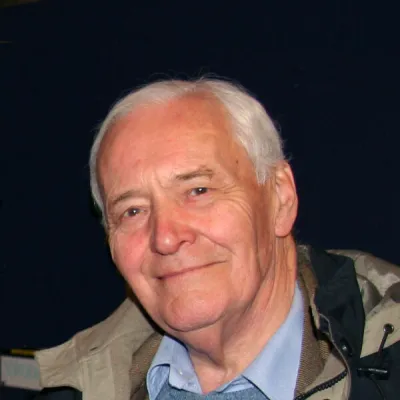
Tony Benn
Human Design Chart
Biography
The Human Design of Tony Benn: Manifestor 5/1
Manifestor 5/1 — Design at a Glance
Tony Benn's Design as a Manifestor marked him as a pioneer and visionary whose task was to lead the world into a new future. His character bore the traits of a Roman emperor: He possessed the grand vision of an empire but did not fight battles or wars himself. Instead, he delegated execution to others, much like how an emperor sends his soldiers to conquer lands for him.
This forward-thinking approach inevitably led to misunderstandings and polarization. As Tony Benn often thought ahead of his environment, he was loved and followed by some because of his immense visions, while others hated or rejected him precisely because of them. This conflict was a central pain point in his design.
To find the right followership and dissolve this polarization, it was crucial for him to inform others about his plans early and accurately. This strategy of informing served to reduce resistance and attract the right people. If he followed this strategy, he was rewarded with an inner sense of peace. Living against his design, however, left him feeling a persistent, deep anger. Thus, his path was marked by the tension between the necessity of clearly communicating his vision and the resulting emotional reward or punishment from his system.
Splenic Authority
Tony Benn's Design inclined towards radical vigilance: His internal authority resided in the defined Spleen Center, while the Emotional and Sacral Centers remained open. This configuration endowed him with a spontaneous survival intelligence that functioned as a fine alarm system for health and well-being. Tony Benn was someone who did not make decisions through prolonged deliberation but rather at the moment of the first impulse. This initial spark was the only reliable source to determine whether an environment or situation served him or harmed him.
The mechanics of this Spleen Authority require utmost attention, as the impulse occurs only once and very subtly. It could easily be overshadowed by external influences or diluted through overthinking. Tony Benn's Design therefore demanded a rigorous demarcation against harmful environments; his physical well-being was the direct indicator of correctness. Since this intelligence always knows what fits in the present moment, long-term commitments appeared counterproductive. Flexibility and freedom were not options but necessities to maintain spontaneity. Tony Benn lived in a constant balance between capturing this tiny signal and reacting immediately without losing it through delay or planning. This created a lifestyle that could adapt short-term rather than submit to rigid plans.
The 5/1 Profile — Heretic / Investigator
Tony Benn's Design presented a fundamental tension: the private, deep learning process contrasted with his public role as a problem solver. As Profile 5/1 (Hero/Researcher), he had almost magnetic appeal, urging others to use his knowledge trove. This dynamic created a risk of exhaustion through unbridled requests from the environment if clear boundaries were not set.
His Line 5, shaped by Gate 21, demanded objectivity and impartiality in crisis management. This meant taking leadership tasks without emotional influence – a skill he had to develop to act successfully on the material plane. Simultaneously, his Line 1, influenced by Gate 54, determined access to power through secret alliances and hidden relationships. Here, disclosure weakened this influence.
Tony Benn thus showed himself in balance between two poles. On one hand, he needed to learn to say no to protect his energy and not end up as an exhausted expert suffocated under questions. On the other hand, he used the hidden networks of his Line 1 for advancement within the family tree. His path lay in connecting this secret influence with public, objective problem-solving. Only through setting clear boundaries could he maintain a beneficial balance between researching for himself and helping others without overburdening his gifts or endangering his power base through transparency.
Single Definition — Defined & Open Centers
Tony Benn's Human Design profile was characterized by a stable foundation of defined centers that gave him a clear and reliable voice. His defined throat center acted as a pivot point, transforming inner messages into external action; he spoke not from fleeting intellect but from a deeply rooted source. This ability to express came directly from his defined G Center, which provided a firm sense of self-identity and internal direction. Benn lived with a clear sense of mission, independent of external validation, allowing him to inspire others without needing their approval.
Additionally, his defined heart center shaped his willpower. He controlled his resources and kept promises consistently, building trust and setting his own value. Simultaneously, the defined spleen center offered intuitive security in the present; he acted from spontaneous body awareness that prioritized health and well-being without having to rationalize these decisions.
This stable inner core contrasted with his open centers, making him vulnerable to external conditioning. His open head center tended to absorb mental pressure from the environment; Benn could get entangled in questions and doubts not of his own making, sometimes seeking inspiration to relieve this pressure. Similarly, his open solar plexus acted as a barometer for foreign emotions. He absorbed the emotional climate of his surroundings, which could lead him to personalize others' moods or instabilities and misinterpret them as his own. His open sacral center lacked a constant energy flow; Benn relied on sensing the life force of others but risked overexposure since he didn't know when enough was enough or how to set healthy boundaries. These opennesses challenged him to always use his inner authority to distance himself from foreign stress and emotional overload.
Channels for intuition, reflection and devoted strength.
Tony Benn's design was marked by a unique synthesis of patient reflection, intuitive talent development, and instinctive persuasiveness. He collected experiences to transform them later into precisely formulated messages grounded in deep tribal consciousness.
This approach stemmed from the Lost Son Channel 13-33 connecting his G Center with his throat center. Through Gate 13, which promotes listening and storing information, and Gate 33, which allows retreat for reflection, Tony Benn learned to practice patience. He waited until the truth of an experience revealed itself before passing it on, giving his statements a weighty continuity as he acted not from immediacy but from mature insight.
Parallel to this was the Wave Channel 48-16 between spleen and throat centers. Gate 48 sought intuitive depth while Gate 16 perfected skillfulness. Tony Benn used this connection to transform his inner intelligence through repeated practice into a communicable talent, not just knowing but precisely conveying knowledge by relying on natural instincts to achieve excellence in expression.
The driving force behind this communication was the Devotion Channel 44-26 linking spleen and heart centers. Gate 44 offered instinctive awareness for tribal needs while Gate 26 provided voluntary strength to sell these insights. Tony Benn had a sense of what his audience truly needed—often before they knew it themselves—and conveyed this with entrepreneurial energy, mobilizing resources by persuasively explaining why something was beneficial for the community.
Together, these channels formed a profile of a communicator who not only spoke but acted from experience (13-33), technical mastery (48-16), and strategic instinct (44-26). His messages were neither impulsive nor purely theoretical but the result of conscious processing of reality packaged in a form that ensured acceptance and support.
Collective Circuitry — Circuit Signature
Tony Benn's design exhibited a clear, rational tendency: he sought logical structures and strategic solutions to guide society towards a better future. This approach stemmed from his simple definition where throat, spleen, and heart centers were directly connected. His Understanding Circuit linked the throat with the spleen center via the Wave Channel, allowing him to analyze visual perceptions and strategic insights free of emotional involvement from the solar plexus and articulate these findings clearly. The focus was on an emotionless ratio aimed at making complex connections understandable.
Parallel to this was his Meaning Circuit linking the throat with the identity center via the Lost Son Channel. Here it was about reflecting on past experiences and finding their meaning, sharing emotional wave movements with others. Although both circuits utilized the throat center, they formed distinct energetic segments: one oriented towards future-oriented logic, the other towards past experience.
Additionally, Tony Benn's Ego Circuit was active, connecting heart and spleen centers via the Devotion Channel. This promoted a cooperative stance in creating shared resources together. Since there was no connection to the sacral center, this configuration required necessary rest periods for regeneration to maintain energy for the collective. His energy thus was characterized by sharing logical visions and finding meaning in past experiences, always embedded within a structure of mutual support.
Left Angle Cross of Endeavour 1
Tony Benn's design indicated a tendency towards strategic endurance, paired with the principle of 'Less is More'. He was someone who did not scatter his strength in many directions simultaneously but focused persistently on one single goal. This attitude stemmed from his configuration, the left cross of Effort 1.
This structure described no quick or varied activity, but rather the necessity to concentrate strictly on one thing at a time and pursue it with repetition and continuity. Success did not arise in this pattern through speed or tackling many tasks simultaneously, but through the quality and constancy of energy in a single channel.
Tony Benn lived this mechanism by understanding that true effectiveness results from focused, repeated effort. His design challenged him to resist distractions and prioritize the depth of one endeavor over the breadth of many superficial attempts. The energy of this cross worked like a drill: it required time and patience to overcome obstacles but was unwavering in its endurance as long as it wasn't scattered. Tony Benn's path was marked by this discipline of concentration, which allowed him to bring about long-term change through persistent adherence to a core concern rather than getting lost in the chaos of many small battles.
Saturn Return · Uranus Opposition · Chiron Return · 2nd Saturn Return — Life Cycles
Tony Benn's design was characterized by clear, radical turning points that redefined his identity and authority. This dynamic manifested concretely in two central phases of his life.
In 1963, at age 38, Tony Benn resigned from his title and returned to the House of Commons. This event coincided with his Uranus opposition. This cycle often marks a moment of profound separation: old structures are rejected to define one's identity more clearly. For Tony Benn, this meant breaking away from an inherited position in favor of a self-chosen political role in the House of Commons. It was an act of radical self-determination where he broke free from prescribed paths to find his true authority.
Later, in 1971, Tony Benn became chairman of the Labour Party. This occurred during his Chiron return, a cycle of fulfillment and bloom. In this phase, one's incarnation cross increasingly unfolds in life; meaning and purpose become experiential if lived according to one's strategy and authority. Taking over the chairmanship was not merely a career move but an expression of his matured inner authority. He entered a position that reflected his long-term development and life purpose. Both events underscore how Tony Benn's design was marked by moments of clear separation followed by phases of authoritative anchoring. His actions reflect these cyclical mechanisms: first, the breaking away from the old, then assuming a role that aligns with one's essence.
Manifestor · Splenic Authority — Synthesis
A central red thread in Tony Benn's design is the dynamic between inner clarity and the need to share this with the world (Channel 48/16, Throat/Spleen Center). The defined throat, connected with G-Center and Heart, points to a strong inner voice and clear self-understanding. This potential was strengthened by open centers like Head and Sacral – an ability to take in and process information from the environment without being bound to rigid patterns. This allowed him to act as a mediator and communicator by combining deep understanding with practical skill (Channel 26/44). Reoccurring events related to career changes and leadership roles confirm this tendency to carry knowledge and insights into the world.
The central paradox lies in the tension between the inner drive for authenticity (defined G-Center) and the constant intake of external influences through open centers. While a defined Heart Center stands for strong willpower and self-determination, openness in other centers points towards vulnerability to conditioning. This creates a dynamic equilibrium: Benn was able to develop profound insights (Gate 53), but had to constantly filter and separate to not lose his own inner truth. This tension likely manifested as an ongoing struggle between the need for leadership and the desire for freedom from external expectations.
3 Defined Channels
Incarnation Cross - Left Angle Cross of Endeavour 1
Solar Return
The Solar Return shows the moment when the sun returns to its exact birth position - your personal solar year.
Life Cycles
Discover the life cycles with a detailed triple view (birth chart, cycle chart, composite).
Human Design Profile
- Type
- Manifestor
- Strategy
- To inform others before acting
- Authority
- Splenic Authority
- Profile
- 5/1 - Heretic / Investigator
- Definition
- Single Definition
- Incarnation Cross
- Left Angle Cross of Endeavour 1
- Date of Birth
- 03.04.1925 14:55
- Place of Birth
- London, United Kingdom
Frequently Asked Questions
What was Tony Benn's Human Design type?
What Profile did Tony Benn have in Human Design?
What Authority did Tony Benn have?
What incarnation cross did Tony Benn have?
When was Tony Benn born?
Discover your own Human Design
Are you also a Manifestor? Find out in a personal reading how to use your initiation power peacefully and dissolve resistance.
More Personalities
Back to overviewChristian-Jaque
Kesha

Laurent-Eynac
Lucebert
Masaccio
Papus