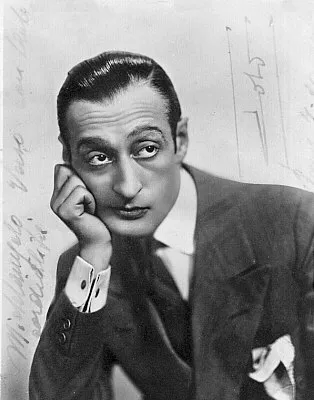
Totò
Human Design Chart
Biography
The Human Design of Totò: Projector 3/5
Projector 3/5 — Design at a Glance
Totó's design features a dense, focusing aura that makes him shine like a bright flashlight. He immediately identifies system errors in his environment and sees what isn't working or is 'in the dark' for others. As a projector, he was meant to bring light into darkness for other people and illuminate their path.
However, his strategy did not involve directly addressing these issues, as this would trigger defensive reactions - similar to shining bright light directly in someone's face. Instead, he elegantly shone through his own harmonious glow. When Totó embodied a functioning relationship or situation himself, others were automatically drawn to him and asked for his insights. His radiant example was attractive; the best approach was to wait for a respectful invitation.
Since his Sacral Center was undefined, he lacked a constant source of intrinsic life energy. He experienced phases of high energy and rapid productivity followed by mandatory rest periods to avoid burnout. Constant work according to societal standards did not fit his cyclical energy needs. Living according to this design rewarded him with success. Ignoring the need for invitation and recovery led to bitterness, an early or later non-self theme.
Emotional Authority
Totó's decision-making process was marked by a deep emotional dynamic that required time and maturation. His design pointed towards emotional authority, carried by his defined Solar Plexus Center. This center experienced constant waves of ups and downs in feelings. The world appeared to him colored by his current mood: enthusiastic about something one moment, deeply skeptical or rejecting it the next.
This emotional authority took precedence over all other defined centers in his chart. His immediate feeling was merely a snapshot, an initial impression that did not yet represent his truth. Quick, spontaneous decisions stemming directly from this fleeting emotion often turned out to be negative or misleading.
Clarity only set in for Totó after a process of emotional detachment. He needed patience and the willingness to 'sleep on' decisions multiple times. By allowing time to pass, intense feelings subsided. Only then did he gain the necessary distance to distinguish between transient mood and deeper insight. This mechanism was especially crucial for long-term, life-defining decisions, as they rested on a stable foundation only after going through this emotional cycle.
The 3/5 Profile — Martyr / Heretic
Totó's design marked him as someone who didn't accept knowledge theoretically but gained it through his own, often flawed experimentation. This Profile 3/5, the experimenter and hero, dictated that he had to test everything himself first in order to learn from it. Line 3 of the adventurer demanded this practical experience, while Line 5 used acquired knowledge to solve others' problems. For Totó, this cycle of trial and error was essential; his failure before an audience was painful but necessary for the learning process.
His attractiveness arose from the rich treasure trove of practical life experiences he presented to others. People were drawn to him because they wanted to partake in his experiences. This flattered his nature as a hero who offers solutions. At the same time, Line 5 carried an innate dignity often misinterpreted as arrogance. This stance was actually a protective mechanism against projection by others. Totó learned to accept life as it came - without judgment - which aligned with the resignation of Line 3. He took the wave of fate in stride, found temporary relief, and transformed this into a powerful presence that fascinated others, even if they sometimes perceived his distance as arrogance.
Single Definition — Defined & Open Centers
Toto's design inclines towards emotional depth and a constant inner pressure. His defined Solar Plexus Center acts as an internal authority, meaning he does not make decisions impulsively but waits for the emotional wave to pass before making choices. Truth reveals itself to him over time; clarity emerges at the end of the emotional cycle when initial excitement or sadness has subsided. This energy colors his environment: others often feel his mood more intensely than he feels it himself. Simultaneously, his defined Root Center propels him forward. It provides a constant, adrenalized pressure that ensures survival and nurtures emotional intelligence. This background stress is not a disturbance but the driving force of his actions in the material world.
In contrast, his open centers appear as mirrors rather than fixed structures. His open Head Center receives inspirations situationally; he tends to take on mental questions from others and wonder if he has the right answers instead of having consistent ideas. Similarly, his open Ajna Center gives him a flexible mind that gathers concepts from the environment but lacks its own unchanging opinion. Communication occurs through his open Throat Center spontaneously and reactively; he does not actively seek attention but speaks when the situation demands it.
His open G Center means a lack of fixed identity. Toto adapts to the people he interacts with and allows them to initiate him in various directions. He often does not know beforehand who he is in a specific context but discovers this through interaction. His open Heart and Sacral Centers function similarly: he lacks consistent willpower or generative energy. Instead, he takes on the energy and ego of his environment, making him vulnerable to exhaustion if he does not listen to his emotional authority. His open Spleen Center reflects fears; he tends to feel uncertain or cling to things that do not serve him in order to gain a sense of security that actually comes from others.
Channels for focused intuition and emotional clarity.
Toto revealed himself as someone driven by an intense emotional desire for new experiences. His design laid a tendency towards restlessness that was fuelled by fantasies of "what could be" and constantly sought to avoid boredom. This fundamental attitude resulted from the Channel of Perception 41-30. This channel connects the Root Center with the Solar Plexus Center: The pressure from Gate 41 (Gate of Limitation) generated the initial urge and a multitude of scenarios, while Gate 30 (Gate of Feeling Awareness) charged these impulses with emotions. The result was a strong desire to immerse himself in new situations to feel life deeply.
For Toto, the challenge lay in giving this emotional wave time to mature – respecting his emotional authority – before following the impulse. The secret of his design consisted in enjoying the longing and the process of experiencing itself without being led by the expectation of immediate fulfillment. Only thus did his experiences become truly fulfilling and avoided the pain of unmet desire.
Additionally, further energies influenced him: Gate 29 (Sacral Center) demanded a clear "yes" and persistence in the face of challenges, where the reward for correct action was inevitable. Gate 14 gave him the ability to handle power and direction with grace and self-control as he entered individually for group goals through Gate 8 and brought his uniqueness to life as a creative role model. Finally, Gate 60 (Accepting Limitations) and the associated melancholy shaped his character; however, this emotional depth could be overcome through creativity and transformation, helping him accept limits as prerequisites for transcendence.
Collective Circuitry — Circuit Signature
Toto exhibited a fundamental disposition characterized by a deep need for emotional reflection on the past. His design suggested that he did not just logically analyze experiences but processed them in wave-like emotional cycles—with clear beginnings, highs, and lows. This energy movement served to uncover the meaning behind events already experienced and then share these felt insights with others to facilitate collective learning.
This configuration arose from Toto's active Meaning-Making Circuit. Unlike cold, future-oriented logic, his energy focused on the right side of the chart, the realm of the past and emotions. The specific active channel "Recognizing" connected his Solar Plexus Center to his Root Center. This created a direct link between his emotional wave movement—often experienced as a descending wave—and his fundamental survival energy. Through this connection, past memories that were visually or emotionally present became a driving force he used to recognize patterns and bring these insights into exchange with the collective. It was not about rational deduction but an intuitive understanding of what had been, to draw shared lessons from it.
Right Angle Cross of Contagion 1
Toto's design established a fundamental disposition that was less influenced by internal initiatives and more shaped by resonance with the environment. He appeared as someone whose energy and behavior were strongly determined by external influences; he reacted to impulses from other people or external circumstances rather than generating them independently. This configuration corresponds to the right cross of infection (Cross 1), a pattern often described as magnetism. Here, the deeper motivation does not lie in actively radiating one's own ideas but in the ability to absorb and reflect states from the social field. Toto was thus "infected" or activated by the energies of his fellow humans. His actions and emotions were therefore often reflections of what was happening around him. This mechanism means that he was not primarily the originator of changes but a sensitive recipient and transmitter of collective currents. His life pattern consisted in responding to the vibrations of others and integrating them into his own experience. As a result, there emerged a dynamic where his identity and expression were closely intertwined with those he interacted with. He lived in a constant exchange that enabled him not only to feel but also to mimic and amplify the mood of his surroundings without necessarily being an independent source for these energies.
Saturn Return · Uranus Opposition · Chiron Return · 2nd Saturn Return — Life Cycles
Toto's public identity was shaped by sharp, cyclical turning points that structurally anchored his artistic success. His sudden entry into the public eye was unexpected: in 1937, at age 39, he appeared on camera for the first time in the comedy "Fermo con le mani" under director Gero Zambuto – a classic Uranus aspect initiating an abrupt career shift.
His status stabilized later through recognition. In 1945, at age 47, after a long legal battle, he received a noble title. This marked his Chiron return, a fulfillment cycle in which his life's purpose increasingly unfolds and becomes experientially meaningful – here concretized by societal legitimation and status security.
Professional authority was finally cemented through concrete awards. In 1952, at age 54, Toto received the Silver Ribbon for Best Actor for "Guardie e ladri." This corresponded to his second Saturn return, which carves established reputation and professional competence in stone. His design thus showed a clear path: from impulsive public opening through confirmation of essence to unshakeable authority in the field.
Projector · Emotional Authority — Synthesis
Totò's life was marked by a deep understanding of human nature and the ability to recognize flaws in the system (Gate 41/30). This sharp perception, fueled by emotional authority and an open G Center, allowed him to grasp subtle dynamics in relationships and societal structures. He was an observer who took in the contradictions of life and reflected them through his art – a role that was amplified by the Profile of Experimenter/Hero (3/5). The combination of an open Sacral Center and defined Root Center suggests that although he did not have constant energy, he had a strong urge to accumulate experiences and transform these into creative expressions.
A central paradox lay in the tension between his need for recognition (Gate 14) and his ability to free himself from conditioning (open Heart, Spleen, and Sacral Centers). He was a master of improvisation who adapted to circumstances but also harbored a deep longing for authenticity. This ambivalence mirrored in his art – a blend of comedic brilliance and melancholic depth that touched the audience equally and prompted reflection.
1 Defined Channel
Incarnation Cross - Right Angle Cross of Contagion 1
Solar Return
The Solar Return shows the moment when the sun returns to its exact birth position - your personal solar year.
Life Cycles
Discover the life cycles with a detailed triple view (birth chart, cycle chart, composite).
Human Design Profile
- Type
- Projector
- Strategy
- Wait for the respectful invitation
- Authority
- Emotional Authority
- Profile
- 3/5 - Martyr / Heretic
- Definition
- Single Definition
- Incarnation Cross
- Right Angle Cross of Contagion 1
- Date of Birth
- 15.02.1898 07:00
- Place of Birth
- Naples, Italy
Frequently Asked Questions
What was Totò's Human Design type?
What Profile did Totò have in Human Design?
What Authority did Totò have?
What incarnation cross did Totó have?
When was Totó born?
Discover your own Human Design
Are you also a Projector? Find out in a personal reading how to unfold your leadership qualities and recognize the right invitations.
More Personalities
Back to overviewSissy Spacek

Alain-Fournier

Anémone

Ann-Margret

Arletty

Arno